
A dental associate may first notice a compensation change when a paycheck no longer matches the expected calculation. The difference could reflect a lower production percentage, a revised definition of collections, a new management fee, additional lab-cost deductions, or a chargeback assigned to an earlier pay period. In other cases, the stated percentage remains unchanged, but the practice modifies the compensation base or the sequence in which fees and percentages are applied.
Understanding the change requires more than comparing two paystubs. The executed agreement, compensation exhibits, amendments, incorporated policies, production reports, and payroll records may each affect the analysis. Contract language is the starting point, but state wage laws may independently regulate earned commissions, deductions, withholding, payment timing, and available remedies. Employee classification, exemption status, and hours worked can also determine whether federal wage-and-hour requirements apply.
This article explains how to identify the source of a revised formula, reconstruct the financial effect, preserve the relevant evidence, and request a meaningful explanation. It also distinguishes ordinary payroll errors from potential contract and wage-law disputes and identifies provisions that can reduce uncertainty in future agreements. Chelle Law reviews dental compensation terms and related contract provisions to help associates understand how the written formula operates and what questions may warrant clarification before they respond.
Key Takeaways
- Immediately pull the signed agreement and compensation exhibits to confirm whether the employer has contractual authority to change the formula.
- Preserve paystubs, payroll details, and communications, then run a side-by-side comparison for representative pay periods to quantify the difference.
- Ask management for a written explanation and a line-by-line payroll breakdown before assuming the change was intentional or authorized.
- Escalate methodically through the practice manager, payroll contact, HR, or regional leadership while maintaining a written record.
- Protect future compensation with clear definitions, limits on unilateral changes, advance notice, payroll transparency, and final accounting terms.
Trace the Source of the Compensation Change
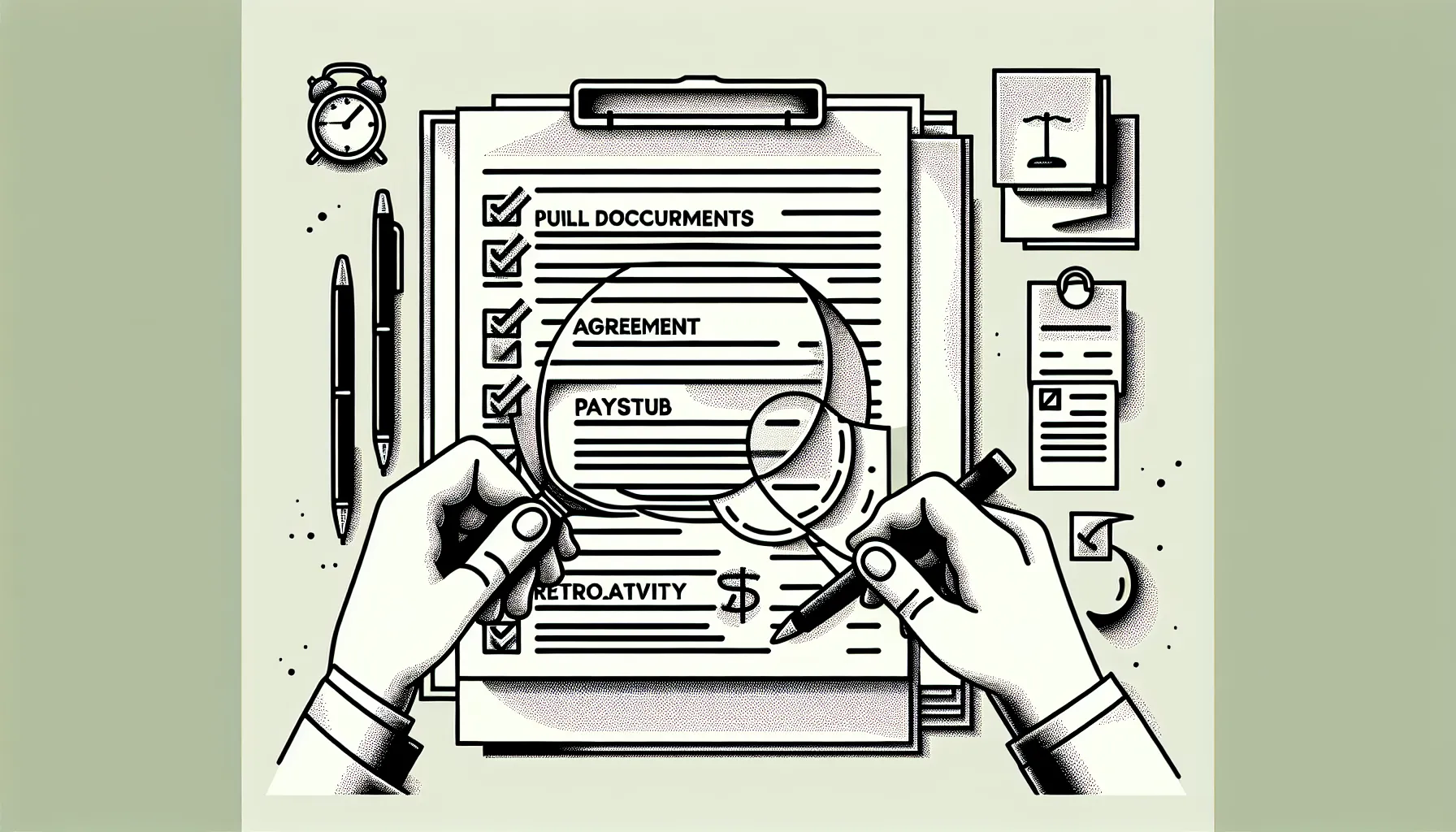
Begin by identifying the exact mathematical change instead of assuming that the practice reduced the headline percentage. Dental compensation formulas can incorporate gross production, adjusted production, collections, contractual write-offs, refunds, lab expenses, remakes, management fees, provider credits, bonus thresholds, and other variables. A change to any one of these inputs can materially affect compensation without appearing as a straightforward rate reduction.
Assemble the Contract and Payroll Documents
Collect the offer letter, executed employment or independent contractor agreement, compensation exhibit, addenda, amendments, and any handbook or compensation policy referenced by the contract. Informal recruitment statements may provide context, but the operative documents ordinarily establish the starting point for determining how pay is calculated and whether the employer reserved authority to modify the formula.
- Locate every provision defining production, adjusted production, collections, net collections, write-offs, fees, expenses, refunds, and chargebacks.
- Identify the percentage, guarantee, draw, tier, bonus threshold, or other formula applicable to each disputed pay period.
- Review the amendment and modification clauses to determine whether a compensation change requires mutual written consent, advance notice, or another specified procedure.
- Determine whether the agreement incorporates an employer policy and how the contract resolves conflicts among its exhibits, policies, and principal terms.
- Compare the announced effective date with the dates on which the affected services were performed, billed, collected, or credited.
An employer may cite a handbook, payroll policy, or corporate operating procedure as authority for a revised calculation. Important questions include whether the contract incorporates that document, whether the policy authorizes the particular change, and whether the agreement establishes a hierarchy when documents conflict. A broad discretion clause also requires careful interpretation because permission to administer a compensation plan does not necessarily resolve whether the practice may change amounts already earned or disregard applicable wage protections.
Separate a New Formula From an Accounting Error
Not every discrepancy reflects an intentional contract change. Production may have been assigned to the wrong provider, collections may have posted after a cutoff date, payroll software may have applied a fee twice, or a temporary guarantee may have been omitted. A line-by-line calculation can distinguish an administrative mistake from a deliberate policy change or a disputed interpretation of the agreement.
- Changed percentage: The production or collections rate is lower than the rate in the operative compensation schedule.
- Changed compensation base: The practice substitutes adjusted production for gross production, excludes services, or reduces credited collections before applying the percentage.
- New deductions: Management fees, lab expenses, remake costs, refunds, or corporate charges appear without an identified contractual basis. The treatment of dental lab fee deductions is particularly important when the agreement does not define which expenses may be assigned to the associate.
- Retroactive application: Earlier periods are recalculated under a formula announced after the affected work was performed or the compensation was otherwise earned.
- Conflict with guaranteed pay: The revised calculation reduces compensation below a stated salary, minimum, draw, commission floor, or temporary guarantee.
These facts do not establish by themselves that a practice breached the contract or violated wage law. They identify where the calculation, authorization, effective date, and governing legal requirements require closer analysis.
Reconstruct the Old and New Pay Formulas

A side-by-side model can reveal whether the discrepancy is a small posting error or a recurring reduction with substantial annual consequences. Select several representative periods before and after the change, then apply both formulas to the same production or collections data. Using identical source figures prevents ordinary fluctuations in patient volume from obscuring the effect of the revised method.
- Identify the production, adjusted production, or collections credited to the associate for the selected period.
- Apply the original percentage, guarantee, tier, or bonus formula to calculate expected gross compensation.
- Apply the employer’s revised formula to the same figures, including every new exclusion, management fee, refund, lab expense, or chargeback.
- Record the difference and repeat the calculation across multiple periods to determine whether the effect is consistent.
- Project the possible monthly or annual effect while recognizing that future production and collections may vary.
For example, assume the agreement pays 40% of credited collections and the relevant collections total $50,000. The original formula produces $20,000 in gross compensation. A revised 35% rate produces $17,500, creating a $2,500 difference before additional deductions. Dentists comparing unfamiliar arrangements can review Chelle Law’s explanation of common dental compensation models.
The order of operations may be as important as the percentage itself. A fee deducted from collections before the split reduces the compensation base, while a fee assessed afterward reduces the associate’s calculated share. If a practice first reduces $50,000 in collections by a 5% management fee and then applies a 40% split, the result differs from calculating the associate’s 40% share first and taking 5% from that amount.
- A pre-split management fee reduces the revenue figure to which the associate’s percentage applies.
- A post-split deduction reduces compensation after the associate’s share has been calculated.
- Refunds, bad debt, remakes, and lab chargebacks may shift costs into later periods and complicate a payroll comparison.
- A production pool may allocate revenue among several providers instead of crediting each dentist directly for individual work.
Centralized reporting can make these mechanics harder to trace in a multi-location group or DSO. An associate may need both office-level production records and the corporate compensation report to determine how provider credits, fees, and exclusions were applied. Chelle Law’s DSO employment contract guide discusses other provisions that can affect compensation in corporate dental arrangements.
Distinguish Contract Interpretation From Wage-Law Issues
A signed agreement is central to the analysis, but it may not be the only source of governing rules. A compensation change can create one question about contractual authority and a separate question about whether the practice withheld, diverted, or failed to pay wages protected by state or federal law. The result depends on the jurisdiction, the wording of the agreement, when the compensation became earned, and whether the dentist is an employee or an independent contractor.
State Wage Rules May Affect Commissions and Deductions
State law may define commissions, bonuses, or other nondiscretionary compensation as wages once the applicable conditions have been satisfied. It may also restrict deductions, recoupments, setoffs, and retroactive changes. This distinction matters because a contractual disagreement about how a formula operates may also support a statutory wage claim, and the available remedies can exceed the amount shown on the disputed paycheck.
Arizona illustrates why jurisdiction-specific review is necessary. Arizona statutes include commissions and other nondiscretionary compensation within the definition of wages and generally restrict withholding or diverting employee wages unless a statutory exception applies, such as prior written authorization or a reasonable good-faith dispute. The state’s wage-withholding statute therefore makes the wording, authorization, and factual basis for a management fee or chargeback particularly important; it does not make every deduction automatically valid or invalid.
Arizona also increased the maximum unpaid-wage claim eligible for its Industrial Commission administrative process from $5,000 to $12,000 in 2025 while retaining a one-year filing period. Depending on the facts, Arizona law may permit remedies beyond the underlying unpaid amount, including potential treble damages in a civil action. These provisions are Arizona-specific examples rather than universal rules, but they demonstrate why an associate should not assume that the contract’s modification clause answers every wage-payment question.
Classification and Federal Wage Requirements Also Matter
A dentist paid through production or collections is not automatically excluded from wage protections. For an employee, federal minimum-wage and overtime consequences may depend on exemption status, hours worked, and how incentive compensation affects the regular rate. Deductions or retroactive adjustments can create separate concerns if they reduce a nonexempt employee’s pay below federal requirements.
The contract’s label also does not conclusively determine whether a dentist is an employee or independent contractor. Federal enforcement guidance shifted in May 2025 when the U.S. Department of Labor directed Wage and Hour Division investigators not to apply the 2024 independent-contractor rule in current enforcement matters while that rule remained under review and litigation. The Department instead instructed investigators to rely on longstanding economic-reality principles. Dentists evaluating a 1099 arrangement should therefore avoid treating any single federal test or the agreement’s title as dispositive and may benefit from reviewing the broader distinctions between W-2 and 1099 dental associate arrangements.
Document the Discrepancy and Request an Explanation
Payroll portals, internal production reports, and informal messages may not remain readily available. Preserve the relevant records before beginning a detailed discussion with management. A complete file allows the associate, payroll personnel, and legal counsel to determine whether the discrepancy resulted from a data-entry error, a revised policy, or a disagreement about the contract.
- Download paystubs and payroll statements showing the original and revised calculations.
- Save production and collections reports that identify dates, provider credits, adjustments, write-offs, and payment postings.
- Preserve emails, texts, memoranda, and portal notices announcing or explaining the change.
- Create a dated note describing relevant verbal conversations, including who participated and what explanation was given.
- Maintain a spreadsheet showing the original formula, the employer’s calculation, and the difference for every affected period.
- Keep the executed agreement, compensation exhibits, addenda, offer letter, and incorporated policies with the payroll records.
The initial inquiry can remain factual and solution-oriented. Ask the practice to provide a line-by-line calculation and identify the contract or policy provision supporting each new fee, exclusion, or percentage. It is also useful to ask when the change was approved, when it became effective, and whether it was applied to services performed or compensation earned before that date.
“My latest payroll statement appears to use a different compensation calculation. Please provide the production or collections data, each deduction or adjustment, the formula used, and the contract or policy language supporting the change so I can reconcile it with my records.”
If the explanation does not resolve the discrepancy, escalation can proceed methodically. A practice manager or payroll contact may be able to correct an administrative error. HR, an owner, operations leadership, or a DSO compensation team may need to address a policy interpretation or corporate fee. When immediate cash-flow stability is a concern, the parties may discuss a documented interim arrangement, such as temporarily using the prior formula while the dispute is reviewed. Any proposal should be evaluated in light of the agreement and applicable law rather than treated as an automatic entitlement.
Evaluate Legal Advice, Exit Risks, and Future Contract Protections
Legal review may be appropriate when the practice refuses to explain the calculation, the revised formula appears inconsistent with the executed agreement, previously earned compensation has been recalculated, or the dispute may lead to resignation or termination. Useful review materials include the complete contract, all compensation exhibits, incorporated manuals, payroll records, communications, a concise timeline, and a spreadsheet calculating the disputed amount.
Those documents can help distinguish among a payroll error, a contract interpretation dispute, an unauthorized deduction, and a potential statutory wage claim. Available options depend on the facts and jurisdiction. They may include an administrative correction, a written clarification or amendment, a request for unpaid compensation, an administrative wage claim where available, or another formal remedy. No particular outcome or timetable can be assumed.
Resignation should not be based on a single unexplained paystub. Before leaving, review the notice period, repayment obligations, final-compensation language, post-termination collections, chargebacks, malpractice coverage, and restrictive covenants. The provisions governing dental associate contract termination may materially affect the financial consequences of a departure even when the compensation dispute is legitimate.
The most effective time to reduce compensation uncertainty is before signing or renewing the agreement. A focused review of dental associate compensation terms examines not only the stated percentage but also the operational rules that determine the amount ultimately paid.
- Modification limits: Identify whether compensation may change during the term and whether the dentist’s written consent is required.
- Advance notice: Establish a defined notice period before a prospective formula change becomes effective.
- Retroactive adjustments: Clarify how the agreement treats compensation already earned or calculated and identify any permitted corrections or chargebacks.
- Precise definitions: Define production, adjusted production, collections, write-offs, refunds, lab fees, remakes, management fees, and excluded services.
- Payroll reporting: Specify which reports will show credited production or collections and every deduction used to calculate compensation.
- Record access: Provide a practical method for obtaining the information needed to verify the practice’s calculation.
- Final accounting: Explain when final compensation will be calculated and how later collections, refunds, lab costs, and chargebacks will be handled.
- Dispute procedures: Identify the contact, reporting process, and response period for a compensation discrepancy.
These provisions cannot prevent every disagreement, but they can replace an opaque payroll process with defined calculations and accessible records. Clear drafting makes it easier to identify administrative mistakes and address genuine interpretation disputes before they affect multiple pay periods.
Frequently Asked Questions
Can a dental employer reduce my production percentage during the contract term?
Whether the employer may reduce the percentage depends on the contract’s compensation, amendment, discretion, and notice provisions, as well as applicable law. Compare the change with the executed agreement, compensation exhibits, incorporated policies, and effective-date communications before accepting the employer’s interpretation.
What records should I save after discovering a changed pay formula?
Save the executed agreement, compensation exhibits, amendments, incorporated policies, paystubs, production or collections reports, and communications about the change. A dated timeline and spreadsheet comparing the old and new calculations can make the issue easier to evaluate.
Can a new formula be applied to dental work I already performed?
Retroactive application requires careful review because the contract and applicable wage law may distinguish future formula changes from compensation already earned. The analysis can depend on when services were performed, billed, collected, credited, and considered earned under the governing documents and jurisdiction.
How do I calculate the amount affected by a compensation change?
Apply the original and revised formulas to the same production or collections data for several representative periods. Include changes to percentages, compensation bases, management fees, lab expenses, refunds, chargebacks, guarantees, and bonus thresholds so the comparison captures the complete calculation.
Does calling a dentist an independent contractor resolve wage-law questions?
No. The contract’s label is relevant but not necessarily controlling. Classification can depend on federal and state standards and the practical working relationship, while contractual payment rights may still apply even when employee wage statutes do not.
Should I resign if the practice changes my compensation?
Confirm the calculation and review the employer’s explanation before making an exit decision. Resignation can trigger notice requirements, repayment obligations, final-pay provisions, malpractice responsibilities, and restrictive covenants, so those terms require evaluation alongside the compensation dispute.
Review a Dental Compensation Change Before You Respond
Chelle Law can analyze the contract, compensation formula, payroll records, deductions, and related exit terms so you can understand the change and identify provisions that may warrant clarification.
Contact Chelle LawExplore Dental Contract Guidance
Review Chelle Law’s dental contract services, practical resources, and state-specific contract information.