
A dental associate may accept an offer expecting predictable compensation during the first several months of employment, only to learn that the stated “guarantee” functions as an advance against future production or collections. Compensation labels do not determine the economic result. The controlling language may appear in the payment formula, reconciliation provision, expense definitions, incorporated policies, or termination section rather than in the sentence describing the monthly amount.
The distinction matters because a nonrecoverable guarantee ordinarily establishes minimum compensation for a defined period, while a recoverable draw may create a deficit that carries forward, reduces later incentive pay, or becomes the subject of a repayment demand. Production adjustments, insurance write-offs, collection delays, refunds, lab expenses, and departure timing can all affect the calculation. Chelle Law reviews these provisions to identify the compensation base, determine how and when reconciliation occurs, explain which amounts may be charged against the formula, and clarify what happens to an alleged balance when the relationship ends. This article provides general contract information, not advice about a particular wage dispute or jurisdiction.
Key Takeaways
- A payment labeled as a guarantee may operate as a recoverable dental draw if the contract includes reconciliation, clawback, or broad managerial-discretion language.
- The agreement should identify whether compensation is based on production or actual collections and explain how refunds, remakes, lab fees, and other adjustments affect the calculation.
- Defined guarantee periods, short reconciliation windows, written calculation rules, and limits on recoverable amounts can reduce financial uncertainty.
- Dentists should preserve paystubs, production and collection reports, offer emails, and written compensation explanations if a deduction or repayment demand arises.
- Termination provisions deserve close attention because resignation or termination may accelerate an otherwise deferred repayment obligation.
A Guarantee and a Recoverable Draw Allocate Risk Differently

A practice may use a draw to provide regular payments while waiting for patient and insurer receipts to support compensation under a production- or collections-based formula. If the draw is recoverable, the practice compares the amount advanced with the amount credited to the associate. A shortfall may then be carried into a later period, offset against a bonus, or treated as repayable if the written agreement and applicable law permit that result.
A genuine guarantee serves a different purpose. It generally provides a stated minimum for a defined period without making ordinary production or collection shortfalls retroactively recoverable. The contract can still contain separate repayment obligations for a signing bonus, relocation assistance, or another advance, so the word “guarantee” does not resolve every repayment issue. The complete compensation and termination language must be read together.
Recruiting discussions often blur these arrangements. An offer may describe a six-month guaranteed salary, while the final agreement calls each payment an advance subject to quarterly reconciliation. The reverse is also possible: a payment labeled a draw may offer meaningful protection if the contract expressly forgives deficiencies during the introductory period. Current American Dental Association hiring guidance likewise emphasizes documenting the compensation method, commission base, benefits, advances, bonuses, caps, and expense treatment rather than relying on an informal description.
The Compensation Base Determines What the Dentist Earns
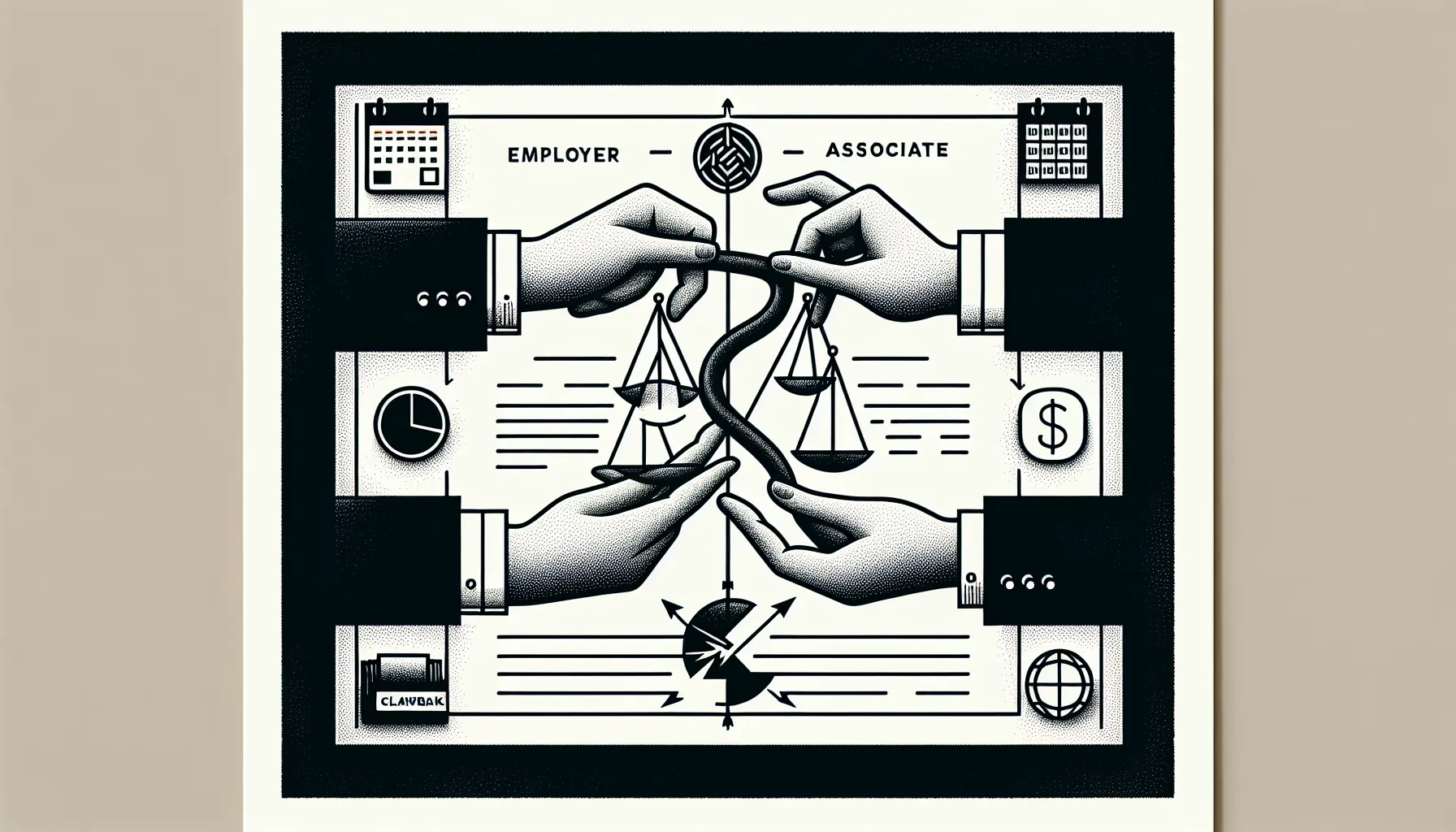
Before evaluating whether a monthly amount is secure, identify the formula against which it will be measured. The ADA’s current dentist compensation guidance distinguishes straight salary, salary-plus, commission, and net-profit arrangements and explains that production, adjusted production, collections, and net profit are materially different bases. Chelle Law’s overview of dental associate compensation provides additional context for how these structures appear in agreements.
Production, Adjusted Production, and Collections
A gross-production formula generally begins with the practice’s stated charges for the dentist’s services. Adjusted production may instead reduce that amount for contractual insurance discounts, write-offs, refunds, remakes, or other defined adjustments. A collections formula credits compensation only when the practice receives payment, which exposes the associate to billing delays, claim denials, patient nonpayment, refund activity, and the effectiveness of collection procedures controlled by the practice.
For example, assume a procedure is billed at $1,000 and the associate’s percentage is 30%. A gross-production formula could initially credit $300. If an insurance agreement reduces the allowed charge to $800, a 30% adjusted-production calculation could credit $240. Under a collections formula, the associate may receive credit only as the $800 is actually collected, and the timing may extend into a later pay period. The same procedure therefore supports different compensation without any change to the stated percentage.
The agreement also needs a clear attribution method. Important questions include which provider receives credit, whether hygiene examinations or assisted procedures count, how work performed at multiple locations is combined, and who bears the effect of coding changes or late insurance submissions. A collections-based formula is particularly sensitive to which party controls billing, adjustments, refunds, and collection efforts.
Lab Fees, Write-Offs, and Other Formula Adjustments
Lab charges, supplies, remakes, provider discounts, and administrative expenses may affect compensation when the agreement makes them part of the defined compensation base. These provisions are not all equivalent to direct payroll deductions. One contract might subtract lab costs before applying the associate’s percentage, while another calculates compensation first and then allocates a portion of the expense to the dentist. The order of operations changes the result.
A useful review identifies the covered expenses, the associate’s percentage, the source records used, and whether the charge applies to the guarantee itself or only to incentive compensation. It also considers whether the practice can introduce new categories through a policy that it may amend unilaterally. The separate guide to dental lab fee deductions explains why the advertised production percentage may not reflect the dentist’s actual payment.
Reconciliation Language Can Convert Predictable Pay Into Debt
Reconciliation compares compensation already paid with the amount earned under the contractual formula. That calculation may occur monthly, quarterly, annually, or after employment ends. A dentist evaluating the provision needs to know whether a deficit is forgiven at the end of each period, carried forward indefinitely, offset against future incentive compensation, or characterized as a debt owed to the practice.
- Measurement period: Determine when each calculation begins and ends and whether the practice can reopen a closed period.
- Crediting rules: Identify when production or collections are assigned to the associate and how later receipts are handled.
- Negative balances: Clarify whether a deficiency expires, carries forward, reduces a bonus, or may become repayable.
- Supporting data: Confirm whether the associate receives production, collection, adjustment, and expense reports sufficient to verify the calculation.
- Correction rights: Review any deadline for questioning an entry or disputing a compensation statement.
Refunds, Remakes, and Long Adjustment Windows
A procedure may initially generate production or collection credit and later be adjusted because of an insurer recoupment, patient refund, coding correction, or no-charge remake. If the contract permits retroactive revisions, compensation that appeared final may change months later. The agreement can define how long adjustments remain open, whether the associate receives documentation, and whether an adjustment follows the dentist after departure.
Consider an associate receiving a $6,000 monthly draw against collections. If the formula credits only $5,200 in one month, the ledger may show an $800 deficit. After four similar months, the reported balance could reach $3,200 even though the dentist received every scheduled paycheck. Whether that amount can reduce later pay or become a repayment demand depends on the agreement, the surrounding facts, and applicable law—not merely on the practice’s use of the word “draw.”
Broad managerial-discretion clauses make the analysis more difficult. A policy may legitimately explain reporting procedures, but language allowing the practice to redefine the compensation base, add expenses, or alter reconciliation mechanics can weaken the certainty of the stated guarantee. Material compensation terms are easier to evaluate when they appear in the signed agreement rather than in a policy that can change outside the amendment process.
Departure, Final Pay, and Classification Require Separate Analysis
A deficit often becomes visible when the associate resigns or is terminated. The practice may perform a final reconciliation, calculate pending collections, or assert that a draw balance is immediately due. The agreement may also address how long post-employment collections remain creditable and whether later refunds are charged back. These provisions need to be compared with the contract’s termination and final-compensation terms.
Final-pay deadlines, permissible wage deductions, and repayment remedies vary by state. A contract provision does not automatically establish that a practice may delay a final paycheck until every account is collected or deduct any asserted balance from wages. Conversely, federal law does not resolve every dispute over commissions or compensation promised above its minimum protections. The U.S. Department of Labor’s FLSA reference guide explains that the Fair Labor Standards Act establishes minimum-wage and overtime rules but generally does not provide a procedure for recovering usual or promised wages above those federal minimums. State wage-payment law and contract law may therefore be central to a particular dispute.
Federal classification also requires care. Licensed dentists performing the practice of dentistry are generally identified in Department of Labor guidance as falling within the federal professional exemption, but that does not mean every dentist is exempt from every wage protection. State rules may differ, and the actual duties, employment structure, and other facts can matter. An agreement’s employee or independent-contractor label is likewise not necessarily conclusive.
Classification affects payroll withholding, benefits, workers’ compensation, tax obligations, and potentially available wage remedies. A purported contractor who receives a draw should therefore analyze the payment formula separately from whether the working relationship has been classified correctly. Chelle Law’s resource on W-2 and 1099 dental associate arrangements discusses these distinctions in greater detail.
Contract Terms That Make a Dental Guarantee Easier to Evaluate
A useful compensation provision does more than state a monthly number. It explains the period covered, whether the payment is recoverable, how the underlying formula works, and what happens when employment ends. The following terms can expose ambiguity or identify language that may warrant clarification before signing:
- Defined guarantee period: State the beginning and ending dates and whether ordinary production or collection deficiencies are forgiven during that period.
- Express recovery language: Specify whether payments are salary, nonrecoverable minimum compensation, or advances subject to reconciliation.
- Objective compensation base: Define gross production, adjusted production, collections, or net profit and identify all included adjustments.
- Limited reconciliation window: Establish when a period becomes final and how long refunds or insurer adjustments can affect it.
- Expense allocation: Identify any lab, supply, remake, staffing, or administrative costs included in the formula.
- Reporting and verification rights: Describe the statements the dentist receives and the process for questioning an entry.
- Departure treatment: Address pending collections, final reconciliation, asserted deficits, and the timing of final compensation, subject to applicable law.
- Limits on unilateral changes: Distinguish administrative policies from material compensation terms that require a written amendment.
Signing bonuses, relocation payments, and retention incentives deserve separate attention because each may have its own repayment schedule. A dentist can compare the triggering events, determine whether the obligation declines over time, and identify whether several repayment provisions could become due simultaneously. The guide to dental signing and relocation bonuses addresses those obligations separately from ordinary compensation reconciliation.
Responding to a Draw Deduction or Repayment Demand
When a practice reduces compensation or asserts a draw balance, the first task is to preserve the relevant record. Useful documents include the signed agreement, offer letter, compensation policies, paystubs, production and collection reports, adjustment ledgers, emails, and written recruiting representations. Those materials can reveal whether the dispute concerns a data error, a disputed contract interpretation, a changed policy, or a legal restriction on the proposed deduction.
- Request an itemized calculation: Ask for the contractual provision, measurement period, credited revenue, adjustments, expenses, and prior balance used.
- Recalculate the formula: Confirm whether the practice used production, adjusted production, collections, or another base and applied the correct percentage.
- Trace retroactive entries: Match refunds, write-offs, remakes, insurer recoupments, and lab charges to supporting records.
- Review timing and termination language: Determine whether the agreement addresses the reconciliation date, post-employment collections, and the asserted repayment event.
- Consider governing law before acting: Wage-payment, deduction, and final-pay rules vary, and resignation or continued work may have additional contractual consequences.
A focused dentist employment contract review can identify whether the written terms establish nonrecoverable compensation, authorize reconciliation, define the disputed expenses, or connect repayment to termination. Review before signing offers the best opportunity to clarify ambiguous language, but an existing agreement and its compensation records can also be analyzed after a disputed adjustment appears.
Frequently Asked Questions
How can a dentist tell whether a pay guarantee is truly nonrecoverable?
Review more than the compensation label. A stronger nonrecoverable guarantee identifies a fixed amount and period and explains that ordinary production or collection shortfalls will not be carried forward, offset, or repaid. Reconciliation, advance, deficit, deduction, and termination provisions may alter the apparent promise.
What is the difference between production and adjusted production?
Production may begin with the practice’s stated charges for services, while adjusted production commonly accounts for defined items such as insurance write-offs, discounts, refunds, or remakes. The agreement’s definitions determine which adjustments apply and when they affect the associate’s compensation.
Can lab fees reduce compensation under a dental guarantee?
Lab fees may affect the compensation calculation if the agreement includes them in the defined formula or expense allocation. The contract needs to clarify which fees apply, how they are divided, whether they are subtracted before or after the associate’s percentage, and whether they affect guaranteed pay or only incentive compensation.
What happens to a recoverable draw when the dentist leaves?
Departure may trigger a final reconciliation or a demand concerning an asserted deficit, but the result depends on the contract and applicable law. Termination language, post-employment collection credits, final-pay requirements, deduction restrictions, and separate clawback provisions all may affect the analysis.
Does federal wage law prohibit every draw deduction or clawback?
No. Federal law establishes minimum protections but generally does not resolve every dispute over promised compensation above those minimums. Many licensed dentists are also treated as federal professional employees when practicing dentistry. State wage law, classification facts, and the contract may be critical, so the legality of a specific deduction cannot be determined from the label alone.
What records are useful when disputing a dental draw calculation?
Preserve the signed agreement, offer documents, compensation policies, paystubs, production and collection reports, adjustment ledgers, relevant emails, and the practice’s itemized reconciliation. These records help trace the compensation base, each adjustment, the applicable period, and any discrepancy between the written formula and the calculation used.
Clarify Your Dental Pay Guarantee Before a Deficit Appears
Chelle Law reviews draw, guarantee, reconciliation, expense, clawback, and termination provisions so dentists can understand how the promised compensation may work in practice.
Contact Chelle Law