
Leaving a dental practice does not necessarily end the malpractice risk associated with treatment provided there. A patient may assert a claim months or years after the dentist’s final day, and whether the former practice’s policy responds can depend on the type of coverage, the reporting date, and the policy’s detailed terms. For a dentist insured under a claims-made policy, this is where an extended reporting endorsement—commonly called tail insurance—may become important.
The financial question is not simply whether tail coverage is available. The employment, independent contractor, partnership, or sale documents may allocate responsibility for obtaining the endorsement and paying its premium. That allocation can change based on whether the dentist resigns, is terminated without cause, is terminated for cause, completes the contract term, sells an ownership interest, or continues working after a DSO transaction. Policy-specific reporting windows, prior-acts coverage, and death, disability, or retirement provisions may also change what coverage is necessary.
Chelle Law evaluates the malpractice provisions alongside termination, indemnity, reimbursement, compensation, and transaction terms. A focused dental malpractice insurance review can identify which document assigns the obligation, whether the language addresses the actual policy, and which questions require written clarification before a dentist signs or departs.
Key Takeaways
- Tail coverage is primarily associated with claims-made insurance, but the policy may offer another reporting or replacement-coverage solution.
- The insurance clause alone may not resolve responsibility. Termination, indemnity, reimbursement, compensation, and transaction provisions can change the result.
- An employer does not automatically pay because the dentist is a W-2 employee, and a 1099 label does not by itself establish the dentist’s legal classification or insurance responsibility.
- A practice sale or DSO transition may trigger a closing-related tail obligation even when the dentist continues working after the transaction.
- Election deadlines, reporting periods, retroactive dates, pricing, and free or reduced-cost extensions depend on the specific policy and endorsement.
- Contract language permitting reimbursement does not necessarily make a deduction from final wages lawful under the governing state’s wage-payment rules.
Tail Responsibility Starts With the Malpractice Policy

A contract may state who is expected to pay, but the insurance policy determines what coverage exists. Before analyzing cost allocation, the dentist needs to know whether the practice maintains claims-made or occurrence coverage, when the dentist became an insured, the applicable retroactive date, and when coverage will end. The dentist also needs to determine whether the policy already includes a reporting extension or permits another method of protecting prior services.
Claims-Made and Occurrence Coverage Protect Different Time Periods
An occurrence policy generally responds to a qualifying incident that occurred while the policy was active, even if the claim is made later, subject to all policy terms. A claims-made policy generally requires the claim to be made—and often reported—while the policy or an applicable reporting period remains active. The treatment date alone therefore may not preserve coverage under a claims-made form.
Suppose a dentist treats a patient while covered by a practice’s claims-made policy and leaves before the patient asserts a claim. If the dentist’s coverage ends and no applicable reporting mechanism remains, a later claim may fall outside that policy. An extended reporting endorsement can allow qualifying claims based on earlier services to be reported after active coverage ends. Dentists who need a broader foundation can review this guide to tail insurance for dental professionals.
The event that creates a contractual obligation may differ from the event that ends coverage under the policy. Employment termination, removal as a named insured, policy cancellation, nonrenewal, practice closure, or a transaction that replaces the existing policy can each matter. The analysis must distinguish the contract’s payment trigger from the insurer’s rules governing eligibility, election, and reporting.
A Separate Paid Tail Endorsement Is Not the Only Possible Solution
Not every claims-made arrangement requires the dentist to purchase the same type of standalone endorsement. Depending on the insurer and policy, there may be a basic reporting extension, a paid endorsement, prior-acts coverage from a new insurer, or replacement coverage that preserves an earlier retroactive date. Some policies also provide reduced-cost or no-cost extended reporting after death, qualifying disability, or retirement.
These alternatives are policy-specific. Regulatory-filed insurance materials illustrate that reporting windows, election deadlines, retroactive-date restrictions, and exceptions involving replacement coverage can differ substantially. Current American Dental Association guidance on employment agreements likewise recommends determining who must obtain and pay for tail, whether special death, disability, or retirement terms apply, and whether the dentist has consent-to-settle rights.
A dentist therefore should not assume that a universal purchase deadline, premium multiple, or reporting period applies. The endorsement’s duration, the underlying policy’s maturity, coverage limits, specialty, claims history, insurer, jurisdiction, and available alternatives may all affect price and protection. Written information from the insurer or broker is more useful than a general estimate based only on the annual premium.
Who Pays Depends on the Relationship and the Reason It Ends
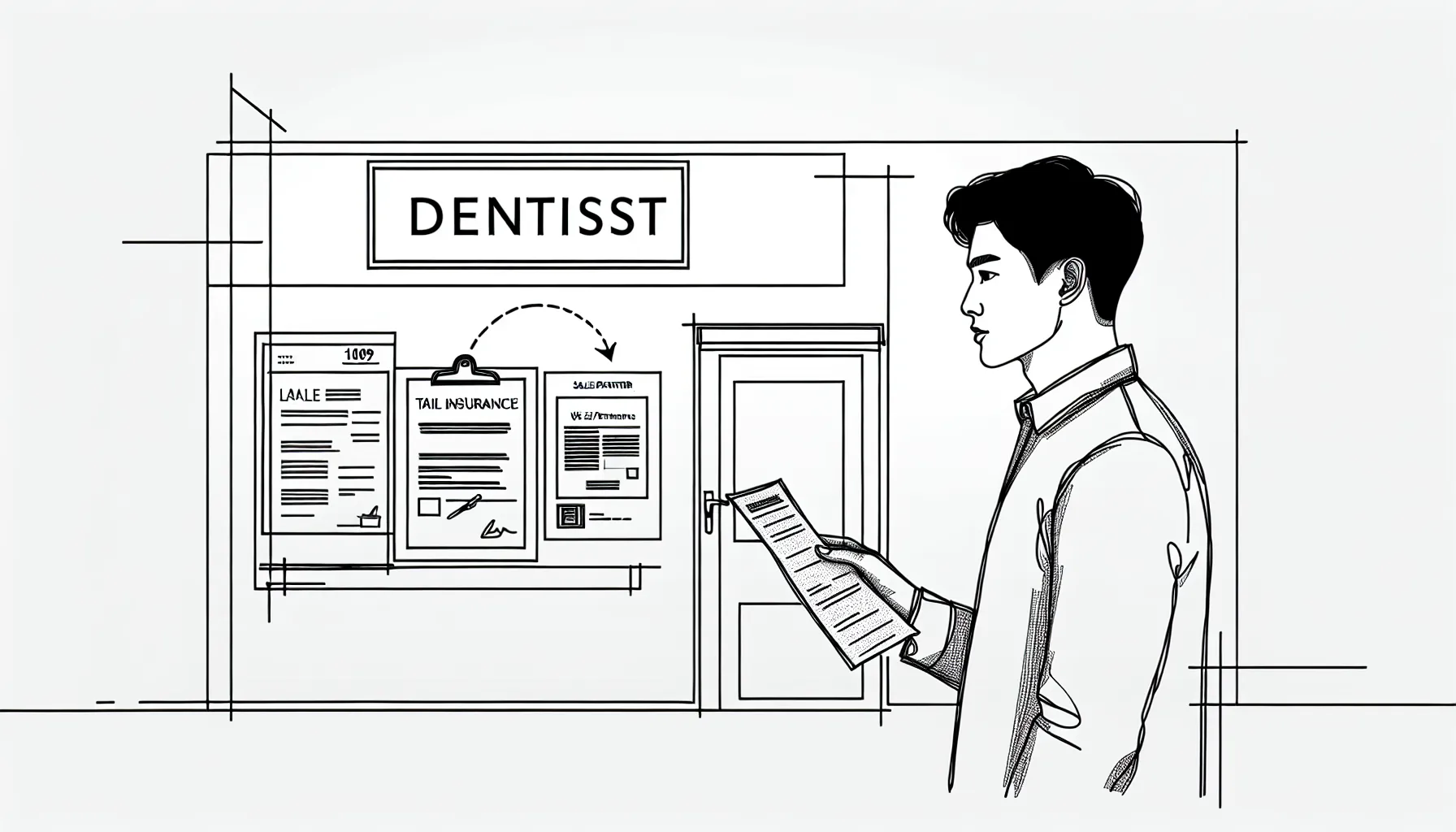
There is no universal rule requiring every dental employer to pay the departing dentist’s tail premium. The agreement may make the practice responsible in one circumstance and the dentist responsible in another. For example, employer payment might apply after termination without cause, while voluntary resignation before the end of an initial term may shift the cost to the associate. Other agreements divide or prorate the premium.
Dental Associates and Independent Contractors
For a W-2 associate, the practice often maintains group malpractice coverage during employment. That fact does not establish who pays for post-employment reporting protection. The answer may depend on resignation, contract expiration, nonrenewal, mutual separation, termination without cause, termination for cause, or an alleged breach. The dentist should compare the insurance provision with the notice, cause, cure, and repayment language in the agreement’s termination terms.
An independent contractor agreement more commonly requires the dentist to maintain professional liability insurance as a business expense. Even then, the arrangement can vary. A practice may place the contractor on its group policy while services are performed but require the contractor to obtain or reimburse tail after departure. The obligation may appear in an indemnity or expense-reimbursement provision rather than in the main insurance clause.
The agreement’s W-2 or 1099 label does not resolve legal classification by itself. The U.S. Department of Labor’s current federal guidance applies a totality-of-the-circumstances economic-reality analysis under the Fair Labor Standards Act, while state employment law and federal or state tax rules may use different tests. Dentists comparing employee and independent contractor arrangements should separately evaluate classification and the contract’s allocation of insurance expenses rather than treating either issue as dispositive of the other.
Partners, Practice Sellers, and DSO Transactions
Ownership and transaction documents can allocate malpractice exposure differently from an ordinary associate agreement. A partnership agreement, equity redemption, asset purchase agreement, or stock sale may assign responsibility for claims arising from services provided before closing. If the practice maintained claims-made coverage, tail may become part of the buyout economics rather than a routine employment benefit.
A sale or DSO affiliation also can create a tail issue even when the dentist remains at the location after closing. The buyer or DSO-related practice may provide prospective coverage while requiring the seller or individual dentist to address the former policy’s reporting exposure. ADA guidance concerning business services agreements and DSO transactions specifically identifies closing-related tail obligations as an issue to examine.
The dentist may need to read several documents together: the purchase or equity agreement, transition documents, any business services agreement, the new employment agreement, and both the former and replacement insurance policies. A promise of forward coverage after closing does not necessarily address claims connected to treatment provided before the transaction.
Contract Terms That Can Shift the Tail Cost
Tail responsibility is often spread across provisions that were drafted for different purposes. A malpractice clause may say the practice will “provide” coverage without defining whether that promise continues after employment. Elsewhere, a repayment or indemnity clause may attempt to recover an endorsement premium from the dentist. The agreement must be read as a whole and then compared with the actual policy.
- Policy type and insured status: Does the agreement identify claims-made or occurrence coverage, required limits, the named insured, and the applicable retroactive date?
- Procurement and payment: Who must request the endorsement, complete the insurer’s election process, pay the initial invoice, and provide evidence of coverage?
- Termination events: Does responsibility change after resignation, termination without cause, termination for cause, expiration, nonrenewal, death, disability, retirement, or a practice sale?
- Reimbursement and indemnity: Can the practice seek repayment after an alleged breach, and does the provision define how that breach is established?
- Final compensation: Does the agreement claim a right to deduct insurance expenses from wages, collections, bonuses, or other amounts due after departure?
- Claims handling: Who controls the defense, selects counsel, receives notice, and decides whether a claim may be settled?
- Transaction documents: Do sale, buy-in, redemption, or transition terms allocate pre-closing claims and legacy coverage separately from future employment?
Conditional language deserves particular attention. An agreement might require the employer to pay after termination without cause but shift the expense to the dentist following an early resignation. Another may divide the premium according to completed years of service. If the clause does not identify who purchases the endorsement, a reimbursement promise alone may leave an important administrative gap when an election deadline is approaching.
Consent-to-settle and defense-control provisions are separate from premium responsibility. A dentist could receive employer-paid tail yet have limited control over settlement decisions that affect professional reputation, credentialing, or future applications. Contract analysis should therefore address the quality and operation of the coverage, not only the person who pays the bill.
State law may affect worker classification, indemnity, restrictive covenants, repayment obligations, and wage deductions. In particular, contract language authorizing reimbursement does not automatically establish that an employer may withhold a disputed premium from the dentist’s final paycheck. Authorization, notice, timing, minimum-wage protections, and permitted deduction categories vary by jurisdiction and require analysis under the governing wage-payment law.
Questions to Resolve Before Signing or Giving Notice
The best time to clarify tail responsibility is before the employment agreement is signed. If that opportunity has passed, a dentist considering departure can still gather the contract, amendments, offer letter, policy declarations, relevant endorsements, broker communications, and any written representations from the practice. Those documents may reveal whether the contractual promise corresponds to the coverage actually in place.
- Is the policy claims-made or occurrence, and what retroactive date applies to the dentist?
- Exactly when will the dentist cease to be an insured under the practice’s policy?
- Does the policy provide a basic reporting extension, paid tail, prior-acts option, replacement-coverage solution, or special extension for death, disability, or retirement?
- What event triggers the obligation, and does the result differ by the reason for separation?
- Who elects and purchases the endorsement, who initially pays, and is reimbursement or cost sharing required?
- What election deadline and reporting window apply under the policy?
- Who controls the defense and settlement of a later claim?
- Can the practice attempt to offset the premium against final compensation, and what state law governs that deduction?
Clear drafting can allocate these responsibilities by separation scenario. For example, the parties may agree that the practice will obtain and pay for an extended reporting endorsement if it terminates the associate without cause or ends the group policy, while the cost will be shared after a voluntary resignation. The appropriate language depends on the negotiated arrangement and the insurer’s actual requirements; a contract cannot create coverage that the policy does not offer.
Verbal assurances that a practice will “take care of” malpractice coverage leave too much uncertainty. The signed agreement or a written amendment can identify the policy type, trigger, payment allocation, procurement responsibility, and proof-of-coverage requirement. Reviewing these points alongside other dental contract risk provisions helps the dentist understand the total financial exposure associated with departure.
Handling an Unexpected Tail Bill After Departure
If the practice sends an unexpected invoice or announces a deduction, the dentist can request the policy, endorsement quote, itemized calculation, proof of payment, and the contractual provision on which the demand is based. The dentist should also preserve emails, offer materials, amendments, separation communications, and prior statements about malpractice coverage. These records help distinguish an insurer’s premium from an additional amount imposed by the practice.
The invoice should be compared with the termination date, policy expiration date, election deadline, retroactive date, and any replacement coverage. A demand may accurately reflect an obligation stated in the contract, but it may also conflict with another provision, a written assurance, the separation agreement, or the policy’s available alternatives. A claimed right to deduct the amount from final compensation requires a separate state-law review.
Coverage should not be ignored while a payment dispute is evaluated. Missing an insurer’s election or reporting deadline may create a separate problem that a later contract dispute cannot repair. Promptly obtaining the governing documents allows the dentist to evaluate both the insurance deadline and the allocation of cost without assuming that one resolves the other.
Frequently Asked Questions
Does every dentist need tail insurance after leaving a practice?
No. Tail is primarily relevant when claims-made coverage ends, but the policy may provide another reporting extension, prior-acts coverage, replacement coverage, or a special death, disability, or retirement option. Occurrence coverage generally addresses later claims arising from qualifying incidents during the active policy period, subject to its terms.
Does a dental employer always pay tail for a W-2 associate?
No. An agreement may require employer payment after termination without cause but assign the cost to the associate after resignation, for-cause termination, or early departure. The employment agreement and actual malpractice policy must be reviewed together.
Is a 1099 dentist automatically responsible for tail coverage?
No. Contractor agreements often allocate malpractice expenses to the dentist, but the particular contract and policy control the stated obligation. A 1099 label also does not determine legal worker classification by itself because federal, state, and tax standards may apply different tests.
Can a practice sale or DSO transaction trigger tail before the dentist leaves?
Yes. A transaction may replace the former claims-made policy and require tail or another reporting solution for pre-closing services even if the dentist remains employed afterward. The sale, transition, business services, employment, and insurance documents may all affect responsibility.
Can a practice deduct a tail premium from a dentist’s final pay?
Not necessarily. A contract may contain reimbursement or offset language, but final-wage deductions are also governed by state law. Authorization, notice, minimum-wage protections, and permitted deduction categories vary, so the contract does not automatically establish that a particular withholding is lawful.
What should a dentist request after receiving an unexpected tail bill?
The dentist can request the policy, endorsement quote, itemized calculation, proof of payment, relevant contract provisions, and the insurer’s election deadline. Prior communications and separation documents should also be preserved and compared with the demand.
Clarify Dental Tail Coverage Before You Sign or Leave
Chelle Law reviews malpractice, termination, reimbursement, compensation, and transaction provisions together to identify who may have to obtain and pay for post-employment reporting coverage.
Contact Chelle Law