
Dental lab fee deductions can turn an attractive compensation percentage into a materially different paycheck. When a practice subtracts expenses for crowns, bridges, implant components, dentures, appliances, or other laboratory work, the associate may be paid on a reduced production or collections base. The financial effect depends not only on the invoice amount, but also on when the deduction occurs, which costs qualify, and whether the practice applies the associate’s percentage before or after subtracting those costs.
The same provision may also determine who bears the cost of remakes, refunds, warranties, shipping charges, and cases completed or adjusted after the associate leaves. Ambiguous language can expose a dentist to expenses the dentist did not approve or control, particularly when a DSO or group practice selects the laboratory, establishes the fee schedule, or changes compensation policies through a separate handbook.
Chelle Law reviews how laboratory expenses interact with production and collections formulas, guarantees, draws, malpractice provisions, termination, and final compensation. A careful analysis can identify undefined deductions, inconsistent formulas, inadequate documentation rights, and post-termination obligations that may warrant clarification before the agreement is signed.
Key Takeaways
- A stated compensation percentage does not reveal take-home pay unless the agreement also defines the calculation base and every permitted deduction.
- Lab fees need to be distinguished from supplies, staff expenses, overhead, refunds, write-offs, and other business costs.
- The order of operations matters. Subtracting an expense from revenue before applying a percentage may produce a different result from charging the full expense against calculated compensation.
- Remake responsibility is best evaluated by cause, control, warranty coverage, documentation, and the language of the agreement rather than by an automatic chargeback rule.
- Federal and state wage laws may limit deductions from employee compensation, even when a contract contains broad authorization language.
How Lab Deductions Reshape Associate Compensation
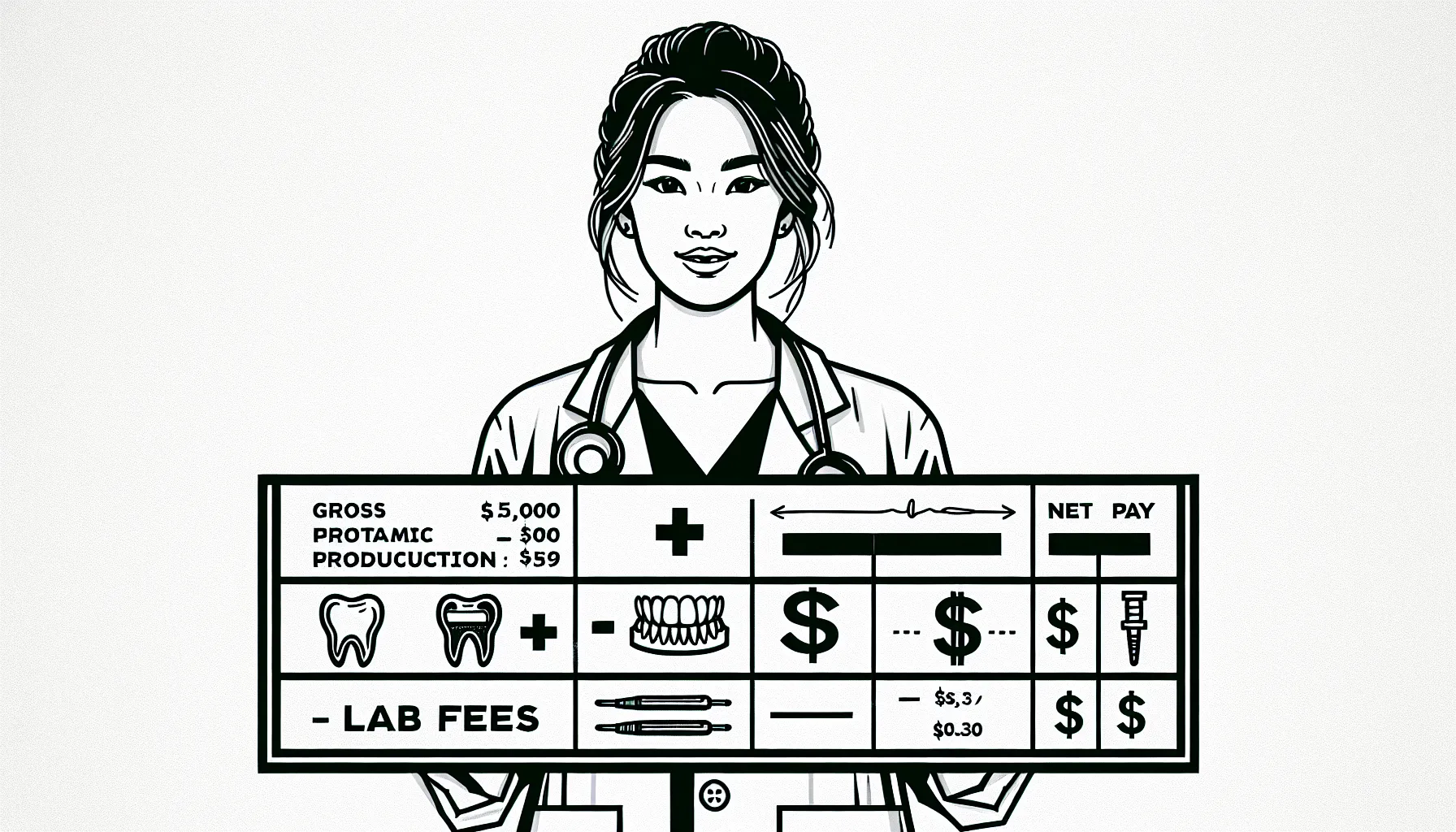
A laboratory deduction is generally an expense removed from an associate’s compensation calculation to account for an externally fabricated restoration, appliance, or component. Practices may use these adjustments to calculate pay from something closer to net revenue rather than gross production. The label alone does not establish the formula, however, and contracts sometimes use “lab fees” to capture expenses that extend beyond actual laboratory invoices.
The American Dental Association’s associate contracting guidance identifies laboratory and supply expenses as potential compensation deductions and emphasizes the importance of defining whether compensation is based on production, collections, or net profit. Those categories are not interchangeable. Each agreement needs an express definition of the compensation base, permitted adjustments, and calculation sequence.
Production, Collections, and the Order of Operations
Production commonly refers to the value assigned to services recorded by the practice, although the agreement may use gross, adjusted, or net production. Collections usually refer to money the practice receives, but the contract may exclude refunds, chargebacks, insurance adjustments, or amounts collected after a cutoff date. Net-profit arrangements may subtract lab expenses, overhead, or other delineated costs before calculating the associate’s share. The broader differences among these approaches are discussed in Chelle Law’s guide to dental compensation models.
Consider an associate who records $10,000 in qualifying production, incurs $2,000 in laboratory charges, and earns 35%. If the practice subtracts the lab expense first, the percentage applies to $8,000 and produces $2,800. A formula that first calculates 35% of $10,000 and then subtracts the full $2,000 produces only $1,500. Both formulas reference the same percentage and invoice, but their economic results differ substantially.
The agreement also needs to explain whether adjustments are applied per case, per procedure, or in a monthly aggregate. That timing can affect cash flow and make it difficult to match a deduction to the underlying treatment. A worked example in the contract or compensation policy can expose ambiguities that are easy to miss in a formula expressed only in words.
Guarantees, Draws, and Negative Balances
A daily rate, base salary, or temporary guarantee can stabilize income while an associate develops a patient schedule. The agreement may nevertheless characterize that payment as a recoverable draw or advance. If lab charges reduce credited production, the associate may take longer to exceed the guarantee and may accumulate a deficit that the practice carries into later pay periods.
Important questions include whether negative balances roll forward, when reconciliation occurs, and whether the practice can demand repayment after employment ends. The contract also may permit retroactive adjustments for refunds or remakes. These terms need to be read together because a guarantee offers limited protection if the employer can later recover it through an open-ended chargeback. A focused review of dental associate compensation can help place the guarantee and deduction language within the complete pay structure.
Which Expenses Count as Lab Fees?
Externally fabricated dental work can generate several separate charges. Common examples include crowns, bridges, pontics, dentures, removable partial dentures, custom abutments, implant bars, night guards, occlusal splints, models, shipping, rush service, and specialty components. A broad clause may also attempt to include impression materials, in-office milling expenses, implant supplies, or other practice costs that are not traditional third-party laboratory fees.
The agreement benefits from separating actual lab invoices from general supplies, staff costs, administrative expenses, insurance write-offs, and overhead. Without that distinction, a practice may expand the deduction category through an internal policy after the associate has accepted the compensation percentage. Definitions are especially important for high-cost implant and restorative cases in which components may be bundled, separately invoiced, or included in a global case price.
Contract analysis can also determine whether deductions are based on the practice’s actual cost, a preset schedule, an average percentage, or a marked-up amount. If the practice receives a discount, credit, refund, or warranty replacement, the agreement can clarify whether the associate receives the corresponding adjustment. Lab expenses should not be treated as a minor accounting issue when they materially change the effective compensation rate.
Remakes, Refunds, and Control Over Laboratory Decisions
Responsibility Depends on Cause and Control
A remake can result from clinical error, a defective material, laboratory workmanship, an administrative mistake, patient conduct, a failed component, or a practice warranty. Those circumstances do not present the same allocation-of-risk question. A clause that charges every remake to the treating dentist may impose financial responsibility without considering why the work failed or who controlled the relevant decision.
Control over laboratory selection is particularly important. The associate may choose the lab and materials, or those decisions may be made by an owner, office manager, or centralized DSO department. If the practice requires a particular vendor or pricing arrangement, the contract can address how that lack of control affects responsibility for cost overruns, defects, and warranty replacements. Dentists evaluating centralized operational rules may also benefit from Chelle Law’s DSO employment contract guide.
Refund provisions require the same precision. The agreement may reverse compensation when a patient receives a refund, even if the refund results from a business decision rather than a clinical finding. Useful language identifies who authorizes refunds, what records support an adjustment, whether the associate can respond, and how the practice treats money recovered from an insurer, manufacturer, or laboratory.
Malpractice insurance does not automatically determine who bears a lab charge, remake expense, or patient refund. Coverage depends on the policy, the asserted claim, and applicable conditions, while financial responsibility ordinarily depends on the contract and surrounding facts. The agreement’s allocation of remake costs therefore needs to be evaluated separately from its dental malpractice coverage terms.
Documentation and Reconciliation Protections
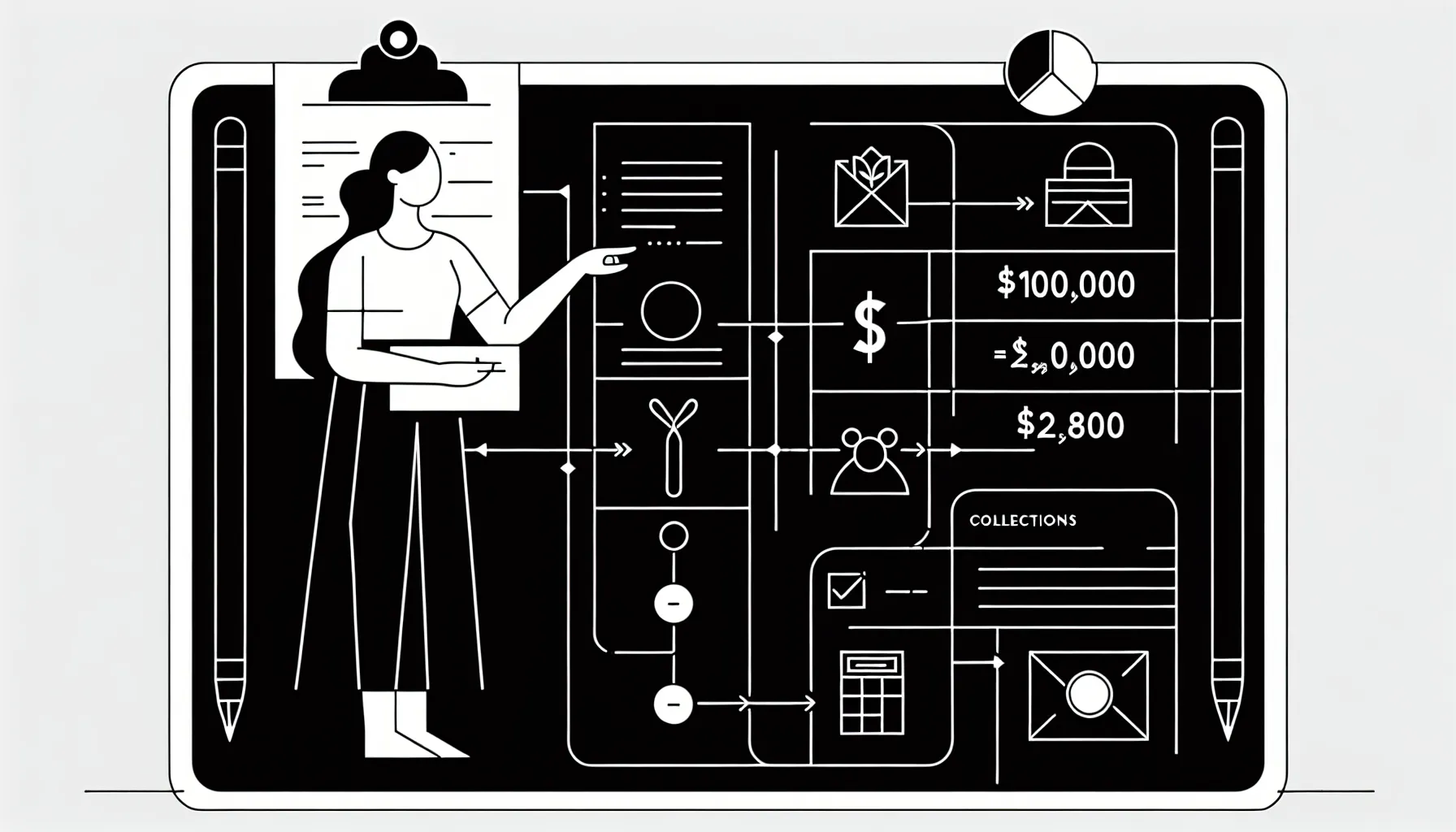
An associate cannot verify compensation using only a total deduction listed on a pay statement. Meaningful documentation may include the laboratory invoice, patient or case identifier, date of service, description of the fabricated item, credits or warranty adjustments, and the reconciliation report showing how the expense changed compensation. The contract can require those records within a defined period rather than making access dependent on informal office practices.
A reasonable review process also addresses how the dentist can question an unsupported charge. Relevant provisions include a deadline for reporting deductions, a period in which the associate can raise an accounting issue, and a finality date after which the practice cannot reopen an earlier pay period except for a defined reason. These protections reduce the risk of old expenses appearing months after the underlying procedure.
Compensation policies incorporated by reference deserve particular attention. A contract may provide only the percentage and place the operative calculation rules in a handbook, compensation plan, or electronic policy that the practice can revise. Contract review can identify whether the employer reserves unilateral authority to change the formula and whether advance notice or written consent is required. Similar issues arise when practices alter crediting or collection rules, as explained in the resource on dental associate productivity rules.
Wage Laws, Worker Classification, and Final Pay
A contractual deduction is not necessarily valid merely because the associate signed the agreement. For employees covered by the Fair Labor Standards Act, employer-benefit business expenses cannot reduce wages below the applicable minimum wage or required overtime compensation. The U.S. Department of Labor’s wage-deduction guidance explains the federal “free and clear” payment principle. State laws may impose additional rules concerning written authorization, itemization, deduction timing, wage-payment frequency, and final pay.
Federal law does not comprehensively decide every lab-fee dispute, and the result depends on employee status, legal coverage, the type of expense, and the timing and amount of the deduction. State wage and contract rules vary, so categorical statements about permissible deductions are unreliable without examining the governing jurisdiction and the associate’s specific arrangement.
Contract Labels Do Not Decide Worker Status
Calling a dentist an independent contractor does not conclusively establish that classification. Federal wage-law, federal tax, and state-law tests may examine different factors, including control, financial independence, the parties’ relationship, and the practical circumstances of the work. The Internal Revenue Service’s employee-versus-independent-contractor guidance likewise treats classification as fact-specific rather than controlled by the agreement’s label.
The distinction matters because wage-deduction protections, tax treatment, benefit eligibility, and expense allocation may differ. A dentist comparing the two structures can review Chelle Law’s guide to W-2 and 1099 dental associate arrangements. Compensation language and classification provisions need to be evaluated together rather than assuming that a percentage-based formula makes the dentist an independent contractor.
Departure creates another layer of risk. A practice may continue collecting accounts, receive delayed lab invoices, process refunds, or complete remakes after the dentist’s last day. The agreement can define a reconciliation cutoff, the treatment of later collections, required documentation, and whether any obligation survives termination. These provisions should be compared with the contract’s notice requirements and final-compensation terms.
Repayment obligations and restrictive covenants also need jurisdiction-specific review. A substantial post-employment balance can make departure economically difficult even when it is not labeled a noncompete. Federal and state treatment of restrictive covenants continues to develop, and there is no reliable substitute for reviewing the current rules that apply to the particular agreement.
Contract Terms That Can Limit Lab-Fee Exposure
Effective contract language begins with a defined formula rather than a general promise to pay a percentage. The agreement can identify the compensation base, list deductible expenses, state the order of operations, and explain how credits, refunds, and adjustments are handled. It can also distinguish ordinary lab work from remakes, warranty replacements, implant components, supplies, shipping, and practice overhead.
Depending on the procedures and compensation model, provisions that may warrant discussion include:
- Itemized invoices and reconciliation reports tied to identifiable cases
- A per-case allowance, cost-sharing formula, or cap on qualifying deductions
- Exclusions for laboratory defects, manufacturer warranties, and practice-required vendors
- A written standard for assigning responsibility for remakes and patient refunds
- A deadline for adjustments and a defined cutoff for post-termination reconciliation
- Advance notice and prospective application of compensation-policy changes
- A worked example illustrating production, collections, lab charges, and the associate’s percentage
No single protection fits every agreement. An associate who performs a high volume of restorative or implant work may face a different cost profile from a dentist whose practice is concentrated in examinations and direct restorative care. Historical information about typical monthly lab expenses, remake rates, and the practice’s compensation reports can help the dentist evaluate the offer’s likely economic result.
Attorney review is particularly useful when the formula is undefined, a policy can be changed unilaterally, negative balances survive termination, or the practice can deduct expenses without producing supporting records. Chelle Law’s dental associate contract review examines the lab-fee clause in the context of the entire agreement, including compensation, malpractice coverage, termination, repayment obligations, and restrictive covenants.
Frequently Asked Questions
Can a practice deduct every laboratory invoice from an associate’s compensation?
Not necessarily. The answer depends on the compensation formula, the deduction language, the dentist’s worker status, and applicable federal and state law. The agreement needs to identify qualifying expenses and explain how each deduction enters the calculation. A broad reference to customary costs may not establish a clear or legally permissible deduction process.
Does it matter whether the lab expense is subtracted before or after applying the percentage?
Yes. Subtracting lab expenses from production or collections before applying the associate’s percentage can produce a different result from calculating percentage compensation first and then charging the full expense. The contract can avoid uncertainty by stating the order of operations and including a numerical example.
Who pays when a crown, denture, or appliance must be remade?
Responsibility depends on the agreement and the underlying facts. Relevant considerations include clinical error, laboratory workmanship, material defects, administrative mistakes, patient conduct, warranty coverage, and who selected the laboratory. An automatic chargeback may fail to account for those distinctions.
What documentation can help an associate verify a lab deduction?
Useful records include itemized invoices, case identifiers, dates of service, descriptions of charged items, warranty credits, refunds, and a compensation report showing the calculation. The agreement can also provide a defined period for reviewing and disputing unsupported or inaccurate adjustments.
Can lab charges be reconciled after the dentist leaves the practice?
A contract may provide for post-employment reconciliation, but the provision must be evaluated with applicable wage and final-pay rules. Important terms include the cutoff date, covered cases, supporting documentation, treatment of later collections, dispute procedures, and any cap on post-termination liability.
Which lab-fee provisions may warrant clarification or revision?
Common issues include undefined expenses, unclear calculation sequences, unlimited remake liability, missing audit rights, retroactive policy changes, and deductions that continue indefinitely after termination. Depending on the agreement, possible revisions may include cost-sharing formulas, caps, warranty exclusions, adjustment deadlines, and itemized reporting requirements.
Review Lab Fee Terms Before They Affect Your Pay
Chelle Law can analyze your dental associate agreement, explain how laboratory expenses enter the compensation formula, and identify terms that may create unexpected financial exposure.
Contact Chelle LawExplore Dental Contract Guidance
Find contract-review services, practical dental resources, and state-focused information for evaluating an agreement.