
Dentists evaluating an associate, independent contractor, or ownership agreement in New Jersey must consider more than the offered salary or production percentage. The New Jersey State Board of Dentistry regulates dental licensure and professional practice under state statutes and Title 13, Chapter 30 of the New Jersey Administrative Code. Those requirements include supervision conditions for dental hygienists and registered dental assistants, as well as individual responsibilities related to prescribing, professional judgment, and Board cooperation. Contract review can determine whether clinical duties, staffing expectations, prescribing provisions, and reporting terms are consistent with those obligations. Agreements in markets such as Newark and Jersey City may also cover multiple offices or broad patient territories, making location assignments, travel expectations, compensation calculations, and restrictive covenants especially important. Chelle Law helps dentists evaluate these provisions, identify financial and professional risks, and understand terms that may warrant clarification or revision before signing.
Small differences in definitions, payment timing, notice requirements, malpractice coverage, or post-employment restrictions can materially affect a dentist’s earnings and future options. A thorough review considers not only what the contract promises, but also what the practice may deduct, change, suspend, or require after the relationship ends.
Key Contract Issues for New Jersey Dentists
- Compensation: Determine whether pay is based on production, adjusted production, or collections and how insurance adjustments, refunds, remakes, lab fees, and other deductions affect the calculation.
- Clinical responsibilities: Evaluate whether duties involving hygienists, registered dental assistants, prescribing, recordkeeping, and patient care preserve the dentist’s independent professional obligations.
- Restrictive covenants: Analyze the duration, geographic reach, covered activities, and triggering events based on the offices, patients, and communities the dentist actually serves.
- Malpractice coverage: Confirm whether coverage is occurrence or claims-made and allocate responsibility for premiums, deductibles, prior acts coverage, and tail insurance.
- Departure rights: Review without-cause notice, for-cause standards, cure rights, final compensation, repayment obligations, and duties that continue after separation.
- Ownership opportunities: Examine the valuation method, financial review rights, payment terms, governance rights, and exit provisions for any proposed partnership or buy-in.
This video explains the dental contract review process, including compensation structures, restrictive covenants, termination provisions, and malpractice coverage. Although the discussion is general, these issues commonly arise in New Jersey dental agreements and merit evaluation before signing.
What a New Jersey Dental Contract Review Covers
Work Setting, Locations, and Contract Type
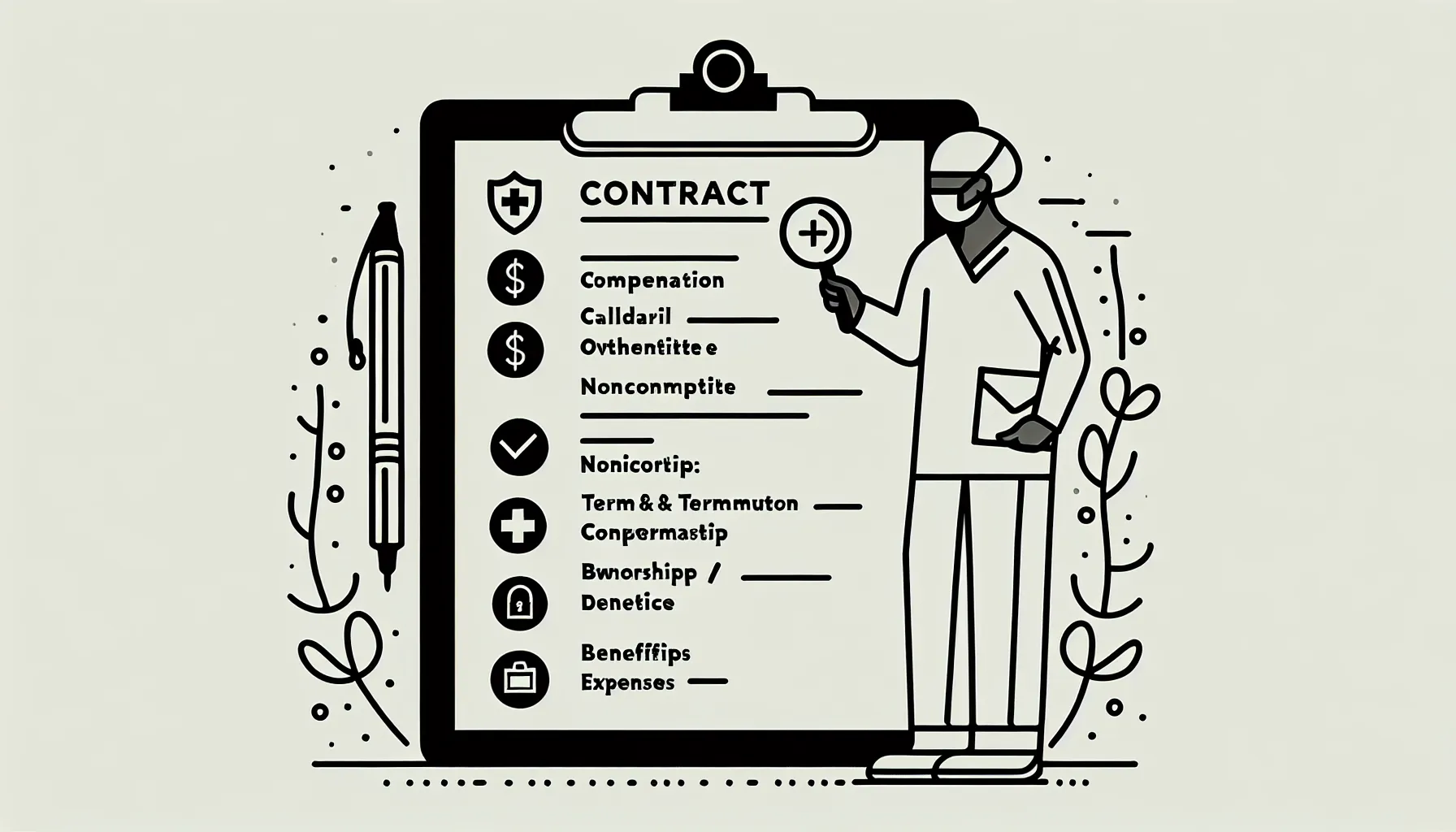
Contract language must be compared with the dentist’s expected day-to-day work. Relevant terms include assigned offices, workdays, clinical and administrative duties, production expectations, staffing support, billing procedures, benefits, emergency responsibilities, and the practice’s authority to change policies. If multiple locations are possible, review can identify how assignments are made, whether travel is required, and whether each office expands the geographic scope of a restrictive covenant.
The structure of the relationship also matters. An employment agreement and an independent contractor agreement may allocate taxes, benefits, expenses, insurance, scheduling authority, and administrative support differently. Chelle Law provides review services for both dentist employment contracts and dentist independent contractor agreements.
Immediate Financial and Professional Exposure
An initial review can identify provisions that create financial exposure before or shortly after the dentist starts. Important questions include whether the compensation formula can change through an office policy, whether a draw is recoverable, whether bonuses are discretionary, and whether signing or relocation assistance must be repaid after an early departure. Incorporated handbooks and policies also deserve attention because New Jersey law may treat employment manuals as contractually significant depending on their language and any clear, prominent disclaimer.
A comprehensive dental associate contract review evaluates compensation, duties, benefits, malpractice insurance, termination, and post-employment restrictions together rather than treating each provision in isolation. This approach can expose conflicts between the main agreement, compensation exhibits, benefit summaries, and policies incorporated by reference.
Dental Compensation, Deductions, and Bonus Terms
Production and Collections Pay Formulas
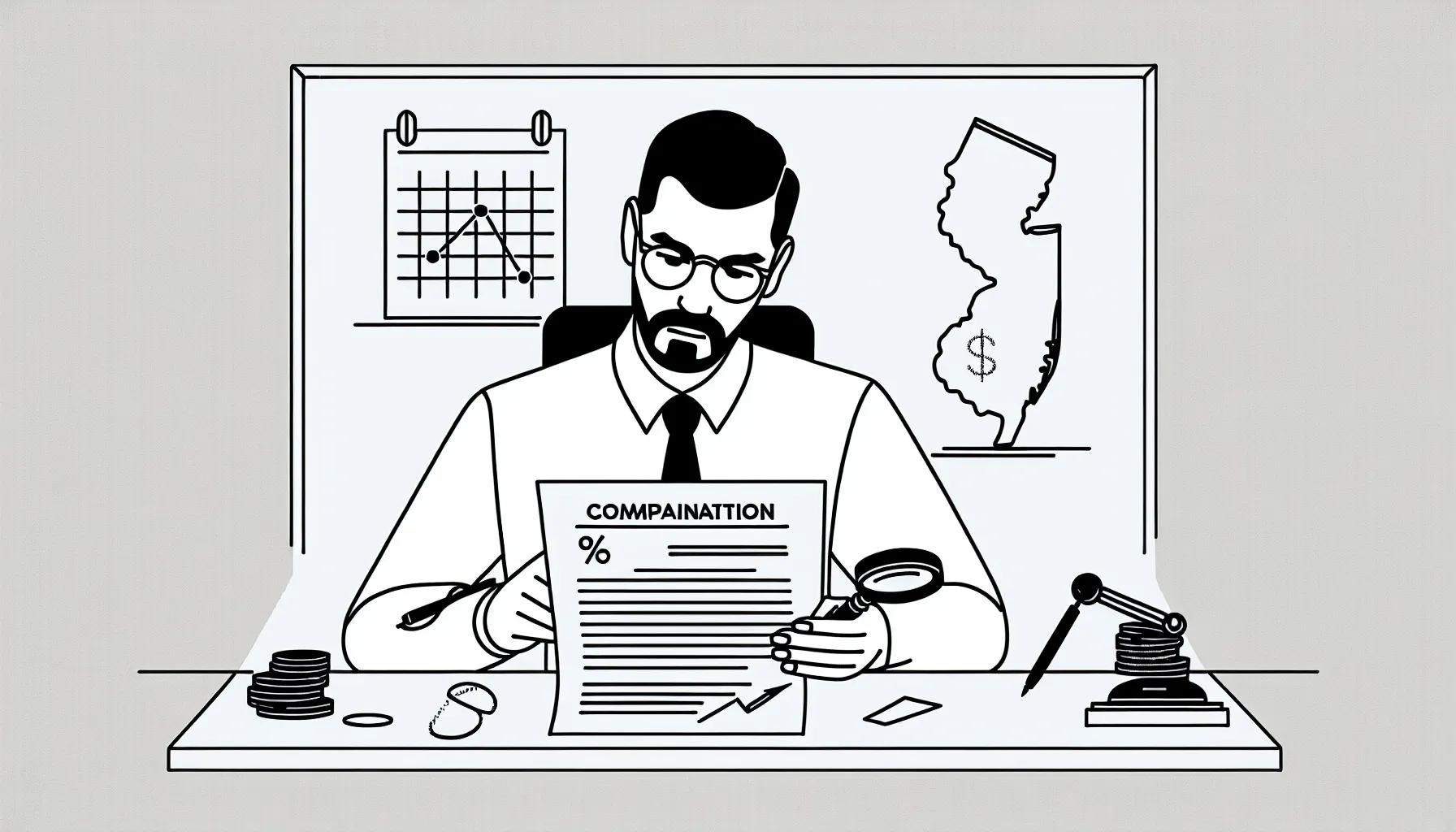
Dental agreements commonly calculate associate compensation as a percentage of production or collections. A production formula may use gross production, adjusted production, or another contract-specific definition. A collections formula generally depends on payment received by the practice, making billing performance, insurance delays, refunds, write-offs, and collection procedures particularly important. The stated percentage alone does not establish the economic value of the offer.
Review can determine when the dentist receives credit for services and how the formula treats denied claims, insurance adjustments, hygiene examinations, remakes, refunds, and treatment involving multiple providers. It can also clarify whether collections received after separation remain payable. Monthly statements need enough detail for the associate to verify the calculation, and the contract should be examined for language permitting unilateral changes through an unwritten policy. A focused dental compensation review can compare the written formula with the practice’s reporting and reconciliation process.
Guarantees, Draws, Bonuses, and Chargebacks
A guaranteed salary or daily minimum may provide stability while a dentist builds a schedule, but the agreement may limit the guarantee to a specific period or convert it into a draw against future earnings. A draw can operate as guaranteed pay, a recoverable advance, or a debt the practice expects the associate to repay. Review can identify which interpretation the contract supports and whether any deficit carries forward.
Bonus provisions are easier to evaluate when they use an objective formula, a defined measurement period, and a specific payment date. A discretionary bonus offers less predictability and may be difficult to verify. Signing, retention, and relocation incentives also require attention because repayment may be triggered by resignation, termination for cause, or departure before a stated date.
Deductions for lab costs, remakes, refunds, supplies, credit card charges, or other offsets can substantially reduce an apparently competitive percentage. The contract may also permit retroactive adjustments or chargebacks after compensation has been paid. The guide to dental lab fee deductions explains how these costs can affect an associate’s actual earnings.
Clinical Duties and New Jersey Professional Requirements
Supervision, Prescribing, and Professional Judgment
New Jersey rules distinguish between authorized services performed under general or direct supervision. Dental hygienists may perform specified services under the supervision conditions established by state rules, while registered dental assistants must perform authorized expanded functions under the direct supervision of a licensed dentist. Contract review can assess whether staffing provisions, patient volume expectations, and delegated responsibilities are consistent with those supervision requirements.
Dentists who prescribe must use compliant New Jersey Prescription Blanks and satisfy applicable controlled-dangerous-substance and prescription-monitoring obligations. A practice may provide administrative systems and policies, but contract language cannot transfer the dentist’s individual prescribing responsibility. The agreement also should not interfere with legally required reporting, cooperation with the New Jersey State Board of Dentistry, or independent clinical judgment.
Schedules, Staffing, Policies, and Assigned Offices
Schedule provisions can affect compensation, clinical workload, and the dentist’s ability to meet professional obligations. Analysis may cover required days and hours, evening or weekend work, emergency coverage, administrative time, continuing education, office closures, and authority to expand the schedule. If compensation depends on patient volume, the contract can also be reviewed for how staffing, operatory access, hygiene support, and schedule control affect the dentist’s opportunity to produce.
Broad policy language may allow a practice to change procedures, duties, locations, or productivity expectations after signing. Review can distinguish reasonable administrative flexibility from provisions that permit material economic or professional terms to change without the dentist’s consent. The agreement’s written terms, incorporated policies, and any disclaimer language should be read together.
Restrictive Covenants and Departure Rights
Noncompete and Non-Solicitation Scope
No profession-specific New Jersey statute or New Jersey State Board of Dentistry rule was identified that categorically prohibits or specially authorizes post-employment noncompetes for dentists. These provisions therefore require analysis under general New Jersey law, together with public-protection and professional-independence concerns. New Jersey courts generally examine whether a covenant protects a legitimate employer interest, avoids undue hardship, and does not injure the public. Reasonableness may depend on duration, geography, covered activities, affected patients or customers, and the facts of the relationship.
A dentist noncompete review can evaluate the restriction’s triggering events, remedies, and practical effect. A radius measured from every practice location may be substantially broader than one tied to the dentist’s primary office or the locations where the dentist actually worked. The language also may need to distinguish clinical practice from practice ownership, emergency treatment, telehealth, teaching, or work outside the employer’s service area.
Non-solicitation terms may address patients, employees, referral sources, or business relationships even when the dentist may practice nearby. Review can determine whether the clause distinguishes active solicitation from general advertising or a patient’s independent choice. During employment, New Jersey’s general duty-of-loyalty principles may independently restrict competition or solicitation, so the agreement should distinguish conduct during employment from lawful post-employment activity.
Termination, Cure Rights, and Final Compensation
A workable without-cause termination provision gives each party a defined path to end the relationship. Review can assess the notice period, whether the practice may remove the dentist from the schedule during notice, whether compensation and benefits continue, and whether the employer may shorten the notice period without paying the remaining compensation. The interaction between resignation, nonrenewal, repayment obligations, and restrictive covenants also matters.
For-cause termination language deserves separate analysis. Some events may support immediate termination, while performance concerns, policy disputes, or curable administrative issues may warrant notice and an opportunity to cure. Broad or subjective standards can affect final compensation, bonus eligibility, insurance, repayment obligations, and whether a restrictive covenant is triggered.
The contract may also address unpaid production, collections received after departure, patient transition, records access, return of property, and cooperation with later claims. Dentists considering a departure can review the dental associate contract termination guide before providing notice or making assumptions about final pay.
Malpractice Coverage and Ownership Opportunities
Occurrence, Claims-Made, and Tail Coverage
Occurrence coverage generally protects claims arising from treatment performed during the policy period, even if a claim is reported later, subject to the policy’s terms. Claims-made coverage generally depends on the policy being active when the claim is reported. When claims-made coverage ends, extended reporting coverage commonly called tail insurance may be necessary unless replacement coverage includes appropriate prior acts protection.
Contract review can identify the policy type, coverage limits, named insureds, premiums, deductibles, consent-to-settle terms, and responsibility for tail coverage. It can also evaluate whether the practice pays for tail after termination without cause, a practice sale, retirement, disability, or another stated event. A dedicated dental malpractice insurance review can flag differences between the employment agreement and the proposed policy arrangement.
Indemnification language also merits attention. A broad clause may attempt to make an associate responsible for billing decisions, staffing failures, business policies, or conduct outside the dentist’s control. Related provisions may determine who reports a claim, selects counsel, directs the defense, approves settlement, and provides policy information after separation.
Partnership, Buy-In, and Exit Terms
A promise of future ownership has limited value unless the essential terms are documented. Review can identify whether the agreement states when the dentist becomes eligible, how the practice will be valued, what financial information will be available, whether an independent appraisal is permitted, and how the purchase price will be paid. A reference to a future discussion or an agreement that does not yet exist may not provide a predictable ownership path.
Ownership documents may address voting, governance, profit distributions, management authority, information rights, accounts receivable, debt, equipment, real estate, capital contributions, tax allocations, and personal guarantees. If the transaction includes an earn-out, the performance metrics, accounting rules, reporting rights, and dispute process need to be sufficiently objective to permit verification.
Exit terms are as important as entry terms. Dentists need to understand how an ownership interest is valued and redeemed following resignation, disability, retirement, termination, death, or an owner dispute. Chelle Law’s guide to dental partnership and buy-in terms outlines the financial and governance issues that may arise before a dentist contributes capital or assumes additional liability.
Preparing for a Dental Contract Review
Before review, gather the complete agreement, offer letter, compensation exhibits, benefit summaries, malpractice information, policies incorporated by reference, and any written ownership proposal. Compare those documents with representations made by a recruiter or practice owner. Material terms involving pay, schedule, office locations, staffing, bonuses, malpractice coverage, or partnership are easier to evaluate and enforce when they appear in the signed documents rather than only in emails or conversations.
- Request a sample compensation statement showing production, collections, adjustments, deductions, and reconciliation entries.
- Identify every office where the dentist may be assigned and how those locations affect travel, scheduling, pay, and restrictive covenants.
- Obtain the malpractice policy type and a written explanation of tail or prior acts coverage.
- List all repayment obligations involving draws, bonuses, relocation assistance, continuing education, or other expenses.
- Collect applicable handbooks and policies governing compensation, leave, productivity, discipline, and professional conduct.
- Ask that proposed partnership terms include a timeline, valuation process, financial access, governance rights, and exit mechanics.
An attorney-led review connects the agreement’s language to its practical financial and professional consequences. Chelle Law can prioritize significant risks, explain how related provisions interact, and identify focused terms the dentist may wish to clarify or request be revised before signing.
Speak With a New Jersey Dental Contract Lawyer Before You Sign
Chelle Law can review your agreement, identify compensation and professional risks, explain restrictive covenants and termination terms, and flag provisions that may warrant clarification or revision.
Request a Dental Contract ReviewExplore Dental Contract Guidance
Review attorney services, practical dental contract resources, and state-focused guidance.