
Non-compete clauses in nurse practitioner (NP) agreements increasingly shape career options, compensation, and practice choices. As attorneys who regularly review NP employment and independent contractor agreements, we see employer-drafted restrictive covenants that can have significant, and sometimes unexpected, consequences for an NP’s income and mobility. This article explains current enforcement trends, the legal factors courts examine, the practical consequences of enforcement, and prudent, lawyer-led steps to reduce risk. Our focus is to clarify how non-competes operate in real-world NP contracts and why a line-by-line attorney review is a risk-management decision rather than a formality.
Key Takeaways
- NP non-compete clauses remain a material career risk for nurse practitioners and should trigger a line-by-line attorney review before signing.
- Courts balance employer protectable interests against patient access, so reasonableness of time, geography, and scope determines enforceability in NP non-compete disputes.
- Recent state statutes, health-care rulings, telehealth expansion, and scope-of-practice changes have narrowed enforcement in some jurisdictions and must be evaluated case-by-case.
- Negotiate narrower restrictions, clear carve-outs for telehealth/hospital work, or alternatives like non-solicitation, garden leave, or buyouts to reduce litigation and income disruption.
- If enforcement is threatened, preserve documentation, avoid unilateral actions, and seek counsel immediately to assess injunction risk and settlement versus defense options.
Where Non-Competes For Nurse Practitioners Stand Today

Non-compete provisions remain common in NP employment and contractor agreements, but enforcement patterns are changing. Employers favor these clauses to protect patient panels, referral networks, and proprietary protocols. At the same time, legislatures and courts across the country have tightened scrutiny of non-competes generally, and some jurisdictions specifically limit or refuse to enforce non-competes against healthcare professionals.
From a practical perspective, most NP non-competes we review include: a duration (commonly six to twenty-four months), a geographic restriction (radius or specific counties), and a scope tied to practice type or services performed. While drafted broadly, these clauses often rely on factual showings, such as access to confidential information or the risk of patient solicitation, to justify enforcement. That factual inquiry means enforceability can turn on case-specific details: where the NP practiced, how patients were assigned, and whether the employer can demonstrate actual risk of unfair competition.
Key takeaway: Non-competes remain a live risk for many NPs. Even where enforcement is uncertain, the mere existence of a clause can limit job options and trigger costly litigation or settlement demands. We advise treating restrictive covenants as a material career risk that merits attorney review before signing.
Recent Legislative And Judicial Trends Impacting Enforcement
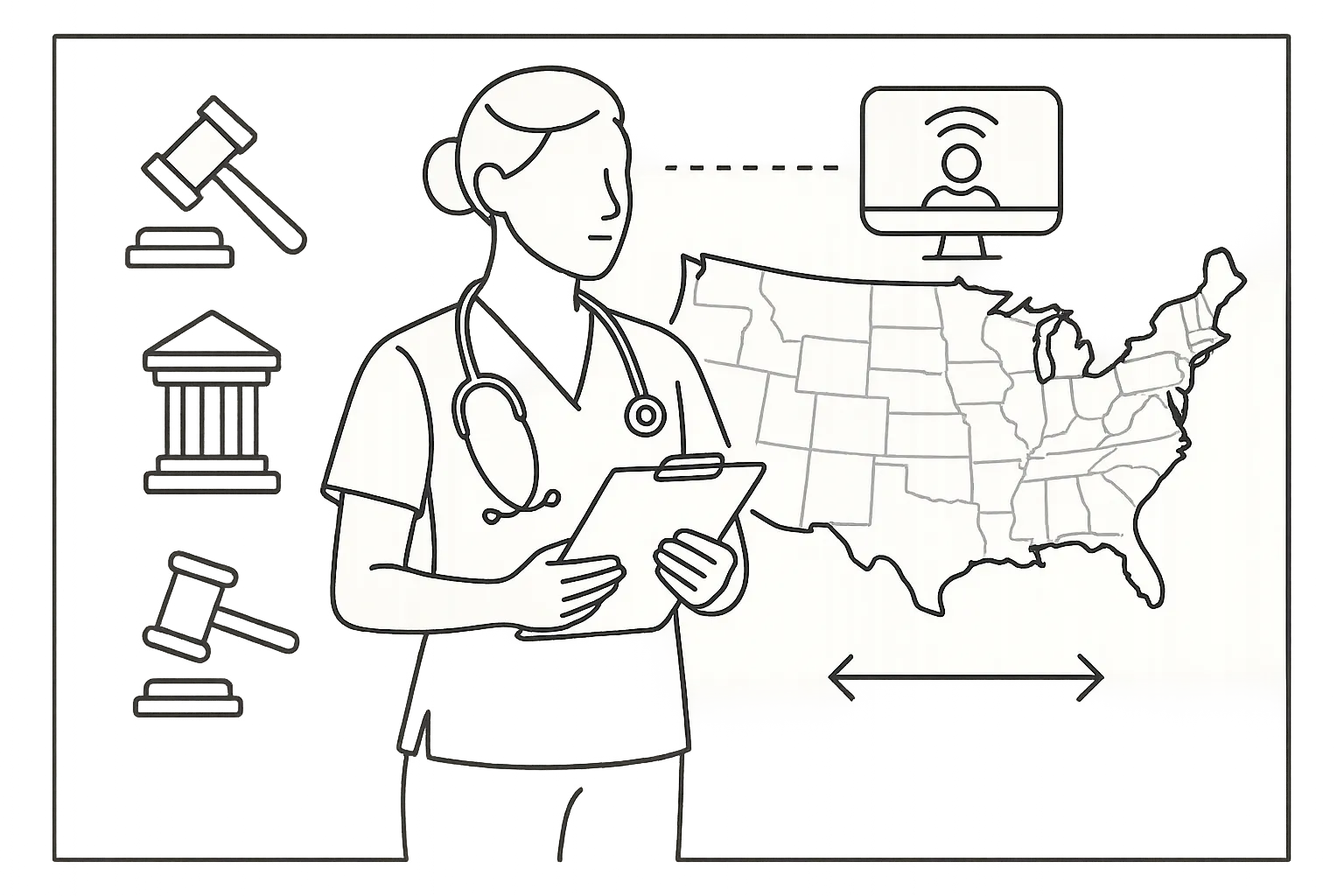
The legal landscape for restrictive covenants has evolved notably in recent years. Two broad trends bear emphasis: statutory reforms limiting non-competes in some states and court decisions that refine how non-competes apply in health care settings.
States Limiting Or Banning Non-Competes
Several states have enacted statutes that either prohibit most non-competes for lower-wage workers or restrict non-competes against certain licensed professionals. Some jurisdictions have tightened the reasonableness standard or required specific notice and consideration elements for post-employment restraints to be binding. Although statutes vary, the effect is that geographic bans or heightened procedural requirements make enforcement more difficult in those states. We review each contract against the relevant state law because these statutory frameworks materially change enforcement risk.
High-Profile Court Decisions Affecting Health Care Non-Competes
Courts have increasingly considered public-policy concerns when evaluating health care non-competes, patient access to care and continuity often weigh against broad enforcement. Recent appellate decisions (across multiple jurisdictions) have invalidated overly broad restraints or required narrow tailoring where employers sought injunctive relief that would limit patients’ access to a practitioner type. That said, courts still grant injunctions when employers show legitimate protectable interests, patient lists, confidential business methods, or substantial investment in recruiting the NP.
Telehealth, Scope Of Practice Changes, And Enforcement Implications
Telehealth and expanded NP scope-of-practice laws complicate enforcement. Telehealth can extend the effective geographic reach of practice, making traditional radius-based restrictions harder to justify. Conversely, where an employer demonstrates that an NP’s telehealth practice would directly compete for a defined patient base or corporate client, courts have considered telehealth activity when assessing harm. Changes in state scope-of-practice rules, granting NPs greater autonomy, also affect the calculus: broader lawful practice may increase the employer’s interest in restrictive covenants, but it can also influence public-policy considerations against enforcement. We evaluate these developments case-by-case when advising clients.
Key Factors Courts Use To Decide Enforceability In NP Cases
Courts apply multi-factor reasonableness tests when assessing non-compete enforceability. The following components recur in NP matters and should be focal points during contract review.
Reasonableness Of Time, Geography, And Scope
Courts examine whether the duration, territorial limits, and activities restricted are reasonable to protect a legitimate employer interest. A six-month, 15-mile restriction limited to the employer’s specialty is more defensible than a two-year, statewide ban covering broad clinical activities. The contract’s actual scope, what the NP is prohibited from doing, often determines whether a court will enforce the restraint.
Patient Relationships, Access To Records, And Solicitation Claims
Employers commonly assert that former NPs will solicit patients or exploit confidential patient lists. Enforceability increases where the NP had exclusive, longitudinal relationships with a defined patient panel or access to databases and direct-marketing lists. Courts also distinguish between passive competition (setting up nearby practice) and active solicitation: allegations of targeted outreach can be particularly persuasive to a judge seeking to prevent customer theft.
Consideration, Role Classification, And Supervision/Delegation
Enforceability frequently depends on whether the NP received adequate consideration for the promise not to compete, this can be initial employment, a promotion, or a post-hire benefit (such as relocation or loan repayment). Role classification, employee versus independent contractor, and the degree of physician supervision or delegation can also be relevant. An NP whose role was more autonomous and who generated revenue independently may be evaluated differently than one who worked under tight supervision, though outcomes vary by jurisdiction.
Practical Consequences Of Enforcement For Nurse Practitioners
Enforced non-competes have real, immediate consequences for an NP’s career and finances. Understanding the potential remedies and their impact is essential when assessing contractual risk.
Career Mobility, Income Impact, And Licensing Considerations
A court-issued injunction can prevent an NP from practicing in a defined area or setting for the duration of the restraint, often forcing career detours: relocation, different specialties, or nonclinical work. This can materially reduce income, especially for NPs compensated via productivity, RVUs, or collections, because a change in location or employer model may reduce billable opportunities. Licensing and credentialing timelines add friction: an injunction may complicate hospital privileges or telehealth arrangements with out-of-area patients.
Common Remedies: Injunctions, Damages, And Emergency Orders
Employers commonly seek preliminary injunctive relief to stop immediate competition. Courts may also award damages for proven lost profits or unjust enrichment. Emergency or temporary restraining orders can be obtained within days, imposing immediate limitations before a full hearing. These remedies mean that contractual risk is both legal and operational: litigation can disrupt income streams and require rapid counsel engagement.
How To Reduce Risk When Reviewing Or Signing NP Contracts
Risk reduction is predominantly a drafting and review exercise. While we do not provide negotiation scripts here, we identify contract terms and drafting approaches that materially change exposure and should prompt attorney-led revisions.
Negotiation Strategies And Redlines Worth Insisting On
We focus on framing: limiting temporal and geographic scope, narrowing the restricted activities to those tied to legitimate business interests, and defining triggering events (for-cause termination versus resignation) so restraints do not activate unnecessarily. Clarifying what constitutes confidential information, carving out general clinical skills, and ensuring reasonable consideration are practical redlines that reduce litigation risk and economic harm.
Alternative Contract Terms: Non-Solicitation, Garden Leave, Buyouts
Employers often accept alternatives to outright non-competes. Non-solicitation provisions that prohibit targeted outreach to the employer’s patients or staff are typically more enforceable and less disruptive to career mobility. Garden-leave clauses (paying the NP during the restricted period) and buyout provisions, where the employer pays a fixed sum to release the NP, convert economic risk into a calculable cost. We review these alternatives to determine whether they adequately protect the NP’s interests and provide clear triggers and calculation methods.
Drafting Safe Carve-Outs For Telehealth And Hospital/Practice Settings
Carve-outs that preserve the NP’s ability to provide telehealth to existing out-of-area patients or to accept hospitalist shifts can materially reduce career disruption. Similarly, explicit exceptions for emergency care or inpatient consult work protect licensing obligations and patient safety. We draft and evaluate carve-outs to ensure they are operationally meaningful, not illusory.
Steps To Take If A Non-Compete Is Threatened Or Enforced
When an employer threatens enforcement, prompt, evidence-based action preserves defenses and mitigates risk. Our approach balances factual preservation with early legal assessment.
Immediate Practical Steps And Documentation To Preserve Defenses
Document dates of termination or resignation, the precise language of the restrictive covenant, and the factual basis for alleged solicitation. Preserve communications (texts, emails) relevant to patient relationships and referrals. Avoid unilateral actions that escalate the dispute, seek counsel quickly so we can evaluate whether injunctive proceedings are likely and prepare responsive filings. Time is critical: emergency motions are time-sensitive and require rapid evidence collection.
Common Legal Defenses And What To Expect In Litigation Or Settlement
Typical defenses include overbreadth (unreasonable time or geography), lack of protectable interest, inadequate consideration, and public-policy arguments tied to patient access. Litigation timelines vary: preliminary injunction hearings can occur within weeks: full trials may take months. Many matters resolve through tailored settlements, carve-outs, limited durations, or financial compromises, when litigation risk and expense are balanced. We evaluate whether defense or settlement best preserves the NP’s career and finances.
Cost, Timing, And How Counsel Evaluates Risk Vs. Settlement Options
Counsel assesses the likelihood of injunctive relief, the employer’s evidentiary strength, potential damages exposure, and the NP’s financial tolerance for litigation. Costs of defense and the potential for immediate income disruption often inform early settlement discussions. We provide candid assessments of risk and likely timelines so NPs can make informed decisions about litigation, temporary work arrangements, or settlement buyouts.
Conclusion
Non-compete enforcement trends increasingly reflect a balance between protecting employer investments and preserving patient access and practitioner mobility. For nurse practitioners, the presence of a restrictive covenant in an employment agreement is a consequential risk that can affect income, licensing issues, and long-term career options, particularly where compensation is productivity- or RVU-based. We consistently find employer-favorable drafting in many NP contracts: a line-by-line attorney review helps identify income impacts, compliance risks (including supervision and malpractice tail obligations), and long-term limitations on practice.
We encourage NPs to treat contract review as proactive risk management. A focused legal review clarifies enforceability risk, suggests defensible alternative terms, and prepares a plan should enforcement be threatened. At Chelle Law we provide attorney-led contract review tailored to the NP context, focusing on compensation mechanics, malpractice insurance issues, supervision clauses, and restrictive covenants, so that you understand the practical consequences before you sign.