
Notice periods in nurse practitioner employment contracts are rarely neutral bookkeeping. They govern when pay stops, when post‑employment restrictions take effect, whether bonuses or relocation repayments can be triggered, and whether malpractice coverage gaps will appear. For NPs, especially those early in practice or moving between systems, notice provisions can produce unexpected financial exposure, professional mobility limits, and increased liability risk. We explain how notice periods work, common traps that increase employer leverage, the interaction with termination types and malpractice coverage, and practical steps we recommend before you sign or after you receive a notice. Our goal is to frame notice language as a risk‑management issue that justifies attorney‑led review rather than a routine formality.
Key Takeaways
- Notice period language can determine when pay stops, when post‑employment restrictions begin, and who pays for tail malpractice coverage, so treat notice periods as a primary risk area in NP contracts.
- Ambiguous triggers, automatic extensions, garden leave, and clawback clauses are common NP notice period traps that can accelerate forfeitures or extend restrictive covenants without clear endpoints.
- Review how the contract defines for‑cause, without‑cause, and constructive termination because those definitions often change notice obligations and can convert resignation into costly repayment or coverage gaps.
- Negotiate for clear start/end notice triggers, mutual notice lengths, caps on garden leave, and limits on employer deductions to protect earned compensation and professional mobility.
- Seek prompt attorney review whenever notice periods affect bonuses, relocation/repayment clauses, restrictive covenants, or malpractice tail obligations to quantify exposure and preserve remedies.
Why Notice Periods Matter For Nurse Practitioners
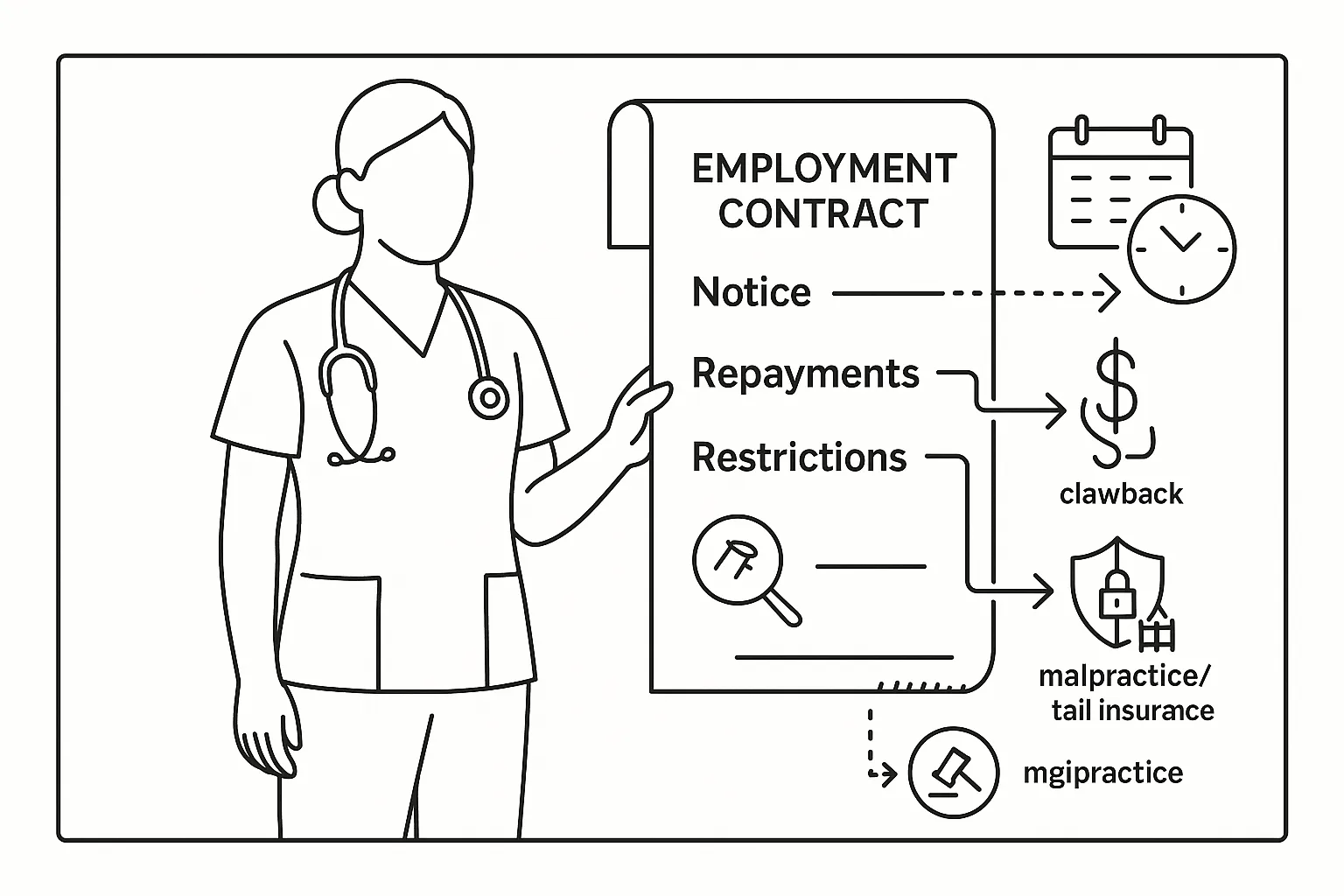
Notice periods determine more than when you stop seeing patients. They can:
- Control the timing of compensation reconciliation (productions, RVUs, or collections) and deductions such as negative accruals or chargebacks.
- Trigger post‑employment restrictions (noncompetes, non‑solicit, confidentiality) that start at resignation, termination, or end of notice.
- Affect malpractice coverage continuity, claims‑made policies and tail insurance obligations often hinge on when employment actually ends.
- Create repayment obligations for signing bonuses, relocation assistance, or loan repayment if notice requirements are not met.
For nurse practitioners, a notice clause that appears neutral can, in practice, accelerate clawbacks, extend restrictive covenants, or permit unilateral employer actions such as automatic contract renewal. Because employment agreements commonly favor employers, a careful, line‑by‑line attorney review reveals how notice language interacts with compensation mechanics, supervision requirements, and termination definitions to affect income and licensure risk. Examples are not hypothetical: we regularly see NPs lose collected bonuses or face tail insurance bills because of ambiguous notice timing or tied‑in repayment clauses.
Common Notice Period Traps To Watch For
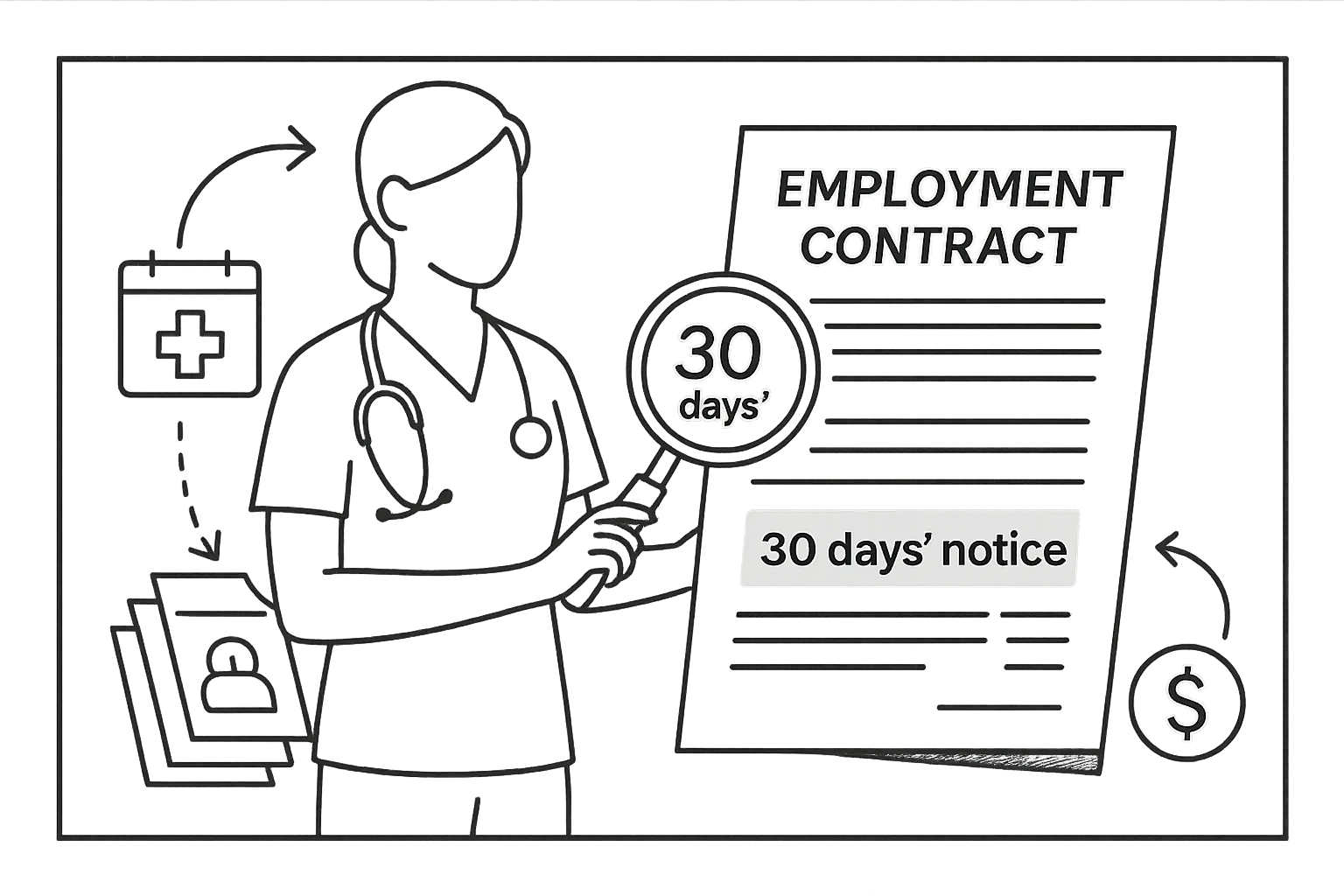
Ambiguous or overbroad notice provisions are a frequent source of adverse outcomes. The following traps recur in NP contracts and materially affect financial and professional exposure.
Ambiguous Timing And Trigger Events
A clause that requires “30 days’ notice” without defining whether notice must accompany resignation, employer termination, or mutual agreement invites disputes. Does the notice period begin on a resignation date mailed to HR, on an employer’s delivery of written termination, or on a later effective date? Ambiguity can allow employers to claim a later or earlier trigger to fit their financial reconciliation needs, such as accelerating bonus forfeiture or delaying final pay. Precise trigger definitions reduce risk of unilateral employer interpretation.
Automatic Extensions And Rollovers
Contracts sometimes include language that automatically extends the notice period if certain events occur (e.g., pending patient care obligations, unfinished productivity reconciliation, or ongoing credentialing). Automatic rollovers can indefinitely suspend final compensation or extend restrictive covenant start dates. For example, an “open case” or “patient transition” exception without a firm endpoint effectively gives the employer discretion to prolong employment obligations and delay compensation.
Garden Leave, Nonclinical Duties, And Availability Requirements
Garden leave provisions can require an NP to remain on payroll but limit clinical practice, restrict outside work, and impose availability obligations for transition. These clauses can be framed as protective for patient care but functionally serve to suppress outside income while maintaining employer control. Availability requirements that demand phone‑on or telehealth shifts, mandatory training, or administrative tasks during notice can also delay the end of supervision relationships and extend malpractice exposure windows.
Forfeiture Of Bonuses, Commission, Or Accrued Benefits During Notice
Pay attention to clauses that condition bonus, commission, or incentive payments on having worked through a notice period, or that permit repayment (clawback) if you leave before reconciliation. Productivity formulas, collections‑based pay, and RVU models commonly include reconciliation periods: tying payout to a continuous employment requirement can cause substantial forfeiture if notice is shorter or contested. Negative accrual language that lets the employer offset debts (like relocation or sign‑on repayment) against final wages or bonuses is another frequent trap.
Conflicting Notice Obligations Between Employer And NP
Some agreements impose different notice timelines for employer‑initiated termination and NP resignation (for example, employer must give 60 days for without‑cause termination while NP must give 90 days to resign). Asymmetry can disadvantage the NP, particularly when combined with repayment provisions or post‑termination restrictions that are triggered by resignation but not by employer termination.
How Notice Periods Interact With Termination For Cause, Without Cause, And Constructive Termination
Termination definitions mediate risk during notice periods. We regularly see three problematic interactions:
- For‑cause termination with narrow, employer‑friendly definitions may permit immediate termination without notice and deny severance or earned compensation. Conversely, broad definitions of for‑cause that include vague performance metrics let employers avoid notice obligations.
- Without‑cause termination often carries a contractual notice obligation and sometimes severance. But, employers may characterize an action as for‑cause to avoid pay obligations during notice: ambiguous “for‑cause” language increases this risk.
- Constructive termination claims arise when employer conduct effectively forces an NP to resign (e.g., sudden removal of clinical privileges, pay cuts, or unworkable supervision). Notice provisions rarely anticipate constructive termination: an NP who resigns under duress may trigger repayment clauses or forfeiture unless the agreement or state law recognizes constructive discharge.
Understanding how the contract defines these termination types, what triggers notice obligations, and which remedies (or forfeitures) apply under each scenario is essential to assessing exposure.
Key Contract Clauses That Amplify Notice Risk
Certain clauses, when combined with notice language, amplify downside risk. We analyze these interactions closely during contract review.
Noncompete, NonSolicit, And PostTermination Restrictions Tied To Notice
Restrictive covenants commonly specify when post‑termination restrictions begin, at resignation, upon delivery of notice, or at the end of the notice period. If restrictions begin on resignation or upon notice rather than on the actual termination date, the enforceable restrictive period may effectively be longer. For example, a 12‑month noncompete starting at notice can extend the restriction by the length of the notice period plus to the stated duration. Because enforceability varies by state, the precise trigger matters for mobility planning.
Repayment, Clawback, And Recruitment/Relocation Reimbursement Provisions
Signing bonuses, relocation assistance, and loan repayment often carry pro rata repayment terms if an NP leaves before a specified service period. Tying repayment triggers to notice (for instance, requiring repayment if an NP fails to provide a full 12‑week notice) increases financial exposure. Also, chargeback language that permits employers to deduct unpaid obligations from final wages or holdbacks of bonus pay is another way employers shift recovery risk onto the NP.
Malpractice Coverage, Tail Insurance, And Notice Timing
Malpractice coverage under claims‑made policies ends when employment ends unless tail insurance (extended reporting period coverage) is purchased. Contracts may require the NP to notify the employer within specific timeframes or may tie employer responsibility for tail premiums to whether termination was for cause or without cause. If the notice period is extended or unclear, there can be gaps between the last date of coverage and the start of tail coverage, or disputes over who bears tail costs. We have seen tail exposure generate tens of thousands of dollars in bills when employer obligations were ambiguous or tied to a termination classification.
Practical Negotiation Strategies And Preferred Language
Although we avoid providing clause‑by‑clause bargaining scripts here, we describe preferred language characteristics and risk‑reducing approaches that reduce notice exposure and clarify obligations.
Defining Clear Start/End Dates And Notice Triggers
Preferred contract language specifies whether notice is tied to resignation delivery, employer delivery of termination, or an effective termination date, and clarifies acceptable delivery methods (email, certified mail, in‑person). Clear examples reduce disputes about when pay and restrictions start or stop.
Limiting Employer Remedies And Preserving Earned Compensation
Language that limits employer remedies to reasonable and documented losses, rather than automatic forfeiture, helps protect earned compensation. For example, distinguishing between earned incentive compensation and discretionary bonuses narrows employer ability to withhold pay during contested notice periods. Explicitly addressing negative accrual treatment and prohibiting unilateral deductions from final pay are other protective features.
Shortening Or Capping Notice Periods And Adding Mutuality
Mutual notice periods (same duration for employer and NP) and caps on extensions or garden‑leave obligations reduce asymmetric leverage. Contract language that limits garden leave to a defined number of days, or that requires employer to continue full benefits through the notice period, narrows downside exposure. Mutuality in post‑termination restrictions, tying noncompetes to employer compensation obligations (e.g., noncompete duration limited to months employer paid base salary), is another structural protection.
Practical Steps Before Signing And If You Receive A Notice
Notice periods are best evaluated before signing, but clear steps exist if you receive a notice.
Document Review, Timeline Creation, And Financial Planning
Before signing, we create a timeline that maps trigger events (resignation delivery, effective termination, benefit end dates), compensation reconciliation periods, repayment deadlines, and restrictive covenant start and end dates. If you receive a notice, reconstruct that timeline immediately and identify gaps (e.g., when malpractice coverage stops, when final collections are reconciled). Financial planning should include potential clawbacks, relocation repayment, and lost incentive income scenarios so you can quantify immediate exposure.
Communication Best Practices During A Notice Period
Keep communications documented and professional. Record the date and method of any resignation or employer termination, preserve payroll stubs and bonus statements, and obtain written confirmation of termination classifications (for cause/without cause). Avoid unilateral actions that could be read as abandonment of notice obligations (for example, ceasing administrative duties if contract requires transition assistance). These measures preserve factual records should litigation or negotiation become necessary.
When To Seek Legal Review Or Representation
We recommend attorney review whenever notice periods are tied to significant compensation (signing bonuses, relocation, incentive reconciliation), restrictive covenants, or malpractice tail obligations. Specific triggers for expedited review include:
- Asymmetric notice obligations or differing employer/NP timelines.
- Clawback or automatic deduction language tied to resignation or short notice.
- Garden leave, extended availability duties, or vague patient transition exceptions.
- Malpractice coverage tied to termination classification or unclear tail payment obligations.
An attorney‑led review evaluates how notice clauses interact with compensation mechanics (base salary, productivity, collections, RVUs), ensures definitions are precise, and quantifies likely exposure under typical termination scenarios. If you receive a contested notice or face classification as for‑cause, prompt representation protects earned compensation and helps address coverage or repayment disputes.
Conclusion
Notice periods are not administrative trivialities: they are leverage points in NP employment agreements that affect pay, mobility, and liability exposure. Because employer‑favorable drafting is commonplace, a measured, attorney‑led contract review converts notice language from a hidden risk into a documented risk profile with actionable options. At Chelle Law we focus on clarifying notice triggers, tracing compensation and coverage consequences, and identifying contractual mechanics that can produce surprise financial obligations. Before you sign, or immediately after you receive a notice, reach out for a targeted review so you understand the real cost and career impact of the notice language in your agreement.