
A nurse practitioner productivity formula can determine far more than whether an incentive bonus is paid. Employers may use work relative value units, collections, patient encounters, quality measures, or a combination of metrics to calculate compensation and evaluate performance. The financial result depends not only on the stated benchmark, but also on definitions, billing attribution, reporting periods, operational support, and the employer’s ability to revise or reconcile the methodology.
These provisions can expose an NP to income volatility, negative accrual, repayment demands, and disputes over earned compensation. They may also create clinical pressure if the target assumes patient volume, staffing, scheduling capacity, or billing credit that the NP cannot control. Telehealth services, team-based care, credentialing delays, payer recoupments, and services billed under another practitioner’s NPI can further separate the NP’s work from the production ultimately credited under the contract.
A careful review examines the productivity clause as part of the entire employment or independent contractor agreement. Chelle Law evaluates how the formula interacts with base salary, bonus timing, documentation expectations, malpractice coverage, termination, restrictive covenants, and post-employment reconciliation. The objective is to identify unclear assumptions and financial exposure before the compensation plan becomes difficult to challenge.
Key Takeaways
- The productivity metric, source data, measurement period, and attribution rules can materially change an NP’s compensation.
- RVU formulas need to identify the RVU source, version, effective date, conversion factor, and treatment of annual methodology changes.
- Collections, team-based care, telehealth, and incident-to billing can shift risks that the NP does not directly control.
- Negative accrual, clawbacks, and final reconciliation terms may reduce future pay or create alleged repayment obligations.
- Itemized reporting, audit access, operational exceptions, and clear termination rules make the earning opportunity easier to evaluate.
Why the Productivity Formula Matters More Than the Headline Rate
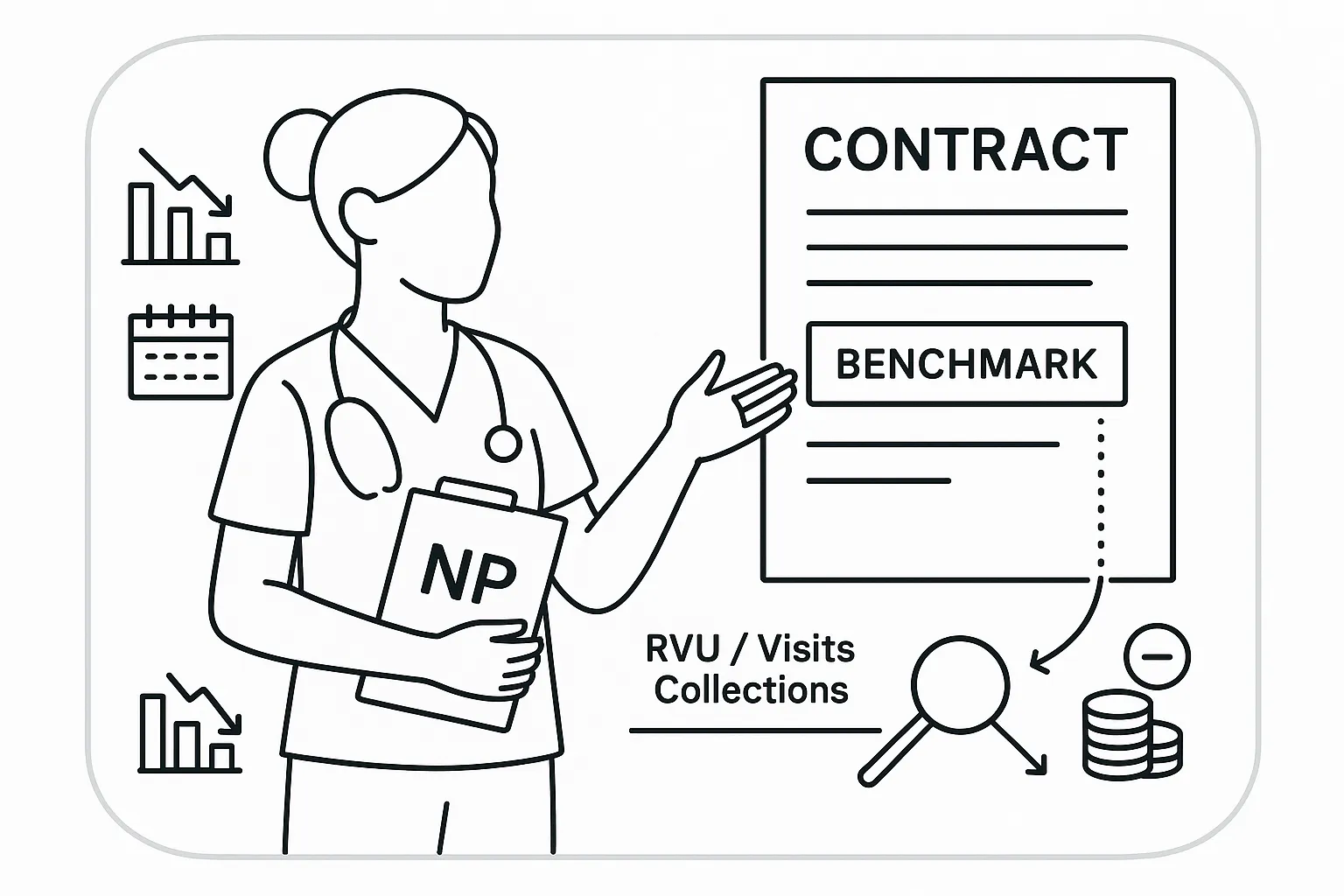
A compensation proposal may advertise a dollar amount per RVU, a percentage of collections, or a bonus for exceeding a visit target. That number cannot be evaluated in isolation. The agreement must also establish when the threshold begins, which services count, how credits and deductions are assigned, when reports become final, and whether the employer can change the plan during the contract term.
Productivity may affect base pay as well as incentive compensation. Some arrangements use a guaranteed salary followed by a reconciliation against production, while others permit deficits to carry into future periods. The benchmark may also influence renewal, schedule changes, corrective action, or termination. Comparing the clause with the broader NP compensation model helps determine whether the stated earning opportunity is supported by the actual formula.
The parties also need to distinguish a performance target from a repayment obligation. A missed benchmark might merely eliminate a bonus, reduce a later payment, or result in an employer claim that prior compensation must be returned. Those outcomes are financially different. Their enforceability and wage-payment consequences may also vary based on state law, the contract language, and whether the NP is classified as an employee or independent contractor.
Defining the Metric and the Data Behind It
RVU Formulas Need a Version, Date, and Conversion Method
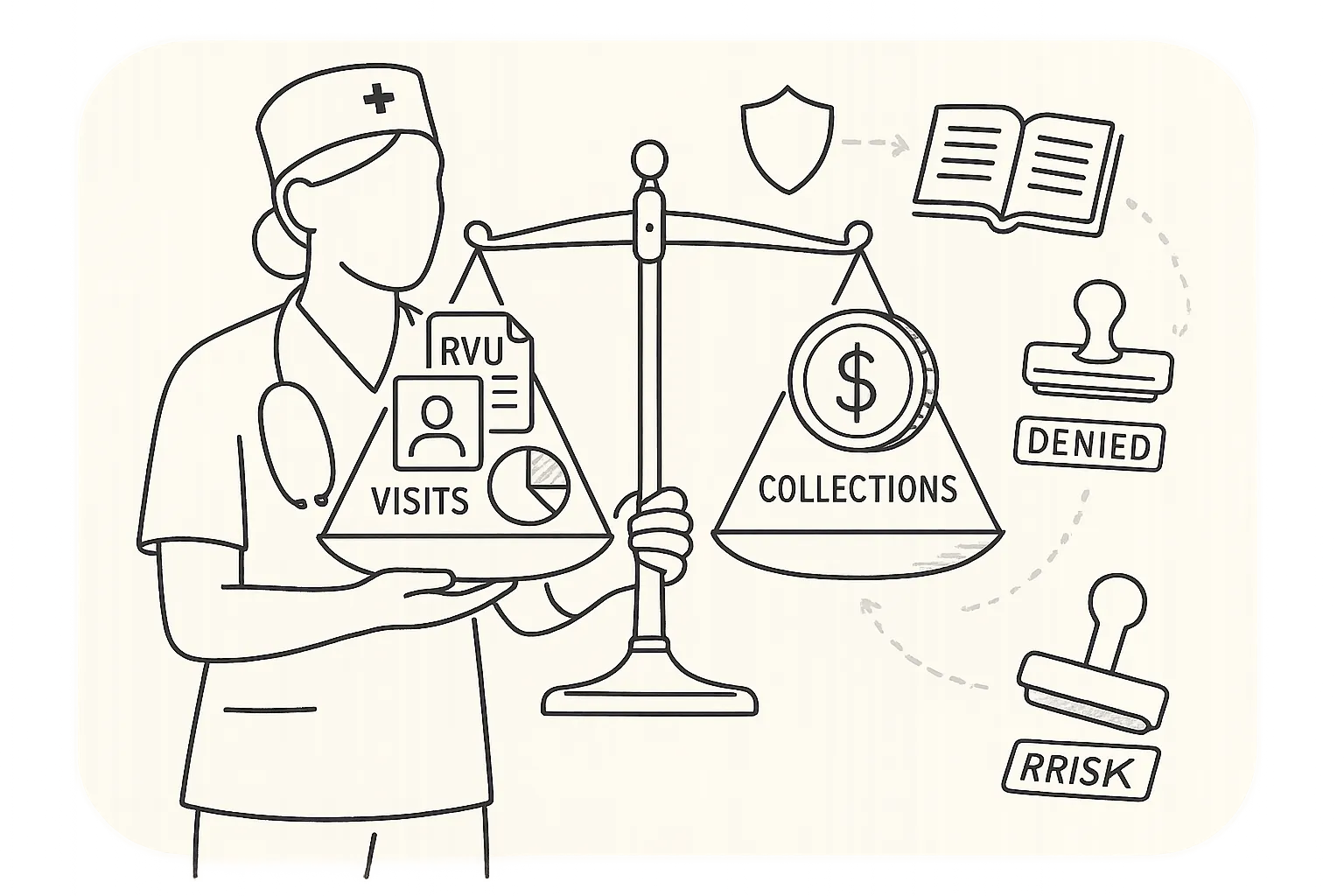
Work RVU compensation connects credited services to values assigned under a specified methodology. A complete formula identifies whether it uses work RVUs or another RVU component, the production threshold, the dollar conversion factor, the applicable reporting period, and the services eligible for credit. It should also explain how corrected claims, coding changes, shared services, and late-posted encounters affect the calculation.
RVU values are not static. The CY 2026 Medicare Physician Fee Schedule includes methodology and valuation changes affecting certain services, and CMS publishes updated RVU files. A contract that merely refers to “current Medicare RVUs” leaves important questions unanswered. It may be unclear which annual file controls, when revisions take effect, and whether a later valuation change can alter compensation for work already performed. A focused explanation of RVU compensation for nurse practitioners can help an NP assess these moving parts.
Collections, Encounters, and Hybrid Models Allocate Different Risks
A collections-based model ties compensation to money the employer receives for the NP’s services. The definition of collections may exclude refunds, payer takebacks, bad debt, billing fees, credit-card costs, or other adjustments. Because the employer commonly controls coding support, claim submission, denial management, and collection activity, the NP may bear financial consequences for administrative performance that the NP cannot direct.
Encounter models count qualifying visits rather than reimbursement. The contract needs to address canceled appointments, no-shows, telehealth encounters, shared visits, procedures, global-period work, and care delivered through a clinical team. Hybrid formulas combine salary with RVUs, collections, encounter thresholds, or quality measures. Those arrangements require an order of operations: the agreement must explain how each component is calculated, whether one component offsets another, and when the final payment is earned.
Billing Attribution and Operational Factors the NP May Not Control
Telehealth, Incident-to Billing, and Team-Based Services
A productivity formula should not assume that every service performed by an NP is automatically credited to that NP. Personal services, shared or team-based services, support-staff work, and services billed under another practitioner’s NPI may be treated differently. CMS explains that incident-to services are subject to treatment, supervision, billing, and state-law requirements. Contract language therefore needs to identify the source of productivity data and the attribution rule used when clinical work and billing identity do not match.
Telehealth requires similar precision. Relevant questions include whether a remote encounter receives the same credit as an in-person visit, which codes and modifiers qualify, and what happens when payer or CMS policies change during the contract term. A formula that counts only paid claims may delay or eliminate credit even though the NP completed the clinical work. The parties can reduce ambiguity by defining eligible encounters and specifying how annual policy changes affect the compensation methodology.
State scope-of-practice rules and any supervision or collaboration requirements can also affect the volume and types of services an NP may provide. A benchmark that assumes unrestricted scheduling or independent billing may be unrealistic in the applicable practice setting. The productivity terms should be considered alongside the relevant supervision and collaboration framework, staffing model, clinical protocols, and payer enrollment status.
Credentialing delays, clinic closures, inadequate support staff, referral changes, scheduling restrictions, EHR outages, and employer-imposed administrative duties can all reduce measured production. If the agreement contains no adjustment mechanism, the benchmark may transfer those operational risks to the NP. The contract can instead identify exclusions, prorating rules, or temporary guarantees for events outside the practitioner’s reasonable control.
How Productivity Provisions Create Financial and Professional Exposure
Negative Accrual, Clawbacks, and Final Reconciliation
Negative accrual carries a productivity deficit from one measurement period into another. An NP who later exceeds the benchmark may receive no bonus because current production first offsets an earlier shortfall. The agreement needs to state whether deficits carry forward, how long they remain, whether they reset annually, and whether a deficit can become a direct repayment demand. Additional detail is available in Chelle Law’s discussion of negative accrual in NP contracts.
Clawback language may permit adjustments after a bonus has been calculated or paid. Common triggers include coding corrections, payer recoupments, refunded charges, reversed claims, and final reconciliation after termination. The financial impact depends on the look-back period, the permitted deductions, whether recovery is capped, and whether employer billing errors can be charged against the NP. Signing, relocation, or retention bonuses may create a separate repayment obligation if the agreement links them to productivity or continued employment.
Productivity pressure can also affect documentation and clinical decision-making. A target that depends on high patient volume may create incentives to shorten visits or defer administrative work. Compensation expectations must remain compatible with clinical judgment, coding requirements, professional standards, and applicable scope limitations. Malpractice coverage is another related risk: the agreement should identify whether coverage is claims-made or occurrence-based and who bears any tail obligation. A dedicated malpractice and tail insurance review can clarify the potential post-employment cost.
Healthcare compensation arrangements may also raise compliance issues that cannot be resolved merely by describing the payment as fair market value. HHS OIG explains that fair-market-value compensation is not, by itself, a defense to Anti-Kickback Statute liability. The purpose of the arrangement, any connection to referrals, applicable safe harbors, and the complete factual structure may require review.
Reading the Productivity Clause With the Rest of the Contract
The productivity provision operates within a larger contractual system. The base-compensation section may promise a guarantee while another provision permits later reconciliation. A bonus may appear earned at the end of a quarter, but the termination section may require the NP to remain employed through the payment date. An amendment clause may allow the employer to replace the compensation plan with limited notice. These interactions often matter more than a favorable conversion factor viewed alone.
- Definitions: Identify credited services, excluded services, the data source, coding rules, adjustments, and the party responsible for resolving attribution questions.
- Thresholds and timing: State the benchmark, conversion rate, measurement period, payment date, and treatment of partial periods or approved leave.
- Reporting: Require itemized statements showing credited RVUs, encounters, collections, denials, deductions, adjustments, and the resulting payment.
- Audit and disputes: Provide reasonable access to supporting information, a deadline for identifying errors, and a process for correcting disputed calculations.
- Plan changes: Address whether the employer may modify the methodology, how much notice is required, and whether changes can apply retroactively.
- Termination: Define how earned but unpaid incentives, pending claims, negative balances, and final reconciliation are treated after departure.
Termination deserves particular attention because collections and reconciliations may continue for months after services are performed. The agreement can specify a final accounting date, access to post-departure reports, and when earned compensation is payable. These provisions are best evaluated with the notice, repayment, and post-employment terms covered in an NP contract termination review.
Restrictive covenants can compound productivity risk by limiting future practice options after an unsatisfactory compensation arrangement ends. The FTC reports that its nationwide Noncompete Rule is presently not in effect and is not enforceable, so the analysis continues to depend substantially on state law, other applicable restrictions, and the contract’s facts. Duration, geographic scope, restricted activities, and the events that trigger the covenant all require separate evaluation.
Contract Protections That Make the Benchmark More Predictable
A productivity system does not need to eliminate performance incentives to allocate risk more clearly. Depending on the role and the parties’ leverage, useful provisions may include:
- A guaranteed base salary or initial ramp-up period while credentialing, scheduling, and patient volume develop.
- A fixed RVU source, version, effective date, conversion factor, and process for implementing later methodology changes.
- Clear credit rules for telehealth, shared visits, team production, procedures, incident-to services, and work billed under another practitioner’s NPI.
- Proration or exclusions for approved leave, clinic closures, EHR failures, staffing shortages, payer disruptions, and other operational events outside the NP’s control.
- A finite look-back period and stated limits on clawbacks, deficit carryforwards, and repayment claims.
- Regular itemized reports, access to supporting data, and a defined correction or dispute process.
- Specific treatment of earned incentives, pending collections, and negative balances when employment ends.
- Clear responsibility for malpractice insurance and any required tail coverage.
Operational support also affects whether the benchmark is achievable. Appropriate staffing, scheduling capacity, coding assistance, scribing, referral flow, and usable reporting systems may improve production without compromising care. When those resources are central to the employer’s projections, the contract or incorporated compensation plan can identify the assumptions on which the benchmark depends.
Concrete examples are especially valuable in hybrid or reconciliation-based plans. A sample calculation can show how the threshold, conversion factor, deductions, negative balances, and payment date interact. The example does not replace operative language, but it can reveal inconsistencies before the NP relies on projected earnings.
Frequently Asked Questions
Which productivity metrics commonly appear in nurse practitioner contracts?
Common metrics include work RVUs, collections or net collections, completed patient encounters, quality measures, and hybrid formulas combining salary with production incentives. Each method allocates billing, scheduling, payer, and operational risks differently.
Why should an RVU formula identify the applicable year or version?
CMS may revise RVU values and methodology through annual Physician Fee Schedule updates. Identifying the source, version, and effective date helps clarify which values control and whether later changes can alter compensation for services already performed.
Can services performed by an NP be credited to another practitioner?
Billing and productivity attribution do not always follow the individual who performed every aspect of the service. Incident-to arrangements, shared services, team-based care, and claims submitted under another practitioner’s NPI require clear contractual credit rules.
How does negative accrual affect future incentive compensation?
Negative accrual can carry a production deficit into a later period, causing future excess production to offset the earlier shortfall before a bonus is paid. The contract needs to explain how long a deficit remains and whether it can become a repayment claim.
What productivity information should an NP receive?
Useful reports identify the credited metric, threshold, conversion rate, deductions, adjustments, and resulting payment. Access to supporting data and a defined procedure for correcting errors can make the calculation more transparent.
What happens to an earned productivity bonus when employment ends?
The outcome depends on the compensation and termination language, including when the bonus is considered earned, whether continued employment is required on the payment date, and how pending claims are reconciled. State law and worker classification may also affect the analysis.
Have Your NP Productivity Formula Reviewed Before You Sign
Chelle Law can analyze the benchmark, billing-credit rules, reporting rights, clawbacks, and termination provisions so you can understand the compensation risks in the agreement.
Contact Chelle Law