
Productivity benchmarks increasingly determine a significant portion of nurse practitioner (NP) compensation. Health systems, urgent care groups, and private practices use these measures to calculate incentive pay, establish performance thresholds, and evaluate clinical output. Although benchmarks can align compensation with organizational goals, unclear formulas may expose an NP to reduced income, clawbacks, billing disputes, malpractice concerns, and unrealistic clinical expectations. Understanding how the metric is calculated, which events affect production credit, and when the employer can reconcile or recover compensation is essential before signing. This guide explains common benchmark models, the legal and operational risks they create, and the contract protections an attorney-led review should prioritize.
Key Takeaways
- Productivity benchmarks can materially affect an NP’s income, clinical workload, and exposure to repayment obligations.
- Contracts should precisely define RVUs, collections, patient encounters, thresholds, reporting periods, and reconciliation procedures.
- Guaranteed base compensation, limited look-back periods, and caps on recoupment can reduce downside risk.
- Itemized reports, audit rights, and a defined dispute process help protect against employer-favorable calculations.
- Productivity expectations should account for operational disruptions, malpractice coverage, scope of practice, supervision, and collaboration requirements.
How Productivity Benchmarks Work in NP Contracts
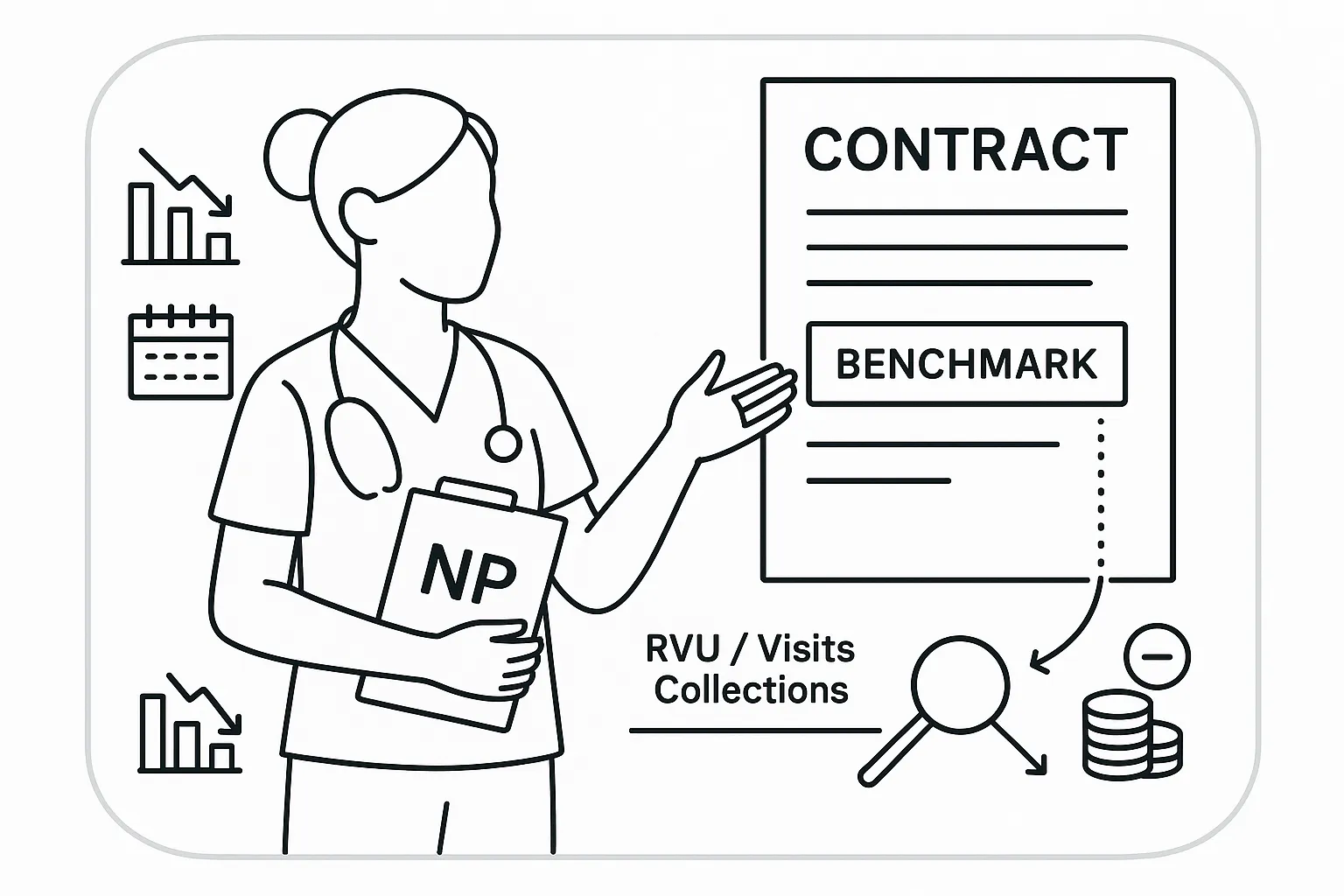
Employers include productivity benchmarks in employment and independent contractor agreements to connect compensation to clinical output. A benchmark may determine eligibility for an incentive bonus, trigger a reduction in base pay, create a clawback or negative accrual, or become a factor in renewal and termination decisions. Targets may apply monthly, quarterly, or annually and can be based on relative value units, collections, visit volume, or a hybrid formula.
These arrangements may appear objective, but the underlying measurement rules often control the financial result. The contract should explain which services receive credit, when production is recorded, how adjustments are handled, and whether the employer can change the methodology. Reviewing the benchmark alongside the agreement’s broader NP compensation model helps reveal whether the stated earning opportunity is realistic.
Common Nurse Practitioner Productivity Models
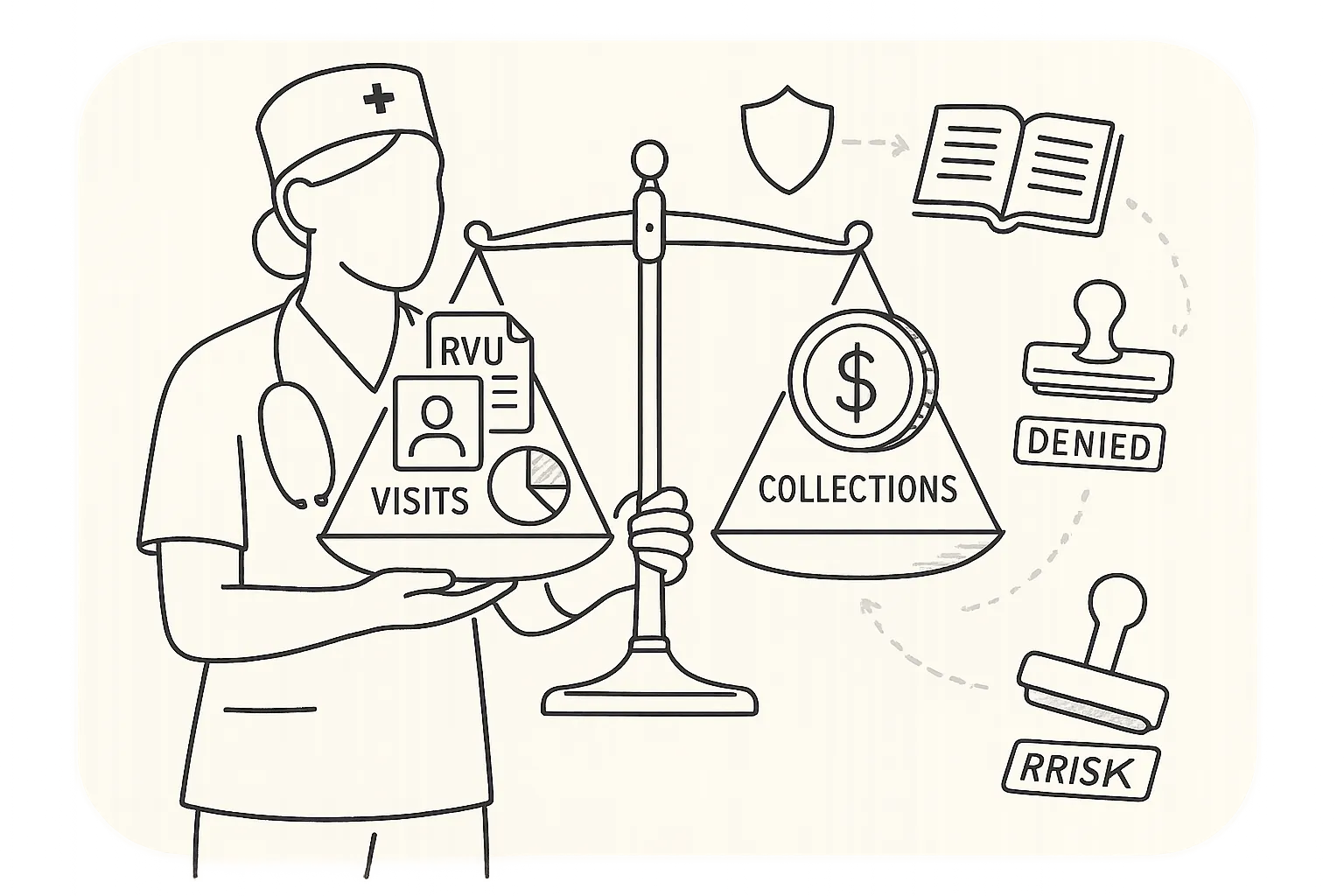
Each productivity model allocates financial and operational risk differently. Common benchmark categories include:
- Relative value units: RVUs assign values to evaluation, management, and procedure codes. An RVU compensation formula should identify the applicable unit, conversion factor, threshold, credited services, and reporting period.
- Collections or net collections: Compensation is connected to money collected by the employer for the NP’s services. The definition should address refunds, payer recoupments, billing costs, bad debt, and other deductions.
- Visit volume or patient encounters: The benchmark counts qualifying in-person or telehealth encounters during a defined period. The agreement should explain canceled visits, shared visits, and encounters involving team-based care.
- Hybrid formulas: A hybrid arrangement may combine guaranteed salary with an RVU floor, collections percentage, quality measure, or bonus above a threshold.
RVU and visit-volume models emphasize output without directly depending on payer remittances. Collections models shift more billing, denial, and receivables risk to the NP, even when the employer controls those functions. Hybrid models can be particularly difficult to evaluate when the contract does not provide concrete examples or clearly explain how the components interact.
Financial, Clinical, and Operational Benchmark Risks
Benchmark compensation may create substantial financial exposure when an agreement permits retrospective adjustments. A negative accrual provision can carry a production deficit into a later period, while clawback language may allow the employer to recover compensation after billing changes or a reconciliation. Recruitment and signing bonuses may also become repayable if the NP does not satisfy a productivity condition. Without limits, these provisions can turn projected incentive compensation into an unexpected debt.
- Ambiguous calculations: Vague definitions of productivity, deductions, chargebacks, or credited services allow the employer to interpret the formula retrospectively.
- Documentation and billing pressure: RVU and collections models require accurate coding and documentation. Unrealistic targets may encourage shortened visits or documentation shortcuts, increasing payer-audit and licensing concerns.
- Operational variability: Clinic closures, staffing shortages, credentialing delays, referral changes, scheduling problems, and EHR downtime may reduce productivity through no fault of the NP.
- Practice-authority conflicts: A benchmark that assumes independent practice may not account for applicable scope-of-practice, supervision, or collaboration requirements. The compensation expectations should align with the relevant supervision and collaboration framework.
- Malpractice exposure: Productivity pressure may affect documentation and clinical decision-making. The agreement should also identify the coverage type and responsibility for any required tail coverage.
These risks affect more than short-term cash flow. They can influence workload, clinical judgment, malpractice exposure, and the financial consequences of leaving the position. Operational risk generally remains with the NP unless the agreement provides exclusions or adjustments for events outside the practitioner’s control.
Productivity Contract Terms to Review and Negotiate
A productivity provision should be reviewed together with the rest of the agreement rather than treated as an isolated bonus formula. The following terms commonly determine how much risk the NP actually assumes:
- Definitions and measurement rules: Specify which services count, how units are calculated, when credit is assigned, and how shared or team-based encounters are allocated.
- Thresholds and conversion factors: State the production threshold, compensation rate, measurement period, and whether unused production or deficits carry forward.
- Reporting and reconciliation: Require regular itemized reports showing RVUs, encounters, collections, denials, deductions, and chargebacks. The agreement should include a fixed reconciliation schedule.
- Audit and dispute rights: Provide reasonable access to supporting records, a process for challenging errors, and an option for third-party review when appropriate.
- Clawbacks and repayment triggers: Limit the look-back period, cap recovery amounts, require notice, and address whether employer billing errors or payer recoupments can reduce the NP’s compensation.
- Malpractice and tail insurance: Identify whether coverage is claims-made or occurrence-based and who pays for any necessary tail coverage. A focused malpractice and tail insurance review can clarify the potential post-employment obligation.
- Termination and earned compensation: Define notice requirements, treatment of earned but unpaid incentives, final reconciliation deadlines, and payment after departure. These provisions should be evaluated as part of an NP contract termination review.
- Restrictive covenants: Examine the duration, geographic scope, and triggering events for any noncompete or nonsolicitation clause. Enforceability depends on state law and the agreement’s specific facts, making a non-compete review important when future practice options may be limited.
The agreement should use concrete percentages, timeframes, formulas, and examples rather than aspirational descriptions of earning potential. It should also restrict the employer’s ability to make unilateral changes after the NP has begun working under the compensation plan.
Ways to Reduce Productivity Benchmark Exposure
Risk-management measures can make benchmark compensation more predictable without eliminating performance incentives. Depending on the position and negotiating leverage, an NP may seek:
- A guaranteed base salary or initial compensation period while credentialing, scheduling, and patient volume develop.
- A finite look-back period and a stated cap on clawbacks, negative accruals, or repayment obligations.
- Carve-outs for clinic closures, EHR failures, staffing shortages, payer changes, and other disruptions beyond the NP’s control.
- Periodic itemized reports, access to supporting data, and a defined appeal or correction process.
- Transparent rules for team production, shared visits, telehealth encounters, and services involving support staff.
- Clear responsibility for malpractice coverage and any tail obligation when the relationship ends.
Operational measures such as team-based care, appropriate support staff, scribing, and scheduling adjustments may improve measured productivity without compromising clinical quality. The contract should recognize team contributions when they affect the NP’s ability to satisfy an individual benchmark. An attorney-led review can identify which protections fit the compensation structure and how they should be stated in the agreement.
Frequently Asked Questions
Which productivity metrics are commonly used in nurse practitioner contracts?
Common metrics include work RVUs, collections or net collections, completed patient encounters, and hybrid formulas combining salary with production or quality incentives. Each model shifts different billing, scheduling, and collection risks to the NP.
How can negative accrual affect an NP’s future compensation?
Negative accrual may carry a productivity deficit from one measurement period into another, reducing later incentive payments. The contract should state whether deficits carry forward, how long they remain, and whether the employer can seek repayment.
What productivity reporting rights should an NP request?
The agreement should require regular itemized reports showing the credited metric, applicable threshold, deductions, adjustments, and resulting payment. Reasonable audit access and a defined process for disputing calculation errors can provide additional protection.
Should a productivity target account for operational disruptions?
Yes. The parties should address how clinic closures, credentialing delays, staffing shortages, scheduling problems, referral changes, and EHR downtime affect the benchmark when those events are outside the NP’s control.
Can productivity pressure create malpractice or licensing risk?
High targets may create pressure to shorten visits, increase volume, or take documentation shortcuts. Productivity expectations should remain consistent with clinical judgment, billing rules, scope-of-practice limits, and applicable supervision or collaboration requirements.
When should an NP obtain legal review of a productivity provision?
Legal review is particularly important when productivity determines a significant portion of compensation, the formula is unclear, deficits carry forward, clawbacks are permitted, or termination affects earned incentives. Review before signing provides an opportunity to clarify the methodology and address financial exposure.
Review Your NP Productivity Compensation Terms
If your compensation depends on RVUs, collections, patient volume, or another benchmark, Chelle Law can review the formula, reporting rights, clawbacks, and termination provisions before you sign.
Contact Chelle Law