
Tail insurance disputes can create significant financial and professional risk for nurse practitioners who leave employment, change malpractice carriers, or move into an independent contractor role. The central questions are whether the underlying policy is claims-made, which party must secure extended reporting coverage, and what events trigger that obligation. Ambiguous malpractice provisions, short notice deadlines, and open-ended repayment terms can turn an ordinary job transition into a coverage dispute. This guide explains how tail obligations arise, which contract terms deserve close attention, how disputes are commonly addressed, and what drafting strategies can make responsibility more predictable before an NP signs or terminates an agreement.
Key Takeaways
- Tail disputes primarily concern claims-made malpractice policies and contract language allocating responsibility for post-termination coverage.
- An agreement should identify the policy type, define tail or extended reporting coverage, and state which termination events determine who pays.
- Notice deadlines, repayment formulas, payroll offsets, and the employer’s right to change carriers can materially affect an NP’s exposure.
- If an employer refuses to provide promised coverage, the NP should preserve communications, obtain available policy records, and involve counsel early.
- Employer-paid tail, cost-sharing, capped repayment, and qualifying prior-acts coverage are possible structures, but each must be documented clearly.
How Tail Coverage Protects Nurse Practitioners
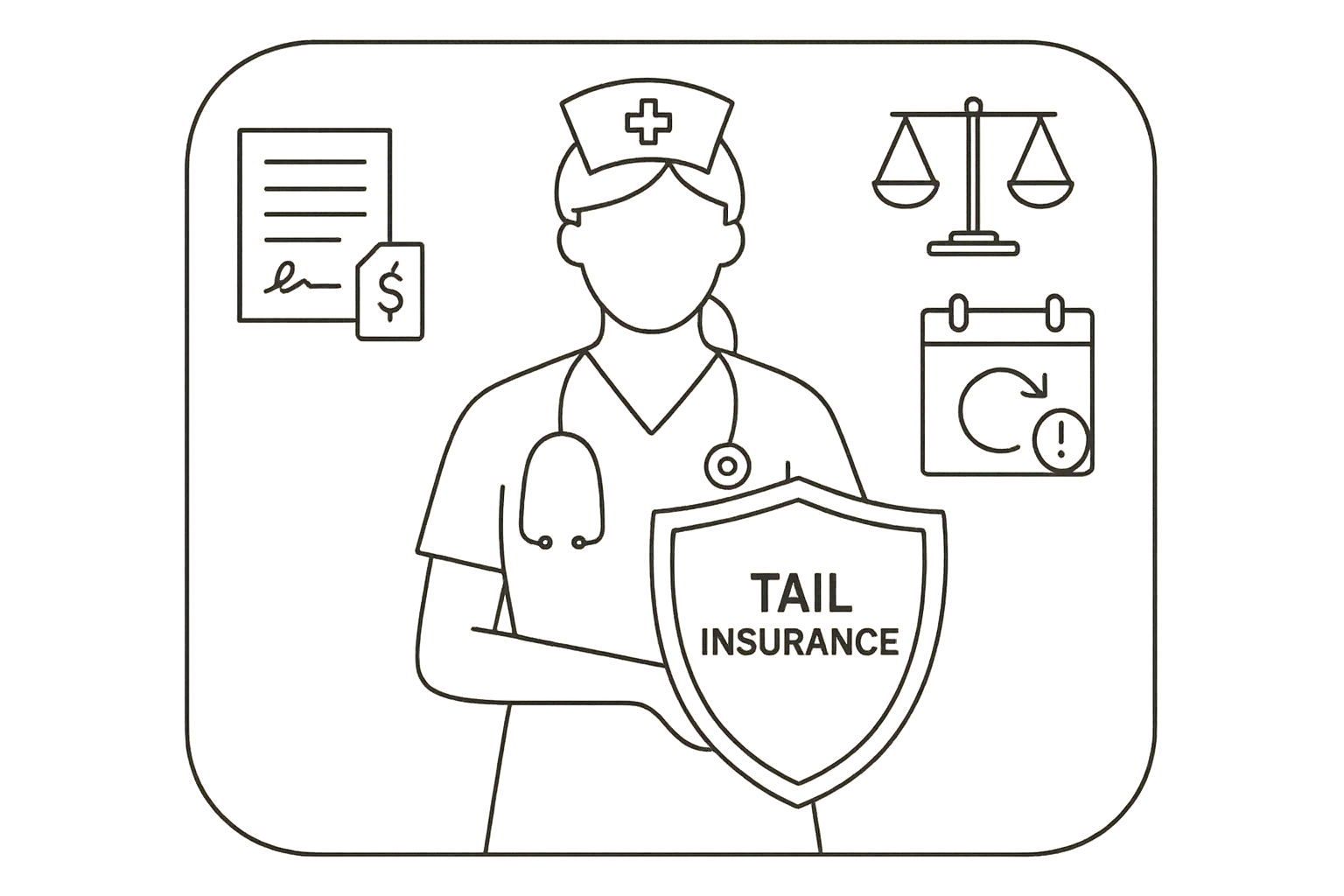
Tail insurance is an extended reporting period that can protect a clinician when a claim is reported after a claims-made policy ends, provided the underlying act occurred during the covered period. Under a claims-made policy, coverage generally depends on when the act occurred and when the claim was reported. An NP leaving the employer’s policy may therefore need tail coverage or another approved method of covering prior acts.
An occurrence policy works differently because it generally covers an act that occurred while the policy was active even if the claim is reported later. Understanding claims-made versus occurrence coverage is consequently the first step in evaluating whether tail is necessary. Policy declarations, endorsements, and carrier requirements should be reviewed rather than relying only on a general contractual reference to “malpractice insurance.”
The distinction matters because malpractice claims may be asserted after an NP has changed jobs. Tail costs can also affect the financial consequences of resignation or termination, while unclear coverage can complicate career moves, locum work, private practice, and contractor arrangements. A focused malpractice and tail insurance review can identify the policy structure and compare it with the obligations stated in the agreement.
How Tail Insurance Obligations Arise in NP Contracts

Tail obligations commonly appear in the professional liability section of an employment or independent contractor agreement. Some contracts expressly require the employer to purchase tail after termination, but that promise may apply only when the employer terminates the NP without cause, after a minimum period of service, or when the NP complies with a notice requirement. Other agreements require the NP to reimburse all or part of an employer-paid premium after an early departure.
- Employer-paid tail: The employer agrees to obtain and pay for extended reporting coverage, subject to stated conditions.
- NP-paid tail: The clinician must purchase coverage after the agreement ends.
- Repayment or cost-sharing: The employer initially pays, but the NP reimburses a defined amount or percentage under specified circumstances.
- Silence or ambiguity: The agreement promises malpractice coverage without addressing tail, prior acts, or post-termination reporting.
Classification also matters. W-2 employees may be covered through an employer’s policy, while many 1099 agreements place responsibility for maintaining malpractice insurance and tail on the contractor. NPs considering contractor work should evaluate both W-2 versus 1099 implications and the insurance provisions in the actual agreement rather than assuming the hiring entity will provide coverage.
The triggering event must be equally clear. Resignation, termination without cause, termination for cause, expiration, and a mutual separation may produce different results under the same clause. Because coverage responsibility often becomes important when employment ends, tail provisions should also be read together with the agreement’s notice, repayment, indemnification, and termination terms.
Contract Language That Commonly Causes Tail Disputes
General language stating that an employer will “provide malpractice insurance” may not answer whether the coverage is claims-made or occurrence-based, whether tail is included, or what happens after the relationship ends. Similar uncertainty arises when a contract uses “tail,” “prior acts coverage,” “extended reporting period,” and “professional liability coverage” without defining the intended protection.
- Unclear triggers: Phrases such as “upon termination” may not explain whether the obligation applies to resignation, termination for cause, contract expiration, or every separation.
- Short notice windows: A requirement that the NP request tail within a narrow period can result in a missed contractual deadline during a job transition.
- Unlimited repayment: The agreement may require full reimbursement without a cap, declining schedule, or defined premium amount.
- Compensation offsets: The employer may claim a right to deduct tail costs from final wages, bonuses, or other amounts otherwise due.
- Unilateral policy changes: The employer may reserve broad authority to change carriers, limits, or policy types without addressing resulting coverage gaps.
- Multiple entities or locations: The agreement may not identify which entity’s policy applies when the NP works at several sites or provides cross-coverage.
These provisions should be evaluated as a connected risk-allocation system rather than as isolated sentences. A broad repayment clause can undermine an employer-paid tail promise, while a carrier-change provision can alter the need for extended reporting coverage. Reviewing these issues alongside other NP contract red flags helps reveal financial obligations that may not be apparent from the compensation section alone.
Steps for Addressing a Tail Insurance Dispute
Confirm the Contract, Policy, and Carrier Position
The first step is to assemble the signed agreement, amendments, offer documents, policy declarations, endorsements, termination notices, and relevant communications. The NP should determine which policy covered the work, whether it was claims-made, the applicable retroactive date, when coverage ended, and whether any extended reporting endorsement has already been issued. A verbal assurance from a recruiter or supervisor should be preserved in writing, but it should not replace confirmation from the governing documents and carrier.
If the employer promised to obtain tail but has not done so, a written request can identify the contractual provision, request proof of coverage, and establish a reasonable response deadline. Early involvement by counsel may help clarify the employer’s position, obtain policy information, and identify whether the insurer can offer tail, prior-acts coverage, or another acceptable arrangement.
Evaluate Negotiation, ADR, and Litigation Options
Many disputes can be addressed through the employer’s human resources or risk-management department once the coverage issue and contractual language are documented. Potential resolutions include full payment, cost-sharing, reimbursement, a temporary extension, or carrier-approved prior-acts coverage. The appropriate solution depends on the existing policy and whether the proposed alternative actually covers the relevant period.
The agreement may require mediation or arbitration before a court action can proceed. Mediation can support practical settlement options, while arbitration may be binding and may affect available procedures or remedies. Litigation may be considered when the employer refuses to honor a sufficiently clear obligation, but the cost, governing law, dispute-resolution clause, available evidence, and insurer’s position should be evaluated before selecting a path.
Drafting and Negotiation Strategies That Reduce Risk
Clear drafting should identify the policy type, the party responsible for premiums, the duration or scope of extended reporting coverage, the events that trigger payment, and the deadline for obtaining proof. If repayment applies, the contract should state the formula, maximum exposure, timing, and whether the obligation declines over time. It should also explain how a carrier change, practice acquisition, or reassignment among related entities affects coverage.
Employer-Paid Tail, Cost-Sharing, and Repayment Limits
Possible structures include employer-paid tail after an involuntary termination without cause, a shared premium after voluntary resignation, or a prorated repayment obligation when an NP leaves before a defined service period. A cap can prevent an open-ended obligation, while a declining schedule can connect repayment to the remaining portion of the service commitment. Any right to deduct costs from final compensation should be reviewed carefully and stated consistently with the rest of the agreement.
Illustrative drafting concepts include requiring the employer to procure an extended reporting endorsement within a stated period, obligating the employer to provide written proof, and defining the separations for which the employer or NP pays. These concepts must be tailored to the actual carrier, policy, agreement, and applicable law; placeholders or generic language should not be inserted without confirming that the proposed coverage is available.
Prior-Acts Coverage and Transitional Alternatives
In some circumstances, a new carrier may agree to cover earlier services through a prior-acts endorsement using an appropriate retroactive date. Portable or convertible coverage, temporary extensions, and phased employer contributions may also be considered. These alternatives are useful only if the carrier accepts the prior exposure and the resulting policy covers the relevant acts, providers, entities, locations, and reporting period.
Because employer-favorable malpractice language is common, an attorney-led NP contract review can compare the insurance provisions with termination, repayment, indemnification, and dispute-resolution clauses. Addressing inconsistencies before signing is generally more predictable than trying to reconstruct the parties’ intent after coverage has ended.
Frequently Asked Questions
How can an NP determine whether a malpractice policy is claims-made?
Review the policy declarations, endorsements, coverage dates, and retroactive date, then confirm the policy type with the employer or carrier. The employment agreement alone may not provide enough detail if it refers only to professional liability or malpractice insurance.
Who is responsible for paying for nurse practitioner tail coverage?
Responsibility depends on the contract and applicable policy arrangement. The employer may pay, the NP may pay, or the parties may share the cost based on the reason for termination, length of service, or another clearly defined condition.
What should an NP do if the contract does not address tail insurance?
The NP should confirm the policy type and ask for written clarification of post-termination coverage before signing or leaving the position. Silence should not be treated as confirmation that the employer will purchase tail.
Does an occurrence policy require tail insurance?
An occurrence policy generally covers qualifying acts that occurred while the policy was active even when a claim is reported later, so tail is ordinarily associated with claims-made coverage. The actual policy terms should still be reviewed to confirm the scope of protection.
Can prior-acts coverage replace a tail policy?
It may be an alternative when a new carrier agrees to cover the earlier period using an appropriate retroactive date. The NP should verify in writing that the endorsement covers the relevant services, dates, entities, and locations before relying on it.
What documents should an NP preserve during a tail insurance dispute?
Preserve the signed agreement, amendments, policy declarations, endorsements, termination notices, emails, written promises, premium invoices, proof of payment, and communications with the employer or carrier. These records help establish the coverage arrangement and each party’s stated obligations.
Need Help Reviewing Tail Insurance Terms?
Chelle Law reviews nurse practitioner contracts nationwide and can identify tail obligations, repayment exposure, termination triggers, and other malpractice coverage concerns before or during a job transition.
Contact Chelle Law