
Tail insurance addresses a risk that may not become apparent until after a nurse practitioner leaves a job or contractor assignment. When professional liability coverage is written on a claims-made basis, ending the policy can affect whether a later claim involving earlier patient care is covered. The result depends on the policy’s retroactive date, reporting trigger, notice requirements, exclusions, and any extended reporting endorsement.
The financial stakes can be substantial. An employment or independent contractor agreement may require the NP to purchase tail coverage, reimburse the employer for its cost, or satisfy conditions before the employer will provide it. Termination provisions, indemnification language, restrictive covenants, and repayment clauses can also change the practical value of an insurance benefit that initially appears straightforward.
This guide explains how claims-made and occurrence policies differ, when an extended reporting period may be necessary, and how NP contracts allocate post-employment coverage responsibilities. Chelle Law evaluates the insurance language together with the rest of the agreement so the nurse practitioner can understand the potential cost, identify unresolved coverage questions, and determine which terms may warrant clarification before signing or leaving a position.
Key Takeaways
- Claims-made coverage generally depends on the applicable retroactive date, when a claim is first made or reported, and compliance with the policy’s notice requirements.
- Tail coverage typically extends the time for reporting an otherwise covered claim; it does not ordinarily expand the underlying policy’s limits or scope.
- No universal rule assigns tail costs to the employer or the NP. The agreement, policy documents, and applicable state requirements must be reviewed together.
- Termination triggers, repayment clauses, indemnification duties, and survival language can create obligations that continue after the clinical relationship ends.
- Declarations pages, endorsements, retroactive-date records, and written confirmation of coverage should be retained in case a claim is reported later.
How Tail Coverage Fits Into Malpractice Insurance
Claims-Made and Occurrence Coverage Use Different Triggers
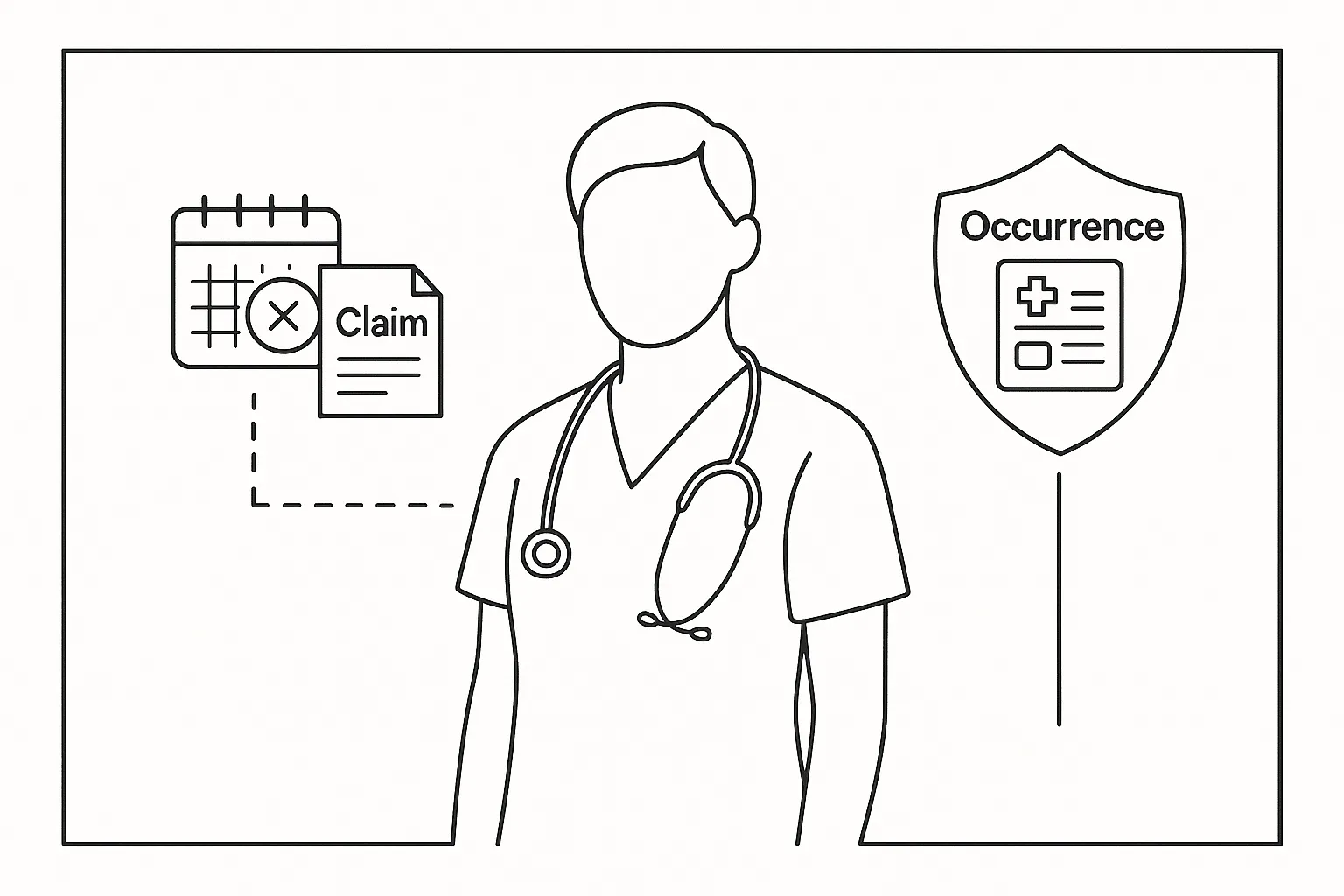
A claims-made policy generally requires the alleged professional act to fall on or after the policy’s retroactive date and the claim to be first made, reported, or both while the policy remains in effect. The exact trigger varies by policy. Notice deadlines, definitions, exclusions, covered services, and named-insured provisions can determine whether the insurer responds, so the declarations page alone may not provide a complete answer.
Occurrence coverage generally responds based on when the covered injury or event occurred, even if the claim is asserted after the policy period. That structure usually avoids the same reporting gap created when a claims-made policy expires, but it is not an unconditional promise of coverage. Limits, exclusions, notice duties, and other policy terms still control. The comparison of claims-made and occurrence policies provides a closer look at these distinctions, while the National Association of Insurance Commissioners offers additional background on medical malpractice insurance.
Tail coverage is a common name for an extended reporting period. It generally permits eligible claims involving acts covered by the former claims-made policy to be reported after that policy ends. It ordinarily does not increase policy limits, add services that were never covered, remove exclusions, or alter the retroactive date. Those limitations make the endorsement’s actual wording as important as the statement that “tail” will be provided.
A Claim May Surface Long After the NP Leaves
A patient may bring a claim months or years after the visit, diagnosis, prescription, or treatment at issue. An NP who has changed employers, retired, or moved into a different practice setting may therefore receive notice concerning care delivered under a former policy. If that policy was claims-made and neither tail nor qualifying prior-acts coverage applies, the former insurer may decline the claim because it was reported after coverage ended.
Coverage through a hospital, clinic, staffing agency, or group practice does not eliminate the need to examine the documents. The organization may retain responsibility for some matters while the employment agreement assigns tail costs, reimbursement duties, or indemnification obligations to the NP. A broader guide to malpractice insurance for nurse practitioners explains other policy and contract terms that can affect this allocation of risk.
When a Nurse Practitioner May Need Tail Insurance
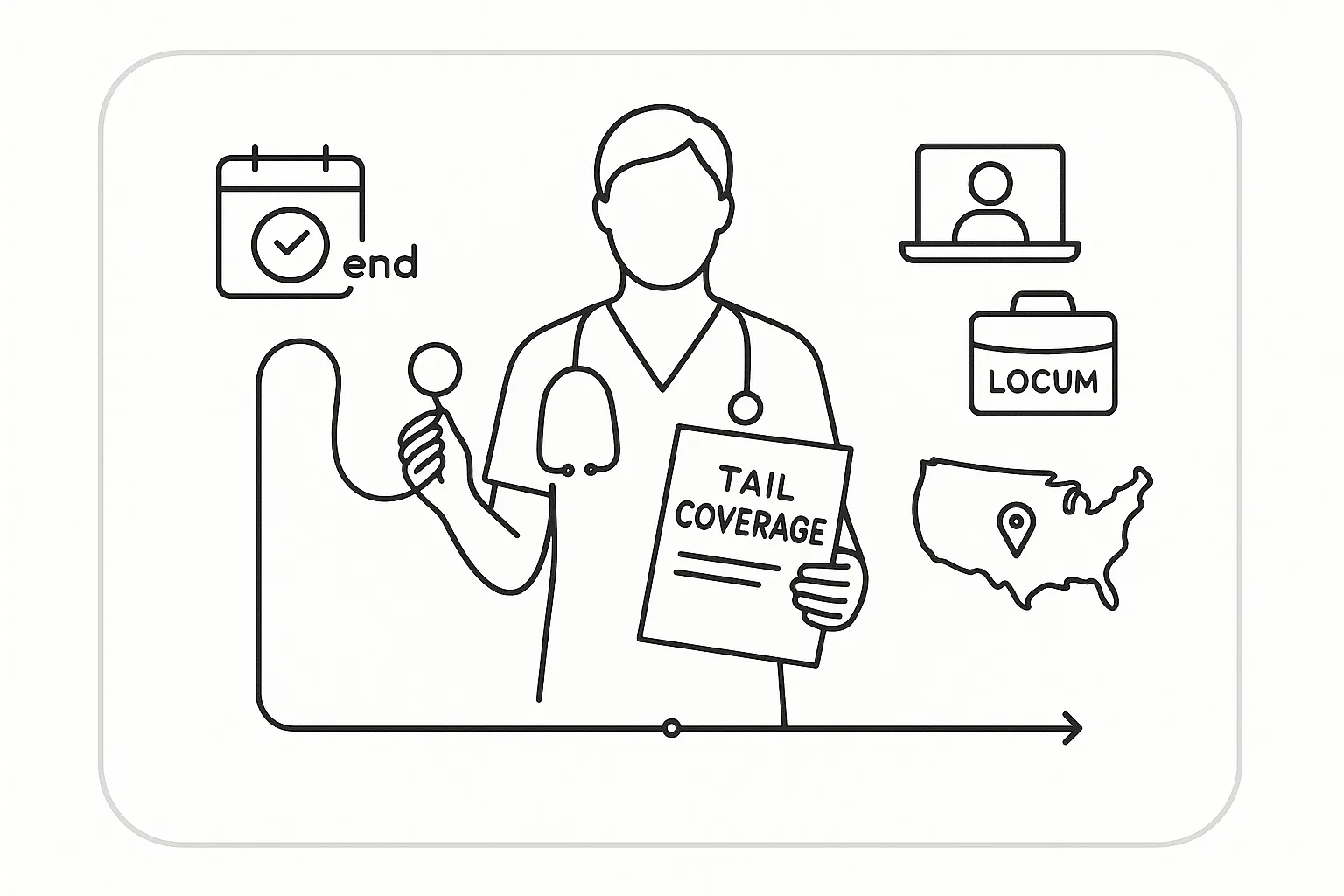
Tail coverage becomes relevant when claims-made coverage ends because of resignation, termination, nonrenewal, retirement, a change of insurers, or the conclusion of a temporary assignment. Retirement does not necessarily eliminate exposure to later-reported claims. The important question is whether the former policy, an extended reporting endorsement, or a new policy with qualifying prior-acts protection will respond to eligible claims arising from the earlier period.
The circumstances surrounding departure may determine who pays. An employer might agree to purchase tail after termination without cause but assign the expense to the NP following resignation, an early departure, or termination for cause. Because the definitions of those events can materially affect coverage responsibility, the insurance section needs to be read alongside the notice period and other provisions governing termination of an NP contract.
Independent contractor, locum tenens, staffing, and telehealth arrangements deserve particular scrutiny. Contractors are often required to maintain their own insurance, while an agency-provided policy may apply only during an assignment or only to specified services and locations. A focused independent contractor agreement review can identify whether insurance, indemnification, reporting, and post-termination duties continue after the engagement ends.
Multistate and telehealth practice can raise additional questions about covered jurisdictions, practice locations, services, and licensure. The policy and endorsements must be checked against the NP’s actual work. Coverage questions should also be confirmed directly with the insurer or broker rather than inferred solely from the employment agreement.
How NP Contracts Allocate Tail Costs and Duties
The Payer, Purchase Deadline, and Coverage Standard
An agreement may assign the entire cost to the employer, place it on the nurse practitioner, or divide it through a cost-sharing formula. The allocation may change according to the reason employment ends or the length of service completed. There is no nationwide default rule establishing that one party must pay, so phrases such as “malpractice insurance provided” or “professional liability coverage included” do not necessarily resolve post-employment responsibility.
Useful contract language identifies who must obtain the coverage, who pays the premium, when the endorsement must be purchased, what limits and reporting period apply, and which documents must be delivered as proof. It may also address whether the employer can select the insurer and whether the NP remains responsible if the quoted cost exceeds an estimate. Because tail pricing varies by specialty, location, claims history, limits, insurer, and policy design, a written quote is more reliable than a general percentage or rule of thumb.
A malpractice and tail insurance review considers these provisions together with the available policy documents. This combined review can reveal a mismatch between the contract’s promise and the insurance actually offered, such as different limits, a shortened reporting period, or an obligation that applies only after selected termination events.
Repayment, Indemnification, and Post-Employment Conditions
A contract may initially characterize tail as employer-paid but later require reimbursement if the NP leaves before a stated date, breaches the agreement, or is terminated for cause. Survival clauses can keep malpractice, cooperation, indemnification, and repayment duties effective after termination. Other agreements make employer payment contingent on signing a release, returning property, completing records, or complying with post-employment restrictions.
These provisions can convert an apparent benefit into a contingent financial obligation. Indemnification language may also be broader than the insurance available to satisfy it, leaving the NP responsible for matters outside the policy’s scope. When tail responsibility is tied to a non-compete or non-solicitation clause, the coverage provision and the restrictive covenant terms need to be evaluated as an interconnected risk rather than separate boilerplate.
Extended Reporting Periods, Prior-Acts Coverage, and State Variation
An extended reporting period may last for a defined number of years or provide a longer reporting window, depending on the endorsement. A limited period may carry a lower upfront cost but leave residual exposure after it expires. Even an unlimited reporting period remains subject to the underlying policy’s retroactive date, limits, covered services, exclusions, and other conditions.
Prior-acts coverage from a new insurer can sometimes protect services performed before the new policy began. The new policy must preserve an appropriate retroactive date and expressly cover the relevant work. Matching the old retroactive date does not automatically guarantee identical limits, defense terms, named-insured status, exclusions, or covered services. Written confirmation from the new insurer is essential before treating prior-acts protection as a substitute for tail.
State insurance rules may impose disclosure obligations, automatic reporting periods, or special provisions for retirement, disability, or death. These rules are jurisdiction-specific rather than universal NP rights. For example, New York’s claims-made disclosure and notice regulation addresses policy notices and retroactive-date changes, while Connecticut applies separate minimum standards that include certain extended reporting provisions. The policy’s governing law and the rules applicable to the insurer therefore matter when evaluating a proposed transition.
A Practical Coverage Checklist Before Departure
Coverage planning is most effective before the employment relationship ends. Waiting until the final day can make it harder to obtain policy records, clarify disputed responsibilities, or compare available options. The following review can help identify the documents and decisions that require attention:
- Obtain the declarations page and confirm whether the policy is claims-made, claims-made-and-reported, or occurrence-based.
- Verify the retroactive date, policy period, limits, covered services, practice locations, and named insureds.
- Review the policy’s notice requirements and determine how known incidents, potential claims, and formal claims must be reported.
- Identify who must purchase tail coverage, the required reporting period, and which termination events change payment responsibility.
- Evaluate repayment, indemnification, survival, release, cooperation, and restrictive covenant provisions for post-employment obligations.
- If relying on prior-acts coverage, obtain written confirmation of the retroactive date, covered work, limits, exclusions, and named-insured status.
- Retain the policy, declarations, endorsements, payment records, incident reports, and communications confirming that coverage is in effect.
Clinical and administrative records also remain important after departure. An NP may need to preserve documentation consistent with applicable legal, employer, and policy requirements and cooperate with the insurer if a claim later arises. Prompt notice of a potential claim or reportable event can be critical because a reporting failure may affect coverage even when tail has been purchased.
When Legal Review of Tail Terms Is Valuable
Attorney review is particularly useful when the agreement assigns the cost to the NP, makes employer payment conditional, contains a reimbursement or clawback obligation, or does not clearly state what happens when the relationship ends. Review can also identify conflicts between the malpractice clause and the contract’s termination, indemnification, restrictive covenant, and dispute-resolution provisions.
Chelle Law analyzes the contractual allocation of malpractice risk, the events that trigger tail responsibility, and the documents needed to verify the promised coverage. A comprehensive nurse practitioner contract review can help an NP understand how these provisions work together before accepting a job, changing insurers, or ending an agreement. Policy-specific coverage questions may also require confirmation from the insurer or a qualified insurance professional.
Frequently Asked Questions
Does every nurse practitioner need tail insurance?
No. Tail coverage is generally relevant when a claims-made policy ends and no other coverage protects eligible later-reported claims involving prior services. An NP covered by an occurrence policy may not need tail for acts covered under that policy, but the policy documents, exclusions, and notice conditions still need to be reviewed.
Who usually pays for an NP’s tail coverage?
Responsibility depends on the contract. The employer may pay, the NP may pay, or the parties may share the cost. Some agreements change responsibility based on whether the NP resigns, completes a service period, is terminated without cause, or is terminated for cause.
Is an extended reporting period the same as occurrence coverage?
No. An extended reporting period allows certain claims involving prior acts to be reported after a claims-made policy ends. It generally does not broaden the former policy’s scope or limits. Occurrence coverage instead generally responds according to when the covered event occurred, subject to the policy’s terms.
Can prior-acts coverage replace tail insurance?
It may protect some earlier services if the new insurer preserves the appropriate retroactive date and confirms the coverage in writing. An NP should not assume it is a complete substitute because limits, exclusions, covered services, defense provisions, and named-insured status may differ from the prior policy.
What proof of tail coverage should an NP keep?
The NP should retain the tail endorsement or policy, declarations pages, retroactive-date information, coverage limits, payment records, and written communications confirming who purchased the coverage. These records may be important if a claim is reported after employment ends.
When should a tail insurance clause be reviewed by an attorney?
Review is particularly useful before signing or terminating an agreement that assigns tail costs to the NP, conditions employer payment, includes repayment or indemnification duties, or uses unclear survival language. The clause is best evaluated with the contract’s termination and restrictive covenant provisions.
Clarify Your Tail Insurance Responsibility Before You Sign or Leave
Chelle Law reviews malpractice coverage, tail costs, termination triggers, repayment provisions, and related contract terms so you can understand the risks assigned to you.
Contact Chelle Law