
A nurse practitioner employment or independent contractor agreement may promise malpractice insurance without explaining the protection the policy actually provides. The controlling details include whether coverage is claims-made or occurrence, the per-claim and aggregate limits, the retroactive date, covered locations and services, and any exclusions. If the contract requires work that falls outside the policy, the NP could perform assigned clinical duties without the coverage expected from the employer’s general promise.
The largest expense often appears when the relationship ends. A claims-made policy may require tail coverage or qualifying prior-acts protection, and the contract may assign that cost differently depending on whether the NP resigns, is terminated without cause, is terminated for cause, or allows the agreement to expire. Indemnification, claims-cooperation, and repayment clauses can shift additional costs even when the employer pays the active-policy premium.
Chelle Law provides attorney-led nurse practitioner malpractice and tail insurance review services nationwide. We compare the insurance clause with the termination, outside-activity, indemnification, and repayment provisions that control the NP’s actual exposure. When declarations pages or endorsements are available, we also compare those documents with the contract so the practitioner can identify missing coverage details, conflicting terms, and obligations that may continue after departure.
What the Malpractice Insurance Clause Actually Covers
A sentence stating that the employer will provide “professional liability insurance” is only a starting point. It does not identify the policy form, limits, named insureds, covered services, exclusions, or what happens when employment ends. Those details determine whether a future claim falls within the promised protection.
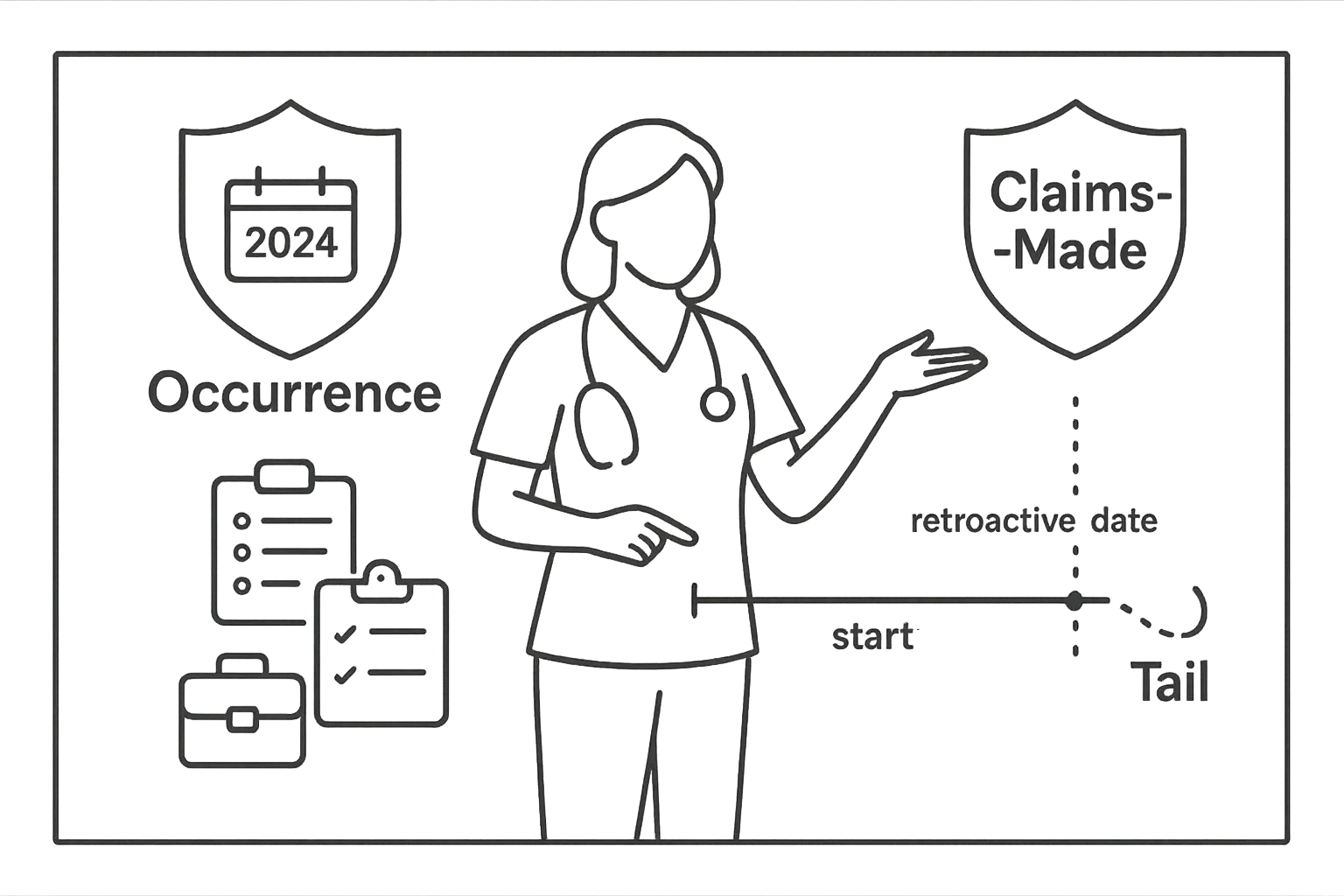
Claims-Made Versus Occurrence Coverage
An occurrence policy generally responds based on when the alleged incident occurred. If the incident happened while the occurrence policy was active and otherwise falls within its terms, a later claim may remain covered after the policy period ends. Traditional tail coverage is therefore generally unnecessary for services properly insured under that occurrence policy.
A claims-made policy generally requires the claim to be made while the policy or an extended reporting endorsement remains active, subject to the retroactive date and other policy terms. If an NP leaves a job and the claims-made policy ends without tail or replacement coverage that includes prior acts, a later claim involving work performed at that job may fall into a coverage gap. The distinction is explained further in Chelle Law’s guide to claims-made and occurrence coverage for nurse practitioners.
Limits, Defense Costs, and Policy Exclusions
Coverage limits must be read on both a per-claim and aggregate basis. The documents should also clarify whether defense expenses are paid outside the limits or reduce the amount available to resolve a claim. A policy with a stated limit can provide less claim protection than expected if attorney fees and litigation expenses erode that limit.
The covered-person definition matters as well. Is the NP directly insured, or does the agreement only require coverage for the employer? The policy and contract also need to account for every assigned site, clinical duty, patient population, and service line. Exclusions involving telehealth, moonlighting, administrative work, procedures, or care delivered outside an approved location can conflict with the duties described elsewhere in the agreement. NPs performing remote care can use the firm’s discussion of telehealth agreement terms to identify related licensing, location, and insurance questions.
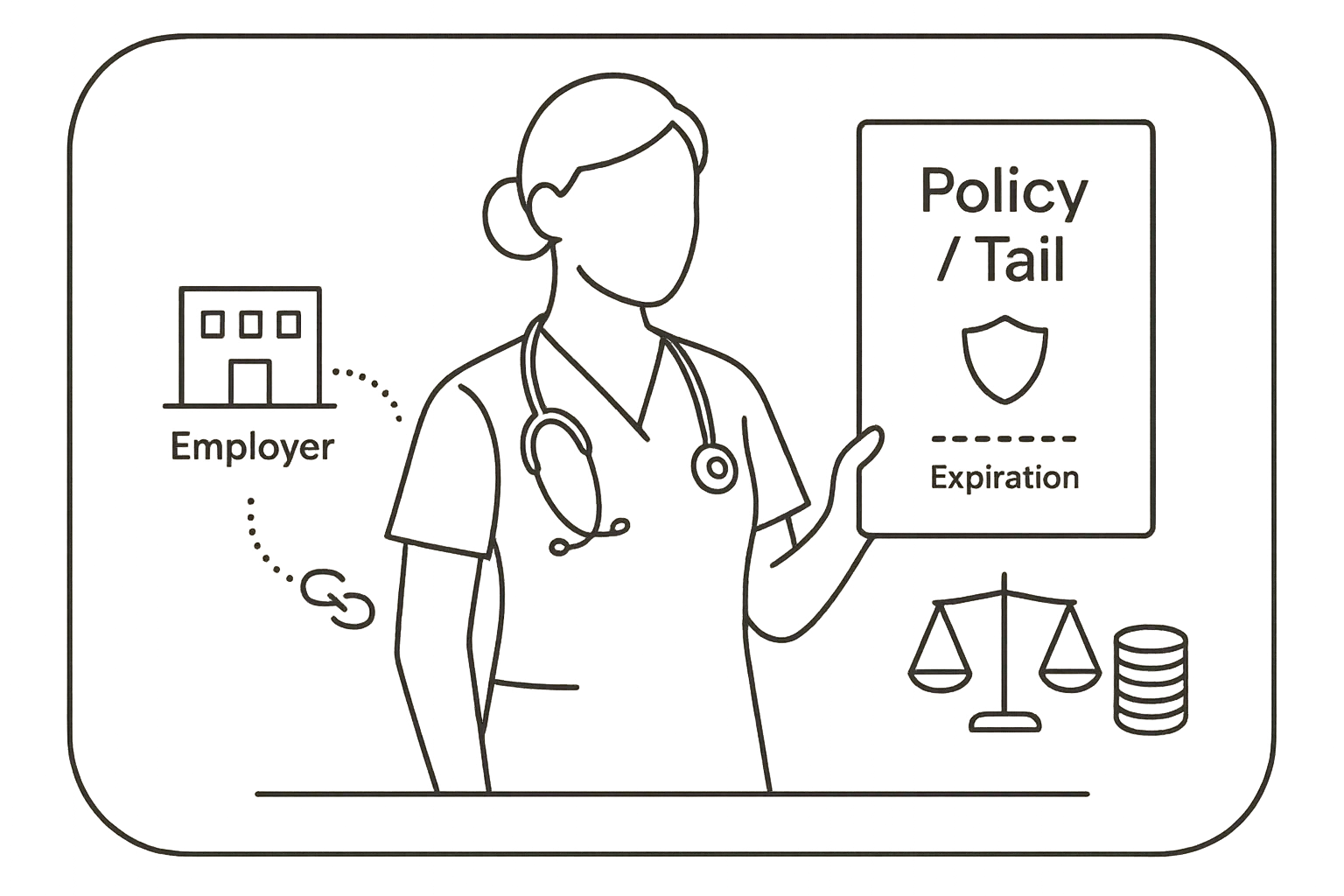
Tail Coverage and the Cost of Leaving
Tail insurance is an extended reporting endorsement for a claims-made policy. It allows qualifying claims to be reported after the underlying policy ends when the alleged incident occurred during the covered period. The tail clause controls who must obtain the endorsement, who pays the premium, the required reporting period, and the deadline for providing proof.
Termination Events That Shift Tail Responsibility
The allocation often changes based on how the contract ends. An employer might pay for tail after a termination without cause but require the NP to pay after resignation, non-renewal, or termination for cause. That structure raises a direct question: if I leave voluntarily in two years, what must I purchase, and when is payment due?
The answer cannot be determined from the insurance section alone. The definitions of cause, notice requirements, renewal language, disability provisions, and repayment clauses may all affect the final obligation. Tail language therefore needs to be read with the agreement’s termination mechanics. Chelle Law’s NP contract termination review addresses how those provisions interact at departure.
Tail Premiums, Prior Acts, and Coverage Gaps
Tail premiums depend on the insurer, specialty, limits, coverage history, claims experience, reporting period, and pricing method. Even if the employer pays every premium during employment, the agreement may place the entire tail expense on the NP. That possible cost belongs in the same exit analysis as bonus repayment, relocation repayment, and unpaid compensation.
Prior-acts coverage, sometimes called nose coverage, may provide another way to protect earlier services when a new claims-made insurer accepts an appropriate retroactive date. It is not interchangeable with tail in every situation and should never be assumed from a new employer’s general insurance promise. The declarations page or endorsement needs to confirm the retroactive date and covered services in writing. For a more focused explanation of the departure expense, see the guide to tail insurance for nurse practitioners.
Coverage for Contractor Work and Outside Activities
Insurance Duties in a 1099 Agreement
A 1099 agreement may require the NP to purchase and maintain an individual policy, meet specified limits, provide certificates of insurance, notify the organization of cancellation, and maintain tail after the engagement ends. If the organization says it covers contractors, the agreement still needs to identify the policy form, covered duties, and post-termination arrangement. A vague statement that coverage is “available” does not answer who pays after the policy terminates.
Insurance duties also need to match the indemnification clause. If the contractor must indemnify the organization for liabilities excluded by the required policy, the NP can satisfy the insurance requirement and still retain substantial uninsured exposure. A dedicated independent contractor agreement review can compare the coverage requirement with the indemnity, defense, and termination provisions.
Moonlighting, Telehealth, and Additional Locations
Employer coverage commonly follows services performed within the scope of assigned employment. It may not extend to moonlighting, volunteer work, a separate telehealth platform, or care delivered at an unaffiliated site. If the NP plans outside clinical work, both the employment contract and the policy must be checked before relying on employer coverage.
An individual policy may provide protection for approved outside activities, but overlapping policies require coordination. Each insurer may impose separate notice and reporting duties, and one policy may be excess over another. The NP also needs to know whether an employer’s outside-activity clause prohibits the work even when separate malpractice insurance is available.
Indemnification, Claim Control, and Reporting Duties
When Liability Extends Beyond the Insurance Policy
An indemnification clause may require the NP to reimburse the employer for defined losses, claims, defense expenses, or misconduct. If the clause covers institutional policies, billing decisions, staffing failures, or other matters beyond the NP’s control, the obligation may be broader than the malpractice policy. The contract can therefore shift liability back to the practitioner even while stating that the employer provides insurance.
Claims-control provisions deserve the same attention. The employer or insurer may select counsel, decide whether to settle, and control communications about the claim. Those decisions can affect the NP’s professional reputation, credentialing disclosures, licensing matters, and future applications. Contract language should be compared with the policy so the practitioner knows who controls the defense and whether consultation or consent rights exist.
Reporting deadlines can be strict. A contract may require immediate notice of an adverse event, patient complaint, demand letter, board inquiry, or circumstance that could produce a claim. Late reporting can create disputes over coverage or breach of contract, so the NP needs access to the reporting procedure and insurer contact information rather than a general instruction to notify management.
Documents and Terms to Confirm Before Signing
A policy summary or offer letter rarely answers every insurance question. When available, the declarations page, certificate of insurance, relevant endorsements, and policy excerpts should be compared with the employment or contractor agreement. The following points reveal most contract-level gaps:
- Is the policy claims-made or occurrence, and does the written insurance document confirm that form?
- What are the per-claim and aggregate limits, and do defense expenses reduce those limits?
- Is the NP directly covered for every assigned location, procedure, telehealth service, and patient population?
- What retroactive date applies, and is prior-acts coverage documented when the NP changes policies?
- Who obtains and pays for tail after resignation, termination, non-renewal, disability, retirement, or employer closure?
- Do indemnification, repayment, settlement-control, or claims-cooperation clauses create duties beyond insured losses?
- What records and proof of coverage will the NP receive when the relationship ends?
Before departure, the NP can request a certificate showing coverage dates and limits, confirm that any promised tail endorsement has been issued, and preserve relevant policy and claim correspondence. If employer-paid tail is unavailable, replacement coverage must be addressed before the claims-made policy ends. Chelle Law’s overview of malpractice insurance for nurse practitioners provides additional background on the policy terms behind these contract questions.
How Chelle Law Reviews Malpractice and Tail Terms
Chelle Law reads the malpractice clause alongside the provisions that can change its effect. A termination clause may determine who pays for tail. An outside-activities clause may exclude moonlighting from employer coverage. An indemnification clause may impose uninsured duties, while a repayment clause may require reimbursement of premiums or other costs after an early departure.
We identify the policy form, limits, retroactive date, exclusions, tail trigger, payment responsibility, reporting duties, and claim-control language stated in the documents provided. We then explain the unanswered questions and the terms that may warrant clarification or revision before the NP signs. This focused service can also be incorporated into a complete nurse practitioner contract review.
Frequently Asked Questions
What malpractice insurance provisions should a nurse practitioner review in a contract?
Review the policy type, per-claim and aggregate limits, effective dates, retroactive date, covered services and locations, exclusions, defense costs, reporting duties, tail responsibility, indemnification, and post-termination requirements. These terms may appear in several contract sections rather than one insurance clause.
What is the difference between claims-made and occurrence malpractice insurance?
Occurrence coverage generally applies based on when the alleged incident occurred, even if the claim is filed after the policy ends. Claims-made coverage generally requires the claim to be made while the policy or an extended reporting period is active, subject to the retroactive date and other policy terms.
Who pays for nurse practitioner tail insurance?
The contract controls the allocation. An employer may pay, require the NP to pay, or change responsibility based on whether the relationship ends through resignation, termination without cause, termination for cause, or non-renewal. The clause should also identify who obtains the endorsement and when proof is due.
Does an occurrence malpractice policy require tail insurance?
Traditional tail insurance is generally unnecessary for incidents properly covered while an occurrence policy was active. The NP still needs to verify the actual policy form, coverage dates, limits, exclusions, and whether earlier services require separate prior-acts protection.
Does an independent contractor nurse practitioner need a separate malpractice policy?
It depends on the agreement and the organization’s policy. Some organizations cover contractors, while others require the NP to maintain an individual policy and purchase tail. The contract should identify the required limits, policy form, covered duties, proof requirements, and post-termination responsibility.
Can Chelle Law review nurse practitioner malpractice and tail provisions nationwide?
Yes. Chelle Law provides nurse practitioner malpractice and tail insurance contract review services nationwide. The review addresses coverage terms, tail allocation, indemnification, termination triggers, reporting duties, and related financial obligations stated in the agreement and available insurance documents.
Understand Your Malpractice and Tail Obligations Before Signing
Chelle Law can review the policy type, exclusions, tail trigger, indemnification language, and post-employment duties that determine what protection you receive and what costs you may face when the relationship ends.
Request a Malpractice and Tail Insurance ReviewExplore More Nurse Practitioner Contract Guidance
Review related legal services, detailed contract resources, and state-specific nurse practitioner guidance.