
When a nurse practitioner accepts a position in New Hampshire—whether practicing in Manchester, Nashua, Concord, or another healthcare market—the employment or independent contractor agreement becomes the governing document for compensation, professional duties, malpractice coverage, termination, and post-employment restrictions. These provisions must operate within New Hampshire law and the regulatory framework administered by the New Hampshire Board of Nursing, including statutory authority under RSA 326-B governing advanced practice registered nurses.
Subtle drafting differences can materially affect productivity compensation, repayment obligations, restrictive covenants, and an NP’s ability to leave a position. Employer-drafted agreements may also assign responsibility for tail insurance, permit compensation offsets, or impose operational requirements beyond what the clinician expected when accepting the offer. A New Hampshire nurse practitioner contract review explains how those provisions work together and identifies financial, regulatory, and professional risks before the agreement is signed.
Chelle Law provides an attorney-led, line-by-line assessment tailored to the agreement and New Hampshire practice context. The review addresses compensation formulas, scope-of-practice language, malpractice allocation, termination rights, and restrictions that may affect future employment. If an agreement contains broad geographic or post-employment limitations, a focused NP non-compete review can help clarify their practical effect.
Key Contract Review Considerations
- Confirm how base salary, collections, RVUs, bonuses, and reconciliation rules determine actual compensation.
- Identify negative accrual, repayment, chargeback, and offset provisions that could reduce current or final pay.
- Verify the malpractice policy type, coverage limits, and responsibility for any required tail insurance.
- Compare scope-of-practice, prescribing, supervision, and collaboration language with New Hampshire regulatory requirements.
- Review termination rights, notice periods, restrictive covenants, and other obligations that continue after employment ends.
Why Contract Review Matters for New Hampshire NPs
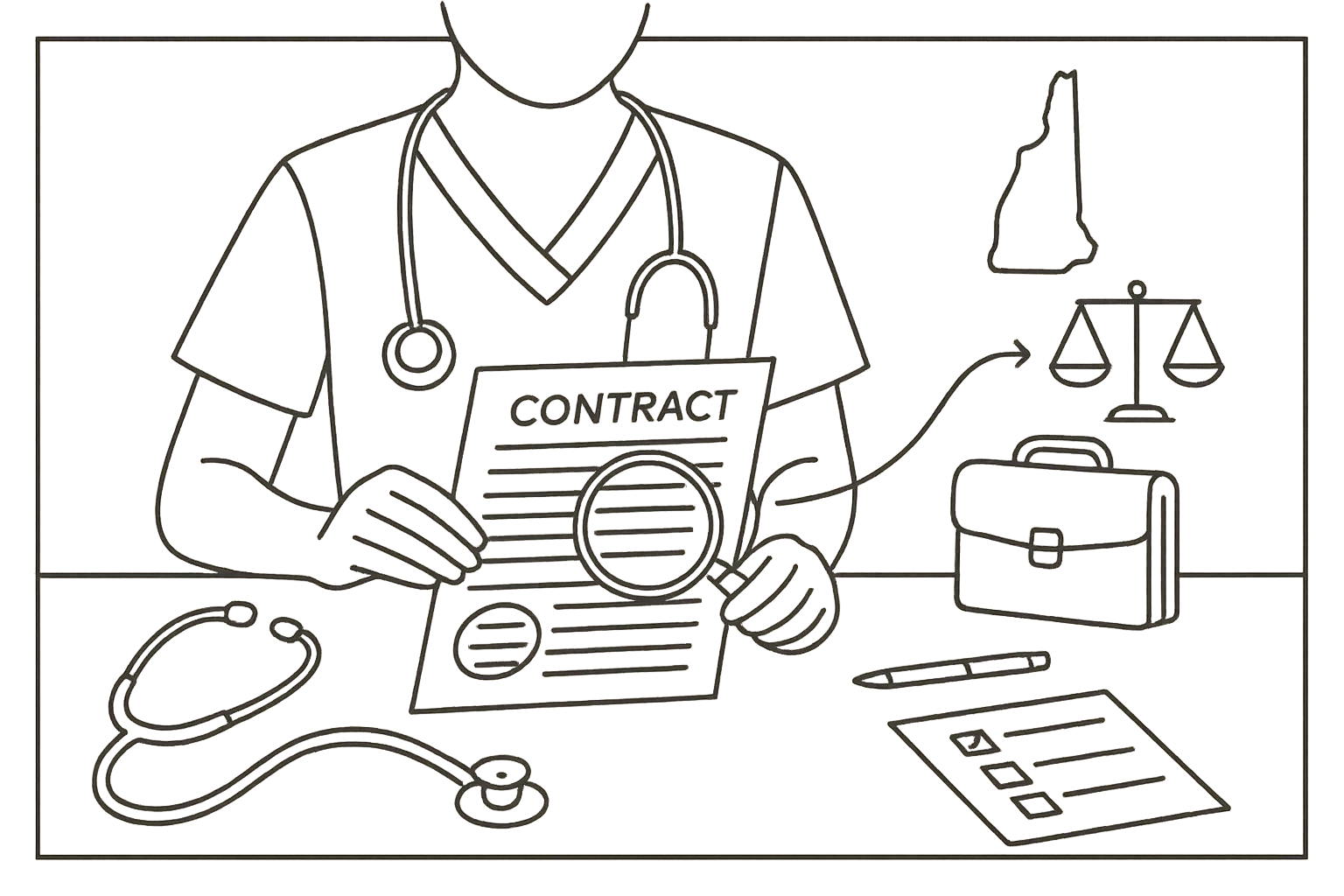
Nurse practitioner agreements frequently favor the employer in both their express terms and the practical implementation of compensation or liability rules. Examples include collections-based pay that transfers billing risk to the clinician, negative accrual that carries a deficit into later periods, broad indemnification obligations, or post-employment restrictions that limit future practice opportunities.
A line-by-line attorney review identifies where contract language could reduce take-home pay, increase personal liability, or restrict career mobility. The objective is to explain what each clause means in practice, how it may be triggered, and what obligations may continue after termination. Reviewing common NP contract red flags also helps clinicians recognize provisions that deserve closer attention before signing.
State-specific context matters because contract terms must align with the NP’s licensure, prescribing authority, professional responsibilities, and applicable New Hampshire requirements. An attorney can assess both the written language and how the employer’s compensation, supervision, billing, and termination practices may affect the clinician.
Compensation, Bonuses, and Benefits
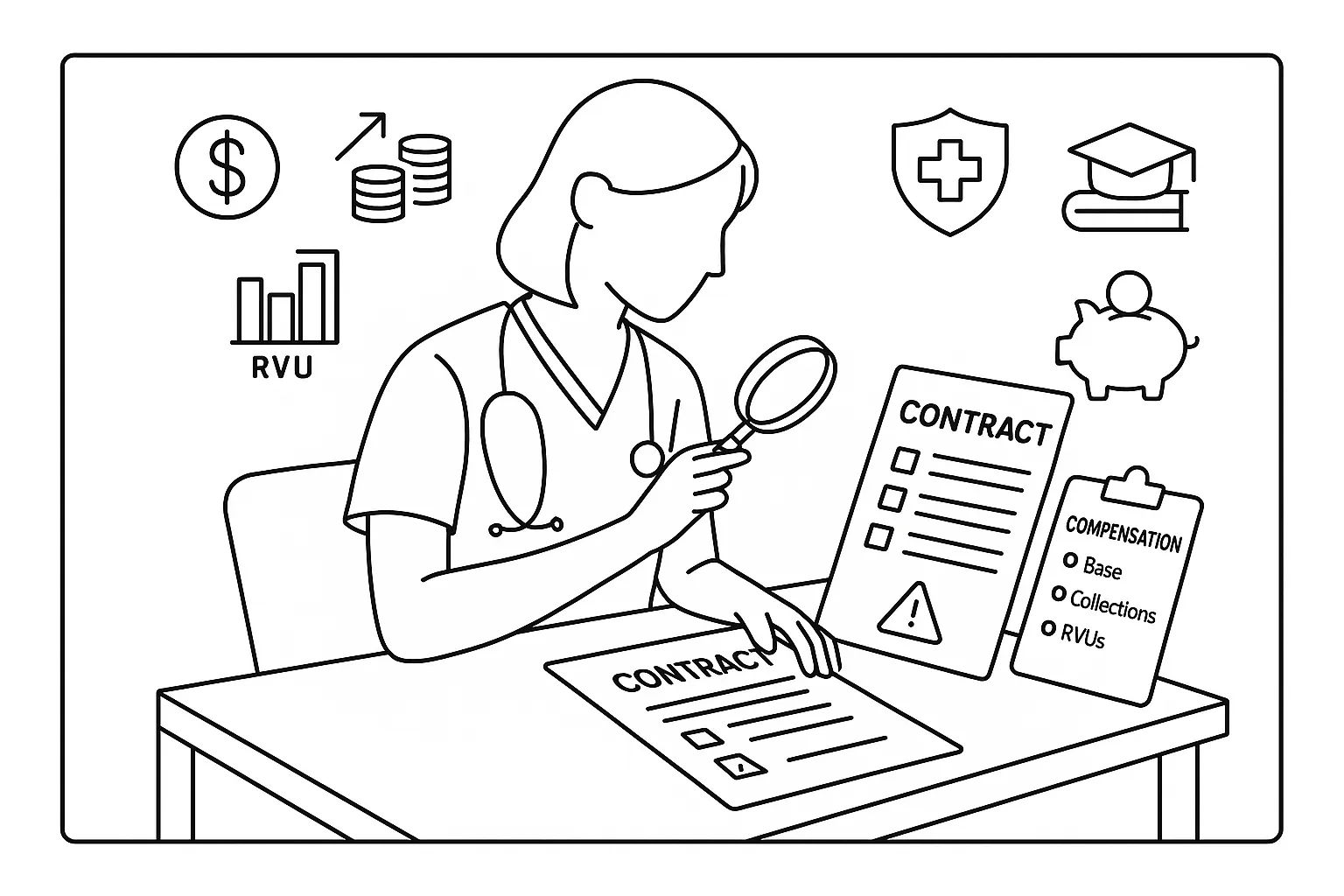
Compensation and benefits provisions determine the financial value of an offer, but the headline salary rarely tells the entire story. A thorough review of compensation and productivity terms examines the formula, the employer’s discretion, and the circumstances in which earned compensation may be reduced or withheld.
Base Salary, Collections, and RVU Metrics
Common models include a guaranteed base salary, collections-based compensation, and RVU-based productivity pay. A base salary should be reviewed for possible reductions, offsets, or conversion to a productivity model. Collections-based pay depends on money actually received, so payer delays, denials, billing errors, write-offs, and the employer’s collection practices can affect the NP’s income.
RVU formulas should identify the applicable schedule, conversion factor, productivity threshold, and treatment of modifiers, shared visits, and procedures. The agreement should also explain when productivity is measured and paid. If a formula refers to collections, the contract should clarify whether it means gross receipts or amounts remaining after adjustments, refunds, or administrative deductions.
Negative accrual and reconciliation provisions require particular attention. These terms may permit the employer to recover an alleged overpayment or carry a productivity deficit into a later period. The review should determine how deficits are calculated, whether they reset, and whether the employer may deduct them from bonuses or final compensation.
Bonuses and Repayment Obligations
Bonus language may be discretionary or based on a stated formula. A discretionary bonus provides limited certainty, while a formulaic bonus should define the relevant productivity, quality, documentation, or collection targets. Audit rights and employer discretion can still affect whether a formula-based bonus is ultimately paid.
Signing bonuses, relocation assistance, and loan-repayment benefits often include clawback provisions if the NP leaves before a specified date. The agreement should identify the triggering events, distinguish resignation from termination without cause, and state whether repayment is prorated or immediately due in full.
Benefits should also be reviewed for employer contributions, eligibility dates, paid leave, retirement plans, continuing education allowances, licensing expenses, and DEA-related fees where applicable. Multi-site work, leave, reduced schedules, or termination may affect eligibility, and the agreement may reserve the employer’s right to modify benefit plans.
New Hampshire Licensure, Scope of Practice, and Contract Status
The agreement should accurately reflect the NP’s professional authority and responsibilities under the framework administered by the New Hampshire Board of Nursing. Contract provisions addressing scope of practice, prescribing, clinical protocols, supervision, or collaboration should be evaluated against the applicable New Hampshire requirements and the realities of the practice setting. Employers may also impose contractual policies that are more restrictive than the regulatory baseline.
Vague delegation or physician-oversight language can create confusion about clinical decision-making, signatures, availability, reporting, and responsibility for patient care. A review of scope-of-practice issues in NP contracts helps distinguish regulatory obligations from additional employer-imposed conditions. The agreement should also address what happens if a required license, credential, enrollment, or practice arrangement is delayed or changes during employment.
Independent contractor agreements require a separate analysis because the contract may shift taxes, insurance, benefits, expenses, and business risk to the NP. Terms granting the employer extensive control over schedules, equipment, locations, clinical operations, or outside work should be assessed alongside the agreement’s classification language. An independent contractor agreement review can identify obligations that differ from a traditional employment arrangement.
Malpractice Coverage and Restrictive Covenants
Malpractice insurance provisions can create significant financial exposure if the contract does not clearly identify the policy type, coverage limits, named insureds, and responsibility for coverage after termination. An occurrence policy generally covers incidents occurring during the policy period regardless of when a claim is later reported. A claims-made policy generally requires coverage to be in effect when the claim is made, which may make tail coverage necessary after the underlying policy ends.
The agreement should state whether the employer provides malpractice insurance and who must pay for tail coverage when a claims-made policy applies. It should also address circumstances that may change responsibility, such as resignation, termination without cause, or termination for cause. A focused malpractice and tail insurance review can clarify these obligations before they become a post-employment dispute.
Indemnification language deserves similar attention because it may require the NP to reimburse the employer for defense costs, settlements, losses, or conduct outside available insurance coverage. Broad provisions should be examined for their scope, triggering events, and relationship to malpractice coverage.
Restrictive covenants may include non-compete, non-solicitation, confidentiality, and patient-contact restrictions. Their practical effect depends on the restricted activity, duration, geographic area, protected interests, and surrounding facts. In New Hampshire, employer-drafted restrictions should be reviewed carefully because broad language may affect opportunities in Manchester, Nashua, Concord, nearby communities, or other markets where the NP expects to practice.
Termination, Repayment, and Performance Terms
Termination provisions determine how either party may end the relationship and what financial consequences follow. The agreement should clearly address without-cause notice, immediate for-cause termination, possible cure periods, compensation during the notice period, and whether the employer may remove the NP from the schedule before the effective termination date.
- Without-cause termination: Review the notice period, whether both parties have equal rights, and whether the employer may shorten notice without continuing compensation.
- For-cause termination: Identify objective triggers, discretionary standards, and whether the NP receives notice and an opportunity to correct a curable issue.
- Final compensation: Confirm the treatment of accrued salary, bonuses, collections, productivity reconciliations, paid leave, and offsets after separation.
- Repayment obligations: Determine whether termination triggers repayment of signing bonuses, relocation assistance, educational benefits, or other advances.
A dedicated contract termination review can help an NP understand notice requirements, continuing obligations, and potential financial exposure before giving notice or responding to an employer’s termination decision.
Performance and audit provisions also affect termination and compensation. Productivity standards should use identifiable metrics and a transparent methodology. The contract should explain whether the NP may inspect supporting data, challenge an audit, or complete a remediation plan before a bonus is forfeited or employment is terminated. Broad employer discretion can otherwise permit retroactive adjustments based on criteria that were not disclosed when the agreement was signed.
What an Attorney-Led Contract Review Covers
A nurse practitioner should consult a contract attorney before signing an employment or independent contractor agreement and whenever a material amendment changes compensation, duties, locations, coverage, or termination rights. The review should occur early enough to allow the NP to understand the agreement before accepting its obligations.
- A line-by-line explanation of the agreement and its practical consequences.
- Identification of compensation risks, including unclear formulas, negative accrual, clawbacks, and collection definitions.
- Analysis of malpractice coverage, tail responsibility, indemnification, and other liability provisions.
- Review of New Hampshire practice terms, professional duties, restrictive covenants, and termination obligations.
- A written memorandum or redline identifying material issues for the NP to consider.
- A consultation to discuss the agreement, risk tolerance, and questions raised by the review.
Chelle Law approaches contract review as risk management rather than a guarantee of a particular negotiation outcome. The goal is to provide a clear understanding of the agreement’s financial, regulatory, and professional consequences so the NP can make an informed decision before becoming bound by its terms.
Get Your New Hampshire NP Contract Reviewed
Understand your compensation, malpractice coverage, termination rights, and New Hampshire practice obligations before signing an employment or independent contractor agreement.
Contact Chelle LawExplore Nurse Practitioner Contract Guidance
Review attorney services, practical contract resources, and state-specific information for nurse practitioners.