
An Oregon nurse practitioner contract can shape compensation, clinical duties, prescribing responsibilities, termination rights, and future practice options long after the offer is accepted. Oregon NPs are advanced practice registered nurses licensed by the Oregon State Board of Nursing, and their work must remain within the licensed specialty or population focus, educational preparation, and demonstrated competence. Oregon also treats NPs as independent practitioners and does not require a physician supervisory or collaborative practice agreement, although a hospital, clinic, or other facility may impose credentialing, privileging, or medical-staff requirements. Those distinctions matter when reviewing positions in Portland, Eugene, Salem, and communities throughout the state because employer language should not inaccurately create physician-supervision duties or expand the role beyond lawful practice limits. Contract review can identify inconsistencies among the proposed duties, facility requirements, prescribing provisions, compensation model, and professional obligations before the NP signs.
Financial and post-employment terms require the same attention. Productivity formulas may depend on collections, work RVUs, patient encounters, or quality measures, while signing bonuses, relocation assistance, and training benefits may become repayment obligations after an early departure. Malpractice policy type, tail coverage, termination notice, and restrictive covenants can also determine the cost and practicality of changing positions. An attorney-led nurse practitioner contract review can evaluate how these provisions work together and flag language that may warrant clarification or revision.
Oregon NP Contract Priorities and Practice Framework
An agreement is most useful when it accurately reflects the entire professional relationship rather than only salary and start date. Review commonly focuses on the following issues:
- Base salary, collections, RVUs, bonus calculations, reconciliation, and negative accrual.
- Clinical duties, population focus, prescribing responsibilities, work locations, scheduling, call, and administrative work.
- Malpractice policy type, coverage limits, tail insurance, indemnification, and reporting duties.
- Contract term, renewal, termination notice, cure rights, final compensation, and repayment obligations.
- Noncompetition, nonsolicitation, confidentiality, and other post-employment restrictions.
- Credentialing, privileging, quality metrics, benefits, professional expenses, and incorporated employer policies.
Independent Practice and Facility Requirements
Oregon NPs are licensed independent practitioners, so state law does not require a physician supervisory or collaborative practice agreement. A facility may nevertheless establish credentialing, privileging, medical-staff, or operational requirements. Contract analysis can distinguish those facility-specific conditions from a purported state supervision mandate and identify unclear reporting relationships or physician-approval provisions.
If an agreement includes a separate collaboration document, review can determine whether its language accurately reflects the Oregon role and the actual workplace arrangement. Chelle Law provides focused supervision and collaboration agreement review when those terms appear in an offer.
Scope, Title Use, and Prescribing Duties
The Oregon State Board of Nursing licenses nurse practitioners as advanced practice registered nurses. The NP title and population focus may be used only by a Board-licensed individual, and clinical services must remain within the NP’s licensed specialty or population focus, education, and demonstrated competence. Broad clauses allowing an employer to assign any duty or location may need closer analysis if they could expand the position beyond those boundaries.
Prescribing and dispensing authority is governed by the Oregon Nurse Practice Act and Board rules. An NP with a DEA number must register with Oregon’s Prescription Drug Monitoring Program, and limited dispensing requirements may also apply. The agreement can allocate operational responsibilities, but it should not obscure the clinician’s individual professional obligations or condition lawful prescribing authority on an inaccurately described physician relationship.
Practice Closure, Records, and Continuity of Care
Termination provisions involving the closure or transfer of an NP practice should account for Oregon requirements concerning client records, notice, and continuity of care. Contract language addressing patient communications, record custody, access, and transition responsibilities can materially affect departure planning. Review can clarify which obligations belong to the employer, which remain with the NP, and whether the agreement provides enough time and access to meet applicable professional duties.
Compensation, Productivity, and Repayment Exposure
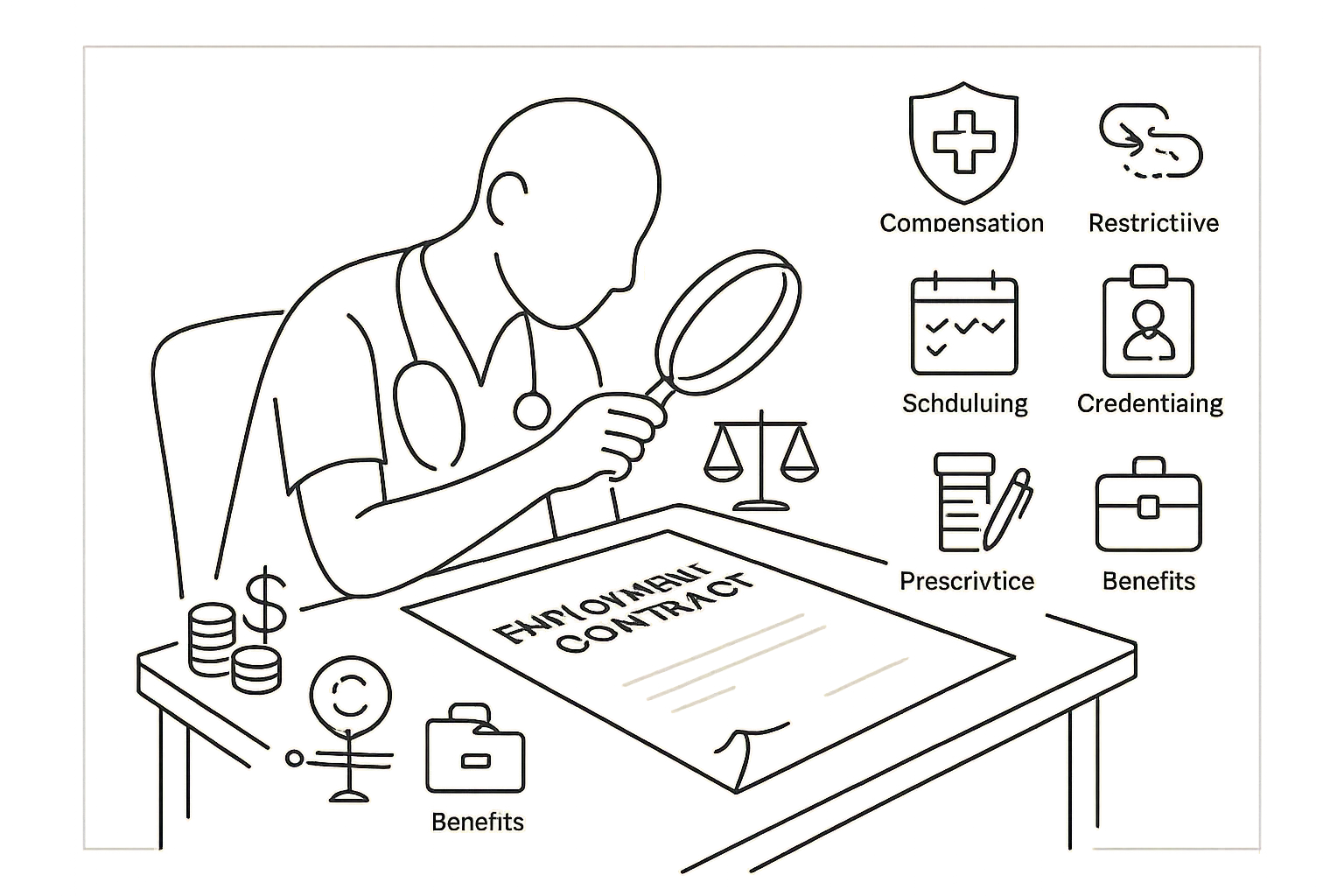
Base Pay and Productivity Formulas
Oregon NP agreements may combine guaranteed base pay with compensation tied to collections, work RVUs, patient encounters, quality measures, or several metrics. Analysis can determine which services generate credit, when productivity is measured, when reports become available, and whether the employer retains discretion to change thresholds or conversion factors. The agreement should also be read with every compensation exhibit, bonus plan, and incorporated policy because definitions outside the main document may control actual earnings.
Collections-based compensation can be affected by payer delays, claim denials, billing errors, and collection practices outside the NP’s control. RVU arrangements raise different questions, including whether telehealth, procedures, administrative work, and other assigned services receive credit. A focused compensation and productivity review can explain the formula, test different performance scenarios, and identify downside risk.
Negative Accrual, Reconciliation, and Clawbacks
Negative accrual and reconciliation provisions may carry a productivity shortfall into a later period, offset future bonuses, reduce final compensation, or create an asserted repayment obligation. Important details include the measurement period, treatment of leave and credentialing delays, access to supporting data, correction procedures, and whether a deficit survives termination.
Signing bonuses, relocation allowances, loan benefits, and training expenses may also be structured as advances subject to repayment. Review can identify the triggering events, proration method, repayment deadline, and treatment of an employer-initiated termination, disability, or other departure circumstance. These provisions should be evaluated together rather than as isolated benefits.
Malpractice Coverage and Termination Rights
Claims-Made, Occurrence, and Tail Coverage
Malpractice provisions may identify the insurer, policy type, coverage limits, named insureds, exclusions, consent-to-settle terms, and reporting obligations. Claims-made coverage may require tail insurance for claims reported after the underlying policy ends, while occurrence coverage generally responds based on when the incident occurred. An NP should not assume the employer will purchase tail coverage unless that responsibility appears in the agreement or an incorporated policy.
Tail costs can significantly affect the economics of leaving a position. Review can determine whether responsibility changes based on the reason for termination, whether prior-acts coverage is an alternative, and whether the NP has access to proof of insurance. Chelle Law offers a dedicated malpractice and tail insurance review for these issues.
Without-Cause Termination and Departure Consequences
Without-cause termination allows a party to end the relationship after providing the contractually required notice. The practical effect depends on the length and form of notice, whether the employer can remove the NP from the schedule, and whether compensation and benefits continue during the notice period. For-cause provisions require separate attention to the definition of cause, any cure opportunity, and whether immediate termination is permitted.
Departure language may also control final bonus calculations, unused leave, repayment obligations, tail coverage, patient transition, and access to records. A nurse practitioner termination review can compare these consequences across different exit scenarios.
Oregon Non-Competes and Post-Employment Restrictions
Restrictions on the Practice of Nursing
ORS 653.295 generally renders a noncompetition agreement restricting the practice of nursing void and unenforceable in covered relationships between a medical licensee and a person, management services organization, hospital, or hospital-affiliated clinic. The statute contains exceptions, including circumstances involving certain ownership interests, so the text of the restriction and the structure of the relationship still matter.
Other Oregon noncompetition agreements may be subject to statutory requirements involving advance notice, a protectable interest, post-termination delivery, and the applicable compensation threshold. Review should therefore evaluate the actual clause and surrounding facts rather than assume every restriction receives identical treatment.
Classification and Related Restrictive Covenants
Labeling an NP an independent contractor does not necessarily remove the agreement from analysis under Oregon’s noncompetition statute. Oregon statutory notes indicate that employee and employer terminology may be considered independently of common-law distinctions involving independent contractors. The agreement’s classification, duties, control provisions, and restrictive language should be reviewed together.
Nonsolicitation, confidentiality, trade-secret, and patient-contact provisions may create separate concerns even when a traditional non-compete is void or questionable. A focused nurse practitioner non-compete review can assess duration, geography, restricted activities, statutory conditions, exceptions, and related post-employment terms.
Job Expectations, Benefits, and Credentialing
Duties, Locations, Scheduling, and Call
The services provision should match the position described during recruitment. Review can compare expected clinical duties, patient volume, population focus, work locations, charting, telehealth, administrative tasks, meetings, supervision of other personnel, and authority to assign additional responsibilities. Language permitting unilateral changes to duties or locations may affect workload and commuting obligations without guaranteeing corresponding compensation.
Schedule terms may address regular clinic hours, weekends, holidays, call coverage, after-hours messages, and chart-completion time. If additional work generates separate compensation, the agreement should make the rate and approval process understandable. Informal scheduling assurances are easier to evaluate when incorporated into the written offer or contract.
Benefits, Policies, and Credentialing Delays
Benefits may include health coverage, retirement contributions, paid leave, CME time and allowances, professional memberships, licensing costs, DEA-related expenses, and relocation assistance. When an employer policy controls eligibility or the amount of a benefit, obtaining the current policy can reveal waiting periods, amendment rights, exclusions, and repayment conditions that do not appear in the primary agreement.
Credentialing and privileging clauses should identify realistic timelines and explain what happens if approval is delayed or denied. Review can flag provisions that postpone compensation indefinitely because of payer, facility, or employer processes outside the NP’s control. Quality measures and ongoing credentialing conditions are also easier to assess when they are objective, documented, and connected to the assigned role.
Preparing for an Oregon NP Contract Review
Documents to Include
A complete review requires more than the signature page or offer letter. Useful materials include:
- The complete employment or independent contractor agreement, including every addendum and exhibit.
- The offer letter and written communications describing compensation, scheduling, duties, or benefits.
- Compensation schedules, RVU tables, bonus plans, and available productivity examples or reports.
- Malpractice insurance summaries identifying policy type, limits, and tail terms.
- Employer policies addressing leave, credentialing, termination, repayment, and professional expenses.
- Written details concerning locations, call, patient volume, administrative work, and facility requirements.
Questions and Review Outcomes
Before signing, an NP may need written clarification about how compensation is calculated, when bonuses are paid, what causes a repayment obligation, who purchases tail coverage, and what happens after notice of termination. Questions may also address whether a collaboration document is truly required, how credentialing delays affect pay, and whether restrictive language reaches future Oregon practice opportunities.
Chelle Law can review the agreement, explain material terms, identify financial and professional risks, and provide written comments or proposed revisions for the NP to consider. The goal is a clearer understanding of the document and the provisions that may warrant clarification before acceptance.
Speak With an Oregon Nurse Practitioner Contract Lawyer Before You Sign
Have Chelle Law review your proposed agreement, identify compensation and repayment risks, explain termination and insurance provisions, and flag terms that may warrant clarification or revision.
Request an Oregon NP Contract Review