
When a nurse practitioner accepts a position in Wyoming—whether practicing in Cheyenne, Casper, Laramie, or another healthcare market—the employment or independent contractor agreement governs compensation, duties, malpractice coverage, termination rights, and post-employment restrictions. These agreements operate within Wyoming’s legal and regulatory framework, including oversight by the Wyoming State Board of Nursing and statutory provisions under Title 33, Chapter 21 of the Wyoming Statutes governing advanced practice registered nurses.
Subtle drafting differences can materially affect productivity compensation, repayment obligations, professional liability exposure, and the ability to change jobs. A Wyoming nurse practitioner contract review examines how the employer’s language allocates those risks and whether provisions concerning scope of practice, prescribing, credentialing, supervision, or collaboration are consistent with the position and applicable state requirements.
At Chelle Law, the focus is on structured, attorney-led risk assessment tailored to the agreement and the Wyoming practice setting. Each contract is reviewed for terms that may affect earnings stability, regulatory compliance, and long-term career mobility. NPs offered a 1099 arrangement should also consider a focused independent contractor agreement review because contractor classification, expenses, insurance, and termination provisions can differ substantially from W-2 employment terms.
Key Takeaways for Wyoming Nurse Practitioners
- Review the complete agreement before signing to identify income risk, malpractice exposure, repayment obligations, and restrictions on future practice.
- Confirm how base salary, collections, or RVU compensation is calculated, reported, reconciled, and paid.
- Identify the malpractice policy type and determine who must purchase tail coverage when the relationship ends.
- Evaluate non-compete, non-solicitation, termination, and repayment provisions together because their combined effect can limit mobility or create debt.
- Compare the contract’s duties, prescribing provisions, credentialing conditions, and practice expectations with the role and Wyoming regulatory requirements.
Wyoming Contract Terms and Regulatory Considerations
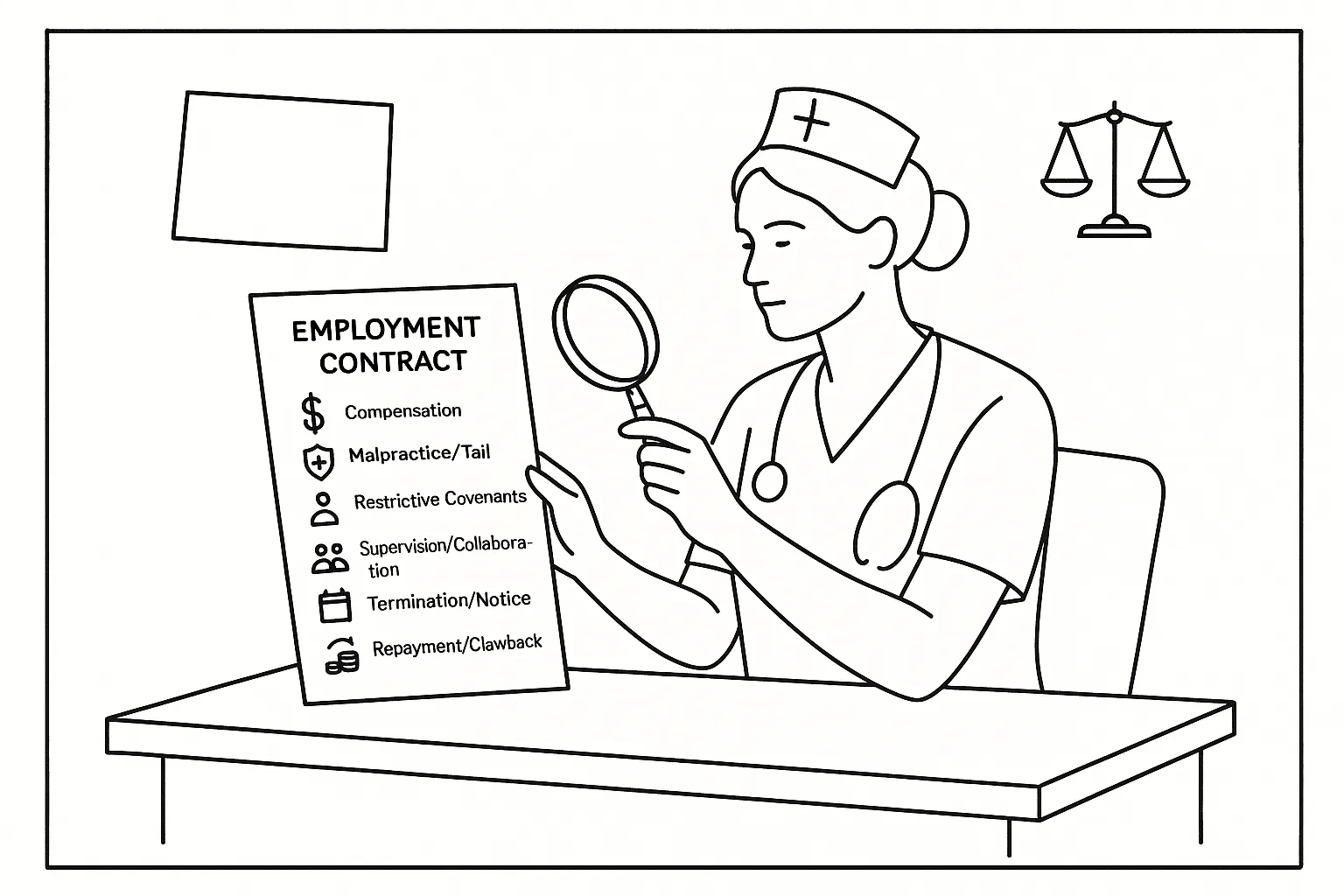
An NP agreement is a risk-allocation document. It determines how compensation is earned, who bears malpractice and tail risk, what duties and locations the employer may assign, how the relationship can end, and whether the NP owes money after departure. Signing bonuses, relocation assistance, educational benefits, and loan support may also be tied to repayment schedules that continue for years.
The contract should accurately describe the Wyoming position rather than rely on generic language drafted for multiple states or professions. References to licensure, prescribing, scope of practice, supervision, collaboration, and professional responsibility should be checked against the role and the requirements administered by the Wyoming State Board of Nursing. Employer policies and clinical protocols may supplement the agreement, but they should not obscure who is responsible for maintaining credentials, paying related costs, or addressing changes that affect the NP’s ability to work.
Compensation, Benefits, and Productivity Models
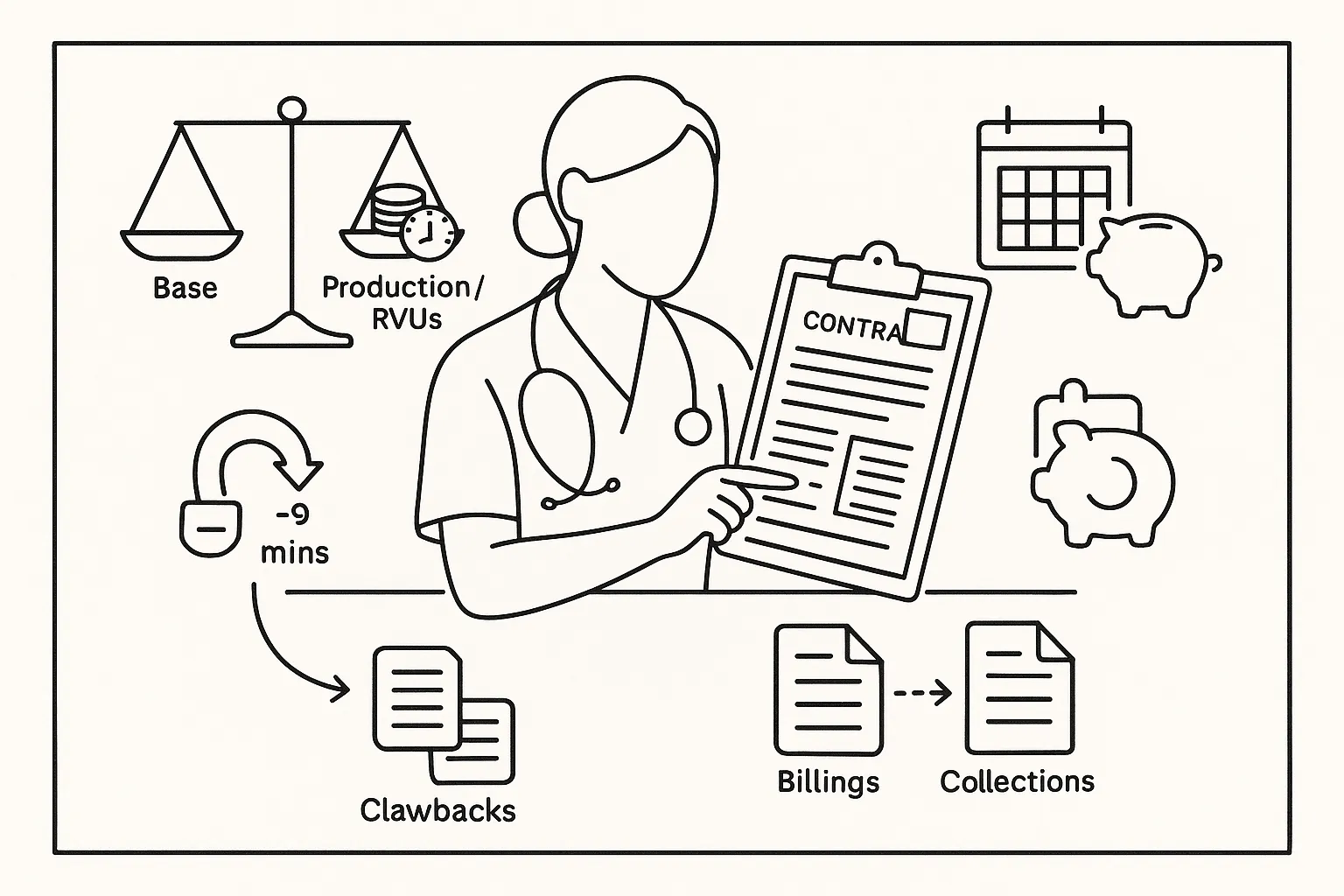
Common compensation structures include guaranteed salary, base-plus-production, collections-based pay, and RVU models. The distinction between billings and collections is important: billed charges do not necessarily equal the payments an employer receives, and collections can be affected by payer mix, denials, adjustments, and administrative delays. A thorough NP compensation and productivity review should identify the formula, reporting method, payment schedule, thresholds, and employer-controlled inputs.
RVU models convert assigned units into compensation through a stated conversion factor. For example, a $40 conversion factor applied to 5,000 RVUs produces $200,000 in calculated production before any threshold, split, cap, expense deduction, or reconciliation provision is applied. The agreement should explain whether the NP receives credit for personally performed services, incident-to billing, shared visits, procedures, or work affected by coding and credentialing delays.
Negative accrual and clawback language can turn a productivity shortfall into reduced future compensation or an asserted debt. Benefits, CME allowances, retirement contributions, paid time off, call compensation, and allowable deductions also affect the total value of the offer. These terms should be read together so that an attractive headline salary is not undermined by unclear reconciliation or repayment provisions.
Malpractice Insurance and Tail Coverage
Malpractice provisions should identify whether the employer provides occurrence or claims-made coverage, the applicable limits, and who is responsible for coverage after the agreement ends. Occurrence coverage generally responds to covered incidents occurring during the policy period even when a claim is filed later. Claims-made coverage generally requires the claim to be made while the policy or an applicable extended reporting endorsement remains in effect.
An employer may provide claims-made insurance during employment but assign tail responsibility to the NP after resignation or termination. The agreement should clearly state when tail is required, who purchases it, whether comparable prior-acts coverage is permitted, and whether responsibility changes based on the reason for termination. A dedicated malpractice and tail insurance review can clarify potential post-employment cost and liability exposure before the contract is signed.
Non-Competes, Termination, and Repayment Obligations
Restrictive covenants may include non-compete, non-solicitation, confidentiality, and non-interference provisions. A nurse practitioner non-compete review evaluates the activities restricted, duration, geographic reach, triggering events, and practical effect on future employment. Enforceability depends on Wyoming law and the specific facts, so an NP should not assume that an employer-drafted restriction is either automatically valid or automatically unenforceable.
Termination provisions define for-cause events, without-cause rights, cure periods, and required notice. They should also address compensation through the final day of employment, unpaid productivity bonuses, benefit continuation, patient-transition duties, and the return of employer property. A focused contract termination review is particularly useful when notice requirements, immediate termination rights, and post-employment obligations do not align.
Repayment obligations commonly attach to signing bonuses, relocation reimbursements, educational support, and loan assistance. The contract should specify whether repayment is prorated, whether the obligation applies after termination without cause, and whether interest, legal fees, or collection costs may be added. These provisions must be evaluated alongside termination language because the employer’s right to end the agreement may trigger a substantial repayment demand.
Scope of Practice, Credentialing, and Work Expectations
Contract language addressing clinical duties, prescribing, supervision, collaboration, and professional responsibility should align with the Wyoming role and applicable licensing requirements. A supervision and collaboration agreement review can identify generic or inconsistent provisions, clarify the parties’ responsibilities, and assess whether related costs or administrative duties have been allocated in the agreement.
Credentialing and hospital privileges are operational prerequisites that can affect the start date and compensation. The agreement should explain who submits required materials, what happens if approval is delayed, whether pay begins before credentialing is complete, and whether the NP bears responsibility for delays outside the NP’s control. Telehealth terms should also identify approved practice locations, applicable licensure expectations, and malpractice coverage for care delivered across state lines.
Schedule, call, floating, and location language deserve similar attention. Vague terms may permit unilateral changes to hours, worksites, patient volume, or call responsibilities without a corresponding adjustment to compensation. The contract should provide enough detail to understand the position the NP is actually accepting.
Contract Review Checklist and Attorney Review Process
Recurring warning signs include ambiguous productivity formulas, unexplained negative accrual, one-sided termination rights, broad restrictive covenants, employer-favorable tail provisions, and vague duty or location language. Before review, compare the agreement with common NP contract red flags and gather the supporting materials needed to evaluate the complete offer.
- The offer letter and complete employment or contractor agreement, including exhibits and addenda
- The job description, proposed schedule, call expectations, and assigned practice locations
- Malpractice policy declarations or a coverage summary
- Productivity reports, compensation examples, or sample reconciliations when available
- Employer policies incorporated into the agreement and written communications documenting material promises
An attorney-led review should identify clauses affecting income timing, professional liability, regulatory obligations, and future mobility. The process generally includes reviewing the documents, preparing written comments or proposed revisions, and discussing the most significant provisions with the NP. Completing that analysis before signing provides an opportunity to clarify ambiguities and understand the practical consequences of the agreement.
Have Your Wyoming NP Contract Reviewed Before You Sign
Chelle Law reviews nurse practitioner agreements for compensation risks, malpractice obligations, restrictive covenants, termination provisions, and state-specific practice terms.
Contact Chelle LawExplore Nurse Practitioner Contract Guidance
Review related services, educational resources, and state-specific contract information.