
Call pay is a frequent source of dispute in physician assistant employment and independent contractor agreements. When call obligations, compensation triggers, and reconciliation methods are ambiguous, PAs can face unexpected income loss, clawbacks, or compliance exposure after separation. Call-pay language is often buried in an addendum even though it affects scheduling, productivity credit, billing, malpractice coverage, and termination obligations throughout the main agreement. This article explains how call compensation typically works, the disputes that unclear provisions can create, the addendum terms that should define each party’s responsibilities, and practical steps to take when a disagreement arises. Understanding these contractual mechanics helps a PA evaluate financial risk and determine when an attorney-led review may protect expected income before signing.
How PA Call Pay Works and Why Disputes Occur
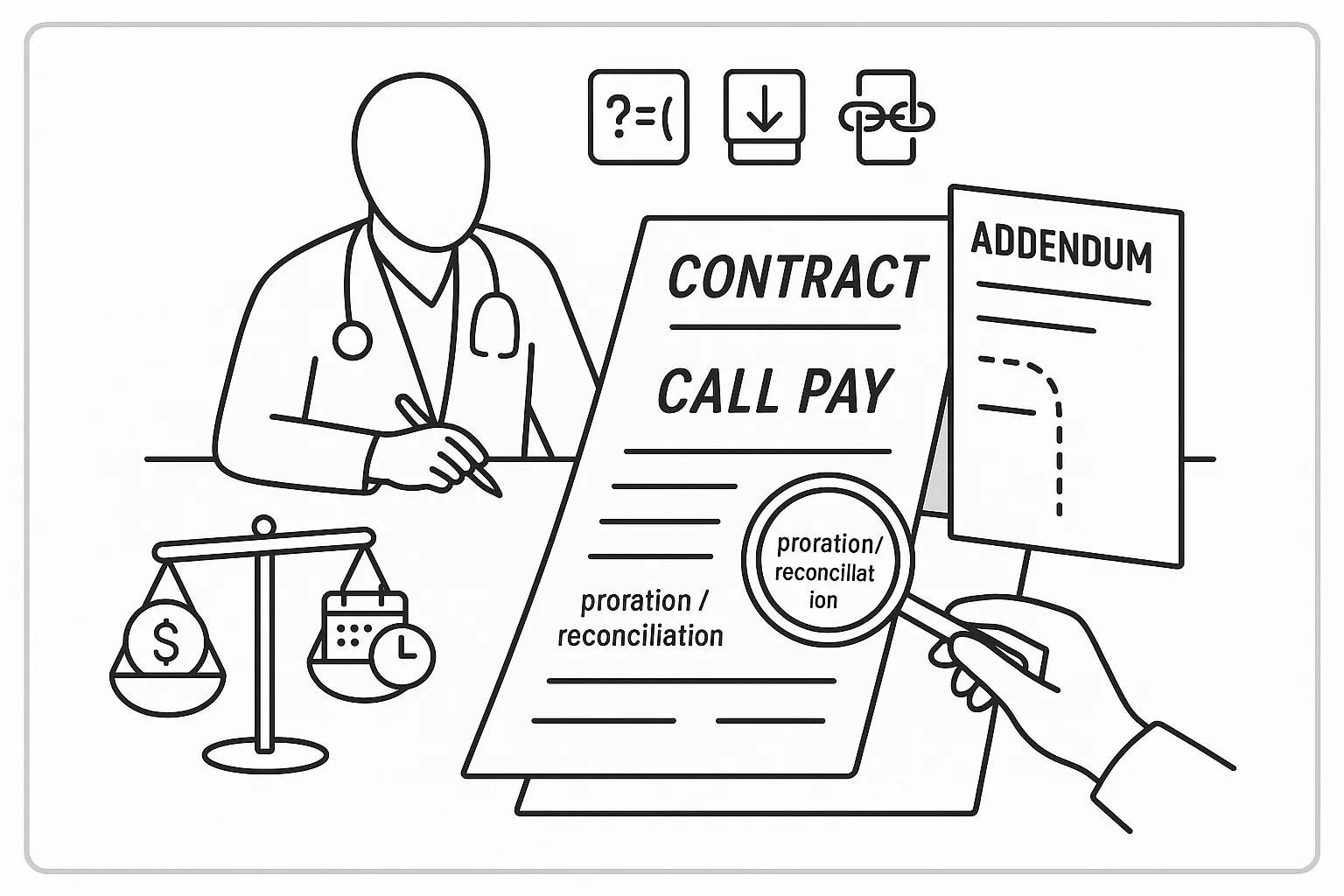
Call pay compensates off-shift availability, on-call response, or in-house emergency coverage distinct from base salary or ordinary productivity compensation. Employers may calculate it as a flat stipend per shift, an hourly on-call rate, a per-episode fee, or a combination of guaranteed pay and incremental payments tied to collections or RVUs. When call work contributes to a broader production formula, the interaction between the stipend and the PA’s regular compensation should be reviewed alongside the agreement’s other compensation and productivity terms.
Disputes arise when the contract does not define what counts as call rather than regular hours, how partial shifts are prorated, whether collections generated during call are attributed to the employer or PA, and how call pay reconciles against productivity guarantees or advances. Problems also occur when an addendum changes the main agreement without clear integration language or when the employer changes schedules, locations, or eligibility requirements without addressing compensation.
Three structural features commonly create conflict:
- Ambiguous calculation formulas, such as a “call stipend per week” that does not specify the number of shifts, eligible events, or proration rules.
- Reconciliation or negative accrual provisions that permit later deductions or repayment demands involving advances and bonuses.
- Misalignment between billing and collections responsibility and the party entitled to call compensation, creating delayed payments or cash-flow disputes.
Because call pay intersects compensation, billing, supervision, scheduling, and termination provisions, unclear language can lead to unpaid compensation or unexpected repayment obligations. A line-by-line contract review can identify how these provisions operate together rather than evaluating the call addendum in isolation.
Common Call Pay Disputes for Physician Assistants
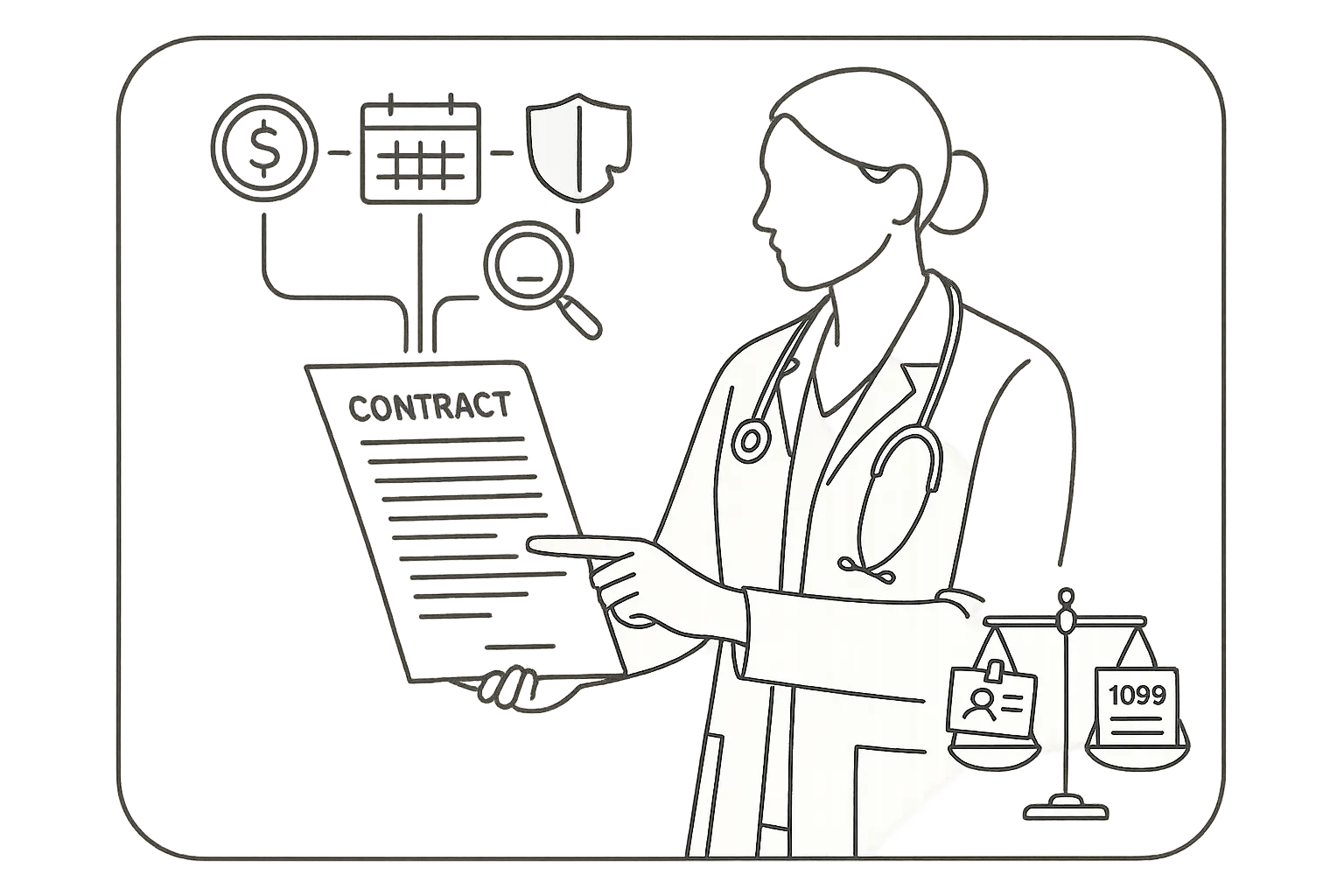
Collections attribution is a common source of disagreement. For example, an emergency call shift may generate significant billings, but the employer may credit the collections to a supervising physician’s panel and reduce the PA’s stipend on the theory that productivity covered the call. If the agreement does not define revenue attribution during call coverage, the PA may not receive the expected payment.
Reconciliation provisions can create similar surprises. An employer may advance a monthly call stipend and later deduct an alleged productivity shortfall, including after termination, when the calculation method is unclear. Schedule changes can also affect eligibility when the agreement ties pay to a particular rotation but the employer later assigns shifts across multiple sites. A detailed review of the PA’s call schedule and coverage requirements can reveal whether the employer has defined locations, reassignment rights, notice, and payment triggers.
Malpractice and classification issues may compound a compensation dispute. A PA who performs higher-risk on-call services could face a post-employment tail obligation if the agreement uses claims-made coverage and allocates that cost to the PA. A clinician treated as an independent contractor for compensation but controlled as an employee for scheduling may also encounter disputes over taxes, benefits, and post-termination obligations. These concerns should be analyzed under the actual agreement rather than inferred from the label placed on the relationship.
Call Pay Addendum Terms That Clarify the Agreement
A well-drafted call pay addendum should clarify calculation mechanics, eligibility, scheduling, billing responsibility, and post-termination treatment. It should also state how the addendum integrates with the main contract and which provision controls if the documents conflict.
Calculation, Payment, and Reconciliation Terms
The agreement should specify whether the PA receives a flat stipend per shift, an hourly on-call rate, a percentage of collections, or RVU-based compensation. If the formula uses RVUs, it should identify the applicable conversion factor, how call RVUs are credited, and whether that production is included in or added to the PA’s regular compensation. The addendum should also define rounding, proration for partial shifts, payroll timing, and what constitutes a payable call event, such as remote availability, patient contact, or a billed encounter.
If the employer provides advances or draws, the document should identify the reconciliation period, explain the math used to net productivity or collections against those payments, and establish a contractual deadline for adjustments or repayment demands. Clear records-access and dispute procedures are also important because a PA cannot meaningfully verify a collections- or productivity-based calculation without the underlying data. PAs whose call compensation depends heavily on production should understand how productivity bonus calculations affect the stipend.
Eligibility, Scheduling, Billing, and Scope
Eligibility language should address full-time, part-time, per-diem, and substitute coverage; identify all covered sites; and state whether pay follows the scheduled shift or the individual PA. The addendum should define remote availability, in-house presence, phone triage, response times, and other qualifying duties. It should also explain whether the employer may reassign call and what notice applies when a schedule change affects compensation.
Billing terms should identify who submits claims, how collections are allocated, when the PA receives payment, and whether the stipend changes when the employer retains revenue from call services. In a collections-based model, the contract should address denied claims, contractual adjustments, chargebacks, and the risk of uncollected charges. Call responsibilities should also remain consistent with the PA’s licensure, delegated duties, supervision or collaboration requirements, credentialed privileges, and applicable institutional policies.
Clawbacks, Malpractice Coverage, and Termination
If the employer reserves a right to recover stipend advances, the addendum should define the permitted triggers, calculation method, records supporting the demand, and deadline for asserting it. Post-termination reconciliation language should explain when the final calculation occurs, whether amounts may be deducted from final compensation, and how the PA may challenge an alleged balance. These provisions should be read together with the contract’s termination and repayment terms.
The documents should also allocate malpractice responsibility for claims arising from call services. If the employer uses claims-made coverage, the agreement should state who purchases tail coverage or whether another form of continuing coverage will apply. Reviewing the policy type and the contract’s tail insurance obligations before signing can help a PA identify a potentially significant post-employment expense.
Call Pay Contract Red Flags
Call compensation should not depend on undefined employer discretion or calculations the PA cannot verify. Provisions warrant closer review when they create open-ended repayment exposure, permit schedule changes without corresponding pay rules, or shift liability for employer-directed services without clearly defining insurance protection.
- Vague reconciliation language that permits unlimited retrospective deductions.
- Call pay tied to collections without a payment timeline, access to supporting reports, or a dispute process.
- Stipends conditioned on employer ownership of generated revenue without clear attribution rules.
- Terms requiring the PA to purchase tail coverage or broadly indemnify the employer for claims involving employer-directed call duties.
- Undefined call duties or supervision language that may require work outside the PA’s credentialed privileges.
- An addendum that conflicts with the main agreement but does not state which document controls.
Each issue can create delayed compensation, repayment demands, regulatory concerns, or post-employment malpractice costs. Contract review can identify the interaction among these provisions and propose clearer language about which party bears each risk.
Steps to Take After a Call Pay Dispute
Prompt, organized action helps preserve evidence and clarify the amount in dispute. A PA should retain the signed agreement and addenda, call schedules, time records, call logs, pay statements, billing or productivity reports, and communications concerning eligibility or schedule changes. The PA can then request a written explanation of the employer’s calculation and the records used to support it while following any internal grievance or notice procedure in the contract.
If the explanation remains incomplete, the employer seeks repayment without a clear contractual basis, or the disputed compensation is material, legal review may be appropriate. Counsel can compare the employer’s position with the agreement’s payment, notice, reconciliation, and termination provisions and determine whether a focused demand for records or compensation is warranted.
The contract may require mediation, arbitration, or another dispute-resolution process. The available path depends on the agreement, the amount at issue, and applicable law. Early review can help the PA avoid inconsistent communications, comply with contractual deadlines, and evaluate recovery options before the dispute expands.
Frequently Asked Questions
What should a PA call pay addendum define?
A call pay addendum should define qualifying duties, eligible shifts, covered locations, the compensation formula, payment timing, proration, billing attribution, reconciliation procedures, schedule-change rules, and post-termination treatment. It should also explain how it integrates with the main employment or independent contractor agreement.
Can call pay be included in a PA’s productivity compensation?
It can be, depending on the contract. The agreement should state whether call-generated RVUs or collections count toward ordinary productivity thresholds, produce separate compensation, offset a stipend, or are retained by the employer without changing the stipend.
Why do reconciliation clauses create call pay disputes?
Reconciliation clauses create disputes when they do not explain the calculation period, supporting data, treatment of advances, or deadline for adjustments. An unclear clause may allow the employer to claim a shortfall or demand repayment after the PA expected the compensation to be final.
What records should a PA preserve during a call pay dispute?
The PA should preserve the signed contract and addenda, call schedules, time records, call logs, pay statements, billing or productivity reports, and written communications about eligibility, assignments, calculations, or schedule changes.
How can termination affect call pay and malpractice obligations?
Termination may trigger a final compensation reconciliation, repayment demand, deduction dispute, or responsibility for tail insurance under a claims-made policy. The agreement should identify when final calculations occur and which party remains responsible for malpractice coverage involving prior call services.
When should a physician assistant seek legal review of a call pay dispute?
Legal review may be appropriate when the employer withholds material compensation, relies on a calculation the PA cannot verify, demands repayment without a clear contractual basis, or invokes arbitration or another formal dispute process. Review before signing can also identify ambiguous terms before a dispute develops.
Review Your PA Call Pay Terms Before a Dispute Develops
Chelle Law reviews physician assistant agreements and call pay addenda to identify unclear compensation formulas, reconciliation exposure, scheduling obligations, and post-termination risks.
Contact Chelle Law