
Credentialing is an administrative process with significant contractual consequences for physician assistants. When payer enrollment, hospital privileging, or facility approval takes longer than expected, a PA may face delayed income, postponed benefits, malpractice coverage questions, or repayment obligations under an employment or independent contractor agreement. The allocation of these risks depends on the contract’s start-date language, compensation formula, credentialing contingencies, and termination provisions. Understanding those terms before signing can help a PA determine who bears the financial burden of a delay and what remedies are available if the credentialing process stalls.
How PA Credentialing Works and How Long It Can Take
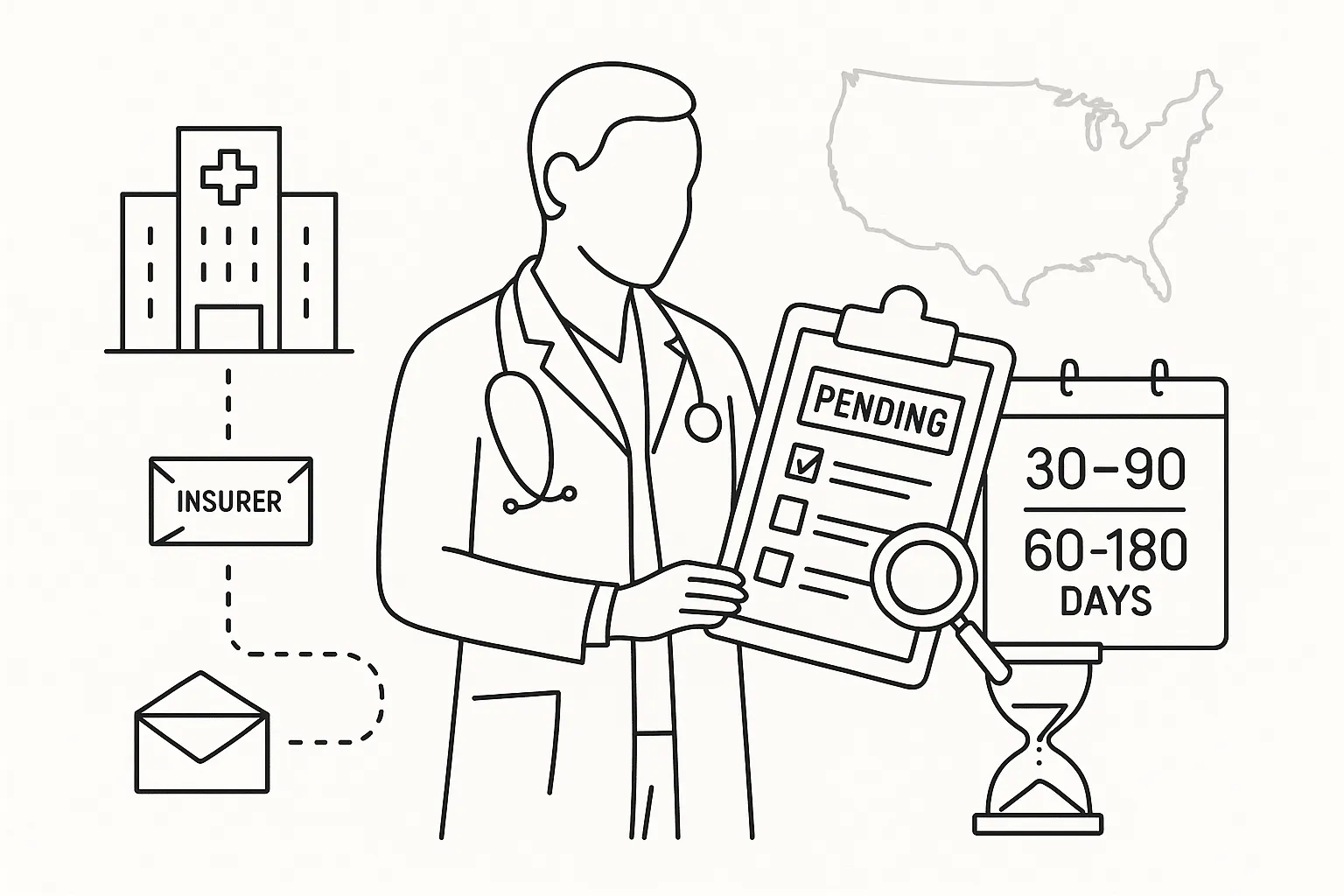
Credentialing is the process through which payers, hospitals, and facility credentialing committees confirm a PA’s licensure, education, training, privileges, malpractice history, and other qualifications. Common components include verification of state licensure, DEA registration, certification where applicable, education and training, work history, references, and malpractice claims history. Payer enrollment and hospital privileging are parallel but distinct processes with separate forms, decision-makers, and timelines.
Timelines vary based on the employer, payer, facility, specialty, and completeness of the application. Internal hospital privileging and medical staff approval may take 30 to 90 days when documentation is complete, while payer enrollment can take 60 to 180 days depending on backlogs and primary-source verification. Multi-state positions, telehealth work, and roles involving several facilities may require additional approvals. Missing documents, incomplete background checks, delayed references, and credentialing committee schedules can extend the process.
These estimates should be treated as directional rather than guaranteed. A contract should account for the possibility that credentialing will continue beyond the anticipated start date instead of assuming that every approval will arrive on schedule.
Contract Risks Created by Credentialing Delays
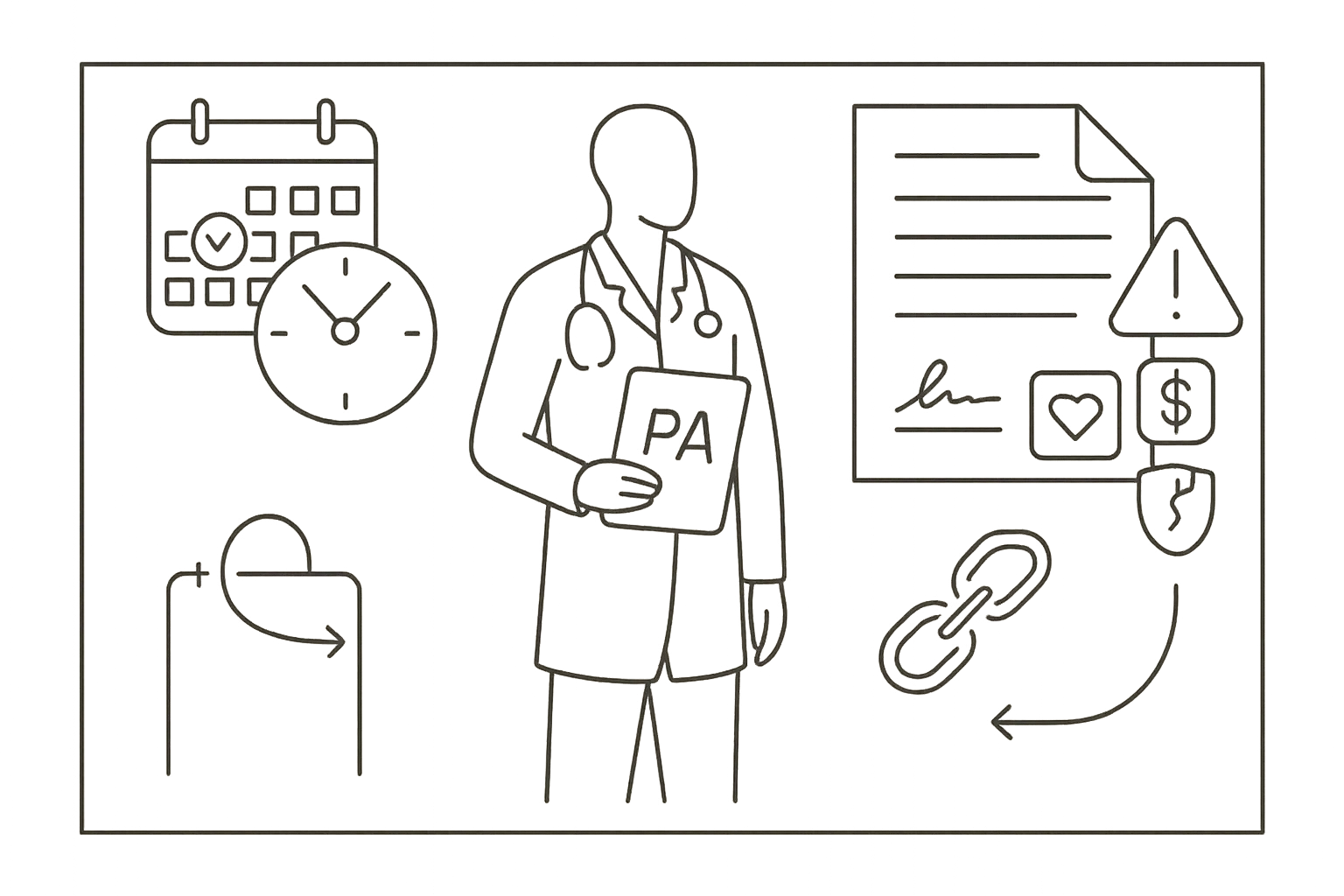
Credentialing delays can affect more than the first day of work. They may change when compensation begins, whether benefits accrue, how malpractice insurance applies, and whether the employer can terminate the agreement or demand repayment. The following areas deserve particular attention during contract review.
Compensation, Start Dates, and Benefits
When compensation depends on productivity, collections, or RVUs, delayed credentialing can prevent a PA from generating billable encounters. Collections-based compensation creates additional cash-flow risk because payer enrollment delays may be followed by a separate payment lag. An RVU model may also produce disputes if the productivity period begins on the contractual start date but the PA cannot treat or bill patients during that period. A focused PA compensation and productivity review can identify how guarantees, draws, reconciliation, and delayed billing interact.
Benefits eligibility, health insurance, retirement participation, PTO accrual, and probationary periods are also commonly tied to an employment start date. If the stated start date arrives before credentialing is complete, the PA may be unable to work while receiving no salary or benefits. The agreement should clearly distinguish the contract’s effective date, the employment start date, and the date on which clinical duties and compensation begin.
Termination, Clawbacks, and Repayment Obligations
Some agreements define failure to obtain credentials or privileges as a for-cause termination event. That language can be problematic when the delay results from an employer’s administrative process, a payer backlog, or another circumstance outside the PA’s control. Vague provisions may allow the employer to end the agreement without the notice or protections that would apply to an ordinary without-cause termination.
Credentialing-related termination can also activate clawbacks for signing bonuses, relocation assistance, education expenses, or other advances. The repayment formula should distinguish between a PA’s failure to provide required information and a delay the PA did not cause. Reviewing sign-on bonus repayment terms before accepting an advance can clarify whether repayment is prorated, when it becomes due, and which termination events trigger it.
Malpractice Coverage, Privileges, and Scope of Practice
Credentialing can affect when malpractice coverage begins and which services the PA may perform. If an employer activates claims-made coverage before all approvals are complete and the relationship ends shortly afterward, the contract may assign the PA responsibility for tail coverage. Conversely, beginning clinical work before the applicable coverage is effective can create a potentially serious coverage gap. The agreement should specify the policy type, effective date, covered duties, and responsibility for any necessary tail insurance. A separate review of malpractice insurance for physician assistants can help explain these distinctions.
Temporary or limited privileges may also restrict the PA’s duties until full approval is granted. That can reduce productivity and earning potential while affecting supervision, delegation, prescribing, or facility-specific responsibilities. Any interim arrangement should be consistent with applicable law, the PA’s privileges, and the employer’s malpractice coverage.
Credentialing Provisions to Review Before Signing
Start-date and contingency clauses determine when the parties’ obligations become effective. A condition requiring credentialing before clinical duties begin may protect the PA from being expected to work without the necessary approvals, but it does not automatically guarantee pay during the waiting period. Language allowing the employer to postpone the start date indefinitely without compensation, notice, or a termination option can shift most of the delay risk to the PA.
Guaranteed compensation is most useful when the agreement states exactly when it begins and whether it continues during an employer-caused delay. In a production model, the contract should explain how delayed billing affects RVU credit, collections, bonus periods, and reconciliation. Draw or negative-accrual provisions should also be examined to determine whether advanced compensation can become a debt if credentialing takes longer than expected.
Other provisions to review include responsibility for submitting applications, deadlines for providing documents, benefit eligibility, bonus measurement periods, malpractice effective dates, and remedies if approval is denied. The termination section should be read together with these clauses because it determines whether either party may end the relationship, what notice is required, and whether repayment obligations survive. A termination provision review can identify how credentialing events affect notice, cause definitions, and post-employment obligations.
How to Reduce Credentialing Risk Before the Start Date
A clear credentialing clause should identify each party’s responsibilities, establish practical benchmarks, and explain what happens when approval is delayed through no fault of the PA. Depending on the compensation arrangement, negotiated protections may include guaranteed base pay during an agreed waiting period, a revised start date, an option to terminate without penalty, or a defined method for calculating retroactive production compensation.
For productivity-based compensation, the formula should specify whether the calculation uses RVUs, gross charges, payer-allowed amounts, or actual collections. It should also address the reporting period and any payment lag. Draw and reconciliation language should explain when repayment may be requested and whether the PA can be held responsible for a shortfall caused by delayed credentialing rather than inadequate performance.
The PA should also request a written credentialing schedule, identify the person responsible for status updates, and retain copies of every submission. Written assurances are more useful when incorporated into the agreement or a signed addendum rather than left in informal email discussions. Before signing, a comprehensive physician assistant contract review can evaluate these terms alongside compensation, malpractice insurance, restrictive covenants, and repayment obligations.
What to Do When Credentialing Is Delayed After Signing
Maintain contemporaneous records of application submissions, verification requests, committee notices, payer communications, and documents supplied to the employer. These records can help establish whether the delay resulted from missing PA information, an employer process, a payer backlog, or a facility decision. Ask for regular written updates and confirm any revised start date, interim assignment, or compensation arrangement in writing.
If the contract provides notice procedures or remedies, follow them promptly. Written notice should identify the delay, reference the relevant agreement provision, and request the applicable remedy, such as guaranteed pay, a revised deadline, or retroactive compensation. A PA should avoid beginning patient care under an informal arrangement without confirming privileges, supervision or collaboration requirements, compensation, billing treatment, and malpractice coverage.
If the employer proposes termination, repayment, or a material contract amendment, review the original agreement before accepting the change. Credentialing delays can affect several provisions at once, and an amendment intended to address the start date may also alter compensation, contract length, bonus eligibility, or termination rights.
When a Credentialing Issue Warrants Legal Review
Legal review may be appropriate when the agreement creates an uncompensated waiting period, conditions all guaranteed pay on credentialing, permits broad for-cause termination for failure to obtain privileges, or requires repayment for delays outside the PA’s control. Other warning signs include negative-accrual provisions, unclear malpractice effective dates, uncapped clawbacks, and productivity formulas that do not explain how a delayed start affects bonus calculations. These concerns may also appear alongside broader physician assistant contract red flags.
An attorney can compare the credentialing language with the agreement’s compensation, benefits, malpractice, termination, and restrictive-covenant provisions. Counsel can also propose clearer contingencies, capped repayment obligations, defined waiting-period compensation, and procedures for documenting or escalating delays. The goal is to identify who bears each risk before the contract is signed or before a post-signing dispute becomes more difficult to resolve.
Frequently Asked Questions
Can a physician assistant be required to wait without pay during credentialing?
The answer depends on the agreement’s effective date, compensation terms, and credentialing contingency. A contract may postpone compensation until credentialing is complete, while another may provide guaranteed pay or a compensated waiting period. The language should clearly state when salary and benefits begin and what happens if the employer’s process causes the delay.
What is the difference between payer enrollment and hospital privileging?
Payer enrollment determines whether the PA can participate in and bill particular insurance programs. Hospital privileging authorizes the PA to perform approved services within a facility. These processes may proceed at the same time, but they involve different applications, decision-makers, and timelines.
Can credentialing delays affect a PA’s productivity bonus?
Yes. A delay can reduce the time available to generate RVUs, charges, or collections during a bonus period. The contract should explain whether the measurement period is adjusted, whether production is credited retroactively, and how payer payment lag affects bonus calculations.
Can an employer demand bonus repayment if credentialing is delayed?
A repayment demand depends on the clawback language and the event that triggers it. The agreement should distinguish between a delay caused by the PA’s failure to provide required information and one caused by an employer, payer, or facility process. It should also state whether repayment is prorated and when it becomes due.
Should a PA perform interim work while credentialing is pending?
Only after confirming that the work is permitted by the applicable approvals, scope-of-practice requirements, supervision or collaboration arrangement, and malpractice coverage. The PA should also obtain written terms explaining compensation, billing treatment, duties, and how interim work will count toward productivity.
When should a PA have credentialing provisions reviewed by an attorney?
Review is most useful before signing, particularly when compensation, benefits, malpractice coverage, bonus repayment, or termination rights depend on credentialing. Legal review may also be appropriate after signing if a delay leads to unpaid time, a proposed amendment, threatened termination, or a repayment demand.
Review Credentialing Risks Before You Sign
Chelle Law reviews physician assistant agreements for credentialing contingencies, delayed compensation, malpractice obligations, repayment clauses, and termination risks.
Contact Chelle LawExplore Physician Assistant Contract Guidance
Review related legal services, practical resources, and state-specific contract information for physician assistants.