
Severance pay provisions are a frequent but often overlooked component of physician assistant (PA) employment agreements. Although employers may frame severance as a discretionary benefit, the contract language governing eligibility, calculation methods, repayment obligations, benefits continuation, and release conditions can materially affect a PA’s income and mobility after separation. Severance also interacts with termination rights, productivity compensation, signing-bonus repayment, restrictive covenants, and malpractice coverage. Understanding these provisions before signing helps a PA determine whether the promised payment offers meaningful transition protection or remains subject to conditions that could reduce or eliminate its value.
What Severance Pay Means for Physician Assistants

Severance pay is a contractual or employer-promised payment made following termination, a reduction in force, position elimination, or another qualifying separation event. For PAs, severance can replace income while they seek new employment, allocate post-employment risk through releases or restrictive covenants, and help cover benefits or other transition costs.
The provision must be read with the rest of the agreement. A PA who faces a lengthy notice requirement or restrictive covenant may place greater value on transition income than someone who can immediately begin another position. Severance can also be affected by productivity compensation, bonus repayment, and malpractice obligations, so its practical value may be very different from the amount stated in isolation.
Common qualifying events include involuntary termination without cause, a reduction in force, position elimination, or an employer-initiated discontinuation of services. Some agreements address resignation following a material employer breach or constructive discharge, but those events are often narrowly defined and may require written notice and an opportunity for the employer to cure the issue. PAs should compare the severance trigger with the agreement’s broader termination provisions.
How PA Severance Is Calculated and Paid
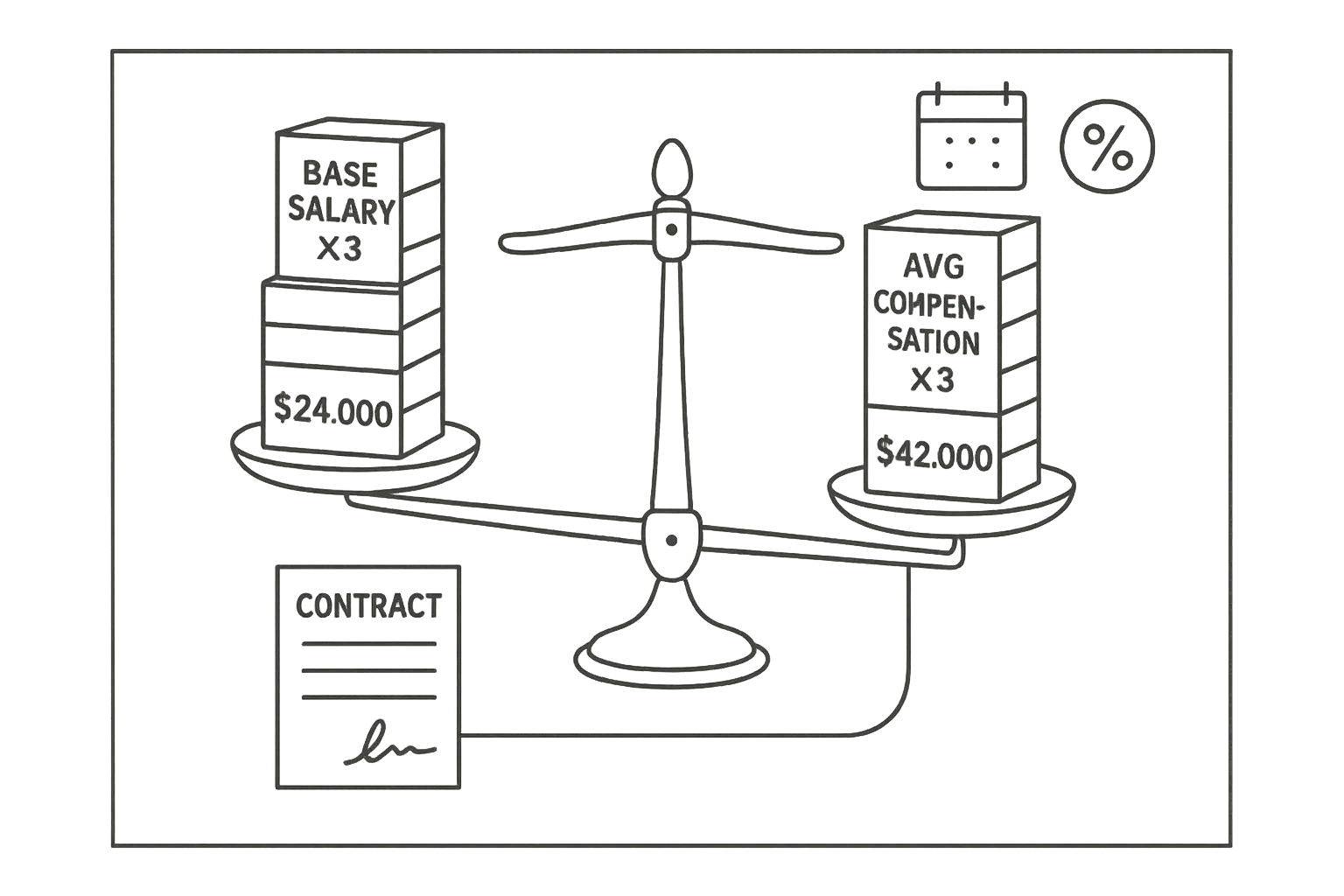
Severance provisions vary by employer type, including private practices, health systems, and urgent care organizations. The agreement should identify the compensation used in the calculation, when payment is due, whether benefits continue, and which offsets the employer may apply.
Base Salary, Average Compensation, and Bonuses
A base-salary formula typically provides a specified number of weeks or months of salary. It is straightforward, but it may substantially understate the PA’s earnings when productivity incentives, call pay, or bonuses represent a significant portion of total compensation. An average-compensation formula may better reflect actual earnings, but the contract must define the measurement period and identify which forms of compensation are included.
- Base salary multiple: Payment based on a set number of weeks or months of base salary, excluding variable compensation unless the contract says otherwise.
- Average compensation: Payment based on average earnings during a defined prior period, which may include base salary, call pay, productivity incentives, or collections-based compensation.
- Bonus treatment: Express inclusion or exclusion of incentive and production bonuses from the severance calculation.
For example, if a PA earns $8,000 in monthly base salary and typically receives $6,000 in monthly RVU incentives, three months of base salary would equal $24,000. Three months of average compensation would equal $42,000 if both components are included. This difference illustrates why reviewing compensation and productivity terms is important when evaluating severance.
Payment Timing, Taxes, Benefits, and Offsets
Severance may be paid as a lump sum, periodic salary continuation, benefits support, or a combination of these forms. A lump sum provides immediate funds but may remain subject to release conditions or recoupment provisions. Installments spread payment over a defined period and may give the employer additional opportunities to suspend payment following an alleged breach.
- Timing: The agreement should state when payment becomes due, particularly when it depends on execution of a release.
- Taxes: Severance is generally treated as taxable income and may be subject to withholding. A PA should consult an appropriate tax professional about individual consequences.
- Benefits continuation: The package may include continued medical coverage or employer support for COBRA premiums for a defined period.
- Offsets and setoffs: The employer may attempt to deduct advances, overpayments, loans, or other amounts allegedly owed by the PA.
Termination Terms That Control Severance Eligibility
Severance eligibility frequently depends on how the employment relationship ends. Definitions found elsewhere in the agreement can determine whether the PA receives payment, even when the severance section appears favorable on its own.
Termination for Cause Versus Without Cause
Many agreements provide severance only when the employer terminates the PA without cause or eliminates the position. A termination for cause usually disqualifies the PA. Because cause definitions may include misconduct, policy violations, failure to maintain licensure, contract breaches, or performance concerns, the wording can give the employer significant discretion over severance eligibility.
The PA should identify the conduct that qualifies as cause, whether the employer must provide written notice, and whether the PA receives an opportunity to cure a correctable issue. The agreement should also be reviewed for provisions that permit immediate termination without a cure period or allow the employer to make a unilateral cause determination.
Resignation, Employer Breach, and Position Elimination
Voluntary resignation is usually excluded from severance eligibility. Some contracts provide protection when a PA resigns after a material employer breach, but they may require prompt written notice and a cure period. Position elimination and reduction in force are more common triggers, although the agreement should clarify whether reassignment, a substantial schedule change, or a material reduction in duties qualifies.
Notice periods also affect transition planning. A without-cause termination clause may require advance notice or permit the employer to pay compensation in lieu of notice. That payment should be distinguished from severance so the employer cannot characterize an existing notice obligation as the entire severance benefit.
Clawbacks, Restrictive Covenants, and Malpractice Obligations
Severance can become contingent when the contract requires repayment following an alleged violation of post-termination obligations. A clawback may apply if the PA competes within a restricted area, solicits patients or employees, breaches confidentiality terms, or fails to satisfy another continuing obligation. These conditions should be evaluated alongside the agreement’s non-compete restrictions because they can turn severance from reliable transition income into a potential repayment liability.
Signing bonuses and relocation assistance can create additional exposure. The employer may offset repayment amounts against severance or require the PA to repay the bonus even when the employer initiates termination. A review of sign-on bonus repayment terms should determine whether repayment is prorated, which separation events trigger it, and whether an offset could eliminate the severance payment.
Malpractice coverage can also affect the value of a separation package. If the PA is covered under a claims-made policy, the agreement should identify whether tail coverage is needed and who pays for it after termination. A severance payment may offer limited protection if the PA simultaneously assumes a substantial tail obligation, making the contract’s tail insurance terms an important part of the analysis.
Reviewing and Negotiating a Severance Provision
A useful severance provision clearly defines qualifying events, the calculation method, the payment deadline, applicable offsets, and any continuing conditions. Objective language such as employer-initiated termination without cause or elimination of the PA’s position provides greater certainty than a provision based primarily on employer discretion.
- Trigger clarity: Determine whether eligibility depends on objective events or broad cause and performance definitions.
- Calculation accuracy: Confirm whether severance includes productivity compensation, bonuses, collections, or call pay.
- Payment certainty: Identify the payment deadline and any conditions that allow the employer to delay, suspend, or recover payment.
- Release scope: Review which employment-related claims the PA must release and which continuing obligations survive separation.
- Repayment interaction: Determine whether signing bonuses, relocation payments, advances, or other amounts may be deducted.
- Benefits and malpractice: Evaluate health coverage continuation and responsibility for any applicable tail insurance.
Standard employer terms may be less consequential when the severance amount is modest and the agreement otherwise provides adequate transition protection. Detailed review becomes more important when severance represents a significant share of expected transition income, compensation is heavily production-based, or payment depends on a broad release and continuing restrictions. A complete physician assistant contract review can identify how these provisions operate together rather than evaluating the severance clause in isolation.
Frequently Asked Questions
When is a physician assistant usually eligible for severance pay?
Eligibility depends on the employment agreement. Common triggers include employer-initiated termination without cause, position elimination, or a reduction in force. Termination for cause and voluntary resignation are commonly excluded unless the contract expressly provides otherwise.
Should PA severance be based on salary or total compensation?
The appropriate calculation depends on the PA’s compensation model and the contract language. A base-salary formula may understate lost income when productivity incentives, call pay, or bonuses make up a significant portion of earnings. An average-compensation formula should clearly define the measurement period and included payments.
Can an employer require a PA to repay severance?
An agreement may contain a clawback requiring repayment after an alleged breach of confidentiality, non-compete, non-solicitation, release, or other post-termination obligations. The triggering conduct, repayment amount, and employer enforcement rights should be reviewed before the agreement is signed.
Can signing-bonus repayment reduce a PA’s severance payment?
Yes, if the contract permits the employer to offset signing-bonus, relocation, advance, or overpayment obligations against severance. The agreement should state whether repayment is prorated and whether an employer-initiated termination changes the repayment requirement.
Does PA severance normally include health benefits or malpractice tail coverage?
Not automatically. Some packages include continued health coverage or COBRA premium support, while others provide only a cash payment. Responsibility for malpractice tail coverage is usually governed by separate insurance and termination provisions and should be evaluated with the severance package.
Should a PA have a severance release reviewed before signing it?
A release can affect employment-related claims and impose continuing confidentiality, non-disparagement, cooperation, or restrictive-covenant obligations. Legal review can explain the scope of the release, the value being exchanged, and the circumstances under which payment may be withheld or recovered.
Have Your PA Employment Contract Reviewed
Chelle Law reviews severance, termination, compensation, repayment, restrictive-covenant, and malpractice provisions so you can understand the financial consequences before signing.
Contact Chelle Law