
A without-cause termination clause allows a physician assistant employment or independent contractor relationship to end without an allegation of misconduct, material breach, or serious performance failure. Although the provision may appear straightforward, its practical effect depends on the notice period, final compensation rules, malpractice coverage, repayment obligations, and restrictive covenants elsewhere in the agreement. A termination can interrupt income, eliminate future bonus eligibility, create a tail insurance expense, or restrict where the PA may work next. Understanding how these provisions operate together—and obtaining a careful PA contract termination review before signing—can help identify financial and professional risks while changes are still negotiable.
What Without-Cause Termination Means for Physician Assistants
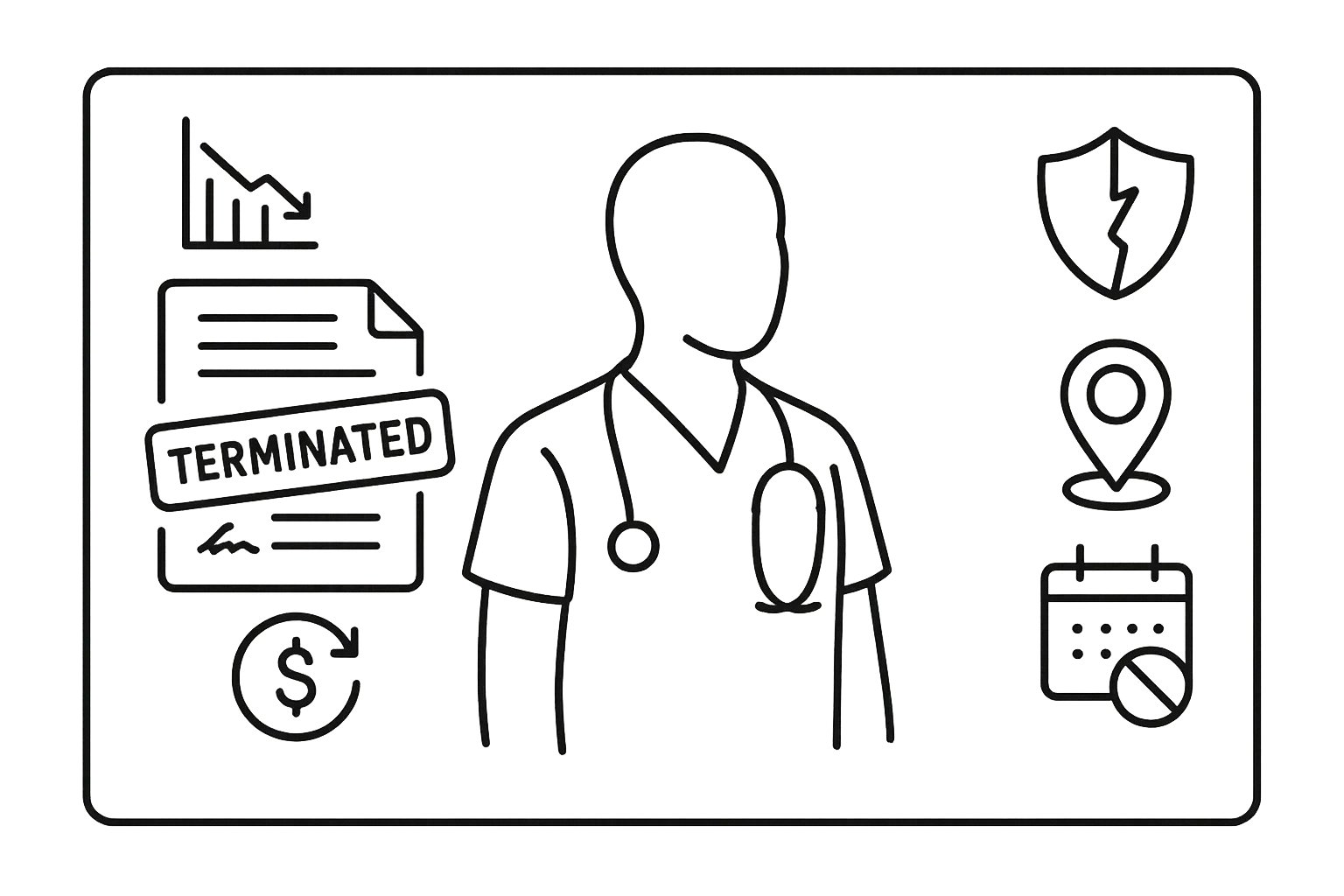
A without-cause provision permits an employer to end the relationship for reasons such as restructuring, financial changes, credentialing issues, or revised staffing priorities without asserting that the PA violated the agreement. The employer must still follow the contract’s requirements concerning notice, severance, final compensation, and other obligations that apply at separation.
These provisions are common in hospital-system, private-practice, and independent contractor agreements because they preserve operational flexibility. The headline termination right is only part of the analysis, however. A PA should determine whether the right is mutual, how much notice each party must give, whether the employer can stop scheduling the PA during the notice period, and which financial or post-employment terms survive termination.
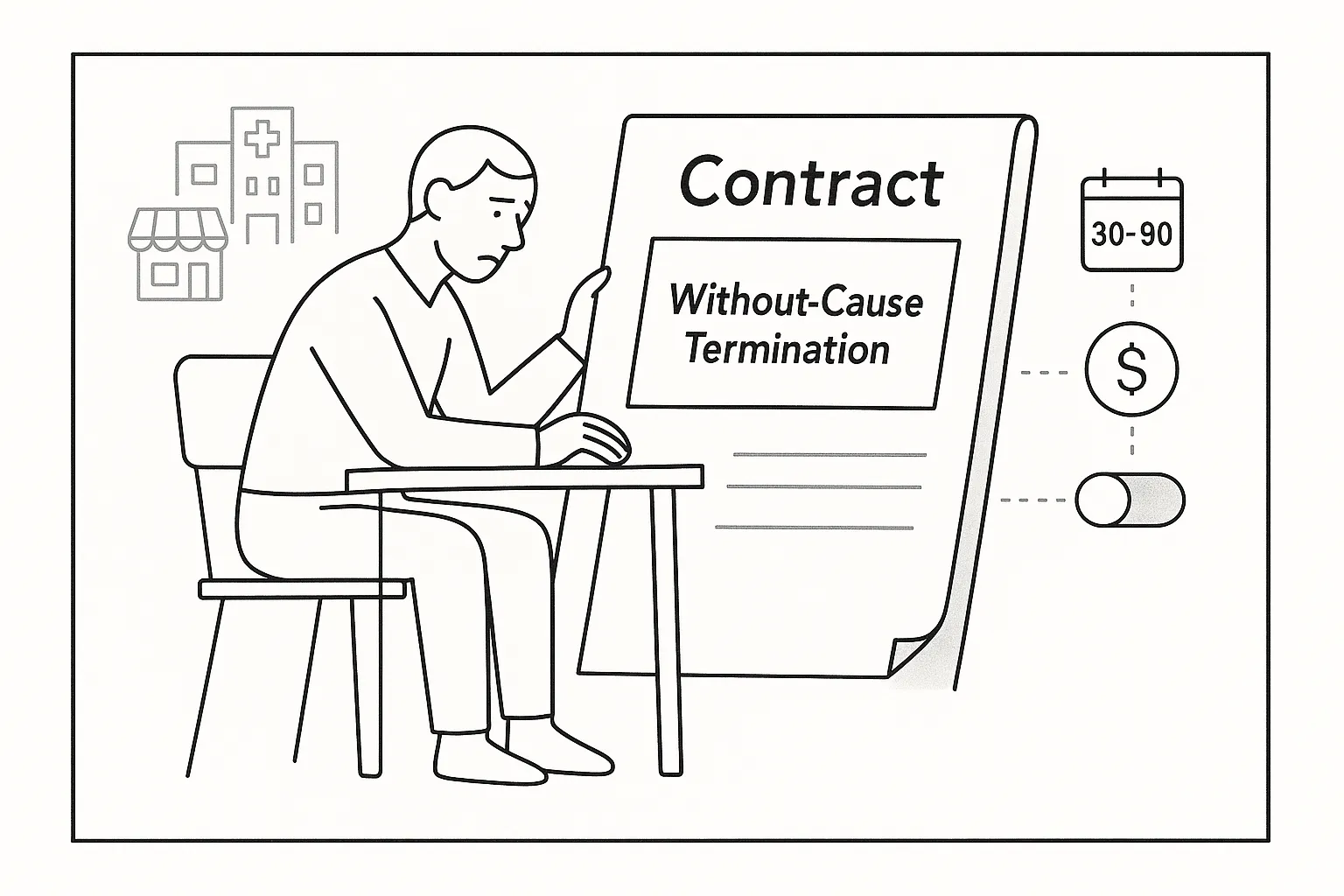
Contract Terms That Control a Without-Cause Separation
Notice, Severance, and Final Compensation
The notice period determines how much advance warning the parties must provide. A short period can leave little time to secure another position, complete credentialing, or arrange replacement benefits. The agreement should also clarify whether the PA will continue working and receiving normal compensation during notice or whether the employer may remove the PA from the schedule while the contract remains in effect.
Severance may be absent, limited to a defined payment, or conditioned on signing a release. Final-pay language should address earned salary, accrued paid time off when applicable, unreimbursed expenses, and productivity compensation. In an RVU or collections model, the PA should understand whether bonuses are prorated, when the final reconciliation occurs, and whether compensation received after separation remains payable. A focused review of compensation and productivity terms can identify formulas that create an unexpected loss when employment ends.
For-Cause Definitions, Repayment Duties, and Restrictive Covenants
The agreement should distinguish without-cause termination from defined for-cause events such as fraud, a material breach, or loss of required credentials. Vague cause language can create disagreement over whether the PA qualifies for notice, severance, or another contractual protection. Any opportunity to cure an alleged breach should also be stated clearly.
Repayment and restrictive covenant provisions can make an employer-initiated separation particularly costly. Sign-on bonuses, relocation assistance, or education payments may be subject to full or prorated repayment even when the employer ends the relationship. PAs should examine the agreement’s bonus repayment terms and determine whether a non-compete or non-solicitation clause applies after a without-cause termination. A dedicated non-compete review can assess how the restriction affects future practice options under the contract’s language.
Financial, Insurance, and Credentialing Consequences
Productivity Pay and Final Reconciliation
Productivity-based compensation can create significant final-accounting questions. If the employer controls scheduling, coding, billing, or collections, termination may stop new production while previously earned revenue remains uncollected. The contract should explain how work performed before termination will be measured, when the accounting will occur, whether the PA may inspect the supporting data, and when any remaining payment is due.
Draws and negative accrual provisions require similar attention. If guaranteed payments are treated as advances against future productivity, the employer may claim that an outstanding balance must be repaid after separation. The PA should determine whether deficits carry forward, whether reconciliation occurs when the employer initiates termination, and whether chargebacks or adjustments can reduce the final payment.
Malpractice Coverage, Tail Insurance, and Credentialing
If the employer provides claims-made malpractice coverage, ending the relationship may create a need for extended reporting, commonly called tail coverage, for care delivered before termination. The agreement should identify who obtains and pays for that coverage and whether the PA must reimburse the employer. Reviewing the contract’s tail insurance provisions can help prevent an unexpected expense or coverage dispute.
Termination may also affect access to electronic health records, prescribing systems, billing platforms, and facility privileges. A PA preparing for a transition should retain permitted employment and compensation records, confirm the status of privileges and credentialing, and understand what information a future employer may request. The contract should not be read as the sole source of licensing or credentialing obligations, which may arise from separate policies and applicable law.
How to Reduce Termination Risk Before Signing
Risk mitigation begins with making the termination mechanics specific and internally consistent. A PA may seek a mutual notice period, predictable compensation during notice, a defined final-accounting process, and clear responsibility for malpractice tail coverage. If severance is offered, the agreement should state how it is calculated, when it is paid, and whether it depends on a release or continued compliance with post-employment restrictions.
- Define for-cause events and any available cure period.
- State whether the PA remains scheduled and paid during the notice period.
- Explain how salary, bonuses, collections, RVUs, draws, and deductions are reconciled.
- Allocate responsibility for tail insurance or other post-termination coverage.
- Limit repayment obligations when the employer initiates termination without cause.
- Clarify whether non-compete and non-solicitation restrictions survive the separation.
The value of a proposed change depends on the entire agreement. For example, a longer notice period may provide limited protection if the employer can immediately stop scheduling the PA, while severance may be offset by a repayment clause. A line-by-line review helps evaluate these provisions together rather than treating termination language as an isolated paragraph.
Steps to Take After a Without-Cause Termination
After receiving notice, the PA should preserve the agreement, amendments, bonus plans, termination notice, payroll records, productivity reports, and relevant written communications. Request a written final accounting that identifies earned compensation, deductions, repayment demands, and the timing of any later productivity reconciliation. Benefits deadlines and malpractice coverage should also be reviewed promptly to reduce the risk of an avoidable gap.
- Confirm the effective termination date and whether work continues during notice.
- Compare the employer’s stated process with the contract’s termination requirements.
- Request documentation supporting final pay, bonus, draw, and repayment calculations.
- Determine when benefits and malpractice coverage end and whether tail coverage is required.
- Review restrictive covenants before accepting another position or contacting patients or referral sources.
- Consult an attorney promptly if the employer disputes pay, demands repayment, denies promised severance, or seeks to enforce post-employment restrictions.
Credentialing and job-search planning should begin early because a new employer may require records concerning privileges, procedures, coverage, or prior employment. The PA should follow applicable confidentiality and record-access requirements while retaining documents the PA is lawfully entitled to keep.
Frequently Asked Questions
Can an employer terminate a PA without alleging misconduct?
Yes, if the agreement permits termination without cause. The employer generally must still comply with the contract’s notice, compensation, severance, and other separation requirements.
Does a without-cause clause make a PA contract at will?
Not necessarily. A contract may allow termination without cause while requiring advance notice or imposing obligations that continue after termination. The complete agreement determines how the relationship may end.
Is a PA entitled to severance after termination without cause?
Severance depends on the agreement and any applicable employer policy or law. PA contracts may provide no severance, a defined payment, or severance conditioned on signing a release.
What happens to an unpaid productivity bonus after termination?
The answer depends on the bonus plan and final-compensation language. The contract should state whether production is prorated, when collections or RVUs are reconciled, and whether the PA remains eligible for payment after separation.
Can a PA owe a sign-on bonus after the employer ends the contract?
Possibly. Some repayment clauses apply regardless of who initiates termination, while others provide exceptions or prorated repayment. The specific repayment language must be reviewed.
Does a non-compete still apply after termination without cause?
It may, depending on the contract language and applicable law. The agreement should be reviewed for exceptions, geographic and time limits, and any provision tying enforcement to the reason for termination.
Review Your PA Termination Terms Before They Take Effect
Chelle Law reviews physician assistant contracts to identify notice requirements, compensation risks, repayment duties, malpractice obligations, and post-employment restrictions before a dispute develops.
Contact Chelle LawExplore Physician Assistant Contract Guidance
Review legal services, practical contract resources, and state-specific guidance for physician assistants.