
Evergreen provisions can automatically renew a physician assistant employment or independent contractor agreement unless one party gives timely notice. Renewal may leave compensation formulas, malpractice obligations, restrictive covenants, repayment duties, and scheduling expectations in place beyond the initial term. PAs should therefore review more than the renewal date: the notice method, termination rights, compensation reconciliation, tail insurance responsibility, and post-employment restrictions can determine the practical cost of remaining in or leaving the relationship. This guide explains how evergreen clauses interact with the contract terms that most directly affect a PA’s income, professional liability, daily practice, and career mobility.
How Evergreen Clauses Renew Physician Assistant Contracts
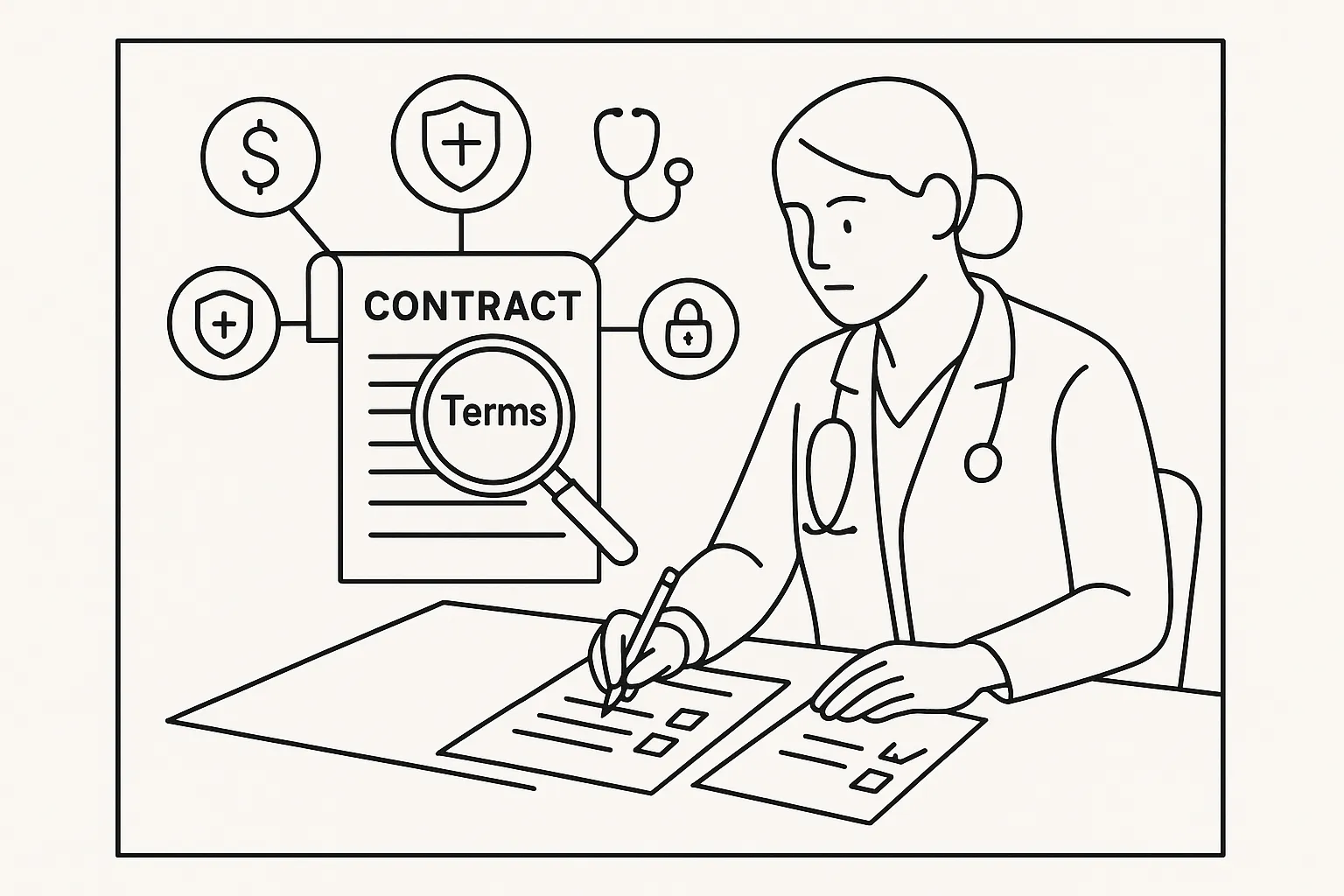
An evergreen clause generally continues the agreement for another term unless the PA or employer provides notice within the contract’s specified window. The clause should be read together with the initial term, renewal period, permitted delivery methods, notice address, and without-cause termination provision. Missing a contractual deadline may allow the agreement and its existing obligations to remain in effect.
Automatic renewal matters because the renewed contract may continue more than employment status. Compensation calculations, call duties, malpractice allocation, restrictive covenants, bonus repayment provisions, and documentation requirements may also carry forward. A careful review should identify which terms renew, which duties survive termination, and whether the agreement provides a practical way to leave before or during a renewal period.
Compensation and Repayment Terms That May Continue

Compensation provisions are among the most consequential parts of a renewing PA agreement. The contract should clearly explain how earnings are calculated, when payments are made, how productivity is reconciled, and what deductions or adjustments may reduce take-home pay. A focused review of PA compensation terms can help translate these formulas into practical financial consequences.
Salary, RVU, Collections, and Productivity Formulas
Common compensation components include base salary, productivity incentives, collections percentages, and fixed bonuses. RVU formulas may depend on whether the employer credits work RVUs or total RVUs, the applicable conversion factor, the measurement period, and any retroactive adjustment for payer denials. Collections-based compensation shifts some cash-flow risk to the PA because billing delays or denials can reduce or postpone payment.
Renewal language should be checked for any right to modify benchmarks, conversion factors, compensation methodology, or reconciliation schedules. Negative accrual and draw provisions also deserve attention because advances may be offset against later earnings or become repayment obligations when employment ends. PAs paid under an RVU structure can review the separate guide to RVU compensation for physician assistants.
Bonuses, Relocation Benefits, and Clawbacks
Signing bonuses, relocation assistance, and student loan support frequently include service periods, vesting schedules, or repayment triggers. The agreement should state whether repayment is prorated, when the amount becomes due, and which termination events activate the obligation. If an evergreen term extends the employment relationship, it is important to determine whether an incentive obligation expires, renews, or remains enforceable under a separate survival clause.
These provisions should be evaluated alongside the contract’s notice requirements and final compensation language. A PA considering an incentive can also examine common sign-on bonus repayment terms before accepting the payment.
Malpractice Coverage and Scope-of-Practice Duties
Claims-Made Coverage, Occurrence Policies, and Tail Insurance
Malpractice language determines who provides coverage, the policy type and limits, and who pays for protection after employment ends. A claims-made policy generally requires tail coverage or other continuing protection when the policy terminates, while an occurrence policy covers incidents occurring during the policy period even if a claim is reported later. The agreement should identify the policy type and allocate responsibility for premiums, tail coverage, prior acts coverage, and any applicable retroactive date.
Tail responsibility can create a significant post-employment expense, particularly when the employer transfers the entire obligation to the PA. Renewal and termination provisions should therefore be read together with the malpractice section. The guide to tail insurance obligations for PAs explains the contract issues that should be identified before signing.
Supervision, Delegation, and Documentation Requirements
Scope-of-practice and supervision provisions define daily clinical authority, documentation duties, and the practical limits of autonomy. Contracts may address supervising or collaborating physician availability, chart review, co-signatures, prescribing, delegated services, and required use of particular documentation systems. Vague language such as “adequate supervision” or “as required by law” may not explain the employer’s actual operational expectations.
Because state regulatory frameworks vary, the agreement should be assessed against the requirements that apply where the PA practices. It should also be reviewed for employer policies that are more restrictive than the legal baseline or that could create licensing, credentialing, reimbursement, or disciplinary exposure. Automatic renewal can preserve these obligations even when the PA’s duties, location, or clinical responsibilities have changed.
Restrictive Covenants and Other Post-Employment Limits
Restrictive covenants can affect where and how a PA works after the relationship ends. A non-compete may restrict practice within a defined territory and period, while non-solicitation provisions may limit contact with patients, employees, or referral sources. The contract should be reviewed for the restricted activities, geographic scope, duration, facilities covered, and events that trigger the restriction.
Renewal can matter when a restriction is measured from the eventual termination date rather than the original contract date. Broad territory definitions, restrictions tied to multiple facilities, telehealth limitations, or automatic extensions following an alleged breach can materially increase mobility risk. Enforceability depends on state law and the facts, so a national article cannot determine whether a particular clause will be enforced. A physician assistant non-compete review can evaluate the language in the context of the complete agreement.
Termination Rights, Renewal Notice, and Final Pay
The termination section determines whether a PA can exit an evergreen agreement and what happens financially afterward. The contract should distinguish termination for cause from termination without cause, define cause with reasonable specificity, identify any opportunity to cure a breach, and state the required notice period. The renewal notice deadline and the without-cause termination notice period may be different, so both provisions must be calendared and compared.
Post-termination language should address final salary, earned incentives, collections received after departure, unused paid time off, repayment obligations, patient handoffs, and malpractice coverage. Negative accruals or outstanding advances may reduce final compensation or produce a claimed balance due. PAs planning an exit can obtain a focused review of contract termination terms before sending notice or agreeing to a separation document.
Evergreen Contract Review Checklist for PAs
A useful review starts with the renewal mechanics and then follows every obligation that may continue into the renewed term or survive termination. Before signing or allowing an agreement to renew, confirm the following points:
- The initial term, automatic renewal period, notice deadline, permitted delivery method, and correct notice recipient.
- Whether compensation benchmarks, RVU conversion factors, bonus formulas, or benefit terms may change at renewal.
- How productivity, collections, draws, and final compensation are reconciled when employment ends.
- Who pays for malpractice premiums and any required tail coverage.
- The scope and triggering events for non-compete, non-solicitation, confidentiality, and repayment provisions.
- Whether call, schedule, location, supervision, and documentation expectations are defined clearly enough to evaluate the renewed position.
Unclear reconciliation terms, claims-made coverage without a clear tail allocation, broad restrictions, vague cause definitions, and ambiguous supervision duties warrant closer scrutiny. The broader PA employment agreement checklist can help identify additional provisions that should be reviewed with the evergreen clause.
Frequently Asked Questions
What is an evergreen clause in a physician assistant contract?
An evergreen clause automatically renews the agreement for another stated period unless the PA or employer gives notice as required by the contract. The clause should identify the renewal term, notice deadline, delivery method, and relationship to the agreement’s termination provisions.
How can a PA prevent an employment agreement from automatically renewing?
The PA should follow the agreement’s notice requirements precisely, including the deadline, delivery method, notice address, and designated recipient. The renewal provision should also be compared with any separate without-cause termination right because the two notice periods may operate differently.
Does automatic renewal preserve the same compensation formula?
That depends on the agreement. Some contracts continue the existing salary or productivity formula, while others contain language addressing future changes, updated schedules, or employer policies. The renewal clause and compensation section must be read together to determine what the written contract provides.
Can malpractice and tail insurance obligations continue after the contract ends?
Yes. A claims-made policy may require tail coverage or another form of continuing protection after employment ends. The contract should clearly allocate responsibility for purchasing and paying for that coverage and explain whether the obligation survives termination.
Does an evergreen renewal extend a PA non-compete?
A renewal may affect the practical timing of a non-compete when the restriction begins on the eventual termination date. The exact result depends on the contract language and applicable state law, including the defined duration, territory, restricted activities, and triggering events.
When should a PA have an evergreen contract reviewed by an attorney?
Review is most useful before signing, before a renewal notice deadline, or before giving termination notice. It is particularly important when the agreement contains complicated productivity formulas, repayment duties, tail insurance responsibility, broad restrictive covenants, or unclear exit rights.
Review Your PA Contract Before It Renews
Chelle Law reviews evergreen provisions, notice deadlines, compensation terms, malpractice obligations, restrictive covenants, and termination risks in physician assistant agreements.
Contact Chelle Law