
Notice periods in physician assistant (PA) employment and independent contractor agreements are small clauses with outsized consequences. A notice provision governs the timeframe and conditions under which either party may end the working relationship, and it often interacts with pay, bonuses, supervision duties, malpractice exposure, restrictive covenants, and repayment obligations. We have reviewed thousands of PA contracts and regularly find notice language that creates income disruption, regulatory risk, and mobility limits that are not obvious on first read. This article explains common notice-period traps, how they affect a PA during departure, and why an attorney-led, line-by-line review can be an important risk-management and income-protection step before signing.
What a PA Notice Period Controls
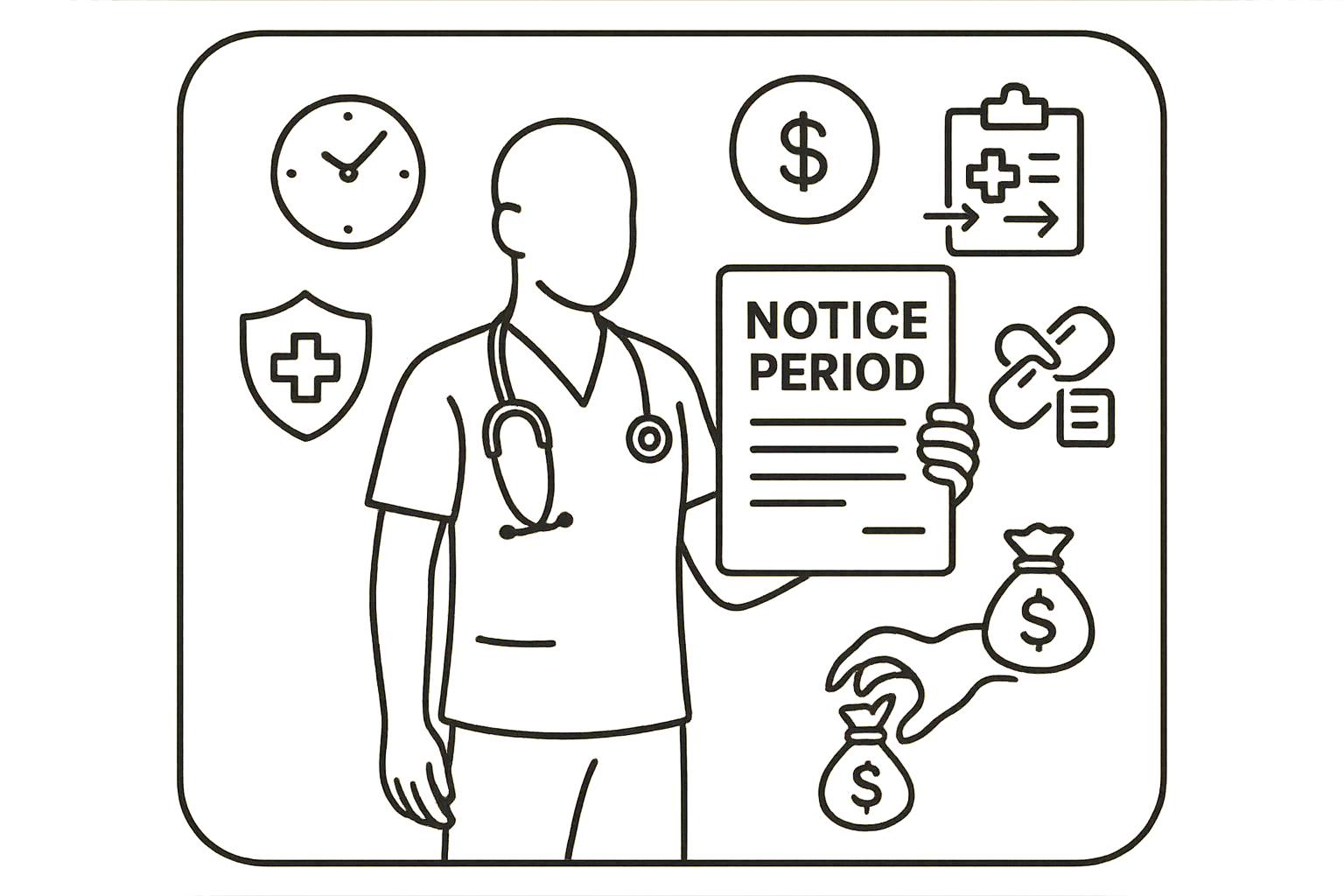
A notice period is the contractual timeframe that a PA or employer must provide before terminating the relationship without invoking immediate termination rights. Notice periods commonly range from two weeks to 90 days or longer. Although they may appear administrative, these provisions can determine whether the PA remains scheduled, receives compensation and benefits, completes patient handoffs, or becomes responsible for repayment obligations during the transition.
- Compensation continuity: Whether base pay, productivity pay, bonuses, and benefits continue during notice.
- Clinical responsibility: The PA’s obligations for patient care, handoffs, records, and on-call duties during the notice window.
- Post-employment restrictions: How notice interacts with non-compete, non-solicitation, and confidentiality clauses.
- Liability and coverage: Who pays for malpractice tail or addresses a claims-made coverage gap after termination.
- Repayment exposure: Whether insufficient notice triggers repayment of a signing bonus, relocation assistance, or another incentive.
Because employers generally draft their agreements, notice language may allocate more risk to the PA. Reviewing the clause alongside the agreement’s termination, compensation, insurance, and restrictive-covenant provisions reveals both the immediate income consequences and the longer-term effect on professional mobility.
Common Notice-Period Traps in PA Contracts
Notice provisions vary widely, but several recurring drafting problems can materially affect compensation, career mobility, or the practical ability to leave a position. These issues should be considered together rather than treating the notice sentence as an isolated contract term.
Ambiguous or One-Sided Notice Requirements
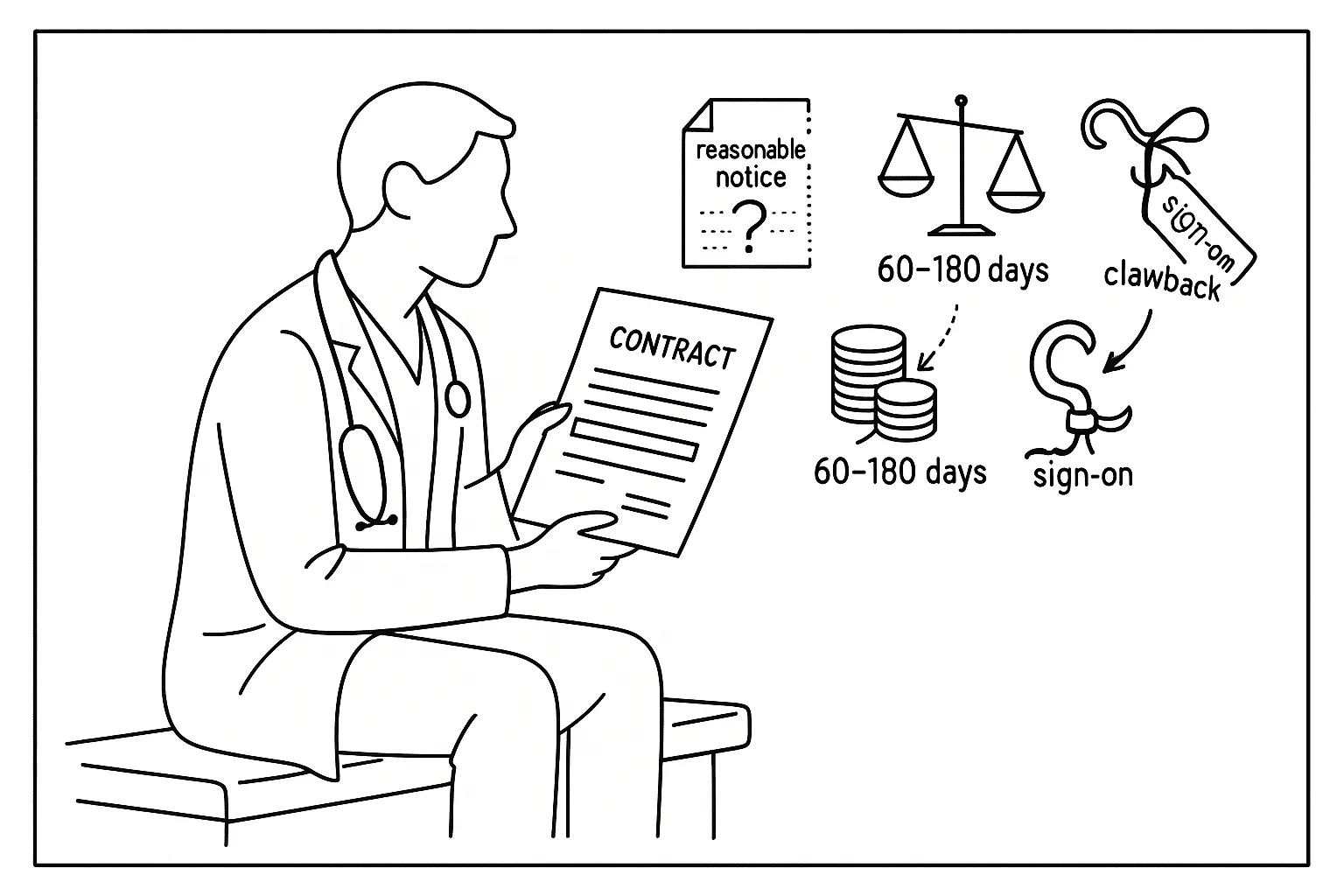
Terms such as “reasonable notice,” “adequate notice,” or undefined delivery requirements create interpretive risk. Ambiguity may allow an employer to dispute whether notice was sufficient, identify a different effective termination date, or withhold compensation and benefits based on alleged noncompliance. The agreement should state the precise notice period, permitted delivery method, intended recipient, and effective date.
Some agreements also require the PA to provide 60 to 180 days of notice while allowing the employer to terminate immediately or on a much shorter timeline. This asymmetry can leave the PA responsible for an extended transition while providing little protection against sudden income loss. It becomes especially consequential when insufficient PA notice triggers repayment obligations but an employer-initiated departure does not provide comparable financial protection.
Compensation, Work Duties, and Repayment During Notice
The contract should explain whether base salary, productivity payments, collections, bonus proration, benefits, and continuing medical education allowances remain available throughout the notice period. Under an RVU model, suspending productivity credit during notice can materially reduce expected income. Under a collections-based model, a PA may lose credit for services already performed if collections received after departure are not allocated to the PA. A focused review of compensation and productivity terms can identify how the notice clause affects each payment component.
The employer may require full clinical service, remove the PA from the schedule, or place the PA on garden leave. Garden leave can keep the PA on payroll while restricting work elsewhere, but the clause should clearly state what compensation and benefits continue. If the employer instead requires continued patient care or call coverage, the agreement should define scheduling authority, duties, and pay during the transition. PAs with significant call responsibilities should also examine how the notice provision interacts with their call schedule and coverage requirements.
Repayment and clawback provisions may be triggered when a PA leaves before a specified date or fails to provide the required notice. These obligations can include signing bonuses, relocation assistance, loan-repayment contributions, or liquidated damages. The formula, proration method, and triggering events should be clear because deficient notice can otherwise convert a routine departure into a substantial financial obligation. This risk warrants particular attention when reviewing sign-on bonus repayment terms.
Clinical and Regulatory Duties During the Notice Period
Notice periods also affect clinical duties and regulatory compliance. Contracts may prescribe patient handoffs, documentation deadlines, records access, unfinished work, and cooperation with post-termination patient matters. Open-ended language can require continued administrative assistance without defining a reasonable timeframe, available support, or compensation for work performed after employment ends.
An employer may also reassign physicians, alter delegation arrangements, change practice locations, or impose a different call schedule during notice. Because supervision, collaboration, delegation, prescribing, and scope-of-practice requirements vary by state, material changes during the transition may create compliance concerns. The agreement should not give the employer unrestricted authority to modify clinical duties without addressing the PA’s licensure obligations, qualifications, compensation, and liability exposure.
Malpractice coverage must remain coordinated with the PA’s final clinical date and the policy type. If the employer uses claims-made coverage, the agreement should identify whether extended reporting coverage is required and who pays for it. A review of the contract’s tail insurance provisions can clarify whether the notice process changes responsibility for post-termination coverage.
Termination for Cause and Employer Notice Waivers
Termination-for-cause and immediate-termination clauses frequently create exceptions to ordinary notice requirements. Employers may reserve immediate termination rights for patient-safety incidents, criminal conduct, loss of licensure, or contract and policy violations. Although certain immediate-termination rights may be appropriate, broad or undefined standards can permit an abrupt departure without continued pay or benefits and may activate repayment obligations.
The definition of “cause” therefore determines whether the notice period and its protections apply. A contract should also be reviewed for any opportunity to cure an alleged breach and any distinction between resignation, termination without cause, and termination for cause. These distinctions are central when evaluating PA contract termination rights.
Notice-waiver language presents another risk. Some agreements allow the employer to waive the PA’s remaining notice period and remove the PA from the workplace, yet remain unclear about salary, benefits, accrued bonuses, or the official termination date. A particularly unfavorable clause may allow the employer to waive continued work while still enforcing a repayment provision or restrictive covenant. The contract should explain the consequences of a waiver rather than leaving them to the employer’s discretion.
Restrictive Covenants, Leave, and Post-Employment Limits
Notice language can determine when a non-compete, non-solicitation provision, confidentiality obligation, or other post-employment restriction begins. Some covenants apply after resignation but are treated differently after an employer terminates the PA without cause. Other agreements extend the restricted period based on alleged deficient notice or use paid garden leave as a practical substitute for a non-compete.
- Triggering events: The notice clause may determine whether the departure is characterized as a resignation or employer termination.
- Extension provisions: The employer may attempt to lengthen a restriction by the period of alleged notice noncompliance.
- Garden leave: The PA may remain employed and paid while being restricted from beginning another position.
Because enforceability depends on applicable law and the specific facts, PAs should not assume that a restriction is either automatically valid or automatically unenforceable. A dedicated PA non-compete review can evaluate how the covenant, notice period, termination classification, geography, and duration operate together.
The agreement should also address notice given during parental leave, disability, or a licensing interruption. Language requiring notice while the PA is “actively practicing,” or counting protected time away against the notice obligation, can create uncertainty about the final date and continuing benefits. Licensing or disability issues may also trigger immediate employer action, making grace periods, cure rights, and the interaction between leave and termination provisions important areas for review.
How to Review a PA Notice Provision Before Signing
A notice-period review should identify how the clause affects financial obligations, clinical responsibilities, regulatory compliance, and future employment. The goal is not merely to confirm the number of days required but to determine what each party may do during those days and what happens when the relationship ends.
Terms to Clarify in the Agreement
- The exact notice length for both parties and whether the obligations are reciprocal.
- The required method of delivery, intended recipient, and date notice becomes effective.
- Treatment of base pay, RVU or productivity compensation, collections, bonuses, benefits, and accrued leave.
- Definitions of “cause,” “good reason,” resignation, and termination without cause.
- Repayment triggers, proration formulas, and any liquidated-damages provision tied to deficient notice.
- Malpractice coverage continuity and responsibility for any required tail insurance.
- Whether clinical duties, supervision, delegation, call, or practice locations may change during notice.
Notice-Language Red Flags
- Undefined “reasonable” or “adequate” notice language.
- A lengthy PA notice obligation paired with immediate employer termination rights.
- Clawback language triggered by resignation, deficient notice, or an employer-waived notice period.
- Broad cause standards without a clear process, notice of the alleged breach, or an opportunity to cure.
- Unclear treatment of compensation, benefits, productivity credit, or collections during notice.
- Language extending restrictive covenants based on an alleged notice deficiency.
These provisions should be read together with the entire termination section and any compensation, malpractice, repayment, or restrictive-covenant exhibits. An attorney reviewing the complete agreement can identify conflicting language and explain the practical consequences before the PA becomes bound by the contract.
Frequently Asked Questions
How long is a typical physician assistant notice period?
PA notice periods commonly range from two weeks to 90 days or longer. The appropriate period depends on the agreement, the position, and the obligations imposed during the transition.
Must a PA continue working after giving notice?
That depends on the contract and the employer’s response. The agreement may require continued clinical service, allow the employer to remove the PA from the schedule, or provide for paid garden leave.
Does a physician assistant continue receiving pay during notice?
The contract should state whether salary, productivity compensation, collections, bonuses, and benefits continue. A notice clause that addresses only the final date may leave important compensation questions unresolved.
What can happen if a PA gives insufficient notice?
Depending on the agreement, insufficient notice may lead to a repayment demand, liquidated damages, disputed compensation, or an alleged contract breach. The specific consequences should be identified before signing or resigning.
Can notice affect malpractice tail insurance?
Yes. The final clinical date and reason for termination may affect when claims-made coverage ends and whether tail insurance is required. The agreement should identify who is responsible for arranging and paying for that coverage.
Why should a PA have the notice clause reviewed before signing?
A review can identify one-sided deadlines, unclear compensation treatment, repayment exposure, broad cause standards, and conflicts with restrictive covenants or malpractice provisions before those terms control a departure.
Understand Your Notice Obligations Before You Sign
Chelle Law reviews physician assistant agreements to explain how notice, termination, compensation, repayment, malpractice, and restrictive-covenant provisions work together.
Contact Chelle LawExplore Physician Assistant Contract Guidance
Review legal services, practical contract resources, and state-specific guidance for physician assistants.