
Physician assistants evaluating employment agreements should understand how negative accrual can affect income, repayment obligations, and long-term financial exposure. These provisions often appear in compensation, productivity, or reconciliation sections and allow an employer to offset or recoup previously paid compensation when productivity targets are not met, collections fall short, or earlier calculations are adjusted. The mechanism may be described as a draw reconciliation, true-up, chargeback, overpayment recovery, or clawback rather than “negative accrual.”
Because negative accrual can shift billing, reimbursement, and administrative risk to the clinician, the entire compensation formula should be reviewed before signing. A meaningful review examines the applicable metrics, reconciliation schedule, employer discretion, repayment method, and treatment of any balance after termination. These issues are especially important in RVU and collections-based arrangements, guaranteed salary models with clawbacks, and agreements combining productivity pay with bonuses or other repayment obligations.
How Negative Accrual Works in a PA Compensation Plan

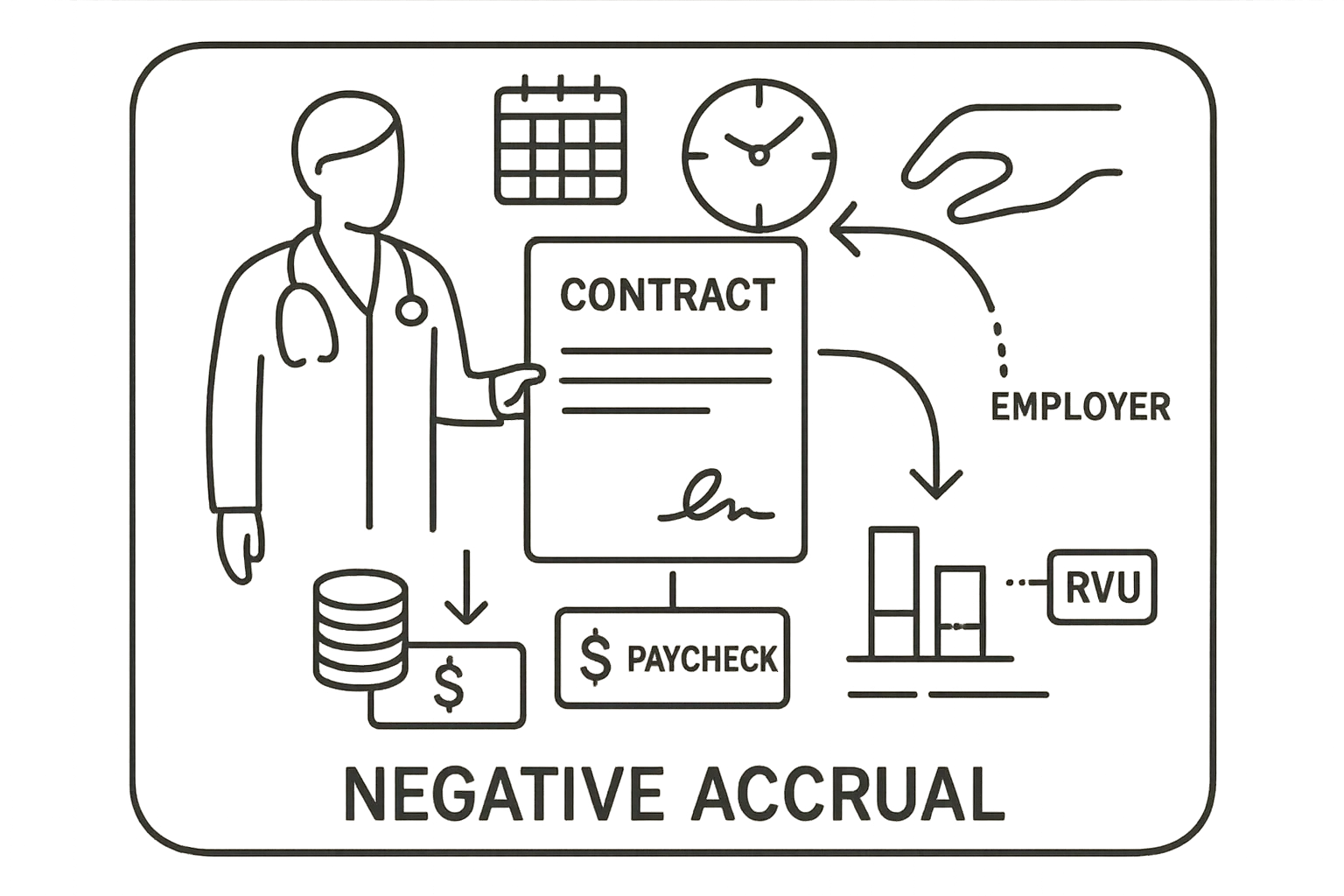
Negative accrual refers to contract language that creates a debit balance against a physician assistant’s compensation account when compensation previously credited to the PA is later adjusted, reversed, or treated as an overpayment. The employer may recover that deficit by withholding future bonuses, reducing later compensation, or demanding repayment. A thorough PA compensation and productivity review should identify both the formula that creates the balance and the provisions governing its recovery.
These clauses commonly appear in production-based models using RVUs, collections, or salary draws reconciled against future productivity. If compensation is credited before the employer receives final reimbursement, a later claim denial, coding adjustment, patient write-off, or payer recoupment may reduce the amount attributed to the PA. Broadly written provisions can therefore make income less predictable and expose the clinician to adjustments months after the underlying services were performed.
Negative accrual provisions in healthcare compensation plans track a shortfall between compensation paid and compensation ultimately treated as earned. The deficit may have to be recovered before additional bonuses are paid, a structure also discussed in analyses of RVU-based clinician compensation models.
Compensation Models and Reconciliation Mechanics
Monthly, Quarterly, and Annual True-Ups
A contract may permit an immediate offset from the next payment, a monthly or quarterly reconciliation, or an annual true-up. The timing matters because a short reconciliation cycle can cause frequent compensation changes, while an annual calculation may allow a substantial balance to accumulate before the PA receives notice. The agreement should explain when calculations occur, what information is included, and whether the PA receives supporting reports.
Similar repayment mechanisms may appear under headings such as overpayment recovery, adjustment, reconciliation, or clawback. A separate signing bonus provision can also create repayment exposure, but it is usually based on an uncompleted service period rather than a productivity shortfall. PAs receiving an upfront incentive should evaluate the agreement’s sign-on bonus repayment terms alongside the negative accrual language.
Collections, RVUs, and Guaranteed Salary Clawbacks
In a collections-based model, compensation is tied to revenue actually received by the employer. Claim approval, payer reimbursement, patient payments, refunds, and write-offs can therefore affect the final calculation. The contract should define “collections,” identify any excluded revenue or expenses, and state how later reversals are allocated.
An RVU model usually applies a conversion factor to measured clinical production. For example, compensation at $50 per work RVU for 2,000 RVUs would produce a gross calculated value of $100,000, although the agreement controls whether and how later adjustments affect that amount. PAs should review the reporting source, conversion factor, threshold, and reconciliation rules together; the broader guide to RVU compensation for physician assistants explains these components in more detail.
A guaranteed salary may provide more stable income during employment, but that label does not eliminate risk if the agreement authorizes a later clawback. The key question is how the contract allocates a productivity shortfall and whether an offset can reach base wages, only future incentive compensation, or a direct repayment obligation. Comparing base salary and production pay can help clarify that allocation.
Common Events That Create a Negative Balance
Billing Adjustments, Denials, and Chargebacks
Payer audits, chart reviews, coding changes, claim denials, and reimbursement reversals can reduce revenue previously credited to a physician assistant. Internal audits may also result in recalculation if an employer reclassifies services, identifies documentation concerns, or changes the coding assigned to an encounter. Patient nonpayment, unpaid cost-sharing amounts, and account write-offs can have a similar effect in a collections-based plan.
Risk increases when the contract permits recovery for any “overpayment” without defining the calculation, documentation requirements, or period during which an adjustment may occur. A better-defined process identifies the triggering event, the records supporting the adjustment, and the deadline for completing the reconciliation. It should also make clear whether the PA bears losses caused by payer conduct or employer-controlled billing and collection practices.
Termination and Post-Employment Reconciliation
Termination frequently triggers a final reconciliation of productivity, collections, and amounts already paid. The agreement may calculate compensation through the final workday, the end of a notice period, or a later date when outstanding claims have been processed. If reconciliation provisions survive termination, a negative balance can become a direct repayment demand after the PA has left the organization.
The termination section should be read together with the compensation provisions because the notice period, final-pay language, and survival clauses may determine when the balance becomes due. A focused contract termination review can identify post-employment reconciliation language and other obligations that continue after the relationship ends.
Financial and Contract Risks for Physician Assistants
A negative accrual can reduce take-home pay unexpectedly, delay productivity bonuses, or create a repayment demand at a financially difficult time. If compensation received in one tax year is repaid later, the timing may also create tax and recordkeeping complications. Physician assistants facing an actual repayment should consult an appropriate tax professional about their individual circumstances rather than assuming payroll records will automatically resolve the issue.
Disputes are more likely when the employer has unilateral authority to decide that an overpayment occurred, select the records used, or calculate the amount without a verification process. The PA may have limited ability to test the calculation if the agreement does not provide access to productivity, billing, and collections reports. Undefined reconciliation periods can also leave compensation open to adjustment long after the work was completed.
Negative accrual may compound other end-of-employment costs. A PA could face a compensation deficit while also becoming responsible for bonus repayment, relocation assistance, or malpractice tail coverage. Reviewing tail insurance responsibility and other repayment clauses at the same time provides a more complete picture of potential financial exposure.
Contract Terms to Review Before Signing
The agreement should clearly define the compensation metric, reporting system, conversion factor or collections percentage, reconciliation frequency, and treatment of reversals. It should also identify which forms of compensation may be withheld and whether a remaining balance becomes immediately due. Important questions include:
- How are collections, productivity, and RVUs defined for compensation purposes?
- Which reporting systems and records control the calculation?
- How often are reconciliations performed, and when does a calculation become final?
- Can a deficit carry forward indefinitely or survive termination?
- May the employer offset base compensation, incentive pay, final wages, or other amounts?
- What documentation must support an adjustment, and can the PA review or dispute it?
Attorney-led review is particularly useful when compensation formulas, reconciliation terms, and repayment language overlap. These clauses should also be considered with termination rights, restrictive covenants, malpractice coverage, and other financial obligations. The broader guide to physician assistant contract red flags identifies additional provisions that may warrant close review.
Documents That Help Evaluate Negative Accrual
A useful contract review begins with the complete proposed employment or independent contractor agreement, including all exhibits and incorporated compensation plans. The offer letter, bonus documents, productivity schedules, and written explanations of the formula may contain terms that do not appear in the main agreement. If available, sample RVU, billing, or collections reports can help show how the employer intends to administer the provision.
For an existing employment relationship, prior compensation statements, reconciliation notices, payroll records, and communications explaining an adjustment may also be relevant. Reviewing the documents together helps determine how the formula operates, whether the reported balance follows the written terms, and what repayment or post-termination exposure the agreement creates.
Frequently Asked Questions
What does negative accrual mean in a physician assistant contract?
Negative accrual means the compensation calculation can create a debit balance when amounts previously paid or credited exceed what the employer later treats as earned. The contract may allow that balance to reduce future compensation or become a direct repayment obligation.
Can an employer deduct a negative balance from a PA’s compensation?
A contract may authorize offsets against future bonuses, other compensation, or amounts due at termination. The exact recovery method depends on the agreement and applicable requirements, so the offset and repayment provisions should be reviewed carefully.
How does negative accrual affect RVU compensation?
In an RVU model, a negative balance may arise when an advance, draw, or earlier productivity payment exceeds the amount produced under the final contractual calculation. The effect depends on the RVU threshold, conversion factor, reporting source, and reconciliation rules.
Can negative accrual survive termination of employment?
Yes, if the agreement states that reconciliation or repayment provisions continue after termination. A final true-up may then create an obligation after the PA leaves, making the survival, final-pay, and post-termination language especially important.
Is a compensation true-up the same as a clawback?
They are related but not always identical. A true-up recalculates compensation using final productivity or collections data, while a clawback is the mechanism used to recover an amount treated as overpaid. The contract may combine both concepts in one provision.
What records should a PA request when reviewing a negative accrual calculation?
Relevant records may include the compensation plan, RVU or collections reports, payroll statements, reconciliation notices, and documents explaining denials, reversals, or other adjustments. These materials can be compared with the formula and procedures stated in the contract.
Review Negative Accrual Terms Before You Sign
Chelle Law reviews physician assistant compensation formulas, reconciliation provisions, clawbacks, and post-termination repayment language so you can understand the financial risks in your proposed agreement.
Contact Chelle Law