
Physician assistant sign-on bonus repayment terms are common in employment and independent contractor agreements. Although an upfront payment can be attractive—especially for clinicians relocating or new graduates reviewing their first PA contract—the bonus is usually tied to a contractual service commitment. If employment ends before that period is completed, the physician assistant may have to repay some or all of the amount.
This guide explains how sign-on bonus clawbacks typically operate, which events may trigger repayment, how the balance can be calculated and collected, and which contract terms can increase or reduce financial exposure. Because these provisions often interact with termination rights, credentialing requirements, compensation, and restrictive covenants, they should be evaluated within the entire agreement rather than treated as a stand-alone benefit.
How Physician Assistant Sign-On Bonuses Create Repayment Obligations
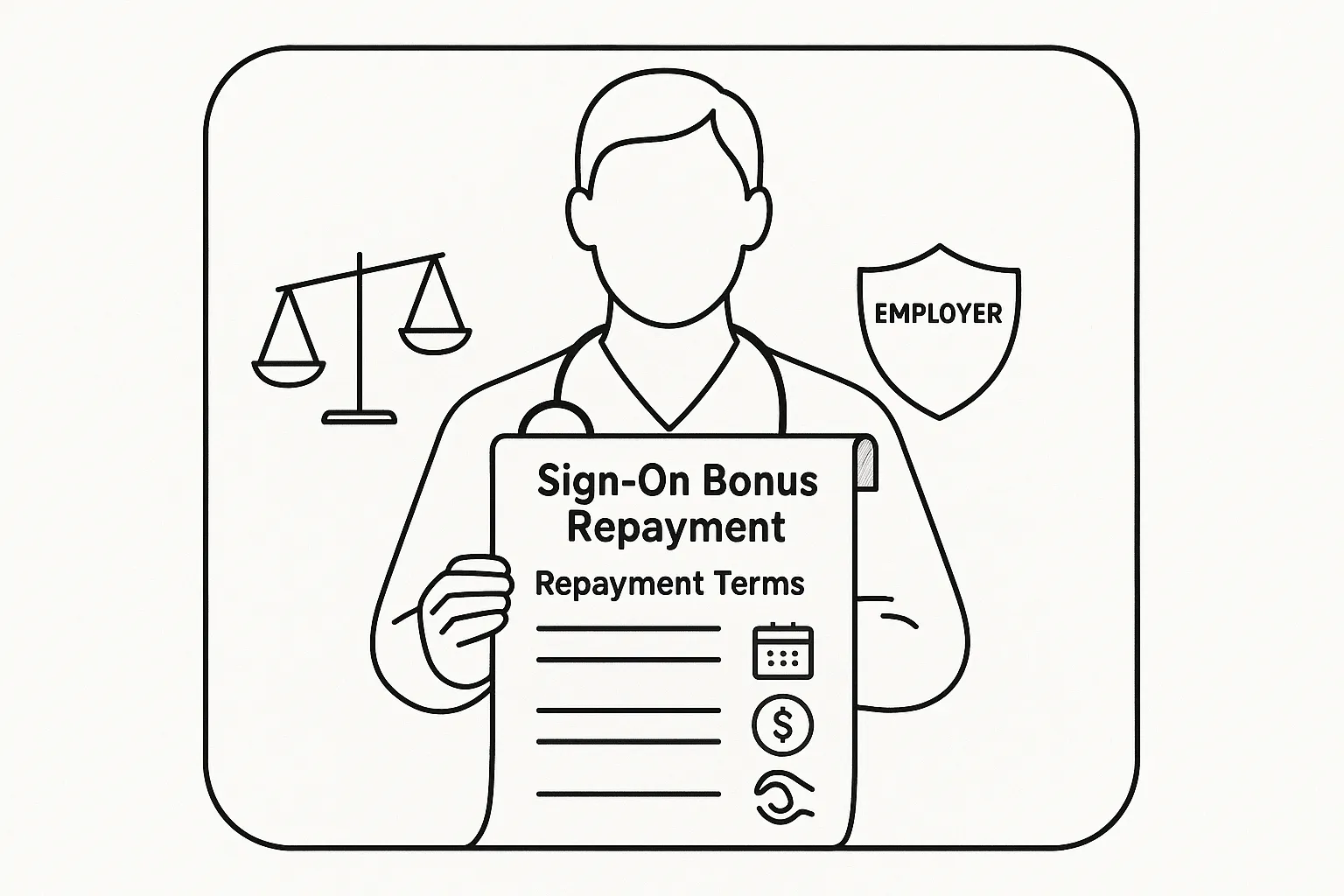
A physician assistant sign-on bonus is a lump-sum payment offered to encourage a PA to accept a position or relocate. Healthcare employers may use these payments to attract qualified clinicians in competitive markets, offset relocation costs, or fill staffing needs quickly. In most PA contracts, however, the payment is structured as a retention incentive rather than unconditional compensation.
Because employers view the bonus as an investment in recruitment, agreements often include repayment provisions—sometimes called clawback clauses—that require the physician assistant to return some or all of the money if employment ends before a defined service period. Sign-on bonuses offered to physician assistants commonly use this structure, as reflected in broader guidance on advanced practice provider recruitment incentives.
A provision may also establish accelerated deadlines, interest, collection expenses, or employer-controlled recovery methods. An attractive bonus can therefore create substantial financial exposure if the relationship ends early, making a focused review of sign-on bonus and relocation terms an important part of evaluating the offer.
Events That May Trigger Sign-On Bonus Repayment
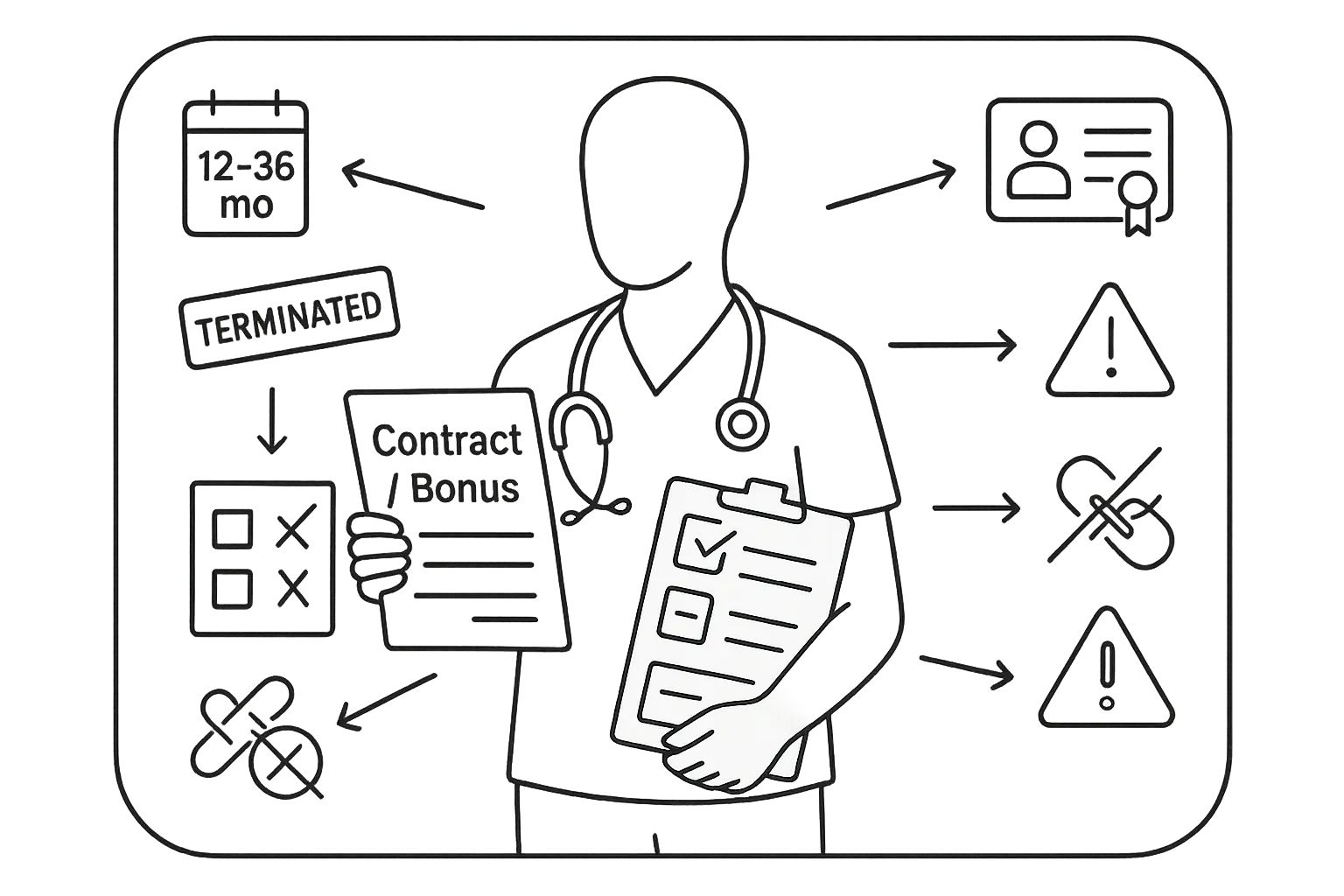
Repayment triggers are the events that require a physician assistant to return some or all of the bonus. They may appear in sections addressing compensation, termination, onboarding, or breach. Because the drafting often favors the employer, the obligation can apply in more situations than the PA initially expects.
Common repayment triggers include:
- Voluntary resignation during a defined service period, which may extend from 12 to 36 months.
- Termination for cause based on conduct, loss of licensure, credentialing failures, or employer-policy violations.
- Failure to obtain or maintain required licensure, credentials, hospital privileges, or payer enrollment.
- Breach of confidentiality, non-solicitation, or other restrictive covenant provisions.
- Failure to begin employment on the agreed start date or complete required onboarding or training.
- Material breach of professional duties, including specified misconduct or regulatory violations.
Broad phrases such as “for any reason” or “termination under certain circumstances” can materially expand repayment exposure. Some agreements treat every resignation alike, while others distinguish between voluntary departure, employer-initiated termination, disability, or circumstances outside the physician assistant’s control. These distinctions should be compared with the agreement’s separate termination language.
Credentialing, privileging, licensing, and payer-enrollment provisions also deserve close attention because repayment may be tied to administrative events rather than a conventional contract breach. Reviewing potential credentialing-delay contract risks can help a PA determine whether the agreement fairly allocates responsibility for processes controlled partly by the employer or outside organizations.
Repayment Structures, Calculations, and Collection Terms
The repayment structure determines how much a physician assistant owes after a triggering event and whether the balance decreases with completed service. Common models include a full clawback during the entire commitment, monthly prorating, graduated reductions at specified milestones, and repayment through withholding or offsets. These models can produce very different results even when the original bonus amount is identical.
Gross, Net, and Prorated Repayment Calculations
A gross repayment clause requires the physician assistant to return the bonus before taxes and payroll withholding, even though the PA initially received a smaller net payment. A net repayment clause instead bases the obligation on the amount actually received after deductions, but the contract should clearly explain what “net” means and how the employer will calculate it.
Prorated formulas reduce the obligation according to completed service. For example, a $30,000 bonus tied to a 36-month commitment might decrease by 1/36 for each completed month, leaving approximately two-thirds due after 12 months. Graduated schedules instead reduce the balance at designated milestones, while a full clawback may provide no credit for partial completion until the entire commitment is satisfied.
Some agreements also permit the employer to include claimed expenses, damages, or other obligations when calculating the amount due. The repayment formula should therefore be read alongside the agreement’s broader contract red flags, compensation provisions, and deduction language.
Repayment Deadlines, Withholding, Interest, and Collection Costs
Repayment clauses may make the entire outstanding balance immediately due when a triggering event occurs. The agreement may also authorize payroll withholding or an offset against a final paycheck, severance, accrued compensation, or other amounts owed to the physician assistant. These terms should clearly identify the available recovery methods and the amounts to which an offset may apply.
Some contracts add interest to unpaid balances or require reimbursement of legal and collection expenses. When an accelerated deadline, gross repayment requirement, and collection-cost clause operate together, the obligation can be considerably larger than the amount the PA originally received. The contract should be reviewed for both the calculation method and the practical timeline for payment.
Contract Terms That Can Limit Repayment Exposure
Small drafting differences in termination definitions, repayment formulas, and operational exceptions can materially change a physician assistant’s financial risk. A careful review focuses not only on whether a clawback exists, but also on which circumstances trigger it, how the amount declines over time, and whether events outside the PA’s control are addressed.
Termination Circumstances and Repayment Exceptions
Some agreements require repayment whenever employment ends before the service period expires. Others limit repayment to voluntary resignation or termination for cause. The contract should distinguish those events from employer-initiated termination of a physician assistant agreement, disability, inability to practice, or another stated exception.
The definition of cause is especially important. A clause limited to serious, specifically identified events creates a different level of exposure than one allowing the employer to characterize a broad range of workplace disputes or policy issues as cause. The repayment provision should use terminology consistent with the agreement’s termination section and should make the consequences of each type of separation understandable.
Service Credit and Delays Outside the PA’s Control
A prorated or graduated schedule gives the physician assistant credit for service already completed. In contrast, an all-or-nothing clawback can require full repayment even near the end of the commitment. The agreement should state when the service period begins, whether partial months count, and how any leave or interruption affects the remaining balance.
Healthcare employment also depends on licensing, hospital privileging, payer enrollment, and employer-controlled onboarding. A contract may address how repayment applies if these processes delay the start of clinical work or prevent the position from proceeding. Clarifying responsibility for such events reduces the risk that an administrative delay will be treated as the physician assistant’s failure to satisfy the agreement.
Sign-on bonus terms should ultimately be evaluated with compensation, termination, restrictive covenant, and onboarding provisions. A comprehensive physician assistant contract review can identify how these clauses work together and where the agreement may create unexpected repayment exposure.
Frequently Asked Questions
When does a physician assistant have to repay a sign-on bonus?
Repayment depends on the agreement’s triggering events. Common triggers include voluntary resignation during the service period, termination for cause, failure to begin employment, loss of required credentials, or breach of specified contract obligations.
Can a PA be required to repay the gross bonus instead of the net amount received?
Yes. Some agreements require repayment of the gross amount before taxes and withholding, while others use the net amount actually received. The contract should clearly define which amount applies and how it will be calculated.
How does prorated sign-on bonus repayment work?
A prorated clause reduces the repayment balance as the physician assistant completes the service commitment. The reduction may occur monthly or at specified milestones, depending on the formula stated in the agreement.
Can an employer deduct bonus repayment from a PA’s final compensation?
An agreement may authorize withholding or an offset against final wages, severance, accrued compensation, or other amounts owed. The specific contract language and any applicable requirements should be reviewed before assuming the employer may use a particular recovery method.
Does termination without cause always trigger repayment?
No single rule applies to every agreement. Some contracts require repayment whenever employment ends, while others exclude employer termination without cause or limit repayment to resignation and termination for cause.
What should a physician assistant review before accepting a sign-on bonus?
The PA should review the service period, repayment triggers, gross or net calculation method, prorating schedule, termination definitions, repayment deadline, withholding rights, interest, collection costs, and treatment of credentialing or onboarding delays.
Review Your Sign-On Bonus Before You Sign
Chelle Law reviews physician assistant agreements for repayment triggers, clawback calculations, termination consequences, and related financial risks.
Contact Chelle Law