
Terminating a physician assistant contract can create immediate issues involving final compensation, malpractice coverage, repayment obligations, and post-employment restrictions. Whether the separation is voluntary or involuntary, for cause or without cause, the physician assistant employment agreement or independent contractor agreement usually determines what happens next. Contract language governing notice, final pay, restrictive covenants, and tail insurance can significantly affect a PA’s income, liability exposure, and ability to accept a new position.
Many agreements contain termination provisions that appear straightforward but create financial or professional risk when the relationship ends. Repayment clauses may apply to signing bonuses, relocation assistance, or guaranteed compensation. Restrictive covenants may limit future employment, while malpractice provisions may require the PA to purchase tail coverage. This guide explains the principal termination methods, the contract terms that deserve close review, and the practical steps physician assistants can take before resigning or after receiving notice.
How Physician Assistant Contracts End
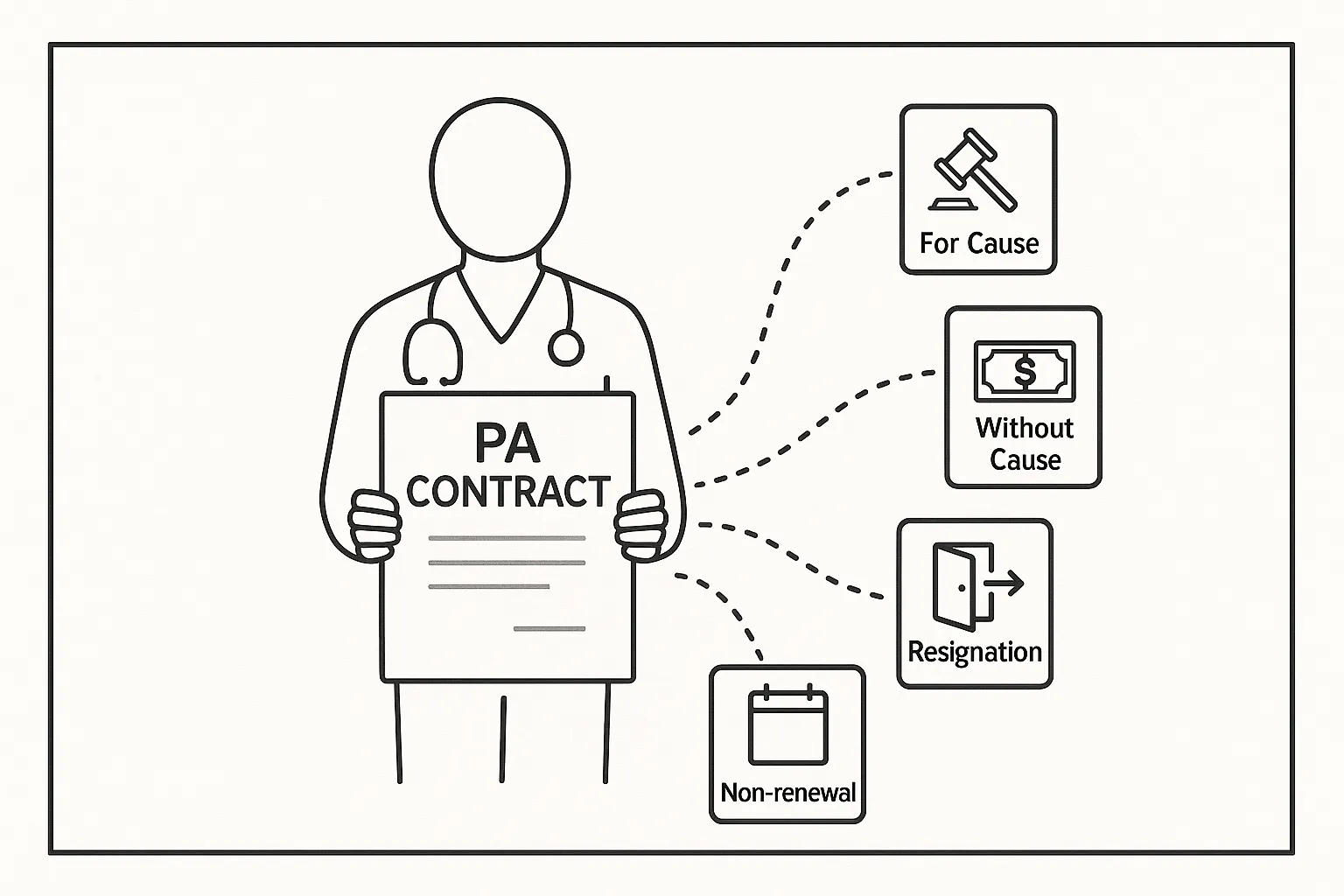
Physician assistant employment and independent contractor agreements commonly provide several ways for the relationship to end. The applicable termination category matters because it can affect notice, final pay, repayment obligations, malpractice coverage, and post-employment restrictions. A physician assistant contract termination review can identify how those provisions interact before a PA gives notice or responds to an employer’s decision.
Termination for Cause
Termination for cause permits an employer to end the agreement based on specified misconduct, professional problems, or performance issues. Cause definitions may include clinical negligence, loss or suspension of licensure, criminal conduct, failure to follow employer policies, or violations of professional standards. Depending on the agreement, compensation can stop immediately, benefits or post-termination payments may be forfeited, and repayment obligations may become due.
The wording of the cause definition is important. Broad language may give the employer substantial discretion to rely on internal policy violations or subjective performance concerns. The agreement should also be reviewed for a cure period that allows the PA to correct an alleged breach before termination becomes effective.
Termination Without Cause
Termination without cause allows one or both parties to end the agreement without alleging misconduct. These provisions usually require advance written notice, often between 30 and 90 days, although the actual period is controlled by the contract. Some employers may remove the PA from clinical duties, continue salary during the notice period, or make payment in lieu of notice.
Salary continuation does not necessarily resolve every compensation issue. Productivity bonuses, collections-based pay, and reconciliation clauses may change the final amount owed. The contract may also specify whether severance is available and whether malpractice, repayment, or restrictive covenant provisions apply after a without-cause separation.
Resignation, Expiration, and Non-Renewal
A voluntary resignation normally requires the physician assistant to follow the agreement’s notice and delivery procedures. Leaving before the notice period expires may affect compensation or expose the PA to contractual remedies. Some agreements also impose stricter repayment terms or restrictive covenant consequences when the PA resigns rather than being terminated by the employer.
Fixed-term agreements may expire automatically or renew unless either party gives notice before a stated deadline. Missing an automatic-renewal or non-renewal deadline can extend the contract for another term. Physician assistants should therefore review both the termination section and any separate renewal provision before selecting a departure date.
Notice, Repayment, and Other Financial Consequences
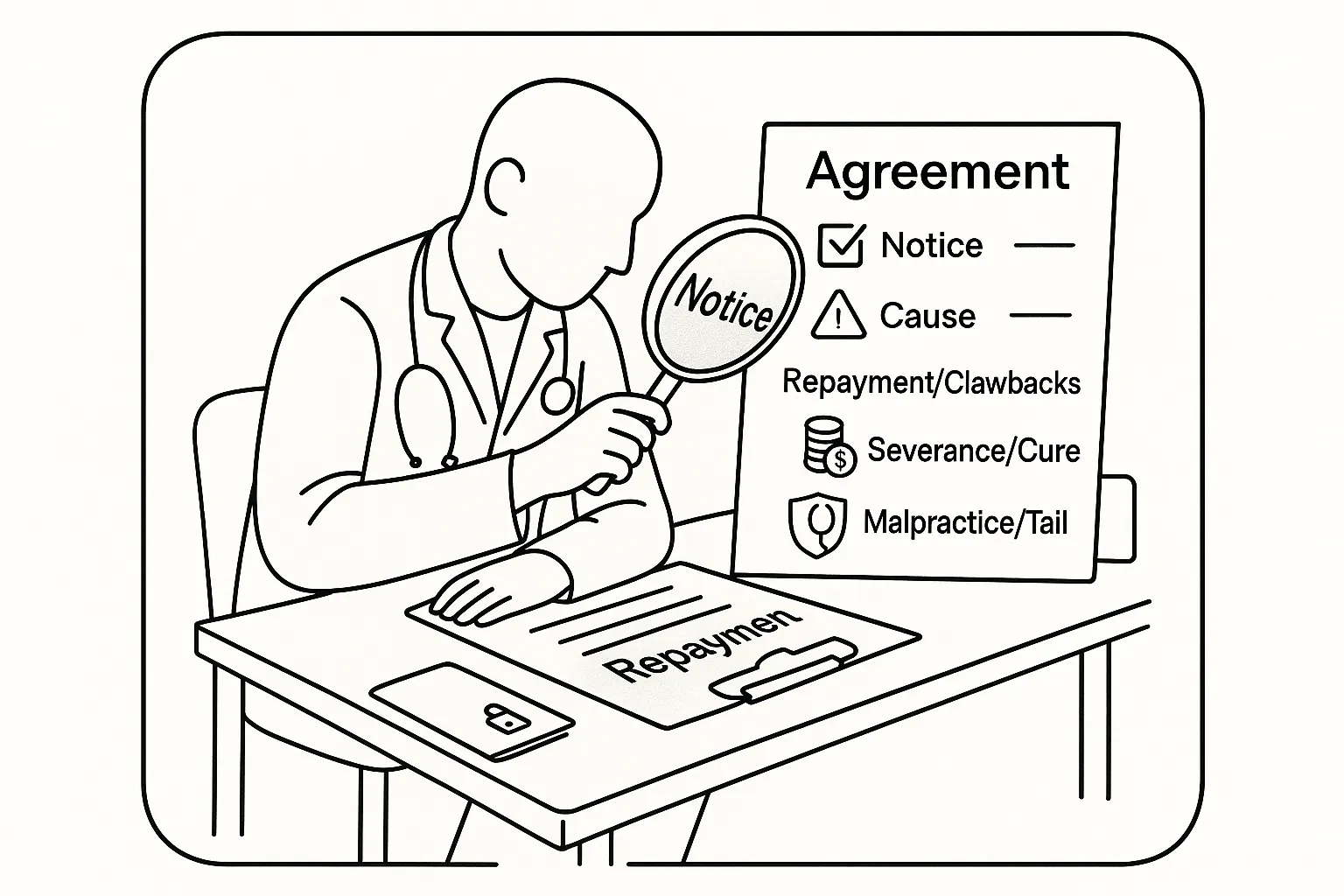
Notice provisions control how termination must be communicated and when it becomes effective. The agreement may require written notice to a specific representative or address and may state that notice is effective only when received. A PA planning to resign should confirm the required delivery method, the exact notice period, and whether the employer can waive clinical duties or end compensation before that period expires.
Financial incentives frequently carry post-termination conditions. Signing bonuses, relocation assistance, loan repayment benefits, and guaranteed salary advances may have to be repaid when employment ends within a defined period. The amount may depend on the reason for termination, the date of separation, and whether the obligation is prorated. Reviewing the agreement’s bonus repayment terms can clarify whether a clawback applies and how the employer calculates the balance.
Productivity arrangements can create additional exposure. Draw provisions, negative accrual, or collections reconciliation may allow an employer to offset final compensation or seek repayment when guaranteed pay exceeds calculated production. A focused compensation and productivity review can help determine how RVUs, collections, bonuses, and chargebacks will be handled at separation.
Final Pay, Benefits, and Administrative Obligations
Final compensation may include salary through the termination date, earned bonuses, accrued paid time off, or post-termination collections. Contract terms and applicable wage laws can affect when those amounts are paid. RVU- and collections-based models may require a later reconciliation after charges, payer adjustments, denials, or receipts are finalized, so the PA should determine whether the agreement permits access to the supporting reports after departure.
The agreement should also explain whether unused paid time off is paid or forfeited. Health coverage may continue through COBRA, generally at the former employee’s expense, while a severance agreement may provide temporary employer-paid coverage. Retirement plan vesting and employer contributions should be reviewed separately because the termination date may affect whether unvested amounts are retained.
Employment termination can affect hospital privileges, medical staff status, credentialing, patient records, and continuity-of-care duties. Some contracts require cooperation with record transfers or credentialing processes, and certain circumstances may involve notifications to licensing or credentialing bodies. Because a new position can also be delayed by enrollment and privileging requirements, physician assistants should account for potential credentialing delays and related contract risks when planning the transition.
Malpractice Insurance After Termination
Malpractice Coverage and Tail Insurance
Malpractice provisions become especially important when employment ends. Occurrence coverage generally protects against covered acts that occurred during the policy period regardless of when a claim is filed. Claims-made coverage ordinarily protects only when the policy is active and the claim is reported, which can create a need for extended reporting coverage after departure.
The contract should state whether the employer or physician assistant must purchase tail coverage, what limits are required, and when proof of coverage must be provided. If the PA bears the cost, tail insurance can become a significant post-termination expense. The agreement should also be reviewed for any circumstance in which responsibility changes based on resignation, termination for cause, or length of service. Additional guidance on tail insurance for physician assistants can help explain how claims-made coverage affects the transition.
Non-Competes and Other Post-Employment Restrictions
Restrictive covenants can affect where and how a physician assistant works after leaving a position. A non-compete may restrict practice within a defined area or for a competing employer during a stated period. A non-solicitation clause may prohibit contacting the employer’s patients, employees, or referral sources. Confidentiality, patient record, and property-return provisions may create additional continuing obligations.
The practical impact depends on the contract language and applicable state law. Geographic limits may be based on mileage, counties, or multiple employer locations, while the restricted activity may cover a particular specialty or a broader range of clinical work. A PA non-compete review can evaluate the duration, geography, covered activities, termination triggers, and any buyout or employer-waiver provision.
Physician assistants should not assume that a restriction disappears merely because the employer initiated termination. Some agreements apply restrictive covenants after any separation, while others contain exceptions for termination without cause or employer breach. Carve-outs for existing patients, limited practice sites, or narrowly defined solicitation activity may reduce the restriction’s effect on future employment.
Steps to Take Before or After Contract Termination
Before giving notice, a physician assistant should review the complete agreement, amendments, compensation plans, bonus documents, and employer policies incorporated by reference. The PA should calculate the notice deadline, identify potential repayment obligations, determine how final compensation will be reconciled, and confirm malpractice responsibilities. Keeping a copy of the notice and proof of delivery can help establish when the contractual period began.
If the employer initiates termination, the PA should preserve performance evaluations, productivity reports, corrective action plans, relevant communications, and available malpractice or privileging records. These documents may help clarify the basis for a cause determination, support a compensation dispute, or answer future credentialing questions. Patient information and other confidential employer materials should be handled in accordance with the agreement and applicable requirements.
Any severance or release agreement deserves careful review before signing. It may address salary continuation, benefits, references, credentialing cooperation, confidentiality, restrictive covenants, or a release of legal claims. The original contract may also require arbitration or select a particular jurisdiction for disputes, affecting where and how disagreements over termination, compensation, or repayment must be resolved.
Frequently Asked Questions
How much notice must a physician assistant give before resigning?
The required notice period is determined by the contract and is often between 30 and 90 days. The PA should also follow the agreement’s delivery method because notice may not become effective until it is received by the specified person or address.
What is the difference between for-cause and without-cause termination?
For-cause termination is based on conduct or events defined in the agreement and may permit immediate separation or loss of certain payments. Without-cause termination does not require alleged misconduct but usually requires advance notice or payment under the contract.
Can a physician assistant have to repay a signing bonus after termination?
Yes. A contract may require repayment when employment ends before a stated date. Whether repayment applies can depend on who ended the relationship, why it ended, and whether the amount is prorated over the required service period.
Who pays for malpractice tail coverage when a PA leaves?
The contract should assign responsibility to the employer, the physician assistant, or both. The answer may also depend on the policy type, reason for termination, and whether the agreement changes responsibility after a particular length of service.
Does a non-compete still apply if the employer terminates the PA?
It may. Some contracts apply restrictions after any separation, while others provide an exception for termination without cause or employer breach. Enforceability also depends on the specific language and applicable state law.
What should a physician assistant review immediately after receiving termination notice?
The PA should review the termination date, final compensation formula, bonus or relocation repayment, malpractice coverage, benefits, restrictive covenants, credentialing obligations, dispute procedures, and any deadline for signing a severance or release.
Review Your PA Contract Before the Relationship Ends
Chelle Law reviews notice requirements, final compensation, repayment clauses, malpractice obligations, and post-employment restrictions so physician assistants can understand the consequences of termination.
Contact Chelle Law