
Physician assistants practicing in Indiana must consider how their employment terms align with requirements administered by the Indiana Medical Licensing Board, including licensure, supervision, delegation, prescribing, and other state-specific practice obligations. These issues can affect how a PA agreement assigns duties, defines supervision, addresses credentialing, and allocates responsibility for maintaining required approvals. Whether an opportunity is based in Indianapolis, Fort Wayne, or another Indiana healthcare market, the contract should also explain compensation, work locations, malpractice coverage, restrictive covenants, termination rights, and repayment obligations. Chelle Law reviews these provisions together because a clause that appears routine in isolation may create significant financial or professional consequences when combined with another section. A state-focused review helps an Indiana PA understand both the practical operation of the agreement and the risks that may continue after the relationship ends.
Employment and independent contractor agreements can materially affect a PA’s income, liability exposure, and career mobility. A formal physician assistant contract review can identify employer-favorable language, explain how interconnected provisions operate, and help the PA evaluate the agreement before committing.
How to Read an Indiana PA Agreement
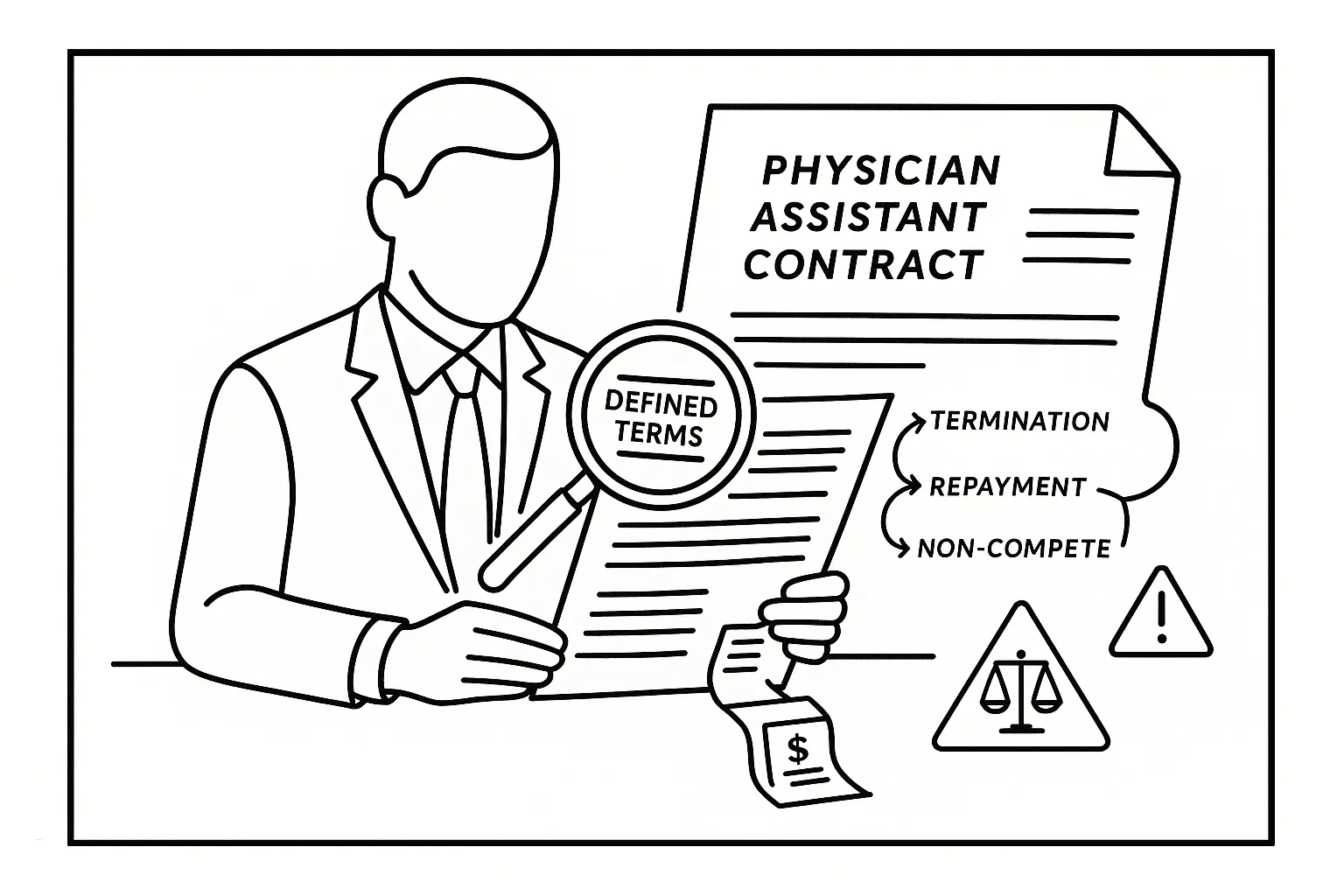
Physician assistant agreements typically address the scope of services, compensation and payroll mechanics, benefits, business expenses, insurance, indemnification, supervision, delegation, contract duration, termination, restrictive covenants, repayment obligations, and dispute resolution. The first review should confirm that each material promise discussed during recruitment appears in the written agreement or an incorporated exhibit.
Defined terms require particular attention because phrases such as “base salary,” “collections,” “billable RVUs,” “for cause,” and “effective date” can determine how an obligation operates. Exhibits and addenda may contain enforceable productivity formulas, work schedules, location lists, or job descriptions, while cross-references can connect resignation or termination to bonus repayment, insurance costs, or restrictive covenants.
A PA should also identify broad discretionary language, unilateral amendment rights, and reimbursement duties that do not have a clear endpoint. Indiana PAs can consult the Indiana Academy of Physician Associates for statewide advocacy and regulatory information concerning evolving practice authority and supervisory frameworks, but employment-specific rights and obligations must be evaluated from the actual contract.
Compensation and Productivity Terms
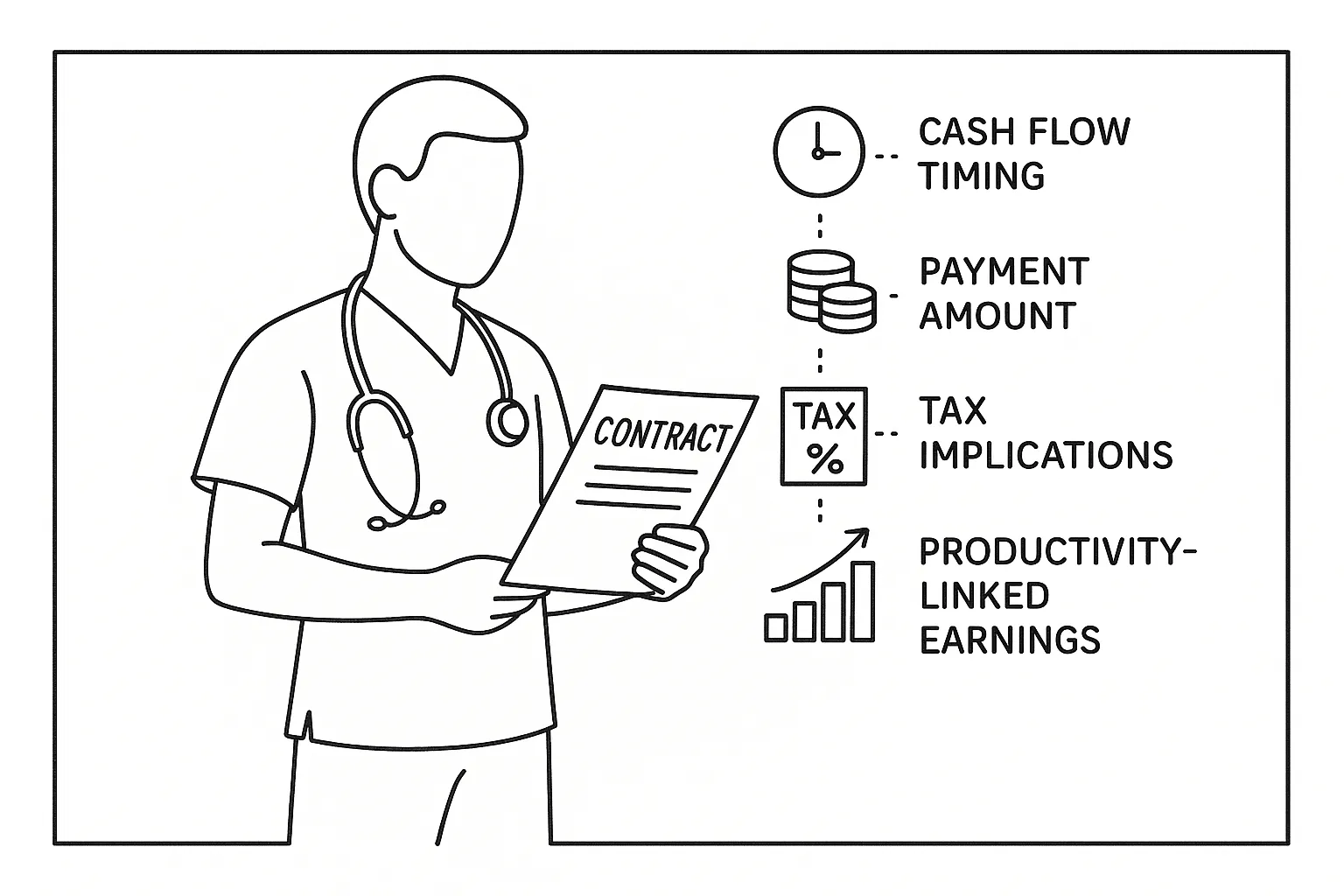
Compensation provisions affect more than the amount shown as salary. The agreement should explain when compensation is earned and paid, whether bonuses depend on collections or productivity, which services receive credit, and whether the employer can change the formula. A thorough PA compensation and productivity review also examines thresholds, reconciliation periods, employer discretion, and any draw or negative balance that may carry forward.
Benefits and expense allocations should be reviewed alongside cash compensation. Licensing, credentialing, continuing education, professional dues, insurance, and business expenses may affect the practical value of the offer. If the arrangement uses independent contractor status, the agreement should clearly allocate expenses and responsibilities rather than relying on assumptions about how the relationship will operate.
Malpractice Insurance and Liability Allocation
Malpractice and indemnification provisions determine how liability is allocated during and after the working relationship. The contract should identify the coverage provided, who pays the premium, whether coverage protects the PA’s services, and whether additional coverage may be required when employment ends. Because policy structure can affect post-employment exposure, PAs should review both the insurance clause and any related exhibit.
Tail obligations can represent a substantial exit cost when applicable. Reviewing tail insurance responsibilities for physician assistants can help a PA understand why the policy type, triggering events, payment responsibility, and duration of any continuing obligation should be clear before signing. Indemnification language also deserves separate attention when it extends beyond the protection available under the malpractice policy.
Licensure, Credentialing, Supervision, and Scope
An Indiana PA contract should reflect the actual duties and practice structure contemplated by the parties. Provisions addressing supervision, collaboration, delegation, prescribing, scheduling, and clinical responsibilities should be consistent with the position and the requirements administered by the Indiana Medical Licensing Board. Language that is overly broad or operationally unclear can create a mismatch between the written agreement and the PA’s day-to-day practice.
Credentialing and start-date provisions should explain what happens if required approvals are delayed. The PA should determine whether compensation, benefits, or termination rights depend on credentialing milestones and whether the employer may assign different duties or locations while approvals remain pending. Work-location clauses also matter when an employer operates multiple facilities or expects coverage beyond the primary site.
Non-Competes, Repayment Terms, and Career Mobility
Restrictive covenants can affect where and how a PA works after leaving an employer. The complete restriction should be evaluated by considering its duration, geographic reach, covered activities, and the circumstances that trigger it. A focused review of a PA non-compete should also account for related non-solicitation, confidentiality, and enforcement language rather than treating the covenant as an isolated paragraph.
Signing bonuses, relocation assistance, training expenses, and other advances may be subject to repayment if employment ends before a stated date. The agreement should make the repayment schedule, triggering events, and interaction with termination provisions understandable. A PA should also determine whether an obligation is prorated, whether repayment applies after an employer-initiated termination, and whether the employer may deduct an amount from final compensation when the contract permits it.
Termination, Discipline, and Exit Rights
Termination provisions determine how either party may end the relationship and what happens afterward. Review should distinguish expiration, nonrenewal, without-cause termination, and termination for cause while identifying applicable notice requirements, cure opportunities, and immediate-termination events. The agreement should also address final compensation, outstanding bonuses, benefits, records, property return, and obligations that survive termination.
Exit terms must be read together with repayment, malpractice, and restrictive covenant provisions because the same event may activate several obligations. A PA contract termination review can clarify the practical consequences of resigning, receiving notice, or facing an alleged breach before the PA takes action.
When an Indiana PA Should Seek Contract Review
Legal review is most useful before the agreement is signed, but it can also help when an employer presents an amendment, compensation-plan change, renewal, or proposed separation. An attorney can trace cross-references, identify income and mobility risks, explain unclear provisions, and help the PA prioritize questions or requested revisions.
The review should match the type of relationship. Employment agreements and independent contractor agreements may allocate taxes, insurance, expenses, control, and termination risk differently. Evaluating the entire document provides a more reliable picture than reviewing salary or a single restrictive covenant in isolation.
Review Your Indiana PA Contract Before You Sign
Chelle Law can explain how compensation, malpractice coverage, supervision terms, restrictive covenants, repayment duties, and termination provisions work together in your proposed agreement.
Contact Chelle Law