
North Dakota physician assistant contracts must account for employment terms and the practice requirements overseen by the North Dakota Board of Medicine. For PAs working in Fargo, Bismarck, or elsewhere in the state, scope of practice, licensure, supervision, delegation, and prescribing requirements can shape how clinical duties, physician relationships, credentialing, and scheduling should be described. Those regulatory issues also intersect with compensation formulas, malpractice coverage, termination rights, and post-employment restrictions. Chelle Law reviews employment and independent contractor agreements to identify language that may shift financial or professional risk to the PA, including unclear RVU calculations, tail insurance obligations, bonus repayment clauses, and broad mobility restrictions. A line-by-line review helps a North Dakota PA understand how the written agreement will operate in daily practice and what terms may warrant clarification or negotiation before signing.
Employment and Independent Contractor Classification
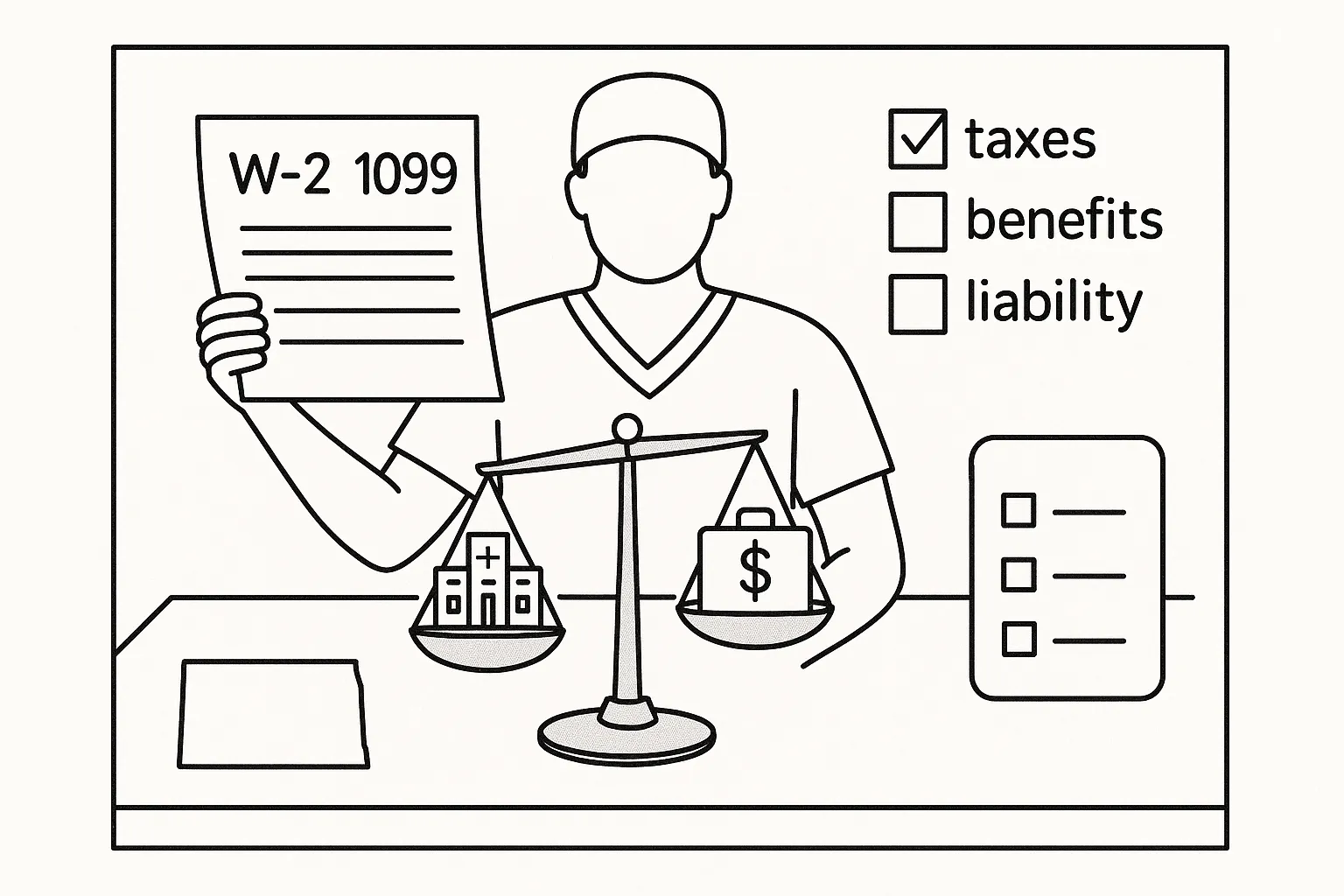
The agreement should clearly identify whether the PA will work as a W-2 employee or a 1099 independent contractor. That classification affects tax withholding, benefits eligibility, workers’ compensation, unemployment coverage, and responsibility for business expenses. A contract may use an independent contractor label while also imposing scheduled hours, required policies, direct supervision, or other forms of control, so the practical relationship should be evaluated alongside the stated classification.
Classification also affects malpractice coverage, retirement benefits, health insurance, paid leave, and responsibility for self-employment taxes. Reviewing the differences between W-2 and 1099 arrangements for physician assistants can help a PA compare the full financial value of competing offers rather than focusing only on the stated compensation. Contract review should identify provisions that evidence control or independence and explain how those terms affect the PA’s obligations.
Compensation, Productivity, and Employee Benefits
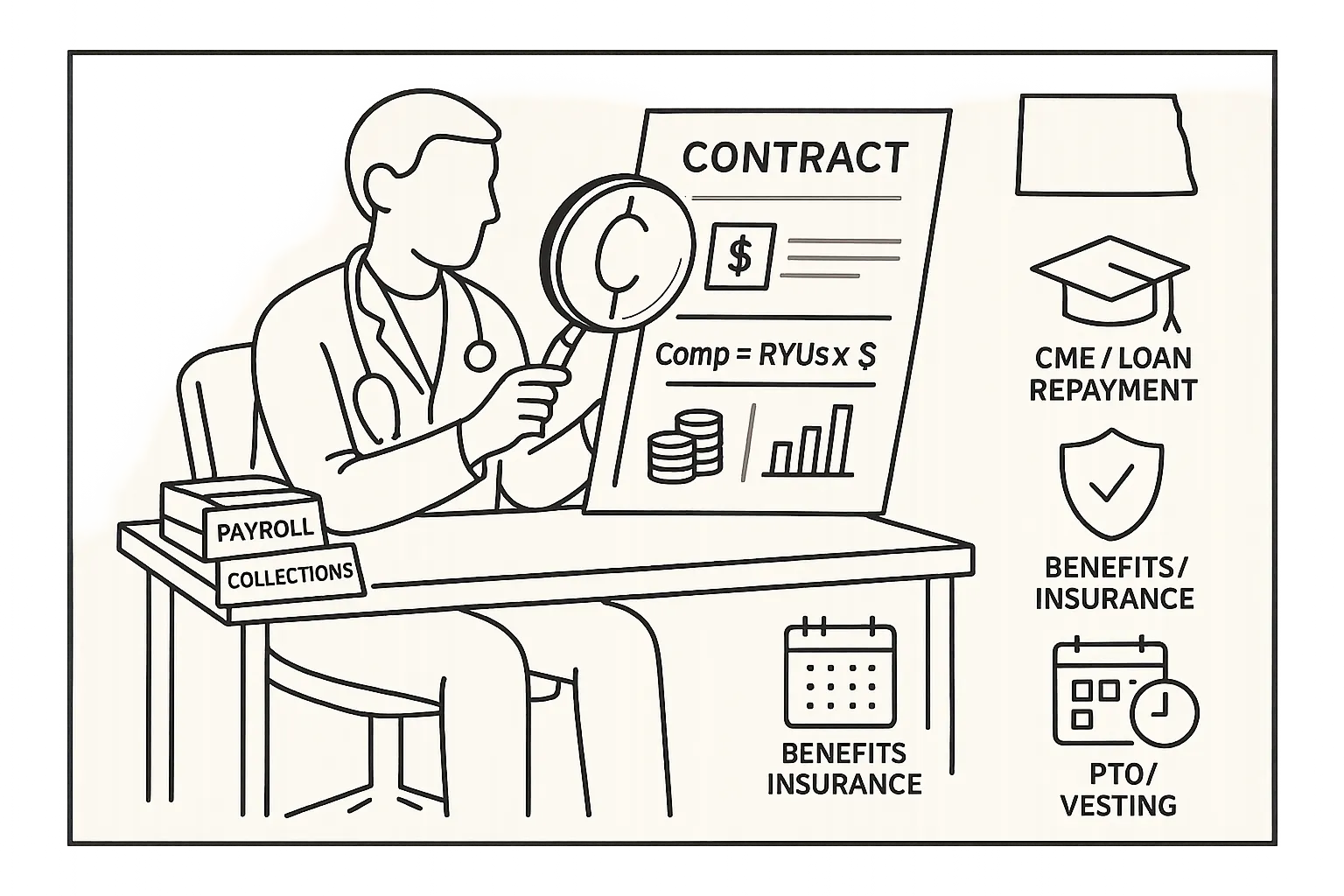
Base salary provisions should establish pay frequency, guaranteed compensation, and the method for prorating pay at the beginning or end of employment. The agreement should also explain whether the employer may adjust compensation, recover alleged overpayments, or conduct retroactive reconciliations. A focused PA compensation and productivity review can identify formulas or discretionary provisions that make expected earnings difficult to calculate.
Productivity compensation may use collections, relative value units, or a blended model. A collections formula can create cash-flow variability when the employer controls billing and reconciliation timing, while an RVU model should define which services count, the measurement period, and the conversion factor. For example, if a PA generates 3,000 RVUs and the applicable conversion factor is $40 per RVU, the productivity component would be $120,000. The contract should make clear whether that amount supplements a base salary or is reconciled against prior payments.
Benefits may include health coverage, retirement contributions, paid time off, continuing medical education funds, licensing expenses, and DEA registration costs. Sign-on bonuses, relocation assistance, and student loan payments often include vesting or clawback provisions, so PAs should examine the specific bonus repayment terms, triggering events, and whether repayment is prorated based on time served.
Malpractice Insurance and Tail Coverage
Malpractice language should identify the policy type, coverage limits, named insured, duty to defend, and responsibility for premiums. Occurrence coverage generally applies to incidents occurring during the policy period even if a claim is made later. Claims-made coverage ordinarily requires the policy to remain active when the claim is reported, creating possible post-employment exposure if extended reporting coverage is not secured.
When a claims-made policy is used, the agreement should state who must purchase tail coverage after termination and whether that responsibility changes based on the reason employment ends. The contract should also address onboarding or credentialing gaps, coverage during leaves, indemnification, and exclusions for alleged misconduct. Because tail obligations can create a significant post-termination expense, PAs should understand the practical consequences of tail insurance provisions before accepting the offer.
North Dakota Scope of Practice and Clinical Duties
Clinical-duty provisions should align with North Dakota requirements governing PA licensure, scope of practice, supervision, collaboration, delegation, and prescribing. The agreement may identify physician relationships, required availability, clinical protocols, or conditions tied to the status of another practitioner. Contract language that is vague, more restrictive than anticipated, or inconsistent with the intended practice arrangement can affect clinical autonomy, compliance, and compensation.
Scheduling terms should also define ordinary hours, call obligations, weekend coverage, multi-site assignments, travel expectations, and compensation for additional duties. Credentialing support for hospital privileges, state licensure, and required registrations should be assigned to a responsible party with realistic timing. North Dakota PAs may also consult professional information from the North Dakota Academy of Physician Assistants when evaluating practice issues that may affect proposed contract language.
Non-Compete and Other Restrictive Covenants
Post-employment restrictions may include non-compete, patient or employee non-solicitation, confidentiality, and non-disparagement provisions. Their practical effect depends on the restricted geography, duration, covered services, and the events that trigger the restriction. Broad language can limit a PA’s ability to accept another position, remain in a community, or continue working within the same healthcare system.
A contract should be reviewed for exceptions involving termination without cause, layoffs, employer breach, or changes in ownership. It should also clarify whether a restriction applies after every form of separation or only after specified events. A detailed review of restrictive covenants in PA contracts can help identify geographic, temporal, and practice-scope language that may create disproportionate mobility risk.
Termination, Repayment, and Dispute Terms
Termination provisions should distinguish termination for cause from termination without cause and specify notice periods, cure rights, final compensation, and continued benefits. Definitions of cause may include broad concepts such as failure to perform, dishonesty, loss of credentials, or alleged misconduct. The agreement should explain whether the PA receives an opportunity to correct a curable issue and what happens to accrued compensation when either party ends the relationship.
Repayment obligations may apply to bonuses, relocation assistance, CME expenses, loan payments, or alleged compensation overpayments. Arbitration, governing-law, and venue clauses can also affect the cost and procedure for resolving a dispute. Reviewing the mechanics of terminating a physician assistant contract helps clarify notice requirements, repayment exposure, and the provisions that remain effective after employment ends.
North Dakota PA Contract Review Checklist
Before signing, a North Dakota PA should identify provisions that are undefined, internally inconsistent, or dependent on employer discretion. Important review points include:
- Broad or undefined termination-for-cause language
- Unclear malpractice coverage or responsibility for tail insurance
- Supervision, delegation, or prescribing terms that do not match the intended role
- Restrictive covenants with a broad radius, long duration, or expansive practice definition
- Repayment triggers that lack proration, notice, or a dispute process
- Collections or RVU formulas without defined metrics and reconciliation timing
- Unspecified call, multi-site, travel, or credentialing responsibilities
Supporting documents may be necessary to evaluate the agreement fully. A PA can request the compensation-plan exhibit, benefit summaries, malpractice policy information, productivity reports, credentialing requirements, and written details about the intended clinical schedule. Material promises made during recruitment should appear in the signed agreement or an incorporated exhibit rather than remain in informal emails or conversations.
An attorney-led review applies these issues to the actual contract, explains potential financial and professional consequences, and identifies terms that may warrant clarification or negotiation. Written comments and proposed revisions can help the PA compare the offer with the practical obligations imposed by the agreement before making a final decision.
Review Your North Dakota PA Contract Before Signing
Chelle Law can review compensation, malpractice coverage, clinical-duty language, restrictive covenants, repayment obligations, and termination provisions in your proposed agreement.
Contact Chelle Law