
Ohio physician assistants evaluating employment or independent contractor agreements must consider both the written business terms and the state-specific rules governing practice. The State Medical Board of Ohio regulates PA licensure and practice, including supervision, delegation, prescribing, and related professional requirements. Those rules matter whether a PA is joining a hospital system in Columbus, a specialty group in Cleveland, or another Ohio healthcare employer because contract language should accurately define duties, authority, credentialing responsibilities, and physician oversight. At the same time, compensation formulas, malpractice coverage, restrictive covenants, termination rights, and repayment obligations can determine the financial and professional consequences of the relationship. Chelle Law reviews these provisions together so Ohio PAs can understand how regulatory obligations interact with pay, liability exposure, schedule expectations, and future career mobility before signing.
Why Contract Review Matters for Ohio Physician Assistants

An employment agreement is more than a statement of salary. It is a legal framework that allocates revenue, liability, professional discretion, and post-employment obligations between the PA and the employer. A focused review identifies language that shifts economic risk to the PA through collections-based pay, negative accruals, repayment triggers, gaps in malpractice protection, or supervision terms that do not match the position’s actual requirements.
Because employer-drafted forms generally reflect the hiring entity’s interests, attorney review should explain how each material clause operates in practice and identify provisions that warrant clarification or negotiation. This analysis is important for both employment contracts and independent contractor agreements, which may allocate taxes, insurance, expenses, and liability differently. Ohio PAs can also consult advocacy and regulatory information from the Ohio Association of Physician Assistants.
Compensation, RVUs, and Productivity Terms
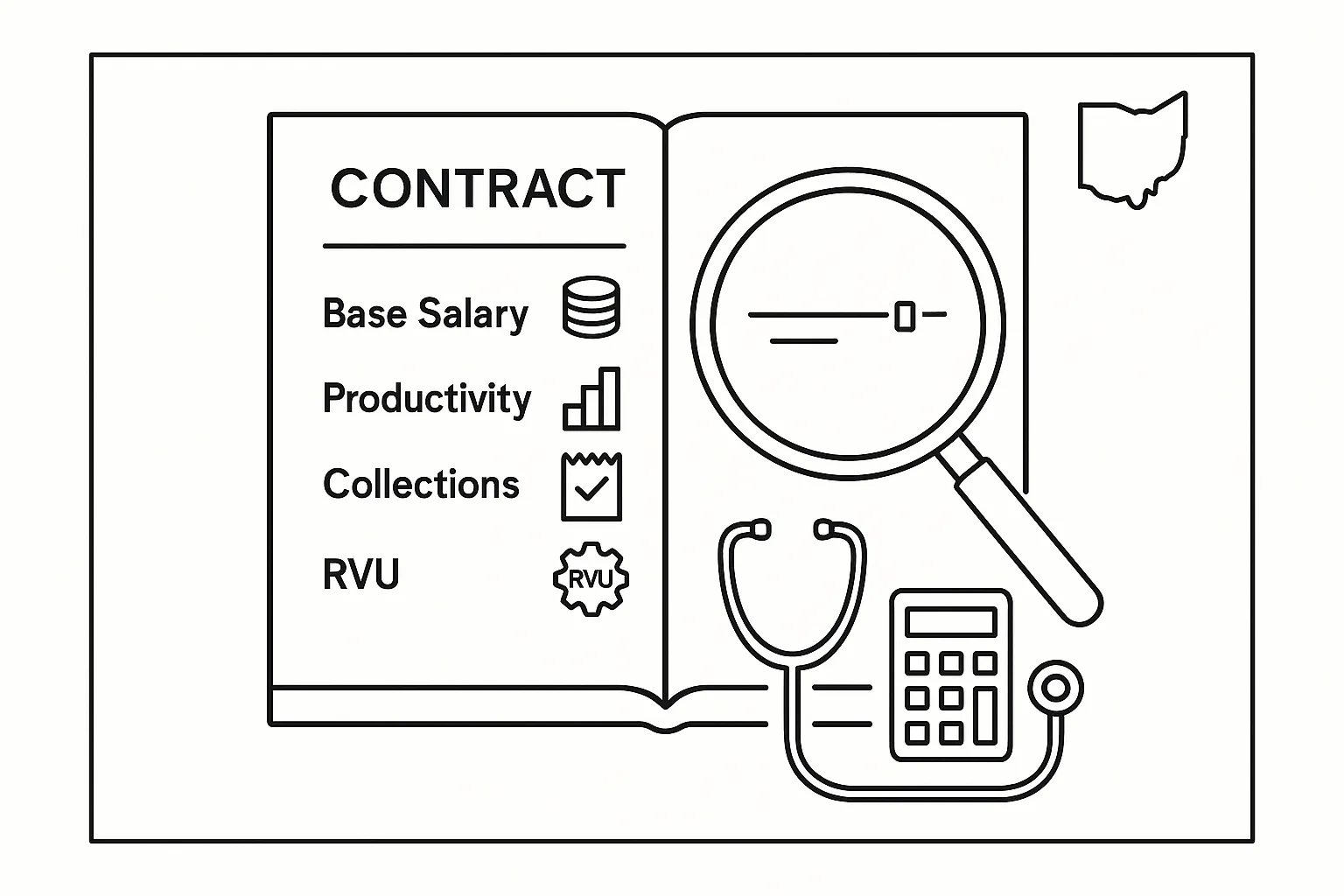
Compensation clauses are often the most heavily negotiated provisions because subtle formula changes can materially alter take-home pay. Common structures include a guaranteed base salary with productivity incentives, collections-based models, and RVU-based compensation. A thorough PA compensation review should determine what work receives credit, how earnings are calculated, when payments are reconciled, and whether the employer can change the formula unilaterally.
Collections-based compensation ties pay to amounts actually collected rather than billed charges, shifting collection timing and payer risk to the PA. An RVU system converts clinical work into relative value units and applies a dollar conversion factor, but the agreement must explain which RVUs count, how shared visits are allocated, and whether the conversion factor can change. PAs evaluating these arrangements should understand the broader mechanics of RVU compensation before relying on projected earnings.
- Productivity definitions: The agreement should address office visits, procedures, telehealth, shared or modifier visits, and global periods rather than leaving credit allocation to later interpretation.
- Conversion factors and thresholds: A stated dollar multiplier, production threshold, floor, and ceiling make projected compensation easier to evaluate. For example, 1,000 RVUs at a $40 conversion factor produces $40,000, while the same production at $60 produces $60,000.
- Collections and chargebacks: The contract should explain payment timing and how denials, refunds, adjustments, and uncollected accounts affect compensation.
- Draws and negative accruals: A draw against future earnings can create a repayment obligation if production falls, particularly when a negative balance becomes due at termination.
- Bonuses and clawbacks: Quality and productivity metrics should be measurable and tied to accessible data. The agreement should also identify when signing bonuses or incentive payments must be repaid.
Reconciliation timing is as important as the formula itself. If a plan uses collections, attributable RVUs, guaranteed pay, and advances, the contract should explain how those components interact and when the PA receives an accounting. Without clear procedures, payment delays and retroactive adjustments can make actual compensation difficult to verify.
Malpractice Insurance, Tail Coverage, and Indemnification
Malpractice provisions directly affect liability during and after employment. A claims-made policy generally covers claims reported while the policy is active, so later-reported claims may require tail coverage after the PA leaves. An occurrence policy generally covers incidents that occurred during the policy period regardless of when the claim is reported. The agreement should identify the policy type, coverage limits, exclusions, and whether the employer’s policy covers all duties and locations assigned to the PA.
Responsibility for tail coverage should be stated expressly when the employer uses a claims-made policy. Tail insurance can become a significant immediate expense, especially in higher-risk specialties, if the contract assigns the cost to the departing provider. Reviewing tail insurance obligations for PAs also requires attention to whether coverage responsibility changes based on resignation, termination without cause, or termination for cause.
Indemnification language presents a separate risk. The contract should explain whether the employer will defend and indemnify the PA for conduct within the scope of employment and whether the PA is being asked to assume liability for the employer or other parties. Narrow protection, broad provider indemnity, or silence about defense costs can create exposure beyond the malpractice policy itself.
Ohio Scope of Practice, Supervision, and Credentialing
The contract’s description of clinical duties should align with Ohio’s PA practice framework and the employer’s actual operational requirements. Supervision and delegation provisions may address physician availability, approvals, documentation, co-signatures, prescribing, procedures, and escalation protocols. These terms should be clear enough for the PA to understand who controls clinical responsibilities and whether the written expectations match the role discussed during recruitment.
Credentialing, privileging, and appointment requirements should also identify who manages the process, who pays associated costs, and what happens if approval is delayed or denied. A delayed start can affect compensation, benefits, and bonus eligibility. Multi-site assignments, telehealth duties, travel reimbursement, and on-call coverage should be defined because each can materially affect workload, scheduling, and liability exposure.
Non-Competes, Non-Solicitation, and Career Mobility
Restrictive covenants can determine where and how a PA may work after leaving an employer. In Ohio, non-compete enforceability can depend on factors such as scope, geography, and duration. The practical impact also depends on what event triggers the restriction, including resignation, termination without cause, or termination for cause. A focused non-compete review evaluates the actual facilities, services, geographic area, and employment opportunities affected by the language.
Non-solicitation clauses may restrict contact with patients, referral sources, employees, or contractors and may be drafted broadly enough to reach passive communications or social media activity. The agreement should define the protected group, the prohibited conduct, and the duration of the restriction. Ownership restrictions and provisions covering any entity that treats similar patient populations also deserve attention because they can limit opportunities beyond direct clinical employment.
Termination, Notice, Repayment, and Leave Provisions
Termination provisions govern how quickly employment may end and what financial obligations survive. Key terms include the initial contract term, automatic renewal, without-cause notice, for-cause definitions, cure opportunities, severance, final compensation, and the treatment of pending productivity payments. A termination clause review should consider how notice requirements interact with restrictive covenants, credentialing obligations, patient transition duties, and the PA’s next position.
Repayment clauses may require the return of signing bonuses, relocation allowances, CME expenses, or advances when employment ends within a specified period. The agreement should state whether repayment is prorated, what termination events trigger it, and when payment is due. These details are central to evaluating sign-on bonus repayment terms, especially when a clawback can be combined with a negative productivity balance.
Leave provisions should address parental, medical, and military leave as applicable, including benefits continuation and the treatment of productivity targets or incentive accruals. Language that suspends compensation, changes bonus eligibility, or triggers repayment during an absence can create unexpected financial consequences. For-cause provisions tied to policy violations, licensing issues, or regulatory findings should likewise be reviewed for clarity and any available notice or cure process.
Ohio PA Contract Red Flags and When to Seek Review
- Undefined or adjustable RVU conversion factors with unilateral employer change rights
- Collections-based pay without clear accounting for payment timing, denials, refunds, or chargebacks
- Draws against future earnings or negative accruals that become immediately repayable
- Silence about tail insurance responsibility under a claims-made policy
- Supervision or delegation language that does not clearly reflect the position and Ohio practice requirements
- Vague duties, multi-site assignments without expense terms, or undefined call obligations
- Restrictive covenants triggered by any termination or covering an overly broad area or patient group
- Bonus, relocation, or expense clawbacks without clear exceptions or prorated repayment
- Broad PA indemnity obligations or no employer commitment to provide a defense for covered duties
Attorney review is particularly valuable before signing a contract with complex productivity formulas, unclear malpractice protection, restrictive covenants, multi-site or telehealth duties, unusual supervision language, or significant repayment obligations. Chelle Law provides attorney-led review through secure document submission, written analysis or redlining, and a consultation focused on the practical consequences of the agreement. Reviewing these terms before acceptance helps an Ohio PA evaluate income, liability, professional autonomy, and future mobility while there is still an opportunity to seek clarification or negotiate changes.
Have an Ohio PA Contract Reviewed Before You Sign
Chelle Law reviews compensation, malpractice coverage, supervision terms, restrictive covenants, termination rights, and repayment obligations so you can understand the practical risks in your proposed agreement.
Contact Chelle Law