
A dental practice may ask an associate to cover an extra day, work different hours, or temporarily report to another office. The request may arise from a provider’s leave, a staffing shortage, an unexpected increase in patient demand, or a need to maintain coverage. Although the arrangement may begin as a short-term accommodation, it can become the practice’s default schedule when no one documents its purpose, duration, or end date.
The resulting problem is larger than inconvenience. Different days, hours, and locations can affect childcare, commuting, patient continuity, production opportunities, collections, support staffing, and eligibility for a compensation guarantee or bonus. An additional location may also expand the practical reach of a restrictive covenant, while an associate who cannot continue the schedule may face termination notice, repayment, or transition obligations.
Whether a practice can require a lasting change depends on the employment agreement, incorporated policies, governing law, and the facts surrounding the request. Chelle Law reviews how scheduling authority interacts with compensation, modification, termination, repayment, and post-employment terms. The analysis can help an associate identify when an operational request is becoming a material contractual change and which provisions may warrant clarification or a written amendment.
Key Takeaways for Dental Associates
- A temporary schedule is more likely to become permanent when the parties do not record its reason, start date, review date, and expected expiration.
- Recurring scheduling templates, compensation changes, staffing decisions, and future patient bookings can show that the practice is treating the arrangement as permanent.
- Associates should evaluate schedule and location authority together with compensation formulas, deductions, amendment language, termination rights, repayment obligations, and restrictive covenants.
- A nominally unchanged production percentage can produce different pay when the revised schedule changes patient volume, collections timing, staffing, or lab-fee allocations.
- Written expiration dates, review procedures, and compensation terms can reduce the risk that temporary coverage becomes an open-ended commitment.
How a Short-Term Schedule Becomes the Practice Default
Operational Momentum Replaces the Original Plan
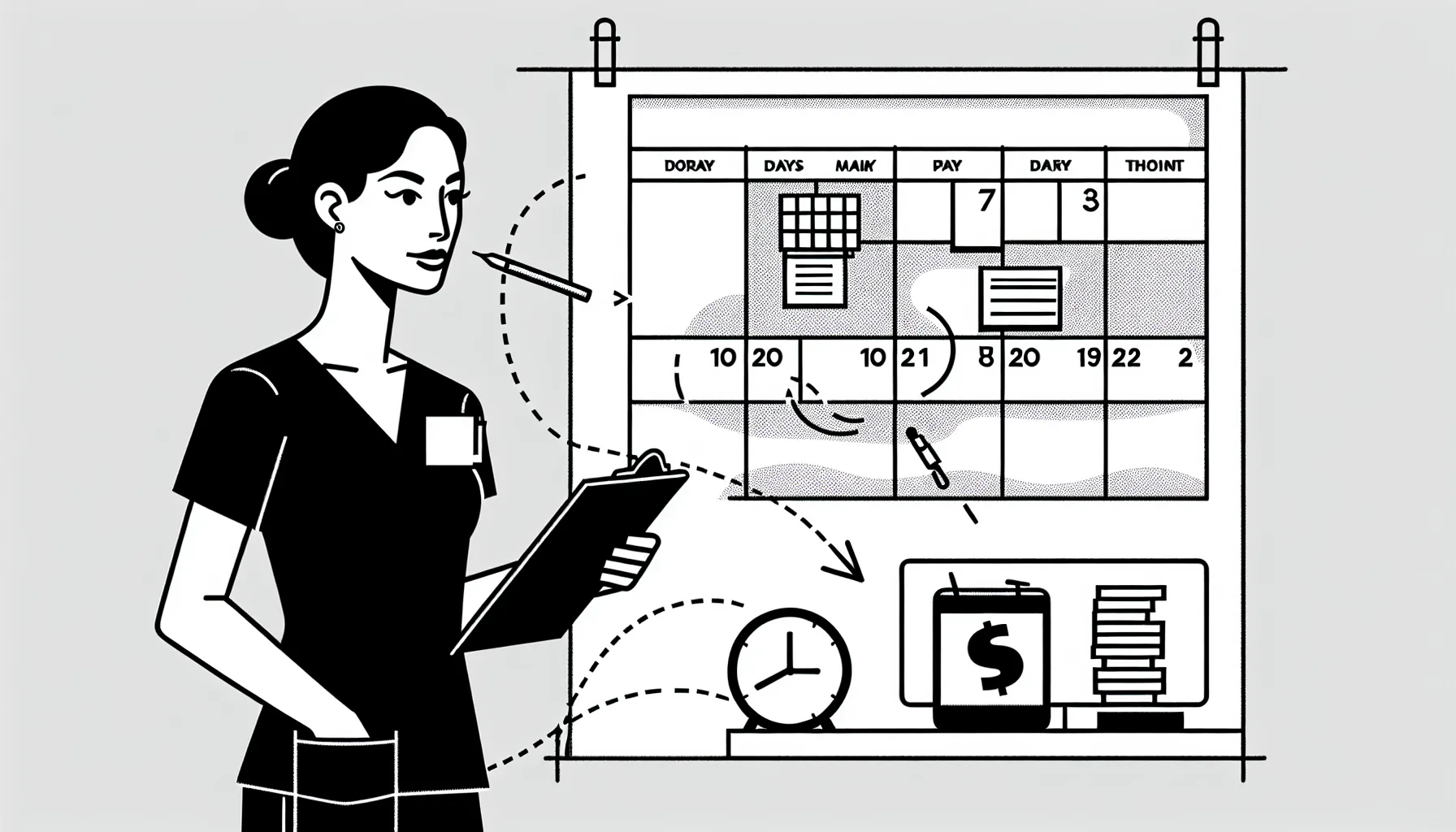
Short-term coverage can quickly reshape a practice’s operations. Once front-desk staff book patients into the revised hours, assistants change their availability, and billing personnel associate production with a different location, returning to the original schedule becomes disruptive. A flexible associate’s availability may then be treated as an established obligation even though the parties never revised the contract.
Practice-management systems can reinforce that shift. If the temporary hours are entered into recurring scheduling templates rather than preserved as an exception, managers and staff may eventually rely on the system instead of the original agreement. Future hiring and patient allocation decisions can further institutionalize the new pattern. Comparing those expectations with the contract’s provisions addressing associate schedules, duties, and coverage can reveal whether the operational arrangement has drifted from the written position.
Revenue and Staffing Decisions Make Reversal More Difficult
Independent practices and dental service organizations may move associates to busier days or higher-volume locations to improve utilization. A change described as temporary can become economically attractive if it fills appointment slots, supports a new patient flow, or allows the practice to reorganize assistant coverage. Once the employer hires staff, reallocates operatories, or builds recurring patient blocks around the revised hours, returning to the original arrangement may carry a real operational cost.
Warning signs include repeated schedules without an end date, management describing the change as “the new normal,” future patients being booked into the revised hours, or the schedule being used for long-term staffing plans. Updated job descriptions, rostering policies, or compensation calculations are stronger indications that the practice no longer views the arrangement as temporary.
Read the Entire Contract, Not Just the Schedule Clause

A schedule dispute rarely turns on one sentence. The signed employment agreement, offer letter, amendments, handbooks, location exhibits, compensation plans, and written communications may address different parts of the relationship. Some contracts reserve broad authority to change hours, duties, or locations. Others identify regular workdays, require advance notice, limit additional-office assignments, or state that material modifications must be signed by both parties.
Oral assurances can explain what the parties expected, but a verbal promise that coverage will last “only a few weeks” leaves substantial room for disagreement. The review must identify which documents are incorporated into the agreement, which provision controls in a conflict, and whether the employer may revise operational policies without changing contractual compensation or termination terms. An employment agreement review for a dentist can evaluate those documents as a coordinated set rather than treating the schedule language in isolation.
Schedule, Location, Notice, and Amendment Authority
Important questions include whether the agreement defines regular days and hours, establishes call or weekend obligations, identifies a primary office, permits assignments to additional locations, or requires notice before a material change. The amendment provision may require a signed writing, while a management-rights clause may permit narrower operational adjustments. Those provisions must be reconciled instead of assuming either that management has unlimited scheduling authority or that the original calendar can never change.
Current American Dental Association contracting guidance identifies scheduling, call requirements, notice, time-off procedures, compensation, deductions, termination, repayment, restrictive covenants, and buyout terms as subjects that warrant documentation. For a temporary arrangement, that means recording the revised days, hours, locations, coverage duties, compensation consequences, review date, and expiration rather than relying on general modification language.
Financial and Legal Consequences of the Revised Schedule
Production Opportunities Can Change Without a New Percentage
A practice does not need to reduce an associate’s stated percentage for the revised schedule to lower compensation. Different days may produce different patient volume, procedure mix, cancellation rates, or collection timing. A new location may also use different support staffing, payer participation, lab arrangements, or methods for allocating supplies and overhead. These variables can change actual pay even when the written formula appears untouched.
The associate should compare the original and revised schedules using the agreement’s defined production or collections base, guarantee period, bonus threshold, reconciliation process, and deductions. Lab fees, supply costs, staff expenses, refunds, uncollected accounts, and post-termination collections may all affect the result. A focused review of dental compensation terms can determine whether the revised schedule changes the economics assumed when the agreement was signed.
Compensation activity can also reveal that a supposedly temporary schedule is becoming permanent. Examples include revising bonus targets, shortening a guarantee, introducing recurring deductions, changing production allocations, or applying a new reconciliation method tied to the revised hours. The associate should retain schedules, production reports, collection records, pay statements, and written explanations of any formula change.
Termination and repayment terms become relevant when the associate cannot maintain the new arrangement. Resignation may trigger a contractual notice period, bonus repayment, relocation reimbursement, buy-in consequences, or disputes over unpaid production. Before planning a departure, the associate should review the agreement’s termination and post-employment provisions together with final-compensation language and any repayment schedule.
Classification, Restrictive Covenants, and Protected Requests
Schedule control can have an additional significance when a dentist is labeled an independent contractor. A schedule change alone does not determine worker status, and the written label is not conclusive. However, repeated control over when and where the dentist works, patient assignments, staffing, and clinical workflow may be relevant to the broader economic-reality analysis described in current U.S. Department of Labor classification materials. Dentists working under a 1099 arrangement may therefore need to evaluate both the contract and the actual working relationship.
A recurring assignment to another office may also affect a restrictive covenant. Some agreements measure the restricted area from every location where the associate provides services, while others use a primary office or specifically listed facilities. Accepting regular work at another location can consequently enlarge the practical burden after departure, depending on the wording and governing state law. The FTC’s 2024 federal noncompete rule is not currently in effect or enforceable, so dental noncompete questions generally require analysis of the agreement and applicable state law rather than reliance on a nationwide ban. A dentist non-compete analysis can identify how an added location may affect the restricted territory.
Not every inconvenient or financially harmful schedule change violates employment law. A narrower issue may arise, however, when the change follows a request for a disability, pregnancy-related, or religious accommodation, or when it appears connected to protected opposition to discrimination. Those situations require fact-specific analysis separate from the ordinary contract dispute. The timing, stated reason, comparable treatment of other workers, and written communications may all be important.
How to Respond Before the Arrangement Hardens
Begin with a written confirmation rather than waiting for a disagreement. After the initial conversation, send a concise email identifying who requested the change, the operational reason, the revised days and hours, each affected location, the start date, the anticipated end date, and a specific review date. The message can remain cooperative while creating a contemporaneous record that the arrangement was intended to be temporary.
- Define the temporary assignment. Record the schedule, location, coverage responsibilities, call obligations, and stated business reason.
- Set a review and expiration date. A specific date is more useful than phrases such as “until staffing improves” or “for the foreseeable future.”
- Measure the financial effect. Track production, collections, guarantees, deductions, patient volume, commuting costs, and unpaid administrative time under both schedules.
- Compare the request with the governing documents. Review schedule, location, modification, compensation, termination, repayment, and restrictive-covenant provisions together.
- Request a written amendment when the change continues. The amendment can address duration, compensation, locations, duties, review procedures, and whether the arrangement automatically expires without a signed extension.
Internal escalation may be appropriate when the practice will not identify an end date, changes compensation retroactively, disregards a written schedule term, or treats the associate’s temporary cooperation as permanent consent. The discussion is stronger when it relies on the agreement, documented communications, and actual compensation data rather than general objections to the new schedule.
If the permanent arrangement is untenable, the associate should evaluate the transition before resigning. Contractual notice, patient handoff, final compensation, bonus reconciliation, repayment obligations, malpractice coverage, restrictive covenants, and a pending ownership opportunity may all affect timing. A planned departure can reduce avoidable disputes and clarify what remains payable after the last day worked.
Drafting Better Schedule Protections in the Next Agreement
A stronger agreement describes the regular schedule without preventing reasonable operational flexibility. It may identify expected workdays, normal hours, a primary office, permitted additional locations, weekend or call duties, advance-notice procedures, and limits on recurring coverage. It can also distinguish a temporary assignment from a permanent schedule modification.
Time-boxing is particularly useful. A temporary authorization can expire automatically unless the parties sign an extension, with a defined review date before expiration. The agreement can also explain how materially different hours, locations, or duties affect guarantees, production thresholds, collections, deductions, and bonus eligibility. These provisions help keep the written economic arrangement aligned with the work the associate is actually performing.
Written-amendment language does not eliminate every dispute, especially when the agreement also grants management broad operational authority. It does, however, create a process for documenting material changes. Associates can further protect the record by retaining published schedules, confirming significant conversations by email, and periodically comparing actual duties with the contract. Reviewing common dental contract red flags before signing can identify vague scheduling authority and related compensation risks while revisions remain possible.
Frequently Asked Questions
Can a dental practice permanently change an associate’s schedule?
The answer depends on the employment agreement, incorporated policies, governing law, and the nature of the change. Some agreements grant broad scheduling authority, while others identify specific days, hours, locations, or notice requirements. The complete set of governing documents must be reviewed before assuming either party has an unrestricted right to impose or reject the change.
What details should be documented for a temporary dental schedule?
Document the revised days, hours, locations, coverage duties, reason for the request, start date, expected end date, and review date. The written confirmation should also address guarantees, productivity targets, deductions, call responsibilities, patient assignments, and any other compensation or workload consequences.
Does accepting a temporary schedule amend the employment agreement?
Not necessarily. An amendment clause may require a writing signed by both parties, while other provisions may allow certain operational changes through policy or management direction. Continuing under a different schedule can nevertheless create practical expectations, making it important to document that the arrangement is temporary and subject to review.
How can different workdays reduce production-based compensation?
Different days, locations, patient assignments, procedure mixes, staffing levels, and collection timing can change actual compensation even when the stated percentage remains the same. The revised schedule may also affect guarantees, bonus thresholds, lab-fee deductions, overhead allocations, and post-termination collections.
Can working at another office expand a dental noncompete?
It may, depending on how the agreement defines the restricted territory and which state law governs. Some provisions measure restrictions from each location where the associate worked, while others use a primary office or listed facilities. The federal FTC noncompete rule is not currently enforceable, so the contract and applicable state law remain central to the analysis.
When does a continuing schedule change warrant contract review?
Review may be useful when the practice will not provide an end date, disregards a written schedule term, changes compensation retroactively, adds recurring locations, or creates termination, repayment, classification, or restrictive-covenant concerns. Contract analysis can clarify how the affected provisions interact and whether a written amendment may resolve the issue.
Review a Dental Schedule Change Before It Becomes Permanent
Chelle Law can analyze how proposed hours, locations, compensation terms, termination provisions, and restrictive covenants interact in your dental agreement.
Contact Chelle LawExplore Dental Contract Guidance
Review legal services, practical resources, and state-focused information for dentists evaluating employment and business agreements.