

Relocation assistance is a common part of veterinary job offers, especially when clinics recruit associates from outside the local labor pool. But the offer letter or employment agreement often ties that assistance to repayment obligations, clauses that can create surprise debt if you leave early, are terminated for cause, or move to a competing practice. We review what “Veterinarian Relocation Repayment Terms” typically look like, the contract elements you must watch, how those provisions interact with noncompetes, malpractice coverage, and practical negotiation strategies. Throughout, we note important state-by-state variations so you can assess risk before signing.
Key Takeaways
- Veterinarian Relocation Repayment Terms convert relocation money or benefits into a repayable obligation if specific triggers occur, so identify exactly what you’re receiving and whether it’s a stipend, reimbursement, or lump sum.
- Prefer pro‑rata forgiveness over lump‑sum clawbacks and insist on a clear amortization schedule, repayment cap equal to the original benefit, and no hidden interest or administrative fees.
- Narrow repayment triggers—define “for cause,” add a 15–30 day cure period, prohibit unlawful paycheck deductions, and require written notice before collection to reduce surprise liability.
- Align relocation repayment with noncompete, severance, and tail insurance provisions: negotiate carve‑outs for termination without cause and clarify who pays tail costs to avoid stacked exit expenses.
- Review state law, tax consequences, and the contract in writing before signing, and have an attorney experienced in veterinary employment agreements confirm the repayment language and written reimbursements.
What Relocation Repayment Means For Veterinarians
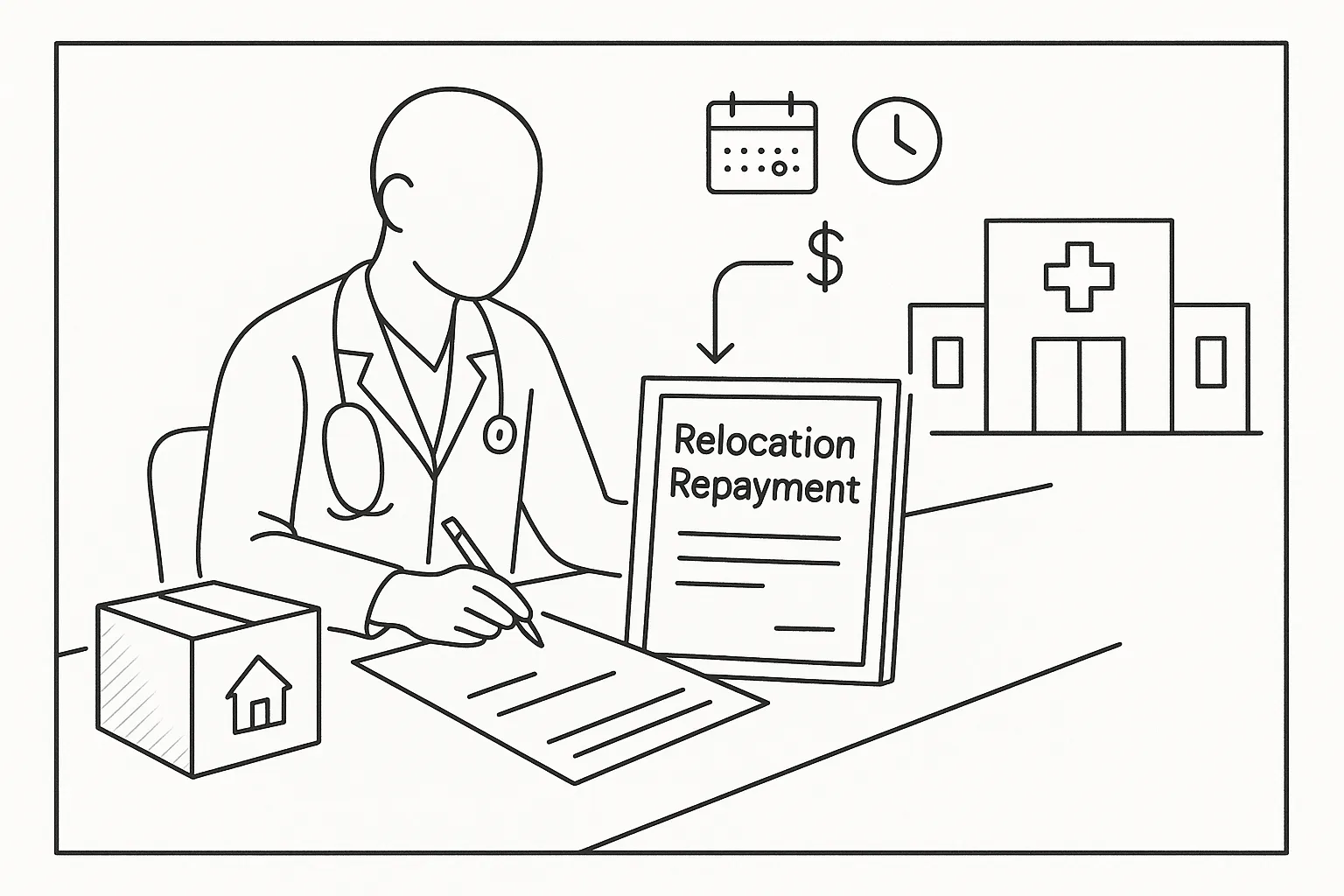
Relocation repayment means the employer provides money, reimbursement, or a lump relocation benefit up front (or covers moving expenses) with the condition that you repay all or part of that amount under certain circumstances. For veterinarians this is common when clinics recruit new associates or specialists and offer a signing bonus, direct moving reimbursement, temporary housing, or assistance with home-sale/mortgage costs.
Why this matters: relocation repayment clauses can convert what feels like a bonus into a deferred loan. Typical triggers include voluntary resignation within a set period (often 6–24 months), termination for cause, or breach of restrictive covenants. Some employers also require repayment if you transfer to another office within the same corporate group. The practical impact depends heavily on the repayment structure, the triggers, and applicable state law.
State variation: some states place limits on post-hire clawbacks, wage deductions, or the enforceability of broad restraints on trade (like noncompetes). For example, California largely prohibits noncompetes, which affects whether an employer can tie relocation repayment to post-employment restrictions. Conversely, states like Texas or Florida have historically been more receptive to enforcing contract repayment terms when they are reasonable and clearly disclosed. Always check both your state’s wage-and-hour rules and recent case law affecting restrictive covenants.
Common Relocation Repayment Structures

Employers use several models to structure relocation repayment. Understanding the mechanics helps you negotiate protections or trade-offs.
Lump‑Sum Repayment
This is the simplest model: the full relocation amount is due if a trigger occurs. Employers sometimes require repayment in one payment or allow installment plans with interest. For new grads or associates offered a large relocation stipend, a lump-sum clawback can be financially devastating if the repayment window is long and the cap is the entire amount.
Pro-Rata Forgiveness (Time-Based Forgiveness)
Here the relocation amount “forgives” gradually, commonly monthly or quarterly, until it is fully earned after a set period (e.g., 12–36 months). If you leave after 8 months of a 24-month forgiveness schedule, you’d repay the unvested portion. Pro-rata forgiveness is industry-standard and more negotiable than a full lump-sum clawback.
Clawback With Repayment Trigger Events (Termination, Voluntary Resignation)
Many employers list specific triggers: voluntary resignation before X months, termination for cause, failure to obtain or maintain state licensure, or breach of non-solicitation/noncompete clauses. Corporate veterinary groups sometimes add internal-transfer restrictions, requiring repayment even if you move to another clinic within the same corporation. Watch for broad “for cause” definitions and employer-friendly language that expands triggers beyond common-sense breaches.
Key Contractual Elements To Watch In Repayment Provisions
A careful contract review focuses on the fine print, where the risk lives.
Repayment Schedule, Cap, And Interest
Confirm the exact amount, how it’s calculated, whether the employer can add administrative fees or interest, and whether there’s a repayment cap. We routinely see clauses that calculate repayment based on gross pay, not net, or permit the employer to charge a stated interest rate. Insist on a cap equal to the original benefit amount and a clear amortization schedule if installments are allowed.
Repayment Triggers, Notice, And Cure Periods
Clear trigger definitions matter. Narrow “for cause” to specific misconduct and add a cure period (e.g., 10–30 days) for solvable defaults like licensing paperwork. Require written notice before repayment is demanded and a reasonable period to dispute or cure alleged breaches.
Offset, Collections, And Withholding From Final Pay
Watch for employer rights to withhold repayment from final wages. State wage laws affect whether an employer may deduct from your paycheck without a signed authorization. In some states employers cannot reduce final wages below minimum wage. Also be mindful of collection and collection-cost clauses, avoid language that makes you responsible for the employer’s attorneys’ fees unless you materially breached the agreement.
How Relocation Repayment Interacts With Other Employment Terms
Relocation repayment rarely stands alone, it intersects with restrictive covenants, termination terms, and malpractice coverage.
Noncompete And Non‑Solicitation Clauses
Employers commonly link repayment to noncompete or non-solicit violations. In states that enforce noncompetes (e.g., Texas, Florida with limitations), a breach could trigger immediate repayment. In California, where most noncompetes are unenforceable, employers still attempt to use repayment clauses: those may be less defensible but should still be narrowed. We recommend separating repayment from restrictive covenant enforcement where possible, or at least limiting repayment triggers to material breaches.
Termination, Severance, And Reduction In Force Protections
Negotiate carve-outs for termination without cause, layoffs, or reductions in force, situations where repayment would be unfair. Employers sometimes agree to prorated forgiveness or full waiver of repayment if they terminate without cause or if your role materially changes (e.g., forced relocation between offices). Include severance offsets and clear language addressing voluntary resignation after a documented demotion or hostile work environment.
Professional Liability (Tail) Insurance And Coverage Gaps
Relocation repayment doesn’t directly affect malpractice coverage, but it matters to your exit economics. If your employer provides claims-made malpractice coverage and you need to purchase tail insurance at termination, the combined cost of a relocation clawback plus tail premiums can be crippling. Ask whether the employer will cover tail costs in scenarios that also trigger relocation repayment, or at minimum exclude employer-initiated terminations from repayment obligations.
Negotiation Strategies And Practical Protections
We negotiate relocation terms frequently. These practical protections reduce downside and make offers workable.
Limit The Repayment Amount, Add A Cap, Or Convert To Forgivable Bonus
Request conversion of relocation expenses into a forgivable bonus paid over time or cap the repayment at the pro-rated unvested portion. For example, if relocation was $10,000 and forgiveness is over 24 months, your repayment after 6 months should not exceed $7,500. Avoid clauses that compound interest or add administrative fees.
Narrow Repayment Triggers, Add A Reasonable Cure Period, And Protect Final Pay
Insist on precise definitions for cause, provide a 15–30 day cure period, and prohibit withholding more than lawful amounts from final wages. Ask for carve-outs for termination without cause, layoffs, or situations where the employer materially breaches first.
Documenting Reimbursement And Seeking Attorney Review Before Signing
Ensure all verbal promises about relocation (temporary housing, realtor fees, covered shipments) are in the written agreement or an attached reimbursement schedule. Before you sign, have an attorney experienced with veterinary contracts, like Robert Chelle, review the repayment provision in the context of the entire agreement, including compensation models, noncompetes, and malpractice coverage.
State Law, Tax, And Payroll Considerations
State law and tax treatment materially affect both enforcement and financial impact.
State Restrictions On Clawbacks, Wage Deductions, And Noncompetes
States vary: California, North Dakota, and Oklahoma generally restrict noncompetes, which influences how enforceable clawbacks tied to noncompete breaches will be. Several states require written authorization for payroll deductions: others prohibit deductions that reduce pay below minimum wage. Recent litigation in multiple jurisdictions has pushed employers to narrow clawbacks or rely on promissory-note frameworks rather than unilateral deductions. We routinely review how state-specific wage laws intersect with repayment and advise tailored edits accordingly.
Tax Treatment Of Relocation Payments And Repayments (With Practical Notes)
Relocation payments may be taxable to you as income unless accounted for under prevailing IRS rules (which have changed in recent years). If you repay a relocation amount in a later tax year, you may be able to claim a deduction or file an amended return, but rules differ depending on whether the original sum was included in income. Document all reimbursements and consult a tax advisor. Practically, insist on written accounting of how payments are treated for payroll and tax withholding to avoid surprises.
Checklist For Veterinarians Reviewing Relocation Repayment Terms
Use this checklist before signing any offer that includes relocation assistance.
Confirm Exact Amounts, Timeline, And Forgiveness Mechanics
- Is the relocation amount specified (not “up to”)?
- What is the forgiveness schedule (monthly, quarterly, cliff)?
- Are relocation expenses reimbursed upon submission of receipts or paid upfront as a gross benefit?
Ensure Alignment With Termination, Noncompete, And Tail Provisions
- Does repayment trigger on termination without cause or only on voluntary resignation and termination for cause?
- Is the noncompete enforceable in your state, and does it independently trigger repayment?
- Who pays for tail insurance if required at termination?
Require Clear Notice, Repayment Procedure, And Written Amendments Only
- Is there a written notice and cure process before repayment is demanded?
- Can the employer deduct from pay, or must repayment be invoiced first?
- Stipulate that only a signed, written amendment (not oral promises) can change repayment terms.
Conclusion
Relocation assistance can make a job offer tempting, but the fine print determines whether that help becomes a future liability. We recommend treating relocation repayment provisions as a central negotiation item: limit amounts, narrow triggers, secure forgiveness mechanics, and align repayment terms with malpractice coverage and termination protections. State laws vary, so localized guidance matters, especially with noncompetes, wage-deduction rules, and tail insurance implications. When in doubt, have an attorney with veterinary employment experience, like Robert Chelle, review the complete agreement before you sign. It’s a small upfront investment that protects your income, mobility, and long-term career stability.
Frequently Asked Questions about Veterinarian Relocation Repayment Terms
What are typical veterinarian relocation repayment terms and triggers?
Relocation repayment terms commonly require full or pro‑rata repayment if you resign within a set period (often 6–24 months), are terminated for cause, breach restrictive covenants, or transfer within the same corporate group. Read trigger definitions carefully and ask for narrow, specific language and cure periods.
How does pro‑rata forgiveness differ from a lump‑sum clawback in relocation agreements?
Pro‑rata forgiveness vests the relocation benefit over time (monthly or quarterly), reducing repayment as you complete service months. A lump‑sum clawback demands the full amount on a trigger. Pro‑rata schedules are more negotiable and typically less financially risky for veterinarians.
Can an employer deduct relocation repayment from my final paycheck?
Some contracts allow withholding, but state wage laws vary: many states require written authorization for payroll deductions and prohibit reductions below minimum wage. Insist on an invoice-first process, limit withholding rights, and add language preventing unlawful deductions from final wages.
How should I negotiate veterinarian relocation repayment terms to reduce my risk?
Negotiate a capped repayment equal to the original amount, convert the benefit into a forgivable bonus, narrow triggers (define ‘for cause’), add a 15–30 day cure period, and secure carve‑outs for termination without cause or layoffs. Have an attorney review the final draft.
Should veterinarians get an attorney review for relocation repayment clauses and who can help?
Yes. Specialized legal review identifies hidden clawbacks, interactions with noncompetes, tail insurance gaps, and compensation impacts. Attorney‑led reviews—like those offered by Robert Chelle—provide line‑by‑line analysis and negotiation guidance tailored to veterinary employment norms.