

A veterinary signing bonus can make an employment offer more attractive by providing immediate cash for relocation, transition expenses, or other financial needs. The payment is rarely unconditional, however. Veterinary employment agreements frequently tie signing bonuses to a required service period and permit the practice to demand repayment if the associate leaves early or another listed event occurs.
The resulting exposure depends on more than the amount printed in the offer letter. Repayment may be triggered by resignation, termination for cause, reduced hours, reassignment, an alleged breach, or failure to satisfy a production-related condition. A veterinarian may also face a lump-sum deadline, interest, collection expenses, a disputed payroll deduction, or simultaneous obligations involving tail insurance and restrictive covenants.
Chelle Law reviews veterinary agreements to identify how the bonus is earned, what events create a repayment obligation, and how the clause interacts with compensation, termination, insurance, and post-employment restrictions. A focused review of veterinary bonus and repayment terms can reveal financial consequences that are easy to miss when the initial payment is the focus of the offer.
Key Takeaways
- A repayment clause is more predictable when it uses narrow, objective triggers instead of applying to every separation, schedule change, or alleged breach.
- Monthly or other pro rata vesting ordinarily creates less exposure than an all-or-nothing clawback because the unearned balance declines as service is completed.
- A contractual debt, a deduction from final wages, and a later garnishment are different collection methods governed by different legal requirements.
- Repayment can produce tax complications when the original bonus was reported as income in an earlier tax year.
- The bonus clause must be evaluated with termination, noncompete, malpractice insurance, production compensation, relocation, and ownership provisions.
Understanding the Economics of a Veterinary Signing Bonus
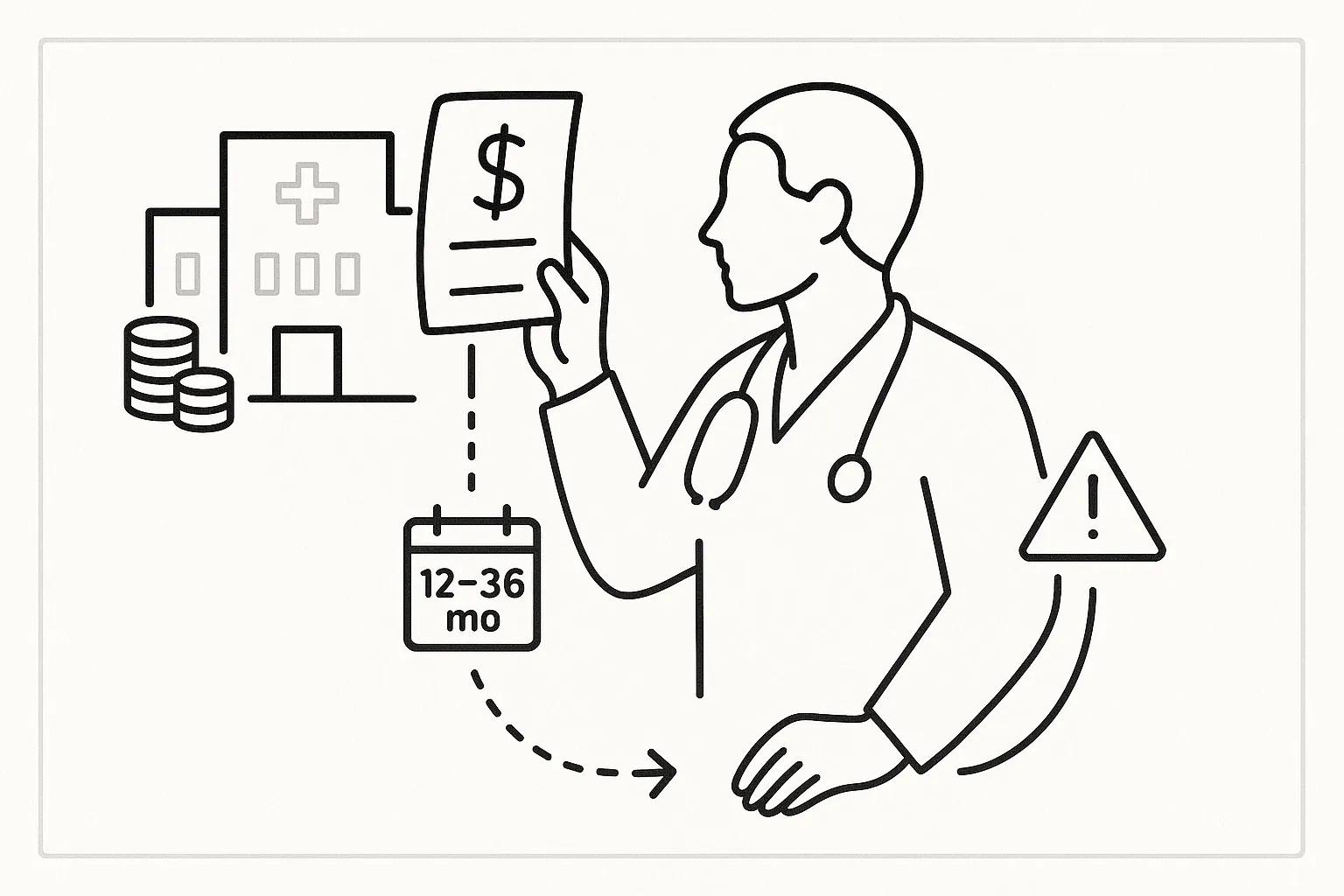
Veterinary employers may use signing incentives to recruit associates into corporate groups, emergency hospitals, specialty practices, rural clinics, or other competitive markets. The payment may replace income lost during a job transition, cover moving expenses, or secure a commitment before the veterinarian’s start date. It may be paid when the agreement is signed, on the first day of work, after an initial pay period, or in several installments.
The Payment Label Does Not Control the Legal or Financial Result
An agreement may call the money a signing bonus, retention payment, relocation stipend, forgivable loan, production advance, or recruitment incentive. Those labels can describe materially different arrangements. The operative language must establish whether the veterinarian earns the payment immediately, earns it over time, must meet production or scheduling conditions, or receives an advance that will later be reconciled against compensation.
The payment’s actual terms can also matter under federal wage law. According to the U.S. Department of Labor’s guidance on bonuses under the Fair Labor Standards Act, a label alone does not determine whether a bonus is discretionary or whether it affects regular-rate and overtime calculations. Most employed veterinarians may be classified as exempt professionals, but exemption depends on the applicable duties and compensation requirements rather than the job title alone. This issue deserves attention when a payment is formula-based, promised in advance, or connected to production.
Characterization is also important when several incentives appear in the same agreement. A signing bonus may coexist with relocation reimbursement, production pay, a retention installment, or a negative-accrual balance. Reviewing these provisions together helps distinguish a one-time recruitment benefit from money the employer may later characterize as an advance. A broader veterinary compensation and ProSal review can identify overlapping calculations and repayment obligations.
Lump-Sum Clawbacks and Pro Rata Vesting
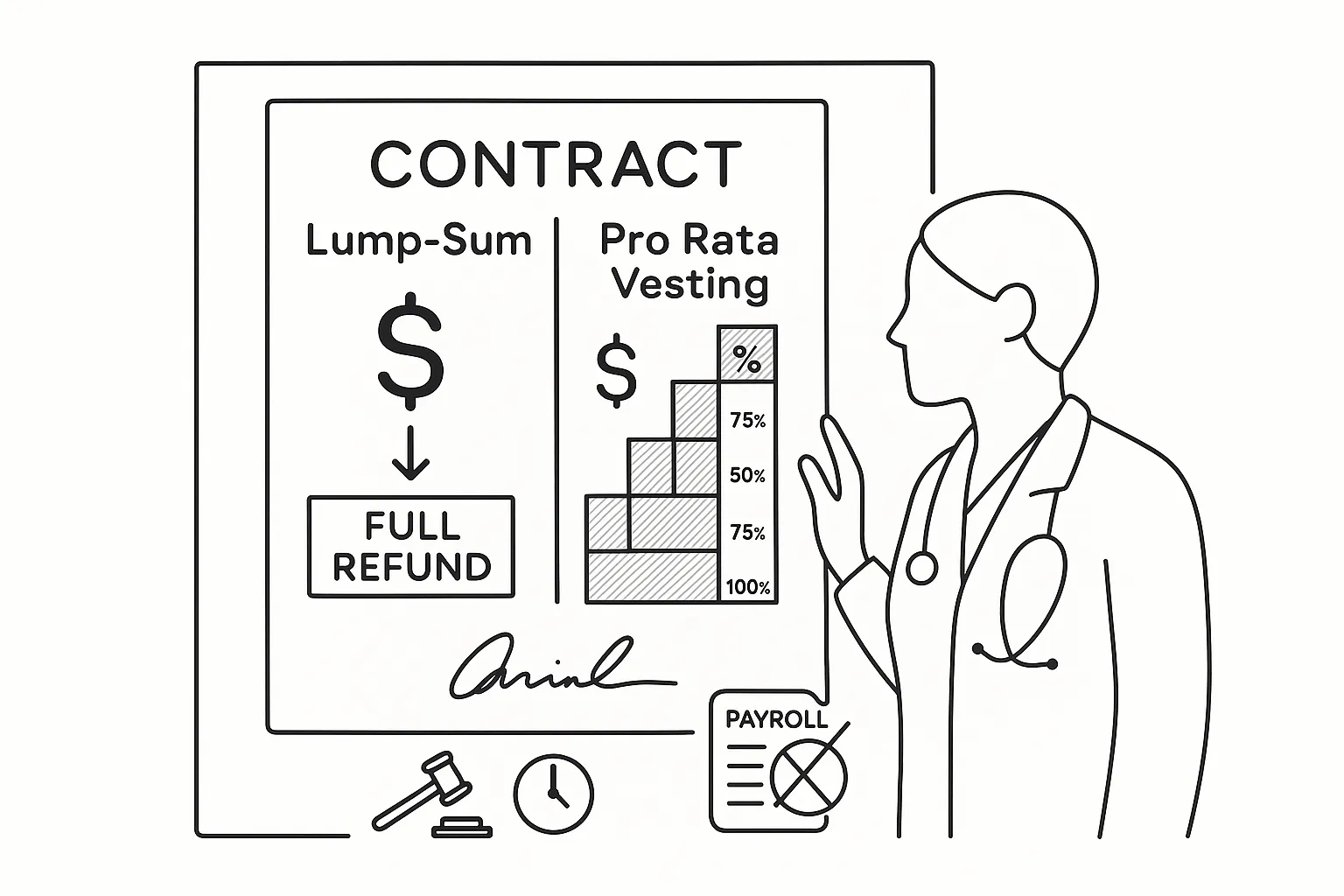
An all-or-nothing provision allows the employer to demand the entire bonus when a trigger occurs at any point during the repayment period. If a $30,000 bonus requires two years of service, an associate who leaves after 23 months may owe the same amount as someone who leaves after three months. The balance does not reflect the substantial portion of the commitment already completed.
Pro rata vesting reduces the unearned amount over time. The bonus might vest monthly, quarterly, or according to stated percentages at six-month intervals. If the veterinarian leaves before the period ends, only the unvested balance is potentially repayable. Monthly vesting generally produces a smoother and more predictable reduction than a single cliff date.
The agreement needs a workable formula, not merely the words “pro rata.” It should identify when vesting begins, the dates on which the balance decreases, whether partial months count, and how approved leave affects the schedule. The same terms should appear consistently in the offer letter, employment agreement, compensation exhibit, and any separate repayment acknowledgment.
Repayment Triggers, Deadlines, and Collection Methods
The central question is not simply whether repayment is possible. The veterinarian needs to understand which event creates the debt, how the remaining balance is calculated, when it becomes due, and what collection methods the employer claims the right to use. Language tied only to voluntary resignation during a defined period is more predictable than a provision activated by any separation or workplace disagreement.
Broad Trigger Events and Unclear Definitions
Common triggers include voluntary resignation and termination for cause before the service period ends. Broader provisions may also cover a reduction in full-time status, refusal to work at another location, failure to meet productivity expectations, violation of a policy, loss of required credentials, or breach of any obligation in the employment agreement. These terms can turn a routine dispute over scheduling or performance into a substantial repayment demand.
Definitions determine how much control the employer has over that result. Terms such as “cause,” “breach,” “full-time,” “termination,” and “employment relationship” need objective meaning. If the employer can decide unilaterally that an undefined performance concern constitutes cause, the veterinarian may have little ability to predict whether the bonus has vested. A notice-and-cure period can also matter when the alleged trigger is a remediable breach rather than an immediate separation.
Repayment timing requires similar precision. A clause demanding payment “immediately” or “within a reasonable time” may leave the associate facing a large and uncertain cash obligation. A fixed deadline, written accounting, installment option, and clear method for disputing the calculation provide a more workable structure. Interest, attorney fees, collection expenses, late charges, and liquidated damages must also be identified because they can increase the amount well beyond the original bonus.
Final-Pay Deductions, Garnishment, and Tax Consequences
Some agreements authorize the practice to offset repayment against final wages, production compensation, unused leave, commissions, or other sums allegedly owed to the veterinarian. Whether a particular deduction is lawful depends heavily on state wage law, the type of payment, the timing of the deduction, and any required authorization. Federal law does not generally establish when every final paycheck must be issued; the U.S. Department of Labor notes in its last-paycheck guidance that state law may impose additional requirements.
A direct payroll deduction is different from later collection of a disputed contractual debt. An employer might send a demand, file a lawsuit, or obtain a judgment and pursue garnishment through formal procedures. Federal garnishment law generally limits the portion of disposable earnings that may be garnished for an ordinary debt to the lesser of 25% or the amount exceeding 30 times the federal minimum hourly wage, subject to statutory exceptions. Those limits do not independently authorize an employer to remove a claimed debt from final wages without satisfying applicable wage-deduction law and required process.
Repayment can also create a tax issue that the employment contract may not resolve. A signing bonus is generally taxable when received or made available. If the veterinarian later returns income reported in an earlier tax year, federal claim-of-right rules may apply in qualifying circumstances. Current IRS claim-of-right guidance distinguishes certain repayments exceeding $3,000 from smaller repayments, and wage-tax or Social Security and Medicare corrections may require employer coordination. Because the correct treatment depends on timing and individual tax facts, a veterinarian facing repayment should consult a qualified tax professional rather than treating the gross repayment amount as purely a contract issue.
How the Repayment Clause Interacts With the Rest of the Contract
A signing bonus provision cannot be evaluated in isolation. The cost of leaving may also include a restrictive covenant, unpaid production compensation, a tail-insurance obligation, relocation reimbursement, training costs, or repayment of other incentives. Several individually manageable provisions can combine into an impractical departure burden.
Termination Rights, Noncompetes, and Departure Costs
Termination language can produce one of the most significant imbalances. If the employer may end the relationship without cause and still demand the full bonus, the veterinarian can lose the position and immediately owe a substantial debt. The repayment provision can instead distinguish voluntary resignation from termination without cause and address disability, death, employer breach, loss of a worksite, material duty changes, or other events outside the associate’s reasonable control. These issues should be coordinated with the notice period and analyzed through a veterinary contract termination review.
A bonus clause may also tie repayment to compliance with a noncompete, nonsolicitation provision, or confidentiality obligation. This can expose the veterinarian to both enforcement of the restriction and a separate payment demand. The federal regulatory status is important: the Federal Trade Commission currently states that its 2024 nationwide Noncompete Rule is not in effect or enforceable following a federal district court order entered on August 20, 2024. The enforceability of a veterinary noncompete—and the effect of any connected repayment remedy—therefore continues to require careful analysis under applicable state law, the contract’s wording, and current legal developments.
A repayment obligation is not automatically invalid merely because it appears next to a noncompete, but it also cannot automatically be assumed to avoid state restrictions on post-employment restraints. A review of veterinary restrictive covenants can determine how the provisions are connected, whether a financial remedy operates independently, and which terms may warrant clarification or revision.
Professional liability insurance may create another departure expense. When coverage is claims-made, the agreement may assign responsibility for tail coverage while also requiring immediate bonus repayment. Contract analysis should identify the policy type, who pays for tail insurance, when it must be obtained, and whether responsibility changes with the reason for separation. Reviewing malpractice and tail insurance provisions can help quantify these overlapping costs before the agreement is signed.
Ownership and buy-in terms can create additional complications. A practice may attempt to offset the unvested bonus against ownership credits or require repayment when an associate leaves before completing an earn-in period. The documents need to explain whether the bonus affects valuation, capital contributions, credited service, or money already applied toward a purchase. Otherwise, the associate may face multiple charges arising from the same departure.
Contract Revisions That Can Reduce Repayment Exposure
A veterinarian does not necessarily have to reject a signing bonus to reduce the associated risk. Targeted revisions can preserve the recruitment benefit while making the repayment obligation easier to understand and budget. The most important changes usually involve progressive vesting, defined triggers, reasonable exceptions, and a transparent calculation.
- Use periodic vesting: Monthly or quarterly reductions prevent the full balance from remaining outstanding until a distant cliff date.
- Limit repayment triggers: The clause can focus on voluntary resignation and clearly defined termination for cause rather than every separation or contract dispute.
- Add appropriate carveouts: Termination without cause, disability, death, employer breach, material changes in duties, and discontinued work locations may warrant separate treatment.
- Require an accounting: The employer can be required to provide the original payment, vested amount, unvested balance, added charges, and supporting calculation.
- Address payment terms: A cap, installment schedule, reasonable due date, and exclusion of interest or penalties can reduce the risk of an immediate financial crisis.
- Separate unrelated obligations: Bonus repayment need not automatically become a remedy for a disputed noncompete, policy violation, or malpractice-insurance obligation.
Alternative payment structures may also work. The employer could divide the incentive into retention installments, forgive a stated amount each month, limit repayment to documented relocation costs, or use a pre-agreed reduced buyout. These arrangements protect the employer’s recruitment investment without leaving the entire payment outstanding throughout the service period.
The collection mechanism deserves its own language. A separate written repayment arrangement may be preferable to an open-ended authorization allowing unilateral deductions from any money owed to the associate. If an offset is proposed, the clause needs to identify which payments may be affected and remain subject to applicable wage law.
Verbal assurances are not a substitute for revised contract language. A recruiter may say that repayment is rarely enforced or that termination without cause will be excluded, but the signed documents control the parties’ stated obligations. Every agreed vesting term, exception, installment right, and calculation method belongs in the final agreement or an incorporated amendment.
A Pre-Signing Review Checklist for Veterinary Associates
Begin by determining whether the payment is a true signing bonus, a retention incentive, a relocation reimbursement, a forgivable loan, or an advance against future compensation. Then compare the offer letter with the employment agreement, compensation exhibit, policy documents, and any separate promissory note. The documents should provide consistent answers to these questions:
- When will the payment be made, and when does the service or vesting period begin?
- Does vesting occur monthly, quarterly, annually, or only on a single cliff date?
- Which events trigger repayment, and how are cause, breach, full-time status, and termination defined?
- Does termination without cause create a repayment obligation?
- How are disability, approved leave, schedule reductions, reassignment, and employer breach treated?
- Can interest, attorney fees, collection costs, late charges, or liquidated damages be added?
- Does the employer claim the right to deduct repayment from wages, production pay, leave, or other compensation?
- How does the clause interact with noncompete, tail insurance, relocation, severance, negative accrual, or ownership terms?
- What tax records or corrected wage documents may be available if repayment occurs in a later year?
The veterinarian should retain the signed agreement, offer materials, compensation exhibits, payment records, amendments, and communications confirming negotiated changes. Documentation of later changes to duties, schedule, location, productivity expectations, or employment status may also become important if the parties disagree about whether a repayment trigger occurred.
Attorney review is especially valuable when the amount is substantial, the service period is lengthy, the triggers are subjective, or the employer claims broad payroll-offset rights. It is also useful when repayment overlaps with restrictive covenants, malpractice insurance, production compensation, relocation assistance, or a future buy-in. The objective is to understand the combined financial exposure before accepting the payment and to identify language that may warrant clarification or revision.
Frequently Asked Questions
What makes a veterinary signing bonus repayment clause risky?
Risk increases when the clause uses broad or subjective triggers, preserves the full balance until a cliff date, permits wage offsets, or adds interest and collection costs. Exposure can be greater when the same departure also creates noncompete, tail-insurance, relocation, or production-compensation obligations.
Is pro rata vesting better than an all-or-nothing clawback?
Pro rata vesting generally provides a more predictable result because the unearned balance declines as the veterinarian completes the service commitment. The agreement still needs to identify the vesting dates, calculation formula, treatment of partial periods, and effect of any leave or schedule change.
Can a practice take bonus repayment from a veterinarian’s final paycheck?
The answer depends on applicable state wage law, the payment involved, the wording and validity of any authorization, and the collection process used. A direct payroll deduction is legally distinct from pursuing a contractual debt through a demand, lawsuit, judgment, or garnishment.
What if the practice terminates the veterinarian without cause?
The contract controls whether termination without cause triggers repayment. Some provisions apply after any separation, while others exclude employer-initiated termination without cause and events outside the veterinarian’s control. Any exclusion needs to appear in the signed agreement rather than rest on an informal assurance.
Does repaying a previously taxed signing bonus create a tax issue?
It can. When repayment occurs in a later tax year, federal claim-of-right rules and possible wage-tax corrections may become relevant. The treatment can depend on the amount, timing, employer records, and individual circumstances, so the veterinarian should obtain tax advice in addition to reviewing the contractual obligation.
When is attorney review of a signing bonus clause most useful?
Review is particularly useful before signing when the bonus is substantial, vesting is unclear, repayment triggers are broad, or the agreement permits offsets and added collection costs. It is also important when the obligation overlaps with termination, production pay, restrictive covenants, malpractice coverage, relocation, or ownership terms.
Understand the Repayment Terms Before Accepting the Bonus
Chelle Law reviews veterinary employment agreements for vesting schedules, repayment triggers, payroll offsets, termination language, restrictive covenants, and other terms that can increase the cost of leaving a practice.
Contact Chelle Law