
Veterinary associate bonus structures directly affect how associates are paid, incentivized, and exposed to financial risk throughout an employment relationship. Whether you are a new graduate reviewing your first ProSal offer, an associate evaluating a percentage-of-production model, or a corporate-employed veterinarian comparing signing and retention bonuses, the details behind the headline compensation figures matter.
Bonus formulas often interact with production definitions, negative accrual, restrictive covenants, malpractice coverage, and contract termination rights in ways that are not apparent from an offer letter. What appears to be a straightforward incentive can shift collection risk, accounting uncertainty, repayment obligations, or post-employment liability onto the associate.
Chelle Law reviews veterinary associate bonus structures nationwide and identifies drafting issues that may reduce take-home pay or increase financial exposure after employment ends. This guide explains common bonus models, production and collections calculations, reconciliation traps, clawbacks, state-law considerations, and the contract language veterinarians should evaluate before relying on a promised bonus.
Key Takeaways
- Veterinary bonus structures allocate both upside and risk, so the written agreement should precisely define production, collections, attribution rules, and excluded revenue.
- Negative accrual, advances, reconciliation changes, and post-termination clawbacks should be limited by clear notice, timing, and recovery provisions.
- For ProSal or collections-based bonuses, request sample calculations, a defined payout schedule, detailed reports, and a reasonable opportunity to audit and dispute errors.
- Signing-bonus repayment should be prorated where possible and coordinated with termination provisions, restrictive covenants, and other post-employment obligations.
- Because wage, repayment, and noncompete rules vary by jurisdiction, bonus protections should be evaluated under the law governing the agreement.
Common Veterinary Associate Bonus Models

Veterinary bonus structures generally fall into several recognizable categories. Understanding how each model works helps an associate compare offers, negotiate compensation, and identify where financial or administrative risk is being shifted from the practice.
- Production or collections percentage: The associate earns a percentage of billed production or cash collections attributable to the associate’s work. The contract must explain which measure applies and how revenue is credited.
- ProSal or salary plus production: A guaranteed base salary is combined with additional compensation after a production threshold is met. This hybrid model may provide income stability while preserving upside, but its value depends on the threshold and reconciliation method. Veterinarians comparing this structure should understand the broader mechanics of ProSal compensation.
- Guaranteed, signing, or retention bonuses: A fixed payment is made at signing, on a start date, or after a stated employment period. These payments frequently include repayment obligations if the associate leaves early or is terminated under specified circumstances.
- Tiered or threshold bonuses: Additional compensation becomes available after monthly, quarterly, or annual performance benchmarks are met. Higher levels of production may unlock larger bonus percentages or fixed payments.
- Per-appointment or per-procedure bonuses: Compensation is tied to case volume, procedure type, or surgical complexity rather than aggregate production. These arrangements may appear in emergency, specialty, or mobile practices.
- Daily or shift-based pay with incentives: A flat daily or shift rate is supplemented by utilization, case-volume, or performance incentives. This model is often used for relief or emergency coverage.
Regional and employer-specific patterns also matter. Higher-cost markets may emphasize stronger base guarantees, while corporate groups frequently use centralized collections-based formulas and formal reconciliation schedules. Private practices may use production-based pay tied to charges rather than cash collected and may have more flexibility to negotiate the formula.
Each model allocates risk differently. Collections-based bonuses protect the practice from bad debt but expose the associate to collection timing, write-offs, refunds, and reconciliation decisions. Production-based and ProSal models reward productivity but require precise definitions of what counts as production, which services are attributed to the associate, and how later adjustments affect compensation. Veterinary compensation can also include profit-sharing opportunities and other benefits, as discussed in this overview of veterinarian benefits and bonus compensation trends.
How Production-Based Bonuses Are Calculated
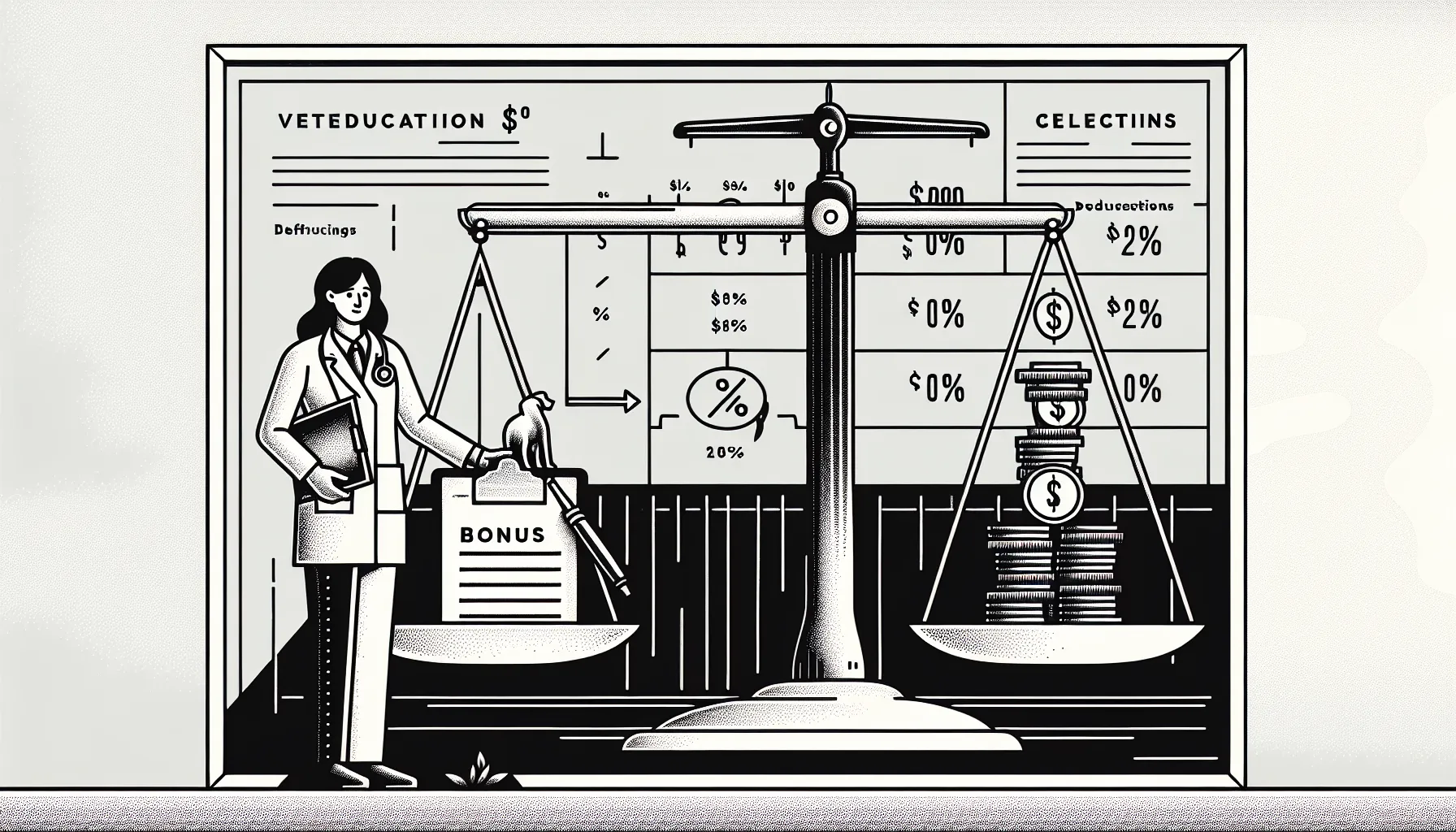
A production-based bonus can look simple on paper—an identified percentage multiplied by production or collections—but its actual value depends on definitions, timing, attribution, deductions, and reconciliation rules. Those details determine whether the arrangement provides reliable upside or creates unpredictable cash-flow risk.
Production, Collections, and Revenue Attribution
Production generally refers to billed charges for services rendered. A charge-based formula may benefit an associate when collections lag or the practice offers payment plans, but it disconnects compensation from the money the practice ultimately receives. Collections generally refers to cash actually collected by the practice. A collections-based formula protects the employer from bad debt but can delay or reduce compensation because of write-offs, refunds, discounts, payment plans, or collection delays.
The agreement should also define attribution. Revenue may be credited to the veterinarian who examined the patient, performed the procedure, entered the charge, supervised the case, or worked at a particular location. If several doctors participate in a case, the contract should state whether revenue is split, assigned to one veterinarian, or pooled across the practice. A veterinarian evaluating these distinctions may also benefit from a detailed explanation of veterinary production pay.
Payout Timing, Reconciliation, and Negative Accrual
Practices may calculate bonuses monthly after applying permitted refunds, discounts, credits, or other adjustments. Others estimate payments monthly and perform a quarterly true-up to correct overpayments or underpayments. The contract should establish when calculations occur, when the associate receives payment, what reports are provided, and how long the associate has to question an error.
Employers may also advance expected bonus compensation and later recover an overpayment through negative accrual. A poorly drafted clause can allow an employer to carry a deficit forward indefinitely or offset a substantial portion of future compensation. If an employer advances $5,000 but later credits only $3,000 under its reconciliation, for example, a broad recovery clause may permit the $2,000 difference to reduce future earnings. The agreement should address notice, recovery limits, timing, and whether an alleged deficit survives termination.
At a 30% collections-based bonus, $50,000 in attributed collections produces a $15,000 gross calculation before permitted deductions. If the employer may subtract refunds, credit-card fees, discounts, or administrative charges, the net payment may be lower. Every deduction should therefore be defined in writing rather than left to unilateral discretion.
Bonus Formulas and Calculation Pitfalls
Most bonus disputes arise from vague math, incomplete accounting rules, or different understandings of how production should be credited. The agreement should contain an explicit formula, such as a stated percentage multiplied by attributable collections minus specifically identified deductions, rather than relying on a policy that the employer may change outside the contract.
Terms the Written Formula Should Define
- Attribution rules: State whether revenue is credited individually, divided among participating veterinarians, or pooled across a location or practice.
- Collection window: Explain how long after a service is performed later collections remain attributable to the associate.
- Permitted deductions: Identify whether refunds, discounts, credit-card fees, laboratory costs, administrative charges, or write-offs reduce the calculation.
- Reporting and dispute rights: Require detailed statements and a reasonable period to identify and contest errors.
- Negative accrual limits: Address how much may be recovered, how long a deficit may carry forward, and whether recovery continues after termination.
Common warning signs include undefined references to production or collections, discretionary administrative deductions, retroactive formula changes, and silence concerning discounted services, vouchers, third-party pricing, or multi-doctor cases. These provisions can materially change compensation even when the stated bonus percentage appears competitive.
Comparing ProSal, Hybrid Pay, and Guaranteed Bonuses
Different compensation blends shift risk in different ways. ProSal can offer substantial upside in a busy practice, but income may fluctuate and the veterinarian remains dependent on accurate practice accounting. Negative accrual can also turn a slow month or an advance into a deficit that reduces later compensation.
A salary-plus-production model combines predictable base pay with additional compensation after a threshold is reached. This arrangement may be useful for a new graduate or an associate entering a new market, but a high threshold can make the advertised bonus difficult to earn. The contract should show how the threshold was calculated and whether it changes with schedule, leave, or staffing.
Guaranteed, signing, and retention bonuses provide immediate value for relocation, recruitment, or an initial ramp-up period. Their primary risk is repayment language. Accelerated clawbacks, interest, lump-sum demands, and repayment after termination without cause can turn an upfront payment into a substantial departure cost. Veterinarians should review both the bonus clause and any related signing-bonus repayment terms.
Contract Protections for Bonus Compensation
A well-drafted bonus provision should define production, collections, attributed revenue, payment timing, reconciliation procedures, audit rights, and any recovery of advances. It should also explain what happens to collections received after the associate leaves and whether an earned but unpaid bonus remains payable after termination.
Clawbacks, Termination, and Restrictive Covenants
Signing-bonus and advance repayment obligations should be coordinated with the agreement’s termination standards. A prorated schedule generally reflects the portion of the service commitment already completed more accurately than an all-or-nothing repayment clause. The contract should also distinguish voluntary resignation, termination for cause, and termination without cause rather than imposing the same repayment result in every circumstance.
Repayment provisions can become particularly burdensome when combined with a noncompete. An associate may otherwise be required to repay a substantial bonus while also being restricted from working in the surrounding market. Because enforceability varies by jurisdiction, both the repayment obligation and the veterinary noncompete terms should be reviewed under the law governing the agreement.
Malpractice insurance can also affect the real value of a bonus. If the employer provides claims-made coverage, an unfunded tail obligation may offset some or all of the incentive compensation. The agreement should identify the policy type, responsibility for tail coverage, and whether the allocation changes depending on how employment ends. A focused malpractice and tail insurance review can clarify that exposure.
Negotiating and Documenting Veterinary Bonus Terms
Begin by requesting a written explanation of the formula, sample calculations using realistic production or collections data, and the reconciliation report the practice normally provides. If the employer cannot clearly explain how the bonus is calculated, paid, and audited, the stated percentage does not provide a reliable picture of expected compensation.
Any clause permitting the employer to recover advances or overpayments should include written notice, defined recovery limits, and a maximum recovery period. Bonus formulas should not be subject to retroactive unilateral changes. If the employer requires flexibility, the agreement should specify advance notice and explain when a revised formula becomes effective.
Multi-location work and call coverage also require clear attribution rules. When a veterinarian may be assigned to different clinics, emergency shifts, or shared cases, the contract should explain which location receives the revenue and how the associate receives credit. Otherwise, an associate can be held responsible for a location’s performance without receiving credit for all work performed there.
Document negotiated terms in the final agreement rather than relying on verbal assurances, an email summary, or an employer policy that can be amended independently. Words such as “may,” “discretionary,” and “reasonable” should be evaluated carefully when they control whether a bonus is earned, calculated, or paid.
When Veterinary Bonus Terms Need Attorney Review
Attorney review is particularly useful when a bonus includes negative accrual, complex deductions, broad repayment triggers, discretionary accounting rules, multiple work locations, or interaction with restrictive covenants. Review can translate the formula into practical pay outcomes, identify provisions that affect compensation after termination, and propose targeted revisions without unnecessarily disrupting the underlying offer.
Bonuses can materially increase earnings, but only when calculation mechanics, payment timing, and legal interactions are precise. Clear definitions, limits on negative accrual, reasonable repayment schedules, and alignment with termination and restrictive-covenant provisions help distinguish genuine compensation from a potential post-employment liability. Veterinarians seeking a broader analysis can use Chelle Law’s compensation and ProSal review.
Frequently Asked Questions
What are the most common veterinary associate bonus structures?
Common structures include production or collections percentages, ProSal, salary plus production, signing or retention bonuses, tiered incentives, procedure-based bonuses, and shift pay with performance incentives. Each model allocates accounting, collection, and repayment risk differently.
What is the difference between production and collections in a bonus formula?
Production generally measures billed charges for services, while collections measures money the practice actually receives. A collections formula can reduce or delay compensation because of discounts, refunds, write-offs, payment plans, or collection delays.
How does negative accrual affect a veterinarian’s bonus?
Negative accrual occurs when an advance, draw, or prior payment exceeds the bonus later calculated under the contract. The resulting deficit may reduce future bonuses, so the agreement should define recovery limits, notice, duration, and what happens when employment ends.
Can a veterinary employer change a bonus formula after signing?
The answer depends on the agreement and applicable law. A veterinarian should look for language permitting unilateral policy changes and seek clear advance-notice rules rather than allowing retroactive changes to compensation already earned.
What happens to an earned bonus when a veterinary associate leaves?
The contract should state whether earned but unpaid bonuses remain payable, how post-termination collections are handled, and whether advances or signing bonuses must be repaid. These terms should be coordinated with resignation, for-cause termination, and without-cause termination provisions.
What records should a veterinarian receive to verify a bonus?
A veterinarian should request detailed production or collections reports showing attributed revenue, adjustments, deductions, thresholds, prior advances, and the final calculation. The agreement should also provide a reasonable period to identify and dispute accounting errors.
Review Your Veterinary Bonus Before You Sign
Chelle Law can evaluate the formula, negative accrual, repayment obligations, termination consequences, and related restrictions in your veterinary employment agreement.
Contact Chelle Law