
Production-based pay is common in U.S. veterinary employment agreements, including ProSal and veterinary compensation models, straight production percentages, and collections-based compensation. Despite how frequently these formulas appear in associate contracts, they are among the most misunderstood parts of a veterinary employment offer.
Veterinarians often sign production provisions without fully understanding how revenue is defined, adjusted, credited, or paid over time. Small differences involving collections, discounts, chargebacks, recoverable draws, multi-provider cases, and payment timing can materially change take-home compensation. The formula also interacts with scheduling, call coverage, malpractice insurance, restrictive covenants, repayment obligations, and termination terms.
This guide explains how veterinary production pay works, compares common compensation structures, identifies frequent contract traps, and provides a practical calculation example. It also outlines the records and contract language a veterinarian should review before relying on projected earnings. Chelle Law reviews the complete compensation formula and related employment terms so veterinarians can understand how the agreement may operate during employment and when the relationship ends.
Key Takeaways
- Veterinary production pay depends on definitions. Confirm whether pay is based on gross charges, net professional fees, or collections because each approach can produce a different paycheck.
- Ask for a worked example and available historical production or collections data so you can compare the proposed percentage with realistic monthly earnings.
- Review draw and recoupment terms carefully. A recoverable draw can create negative accrual that reduces future compensation.
- Require clear rules for chargebacks, payment timing, multi-provider splits, discounts, refunds, and the procedures or products that count toward production.
- Consider the entire agreement, including final production payouts, bonus repayment, noncompetes, malpractice coverage, and termination rights.
How Veterinary Production Pay Is Calculated
Charges, Professional Fees, and Collections
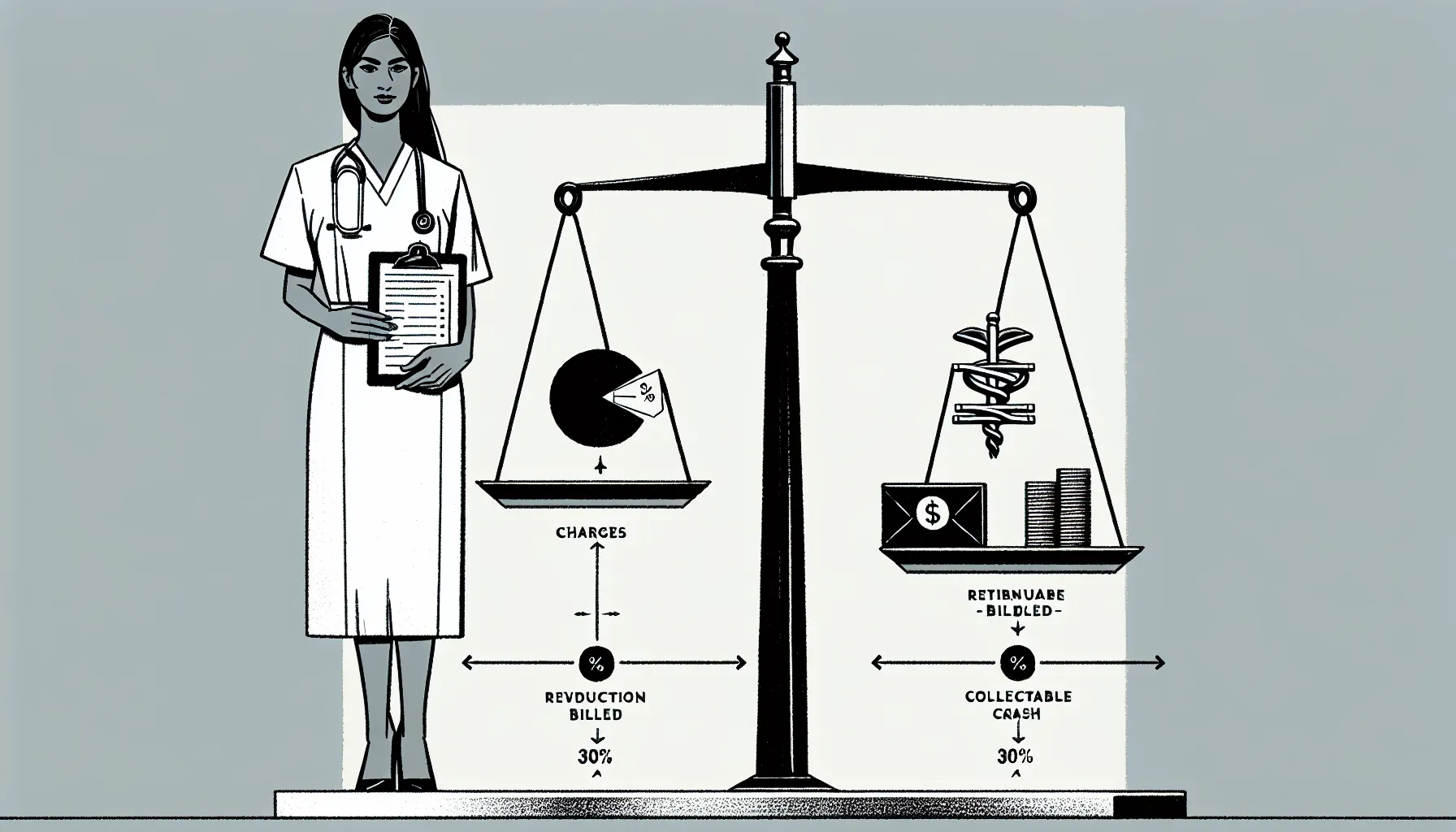
The biggest source of confusion in production pay is the difference between production, billed revenue, and collections. An employer may define production as gross charges generated, professional fees after discounts, or cash the practice actually receives. A collections-based formula pays on collected revenue, while a charge-based formula may credit services when they are billed. These approaches can produce different results when payments are delayed, discounted, written off, refunded, or never collected.
The definition should be in writing. Confirm whether the formula includes third-party payments, client payments, in-house plans, retail sales, laboratory charges, prescription products, and other ancillary revenue. The agreement should also explain whether returns, refunds, write-offs, discounts, merchant fees, or uncollectible accounts are deducted before the production percentage is applied. Veterinarians considering a collections formula should understand the specific risks of collections-based compensation, including delays that may be outside the associate’s control.
Production Percentages, ProSal, and Hybrid Formulas
Production pay typically uses a percentage of qualifying professional fees. For example, if qualifying monthly production is $40,000 and the contract pays 30%, gross production compensation for that month is $12,000 before taxes, benefit deductions, and permitted offsets. The percentage cannot be evaluated in isolation because a lower percentage applied to a broad revenue definition may produce more compensation than a higher percentage applied to a narrow definition.
ProSal compensation blends a guaranteed salary with a production component, often using a base amount and a percentage of production above a stated threshold. Other hybrid formulas combine salary, daily rates, shift compensation, or production bonuses. What matters is not the label but the math, including the threshold, reconciliation period, qualifying revenue, and treatment of any shortfall.
Compensation structures also vary by practice setting and service line. Corporate groups may pair a particular percentage with standardized benefits and advancement policies, while private practices may use different splits or offer an ownership path. Specialty services, dentistry, emergency work, or other procedures may be credited at separate rates. Every applicable rate and exclusion should be stated in the agreement or an incorporated compensation plan.
“Gross revenue” may include product sales and retail items, while “net professional fees” usually refers more narrowly to veterinary services. If retail revenue is included, determine whether it is credited at invoice value or reduced to account for inventory costs. This distinction can explain why an attractive headline percentage does not produce the expected compensation.
Draws, Negative Accrual, and Payment Timing
Guaranteed Minimums and Recoverable Draws
Many veterinary associate agreements provide a guaranteed minimum or draw to stabilize income during the ramp-up period. A non-recoverable draw functions as a true guarantee: if production is below the stated amount, the veterinarian keeps the guarantee without owing the difference. A recoverable draw allows the employer to apply a shortfall against future production earnings.
Recoverable draws can create negative accrual. If the balance is not capped or time-limited, a deficit may follow the veterinarian across multiple pay periods and reduce future bonuses even after production improves. The contract should identify the reconciliation period, whether negative balances reset, how long a shortfall can roll forward, and whether an unpaid balance remains collectible when employment ends. The consequences are examined further in the guide to veterinarian negative accrual.
Chargebacks and payment timing can create similar problems. Common issues include production credited on the date of service versus the date of payment, reductions caused by later refunds or insurance denials, and undefined lookback periods that permit adjustments months after compensation was issued. The agreement should establish when production is recognized, how previous periods may be corrected, and whether retroactive chargebacks are capped.
Veterinarians can request a worked payroll example showing both a high-production month and a month in which earnings fall below the draw. They may also seek a defined lookback period, a cap on recoupment, periodic resets, or conversion of a recoverable draw into a true guarantee after stated conditions are met. Any negotiated protection should appear in the signed contract rather than an informal explanation.
Contract Terms That Can Change Production Earnings

Bonuses may be discretionary or formula-based. A written formula tied to measurable productivity milestones is generally easier to evaluate than a bonus left entirely to employer discretion. The contract or compensation plan should identify the calculation period, eligibility requirements, payment date, and circumstances in which a bonus may be withheld or recalculated. Separate veterinary bonus structures should be reviewed alongside the core production formula.
Call coverage, emergency work, nights, weekends, and holidays may be included in ordinary production or compensated through flat fees, shift rates, or percentage add-ons. The agreement should define qualifying hours and explain whether revenue generated during those periods receives the same production credit. Schedule expectations also affect the veterinarian’s ability to meet a production threshold, so the formula should be evaluated together with schedule and call obligations.
Billing practices determine whether work is credited. Some agreements require charges or medical records to be completed within a particular timeframe. Multi-provider cases need transparent allocation rules so shared procedures, assistance, referrals, or supervision do not unexpectedly dilute production credit. A veterinarian should also know how corrections are documented and whether there is a process for disputing a production report.
Final Pay, Repayment Obligations, and Broader Contract Risks
Final-pay language should state whether accrued but unpaid production is paid after termination, including collections received after the veterinarian’s last day. It should also explain the reconciliation date and any offsets for a signing bonus, relocation payment, loan, negative accrual balance, or other claimed debt. Repayment terms are generally easier to manage when they are clearly defined, prorated over time, and coordinated with the agreement’s termination provisions. A separate termination review can identify how notice, final compensation, and repayment clauses interact.
Restrictive covenants can also affect the economic value of a production arrangement. Noncompete rules vary by state, and broad restrictions involving duration, geography, scope, or client relationships may limit where a veterinarian can work after departure. The compensation section therefore should not be reviewed without considering the agreement’s noncompete and mobility restrictions.
Professional liability coverage presents another potential cost. Occurrence coverage generally applies to covered incidents during the policy period without requiring tail coverage after departure. Claims-made coverage may require an extended reporting endorsement when employment ends. The contract should identify the policy type, limits, and responsibility for any tail expense. Chelle Law can review these provisions through a focused malpractice and tail insurance analysis.
If the employer offers a future ownership or buy-in opportunity, confirm the valuation method, payment terms, voting rights, and exit mechanics. A vague promise of future partnership is not a substitute for defined terms. Production formulas, negative accrual, and repayment obligations should also be addressed before they carry into an ownership transition.
Example of a Veterinary Production Pay Calculation
Assume the veterinarian has $45,000 in monthly net professional fees on a collections basis, a 30% production percentage, a $6,000 recoverable monthly draw, and $2,000 in permitted chargebacks from a prior month. Start with the $45,000 in credited collections and subtract the $2,000 chargeback, leaving $43,000 in qualifying production. Applying the 30% rate results in $12,900 in gross production pay before taxes, benefits, and other authorized deductions.
- Credited collections: $45,000
- Less permitted chargebacks: $45,000 − $2,000 = $43,000
- Apply the production percentage: 30% × $43,000 = $12,900
- Compare the result with the draw: $12,900 exceeds the $6,000 draw, so the gross production compensation is $12,900.
Now assume collections are $18,000 and chargebacks reduce qualifying production to $16,000. Applying the same 30% rate produces $4,800. Because that amount is $1,200 below the $6,000 draw, a recoverable-draw policy may carry the $1,200 shortfall into a later period. Whether the employer can carry it forward, how long it remains active, and what happens at termination depend on the contract language.
Warning signs include unlimited recoupment, broad chargeback definitions, undefined adjustment periods, unclear treatment of retail revenue, and a formula the employer cannot demonstrate through a sample calculation. Reasonable clarification requests may include a written payroll example, historical reports for similarly situated associates, a defined lookback window, a cap on recoupment, and a clear process for reviewing disputed production credit.
Preparing for a Veterinary Compensation Review
Provide the attorney with the complete proposed employment agreement, compensation or commission plan, offer letter, employee handbook, and any sample production reports or pay statements the practice supplies. Include documents addressing signing bonuses, relocation assistance, ramp-up expectations, ownership opportunities, and repayment obligations. Oral representations about expected earnings should be summarized and incorporated into the written agreement when they are material to the decision.
Before signing, determine exactly how production is defined and verified, whether compensation is based on charges or collections, whether a draw is recoverable, and how refunds, write-offs, and denials are handled. The review should also resolve what happens to earned but unpaid production after termination, who is responsible for malpractice tail coverage, what restrictive covenants apply, and whether a proposed ownership path contains enforceable terms.
A focused legal review looks beyond the headline percentage. Chelle Law analyzes the compensation math, identifies ambiguous or one-sided provisions, and explains how the language may operate during actual payroll cycles. Production pay can be a strong earning model when definitions, timing, reporting, and risk allocation are clear, but unclear language can lead to underpayment, delayed compensation, or unexpected repayment liability.
Frequently Asked Questions
What is veterinary production pay, and how does it differ from a salary?
Veterinary production pay ties some or all compensation to qualifying revenue generated by the veterinarian, often through ProSal or a percentage of charges, professional fees, or collections. A fixed salary does not fluctuate directly with monthly production. The contract’s definition of production determines how much variability and financial risk the veterinarian assumes.
How do collections and billed charges affect production compensation?
A collections formula credits revenue when the practice receives payment, while a charge-based formula may credit services when they are billed. Discounts, refunds, write-offs, payment delays, and uncollectible accounts can therefore affect the two models differently. The agreement should state which amounts count and when they are credited.
What should I watch for with draws, recoupment, and negative accrual?
Determine whether the draw is a non-recoverable guarantee or an advance that the employer can recover from future earnings. The contract should explain how shortfalls are calculated, whether balances reset, how long they can carry forward, and what happens to any remaining balance when employment ends.
Can a veterinary employer change the production formula after I sign?
The answer depends on the agreement and any compensation plan incorporated into it. Review whether the employer reserves discretion to change percentages, thresholds, exclusions, or reconciliation rules and whether advance notice or a written amendment is required. Material compensation terms should be documented clearly rather than left to an informal policy.
What happens to unpaid production compensation when employment ends?
The contract should state whether the veterinarian receives payment for earned production or collections received after the final day of work. It should also identify the reconciliation date, applicable chargebacks, and any offsets for negative accrual, bonus repayment, or other obligations.
What records should I request before accepting a production-based offer?
Request a written compensation formula, a worked payroll example, and any production or collections reports the practice can provide for a comparable position. Also review the proposed agreement, bonus plan, repayment terms, schedule expectations, billing policies, and examples showing how refunds, shared cases, and chargebacks are handled.
Have Your Veterinary Production Formula Reviewed
Chelle Law reviews production percentages, ProSal thresholds, draws, chargebacks, final-pay terms, and related contract risks so you can understand the compensation model before signing.
Contact Chelle LawExplore Veterinary Contract Guidance
Review legal services, practical contract resources, and state-specific guidance for veterinarians.