
It is jarring to open a paycheck and find that the math does not match the promise. When a dental employer changes a pay formula during a contract term, an associate may be left trying to determine whether the change is permitted, how much compensation has been lost or gained, and what to do next. The change may appear as an updated production split, a new management fee, a different collections calculation, or a retroactive charge on a payroll statement.
The financial effect can extend beyond a single paycheck. A revised definition of production, an added deduction, or a change in the order of calculations can materially reduce compensation even when the headline percentage appears unchanged. The associate must compare the new calculation with the signed agreement, compensation exhibits, payroll records, and any policies incorporated into the contract.
This guide explains how to assess whether a mid-contract pay change fits the agreement, quantify its practical impact, preserve relevant evidence, and request an explanation without escalating prematurely. It also covers when to seek legal advice and which compensation protections dentists should consider during a future employment contract review. Chelle Law examines the governing documents and payroll mechanics to help dentists distinguish an accounting error from an unauthorized change or contractual dispute.
Key Takeaways
- Immediately pull the signed agreement and compensation exhibits to confirm whether the employer has contractual authority to change the formula.
- Preserve paystubs, payroll details, and communications, then run a side-by-side comparison for representative pay periods to quantify the difference.
- Ask management for a written explanation and a line-by-line payroll breakdown before assuming the change was intentional or authorized.
- Escalate methodically through the practice manager, payroll contact, HR, or regional leadership while maintaining a written record.
- Protect future compensation with clear definitions, limits on unilateral changes, advance notice, payroll transparency, and final accounting terms.
Can a Dental Employer Change Your Pay Formula?
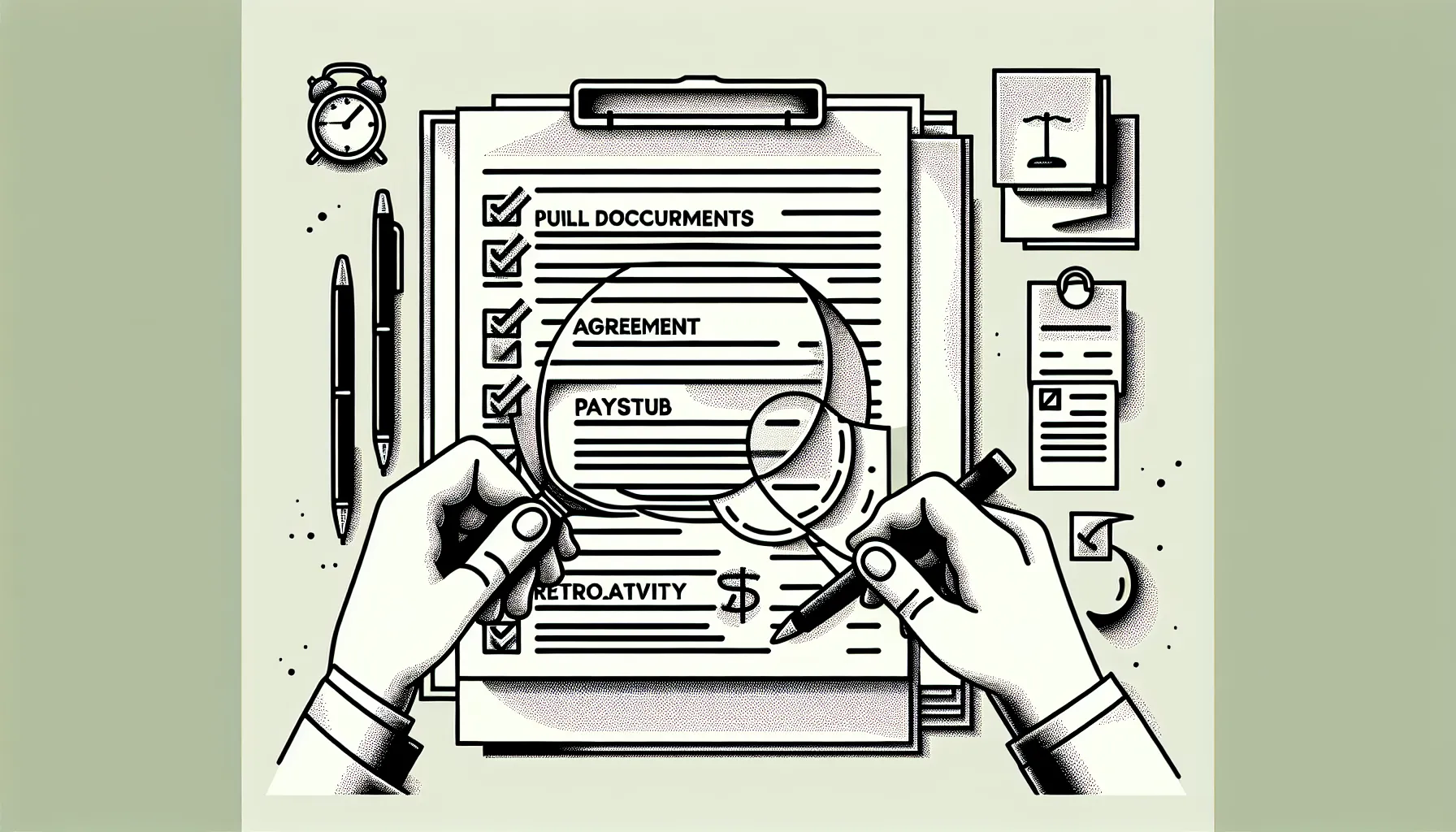
Review the Signed Contract and Payroll Records
Start with a rapid review so that you can respond clearly rather than react. The following steps help identify which documents and calculations control the dispute:
- Pull the operative documents, including the offer letter, employment or independent contractor agreement, and any compensation exhibits or addenda. Those documents, rather than an informal verbal description, generally provide the starting point for interpreting compensation.
- Locate the compensation provisions and defined terms such as “production,” “collections,” “management fee,” “withholdings,” and “adjusted production.” Identify any schedule that establishes percentages, guarantees, tiers, or bonus thresholds.
- Check whether the agreement allows the employer to modify compensation unilaterally. Look for language such as “Employer may modify,” “at Employer’s discretion,” or provisions requiring advance notice or mutual written consent.
- Match each new payroll item to the contract. Identify changed percentages, new deductions, fees, or chargebacks and determine whether the agreement or an incorporated policy addresses them.
- Compare effective dates. Determine whether the practice applied the new formula only to future work or recalculated compensation from prior pay periods.
Employers sometimes cite an employee handbook, payroll policy, or corporate standard operating procedure as the basis for a change. Those materials may have different amendment procedures from the signed agreement, so confirm whether the contract incorporates them by reference and how conflicts between the documents are handled.
Modification Clauses and Compensation Red Flags
Several provisions can determine whether a change is consistent with the agreement. The amendment or modification clause may require a writing signed by both parties, while a notice provision may establish how far in advance the employer must announce a change. A guaranteed salary or guarantee period can also limit immediate adjustments, and definitions of production and collections determine the base against which a percentage is applied.
- Retroactive application: Compensation for previously performed work is recalculated even though the agreement only addresses prospective changes.
- Missing required notice: The contract requires advance notice, but the associate receives none before the new formula takes effect.
- Undefined deductions: New management fees, lab charges, refunds, or other deductions appear without a clear contractual basis. A separate review of dental lab fee deductions may help identify questions to ask about the calculation.
- Conflict with guaranteed pay: The revised calculation causes pay to fall below a stated salary, draw, commission floor, or guarantee.
- Unclear production definitions: The agreement uses “production” without explaining whether it means gross production, adjusted production, collections, or another internally controlled figure.
These indicators do not establish by themselves that a change is unlawful. They identify the contractual and payroll issues that should be documented, questioned, and evaluated under the agreement and applicable law.
Calculate the Effect on Your Dental Compensation

Compare the Old and New Formulas
A conservative side-by-side calculation can reveal the scale of the issue quickly. Select a representative pay period from before the change, calculate the applicable production or collections according to the contract, and apply both formulas to the same underlying data. Use identical taxes and agreed benefit deductions when comparing net results, and repeat the calculation across several periods if production fluctuates.
- Identify the production, adjusted production, or collections credited to you during the selected period.
- Apply the original percentage, guarantee, tier, or bonus formula to calculate expected gross compensation.
- Apply the revised formula to the same figures and identify any new fees, exclusions, or deductions.
- Calculate the difference for the period and project the effect across several months or a year, while recognizing that actual production may vary.
For example, if the agreement provides 40% of collections and credited collections are $50,000, expected gross pay would be $20,000. If a revised formula reduces the share to 35%, gross pay would be $17,500—a $2,500 difference before considering chargebacks or management fees. Dentists who need additional context can review the common dental compensation models used in associate agreements.
Management fees and chargebacks can reduce pay without changing the stated percentage. A practice may deduct a flat fee before applying the production split, remove a percentage-based corporate fee from collections, assess refunds or remake costs against future compensation, or place revenue into a production pool allocated among multiple providers. These mechanics are especially important in a DSO arrangement, where centralized policies may affect how location-level numbers are reported.
- A fee taken from collections before the associate’s percentage is calculated reduces the compensation base.
- A deduction taken after the split reduces the associate’s earned share instead.
- Chargebacks can shift refunds, bad debt, lab expenses, or remake costs into later pay periods.
- Production pools can dilute the results of a high producer depending on how the pool is weighted and allocated.
The order of operations matters. A 5% fee deducted from the compensation base before a 40% split produces a different result from a 5% deduction taken from the associate’s earned share afterward. Model each step in the same sequence shown on the payroll statement to locate the source of the difference.
How to Respond During the First 72 Hours
Preserve Payroll Records and Evidence
Time matters because payroll portals, internal reports, and informal messages may not remain readily available. Preserve a clear record of the change before beginning a detailed discussion with management:
- Save PDF copies or screenshots of paychecks and payroll statements showing the new calculations.
- Request or download line-by-line payroll details showing production, collections, deductions, dates, and explanations.
- Preserve emails, texts, memoranda, or other messages announcing the change, and create a dated note describing relevant verbal conversations.
- Maintain a spreadsheet showing the original calculation, the employer’s calculation, and the difference for each affected pay period.
- Keep the signed agreement, compensation exhibits, addenda, offer letter, and any incorporated policies together with the payroll records.
This documentation allows the associate to present the issue objectively. It also helps management, payroll personnel, or an attorney determine whether the discrepancy arose from an administrative error, a revised policy, or a disputed interpretation of the contract.
Request an Explanation and Escalate Methodically
Begin with a factual, solution-focused request rather than an accusation. Clear questions often produce the documents needed to identify what happened:
- “I received my latest paycheck and noticed a difference from our agreed compensation. Could you walk me through the calculation and identify the policy or contract language authorizing the change?”
- “Can you provide payroll detail for these pay-period dates showing how the management fee and production split were applied? I would like to reconcile the calculation with my records.”
- “Was this change applied retroactively? If so, when was the decision made, and where was the change documented?”
If the explanation does not resolve the discrepancy, escalate in order of relationship and authority. Start with the practice manager or payroll contact because many errors can be corrected administratively. Next, provide the documentation to HR, the owner, or the operations leader. In a multi-location group or DSO, regional leadership or the compensation team may need to evaluate how a corporate fee or policy was implemented. Associates working under a corporate structure may also benefit from reviewing the broader issues covered in the DSO employment contract guide.
When immediate cash-flow stability is necessary, consider proposing a written interim arrangement. The parties might temporarily restore the prior formula while reviewing the dispute or agree to a one-time supplemental payment covering the disputed difference for a defined period. Keep communications in writing when possible and treat escalation as a fact-finding process rather than a threat.
When to Seek Legal Advice About a Pay Change
Consider consulting an attorney experienced in dental contracts when the employer refuses to explain or correct the calculation, the change appears inconsistent with the signed agreement, compensation for completed work has been recalculated, or the dispute may affect resignation or termination. Bring the fully executed agreement, compensation exhibits, incorporated manuals, payroll records, communications, a concise timeline, and your calculation of the disputed amount.
Those materials help counsel determine whether the issue involves contractual interpretation, a payroll error, a disputed deduction, or a potential wage claim under applicable law. The appropriate options depend on the agreement, the facts, and the jurisdiction, so no particular result or timeline should be assumed.
- Administrative correction: The employer may reverse or adjust payroll after reviewing the calculation and supporting records.
- Written clarification or amendment: The parties may document the intended compensation formula and prevent the same dispute from recurring.
- Demand or negotiated resolution: Counsel may seek unpaid compensation or another agreed remedy when an internal review does not resolve the issue.
- Exit planning: If the dispute contributes to a departure, the contract’s notice, final-pay, chargeback, and restrictive-covenant provisions should be reviewed before action is taken. The rules governing dental associate contract termination can affect the financial consequences of leaving.
Many compensation disputes can be addressed through documentation, clarification, and negotiation without litigation. An attorney’s initial role is to explain the contract, identify available options, and help the dentist communicate from an informed position.
Contract Terms That Help Prevent Future Pay Disputes
The best time to address compensation stability is before signing or renewing an agreement. A comprehensive dental associate compensation review should evaluate both the stated percentage and the operational rules that determine the amount actually paid.
- Limits on material changes: State whether compensation can be changed during the term and whether the dentist’s written consent is required.
- Advance written notice: Establish a defined notice period before a prospective compensation change takes effect.
- No retroactive adjustments: Clarify that a revised formula will not be applied to compensation already earned or previously calculated, subject to specifically defined corrections or chargebacks.
- Precise definitions: Define production, adjusted production, collections, write-offs, refunds, lab fees, remakes, management fees, and excluded services.
- Payroll reporting: Require regular statements showing credited production or collections and each deduction used to calculate pay.
- Review rights: Provide a practical method for obtaining the records needed to verify the employer’s calculation.
- Exit accounting: Explain when final compensation will be calculated and how post-termination collections, refunds, lab costs, and chargebacks will be handled.
- Dispute procedures: Establish whom the dentist should contact, how a discrepancy must be reported, and how quickly the practice will respond.
These terms do not eliminate every disagreement, but they replace an opaque payroll process with defined rules and accessible records. That transparency makes it easier for both sides to identify errors and resolve genuine interpretation disputes before they affect multiple pay periods.
Frequently Asked Questions
Can my dental employer reduce my production percentage during the contract term?
Whether the employer can reduce the percentage depends on the contract’s compensation, amendment, discretion, and notice provisions, as well as applicable law. Compare the proposed change with the signed agreement and any incorporated compensation plan before accepting the employer’s interpretation.
What should I do if a new management fee appears on my paycheck?
Save the payroll statement, request a line-by-line calculation, and ask the employer to identify the contract or policy language authorizing the fee. Determine whether the fee reduces the compensation base before your percentage is applied or is deducted from your earned share afterward.
Can a changed pay formula be applied to work I already performed?
Retroactive changes deserve careful review because the contract may distinguish future compensation adjustments from amounts already earned. Preserve the original calculation, effective-date communications, and affected payroll records, then obtain advice based on the agreement and applicable state law.
How do I calculate how much compensation I lost?
Apply the original and revised formulas to the same production or collections data for several representative pay periods. Include changes to the percentage, compensation base, management fees, lab expenses, refunds, chargebacks, and bonus thresholds so that the comparison reflects the complete calculation.
Should I resign if my employer changes my compensation?
Do not make that decision based only on one payroll statement. First confirm the calculation, document the employer’s explanation, and review the agreement’s resignation notice, repayment, final compensation, malpractice, and restrictive-covenant provisions because leaving can create additional contractual consequences.
What documents should I provide for a dental compensation review?
Provide the executed agreement, offer letter, compensation exhibits, addenda, incorporated policies, affected paystubs, detailed production or collections reports, communications about the change, and a timeline showing when the new calculation began. A spreadsheet comparing the original and revised formulas is also useful.
Concerned About a Mid-Contract Pay Change?
Chelle Law reviews dental compensation provisions, payroll mechanics, amendments, and related contract terms so you can understand the agreement and evaluate your options.
Contact Chelle LawExplore Dental Contract Guidance
Review Chelle Law’s dental contract services, practical resources, and state-specific pages.