
When a dentist leaves a job, one of the most important unresolved questions may be who pays for malpractice tail insurance. The answer can determine whether the departing dentist faces a significant post-employment bill or a gap in protection against claims reported after the last day of work. Tail coverage is not required in every arrangement, so the analysis begins with the type of malpractice policy the practice maintains.
For dentists covered by a claims-made policy, an incident that occurred while treating patients may generate a claim after employment ends. An extended reporting endorsement, commonly called tail insurance, allows qualifying claims to be reported after the underlying policy or the dentist’s coverage under it ends. Responsibility for that coverage often depends on the employment agreement, the reason for termination, the dentist’s classification, and the terms of the insurance policy.
Chelle Law reviews malpractice, termination, indemnity, repayment, and restrictive covenant provisions together because tail responsibility is rarely determined by a single sentence. A focused dental malpractice insurance review can identify the applicable trigger, explain whether the employer or dentist is expected to pay, and flag ambiguous language before it becomes a post-departure dispute.
Key Takeaways
- Tail is generally relevant when a dentist has claims-made malpractice coverage; occurrence coverage operates differently.
- Insurance, termination, indemnity, and reimbursement clauses should be read together to determine who must pay and what event triggers the obligation.
- W-2 associates may receive employer-paid tail under specified termination circumstances, while independent contractors more commonly bear their own insurance obligations unless the agreement states otherwise.
- Dentists should obtain written confirmation of whether payment will be full, shared, or prorated and whether the group policy will continue after departure.
- A dentist who receives an unexpected tail bill should request supporting documentation and compare it with the contract, policy, and prior communications.
How Claims-Made and Occurrence Coverage Affect Tail Insurance

Claims-Made Coverage, Occurrence Coverage, and Tail Triggers
Malpractice policies generally use either claims-made or occurrence coverage. An occurrence policy covers qualifying incidents that occurred during the policy period, even if the resulting claim is filed later. A claims-made policy generally requires the claim to be made and reported while coverage is active or during an applicable reporting period. Tail insurance, formally an extended reporting endorsement, is therefore principally relevant to claims-made coverage.
If a dentist worked under a claims-made policy and then leaves the practice, treatment provided during employment may still generate a claim later. Without an applicable extended reporting period or other continuing coverage, the later claim may fall outside the policy. Dentists can review the broader mechanics in this guide to tail insurance for dentists.
Practice owners and DSOs may prefer claims-made policies because of their cost structure and administrative features, but that choice creates a post-employment risk that the contract should allocate. The agreement should not merely state that the practice provides coverage during employment; it should address what happens when the dentist’s participation in the policy ends.
Tail may become relevant when the employer cancels or does not renew the group policy, the dentist’s employment ends, or the dentist ceases to be a named insured. Other possible triggers include a practice sale, closure, or corporate restructuring that terminates the existing group policy. Identifying the precise trigger is essential because it establishes when the extended reporting obligation arises and whether the practice or departing dentist must act.
- Termination of employment or the independent contractor relationship.
- Removal of the dentist as a named insured under a group policy.
- Cancellation or nonrenewal of the policy covering the dentist.
- A practice sale, closure, or restructuring that ends the existing coverage.
Who Usually Pays Tail Insurance When a Dentist Leaves?
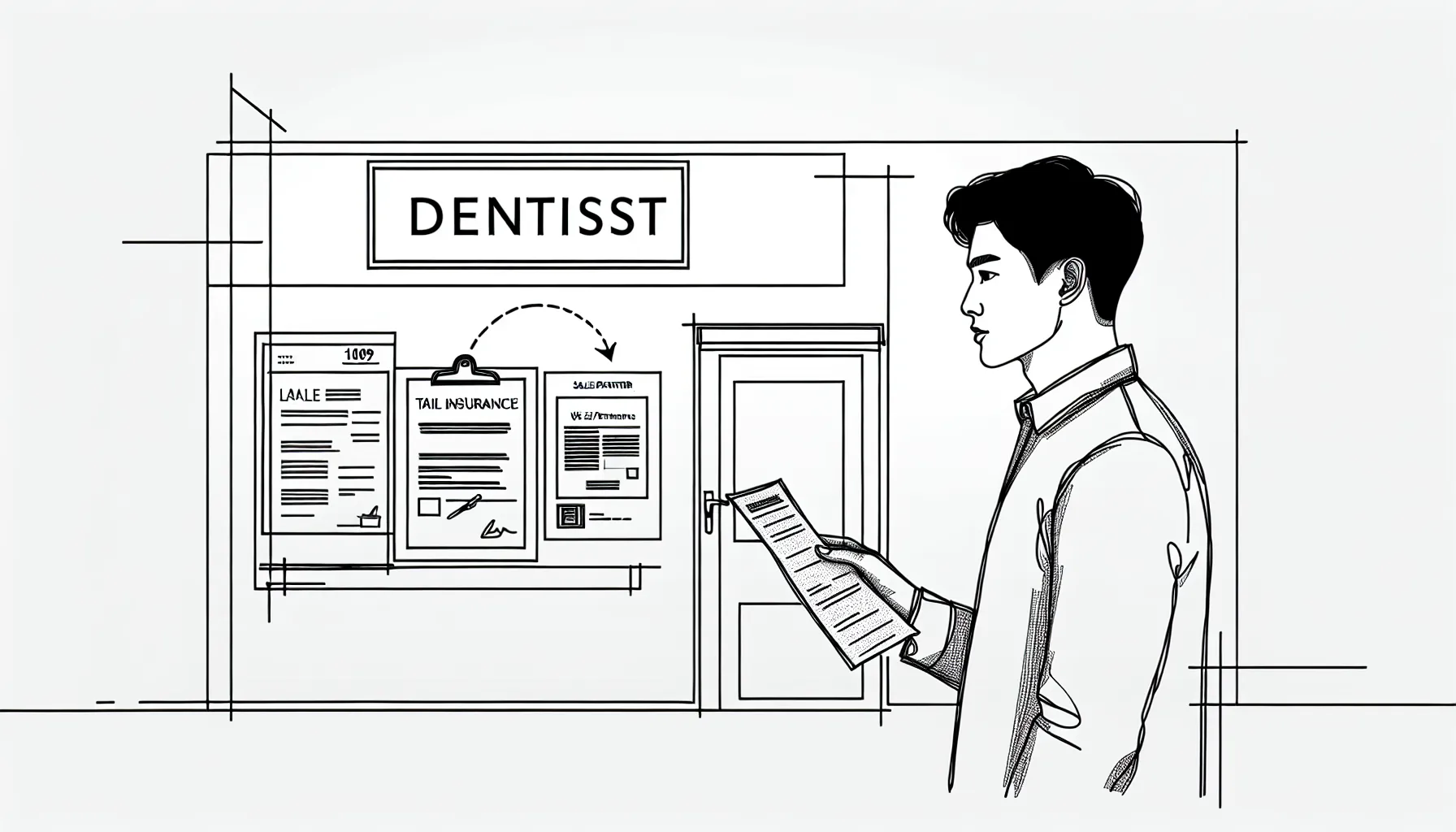
W-2 Dental Associates and 1099 Independent Contractors
For W-2 associates, a common arrangement is for the employer to provide malpractice coverage during employment and pay for tail when the employer terminates the associate without cause or the parties mutually end the relationship. The agreement may create important exceptions, however. An employer may shift tail costs to the associate following a voluntary resignation, an early departure, a for-cause termination, or an alleged breach of restrictive covenants.
The reason for separation can therefore be as important as the insurance clause itself. A dentist reviewing possible departure options should compare the malpractice provision with the notice, cause, cure, and repayment language addressed in the practice’s contract termination terms.
Independent contractors more frequently bear responsibility for obtaining their own malpractice insurance, including any necessary tail coverage, because the agreement treats them as operating a separate business. In some arrangements, the practice purchases a group policy that names the contractor while services are being provided but requires the contractor to pay for tail upon departure. These obligations may be buried in insurance, indemnity, or reimbursement clauses and can produce an unexpected cost.
The label used in an agreement does not by itself resolve every classification issue, but the contract’s allocation of taxes, benefits, insurance, control, and business expenses remains important. Dentists evaluating those distinctions can also review the practical differences between W-2 and 1099 dental associate arrangements.
Partners, Practice Owners, Sales, and DSO Transitions
Partners, owners, and dentists entering or leaving an equity arrangement typically face a different allocation of malpractice risk. The practice may maintain occurrence coverage for historical services, or the partnership, buy-in, or purchase documents may assign responsibility for legacy claims and extended reporting coverage. If the practice uses claims-made coverage, tail responsibility may become a negotiated term of a buyout rather than a standard employer expense.
When a practice is sold or integrated into a DSO, transition provisions may address legacy claims and continuing insurance. A buyer may agree to continue group coverage for a specified period or purchase tail for certain clinicians. Alternatively, the purchase agreement may shift responsibility to the seller or individual dentists. The employment agreement should therefore be read together with any asset purchase, equity transfer, or transition documents rather than reviewed in isolation.
Contract Clauses That Determine Tail Responsibility
A small group of provisions usually controls who must obtain and pay for tail. The insurance clause should identify the policy type, required limits, named insureds, premium responsibility, and whether the employer’s obligation extends beyond active employment. Language stating that an employer merely provides coverage while the dentist is employed is narrower than a promise to purchase an extended reporting endorsement after a particular kind of termination.
- Malpractice insurance: Does the employer maintain the policy, and does the clause expressly address tail or an extended reporting endorsement?
- Termination: Is payment tied to resignation, termination without cause, termination for cause, expiration, nonrenewal, or a sale of the practice?
- Indemnity and reimbursement: Can the practice recover premiums or tail costs based on an alleged breach or another contractual obligation?
- Definitions and policy status: When does the dentist cease to be a named insured, and who must provide evidence of continuing coverage?
- Final compensation: Does the agreement permit deductions or withholding from final pay for insurance-related costs?
Ambiguous or internally inconsistent terms are a frequent source of post-employment disputes. A clause may promise malpractice coverage in one section while a termination, repayment, or indemnity provision shifts tail costs back to the dentist elsewhere. Reviewing the agreement as a whole is particularly important when the tail obligation is conditional.
State law may influence related issues such as worker classification, restrictive covenants, wage deductions, and the enforceability of repayment or clawback provisions. The practical allocation of tail coverage, however, usually depends heavily on the contract and the actual insurance policy. Because those documents may use different terminology, the dentist should confirm that the contractual promise matches the coverage the insurer will provide.
What Dentists Should Confirm or Negotiate Before Leaving
Written Confirmation, Cost Allocation, and Clear Tail Language
Before resigning, accepting a new role, or signing an agreement, a dentist should confirm who is responsible for tail under each possible separation scenario. The language should address voluntary resignation, termination without cause, termination for cause, contract expiration, nonrenewal, and changes to the group policy. It should also explain whether payment is full, shared, prorated, or subject to later reimbursement.
- Whether the policy is claims-made or occurrence coverage.
- Which event triggers the obligation to obtain tail.
- Who purchases the endorsement and who ultimately pays its cost.
- Whether the cost is paid in full, divided, prorated, or reimbursed later.
- Who controls the defense of a claim and whether the dentist remains an insured for applicable matters.
- Whether bonus, buy-in, indemnity, or repayment obligations can affect the allocation.
Plain language can reduce uncertainty. For example, an agreement may state that the employer will pay for an extended reporting endorsement for claims arising from services provided during employment if the employer terminates the associate without cause or ends the group malpractice policy covering the associate. A different arrangement may require the parties to share the cost following a voluntary resignation. These examples illustrate the level of specificity to seek; the final language should match the negotiated arrangement and policy.
Dentists should avoid relying only on verbal statements that the practice will “take care of” malpractice coverage. Insurance obligations should be documented in the signed agreement or a written amendment. A broader review of dental contract red flags can also identify provisions that affect the dentist’s financial exposure at departure.
Departure Steps, Tail Costs, and Common Red Flags
When notice is given, the dentist should ask the employer to confirm in writing whether the group policy will remain active, when the dentist will be removed as an insured, and who will obtain any required endorsement. The dentist should also request policy information and evidence of coverage when available. If a claim or potential claim arises, timely notice to the appropriate insurer is important because delayed reporting may complicate coverage even when tail exists.
Tail cost varies based on the policy, coverage limits, specialty, claims history, insurer, and market conditions. Pricing may be based on a multiple of the annual premium, but no single formula applies to every dentist or policy. Group-policy terms, the length of the reporting period, and any conversion or prior-acts options may also affect the available solution and its cost.
Common cost-allocation approaches include employer payment based on the reason for separation, a prorated division of the premium, a negotiated reimbursement, or treatment of the cost as part of a practice sale or buyout. Any agreement reached at departure should be documented and should identify who will purchase the coverage, not merely who will reimburse the expense.
Red flags include vague language about who “provides” coverage, tail obligations tied to undefined business decisions, inconsistent effective dates, and clauses allowing the employer to deduct disputed insurance expenses from final compensation. Dentists should also question provisions that impose tail costs after any alleged breach without explaining how the breach will be determined.
If a tail bill arrives after departure, the dentist should preserve communications, request an itemized calculation, obtain the relevant policy or endorsement information, and compare those materials with the employment agreement. The amount demanded may reflect an obligation expressly stated in the contract, but it may also conflict with prior written representations or another provision. A contract review can help identify the controlling language and practical next steps.
Frequently Asked Questions
Does every dentist need tail insurance after leaving a practice?
No. Tail insurance is generally relevant when the dentist was covered under a claims-made policy and that coverage ends. An occurrence policy covers qualifying incidents that occurred during the active policy period even when a claim is filed later, subject to the policy’s terms.
Does an employer always pay tail insurance for a W-2 dental associate?
No. Some employers pay tail following termination without cause or another specified event, while the associate may be responsible after a voluntary resignation, for-cause termination, or early departure. The contract and insurance policy should be reviewed together.
Are independent contractor dentists usually responsible for their own tail coverage?
Independent contractor agreements more commonly make the dentist responsible for malpractice insurance and tail, but the arrangement can vary. A practice may cover the contractor under a group policy while requiring the contractor to purchase or reimburse tail after departure.
Which contract sections should a dentist review for tail responsibility?
The dentist should review malpractice insurance, termination, indemnity, reimbursement, final compensation, and definition provisions. Tail responsibility may be stated directly in the insurance clause or shifted through another section of the agreement.
What should a dentist request before leaving a practice?
The dentist should request written confirmation of the policy type, the date coverage will end, who will obtain any required tail endorsement, who will pay, and whether the cost will be shared or reimbursed. Policy or endorsement documentation should also be requested when available.
What can a dentist do after receiving an unexpected tail insurance bill?
The dentist can request an itemized calculation and supporting policy documents, preserve prior communications, and compare the demand with the signed agreement. If the documents conflict or remain unclear, a focused contract review can help evaluate the stated obligation.
Clarify Tail Insurance Before You Leave
Chelle Law reviews dental malpractice, termination, indemnity, and repayment provisions together so you can understand who may be responsible for tail coverage and when that obligation is triggered.
Contact Chelle Law