
Dental associates are often told that compensation will equal a percentage of production, yet the resulting paycheck can be substantially lower than the headline percentage suggests. The problem is not always a dishonest employer. More often, it is a predictable gap between how production pay is described during hiring and how production, collections, adjustments, and deductions are defined in the employment agreement and payroll system.
The distinction matters because billed production does not necessarily represent money the practice has collected. Insurance write-offs, claim denials, patient refunds, lab expenses, management fees, and retroactive adjustments can all reduce the amount used to calculate an associate’s compensation. Scheduling, payer mix, and location assignments can further affect whether the production figures discussed during recruitment are realistic.
A careful review should connect the promised percentage to the actual compensation formula, reconciliation process, audit rights, and supporting practice policies. This guide explains where expectations form, which contract and practice-level mechanics commonly reduce take-home pay, what to examine when a payment is lower than expected, and how clearer terms can reduce future disputes.
Key Takeaways
- Hiring discussions may refer to billed production even when compensation is calculated from adjusted production or collections. The contract should define the applicable figure in writing.
- Retroactive adjustments, insurance write-offs, lab expenses, management fees, and clawbacks can materially reduce take-home pay.
- When pay is lower than expected, associates should preserve paystubs, production reports, patient ledgers, and written communications before requesting a detailed explanation.
- Useful protections include clear compensation definitions, reasonable adjustment windows, itemized statements, audit rights, and documentation supporting deductions.
How Dental Production Pay Differs From Collections
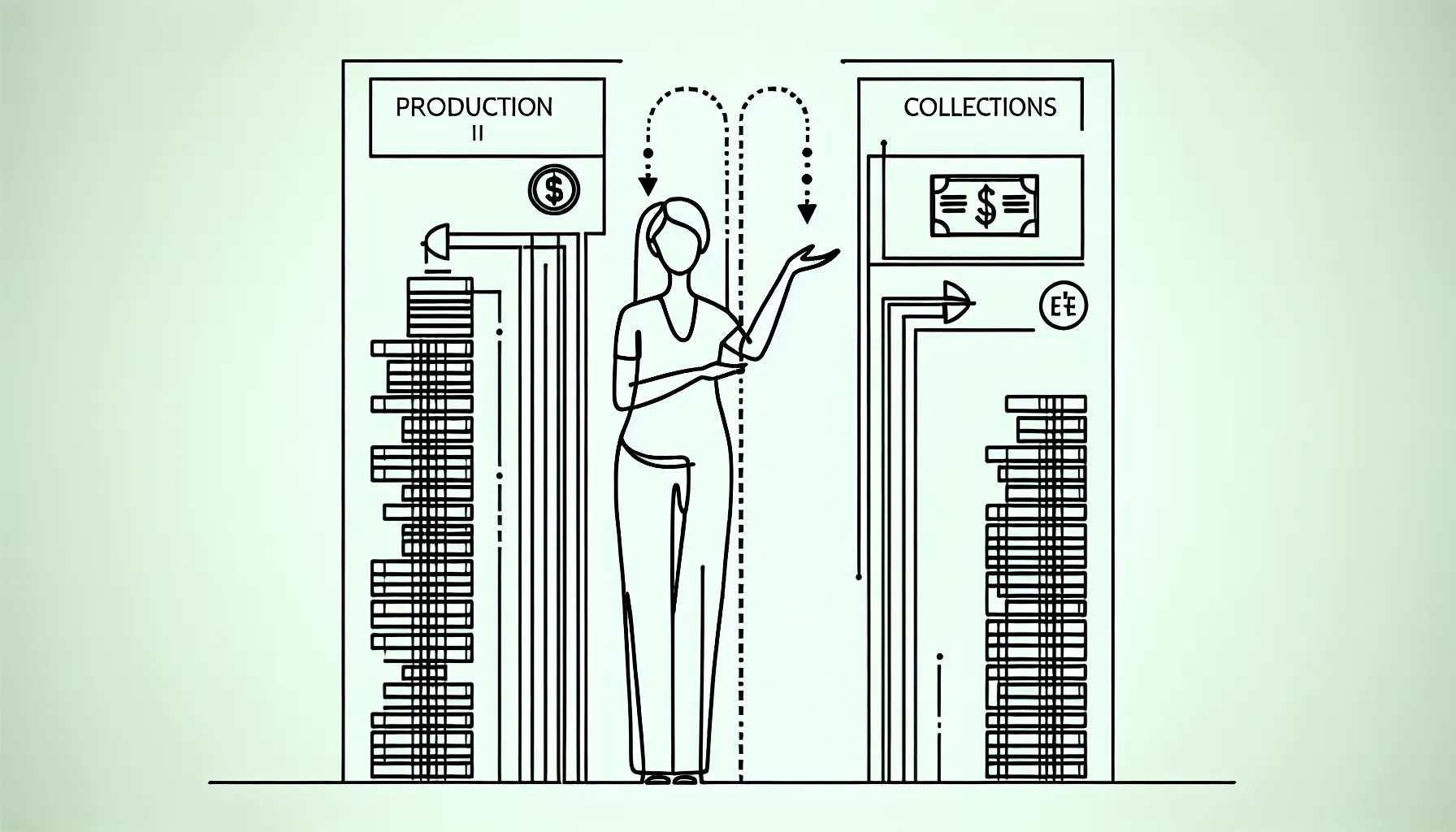
Billed Production, Adjusted Production, and Collections
When hiring conversations focus on a “percentage of production,” it is easy to assume that production equals revenue and therefore predicts the paycheck. In many practices, however, production is a billing measure representing charges or production credits entered in the practice management system. Those figures can be useful for productivity reporting and scheduling decisions, but they are not necessarily the same as cash collected by the practice.
Dental compensation can instead be based on gross production, adjusted production after contractual write-offs, or collections actually received. Each method produces a different result even when the associate performs the same procedures. Associates comparing offers should therefore examine the complete formula rather than focusing only on the percentage. The broader guide to dental compensation models explains how these structures differ.
Post-Billing Adjustments and Unearned Production Credits
Initial production credits may be adjusted after a pay period closes. Insurance discounts, claim denials, patient refunds, corrected billing, and uncollectible balances can reduce the amount available to split. Procedures initially credited to an associate may consequently generate less compensation once the account is reconciled.
Some practices place these post-billing corrections on the provider through chargebacks or by netting the associate’s share against future pay. Adjustments are not inherently improper; they are a normal part of revenue-cycle management. The compensation problem arises when the agreement does not clearly explain which party bears that financial risk, how long adjustments may continue, or what documentation the associate can inspect.
Why Dental Production Pay Commonly Falls Short

A surprise paycheck often results from retroactive adjustments. Some agreements allow a practice to correct production statements for months after a procedure is billed. An associate who appeared to exceed a target in one month may therefore see compensation reduced later when claims are reprocessed, refunds are issued, or previously credited amounts are reversed. Broad or undefined adjustment windows make it particularly difficult to know when a production statement is final.
Schedule, Payer Mix, and Location Changes
Compensation also depends on operational conditions that the associate may not control. Hiring managers may discuss a full schedule, a favorable payer mix, or established patient demand, but the associate may later receive fewer patients, less profitable appointment types, or a larger share of low-fee plans. Moving an associate to another office or changing assigned days can similarly reduce collections even when the compensation formula itself remains unchanged.
These issues are especially important in multi-location groups because the agreement may give the employer broad authority over scheduling and work sites. A contract cannot guarantee every operational outcome, but it can clarify expected days, locations, clinical duties, and the process for material changes. Associates evaluating a corporate offer may also benefit from reviewing how these issues appear in a typical DSO employment agreement.
Lab Costs, Management Fees, and Other Deductions
Insurance write-offs and unpaid patient balances reduce collections, while other agreements deduct expenses before applying the associate’s percentage. Groups and DSOs may allocate management fees, facility expenses, supply charges, or other corporate costs to the compensation calculation. These deductions can turn an attractive headline percentage into a much smaller share of actual revenue.
Lab expenses deserve particular attention because contracts differ on which costs may be allocated, how the associate’s share is calculated, and whether the dentist can verify the underlying invoice. The practical effect of these provisions is addressed further in the resource on dental lab fee deductions. The agreement should also distinguish legitimate case-specific expenses from general overhead that the practice is expected to absorb.
Contract Terms That Change Take-Home Pay
Withholdings, chargebacks, and reconciliation rights are usually addressed in the contract, a compensation exhibit, or an incorporated policy manual. The most important provisions to review include:
- Compensation definitions: whether “production” means billed charges, adjusted production, net production, or collections.
- Payment timing: when compensation is calculated, when collections are credited, and whether payment is delayed after the associate leaves.
- Audit and adjustment windows: how long the practice may correct statements or recapture previously credited amounts.
- Expense allocations: whether lab fees, supplies, remakes, refunds, management fees, or other costs are deducted before applying the percentage.
- Discretionary policies: whether a separate payroll or compensation policy can change the calculation without a signed contract amendment.
Ambiguous definitions often give the employer substantial discretion to apply post-billing adjustments. That discretion is where many disagreements originate: the contract appears to promise a simple percentage, but its definitions and reconciliation rules fundamentally change the outcome. Associates should also identify cross-references to policy manuals because important compensation details may be located outside the main agreement.
Advances and guarantees can further obscure the effective pay rate. A guarantee may function as a recoverable draw that is later reconciled against production or collections, rather than a true minimum payment. The distinction is explored in when a dental draw or guarantee is not guaranteed. Signing and retention bonuses may also be subject to repayment if the associate leaves before a specified date.
Compensation provisions should be read alongside termination and restrictive covenant terms. Departure may trigger bonus repayment, affect the timing of final collections-based compensation, or limit where the dentist can work next. Understanding the contract’s termination and final-pay provisions is therefore part of evaluating the overall economic risk, not merely an exit issue.
What to Do When a Paycheck Is Lower Than Expected
Begin by preserving the relevant documents. Save the paystub, production statement, patient-ledger entries for the procedures in question, applicable schedules, and communications concerning guarantees or compensation. Ask the practice manager or payroll contact for a written, itemized explanation identifying the transactions, dates, deductions, and contract provisions used in the calculation. A calm request for the numbers is generally more productive than starting with an accusation.
Audit the statement by comparing procedure codes and service dates against the patient ledger. Check for insurance adjustments, write-offs, denials, refunds, remakes, lab charges, or supply expenses assigned to the provider. Determine whether an adjustment was retroactive and whether it falls within any period permitted by the contract. The associate should also confirm that collections were credited to the correct provider and pay period.
- Compare procedures and service dates on the patient ledger with the production statement.
- Identify insurance adjustments, denials, refunds, and unpaid patient balances connected to those entries.
- Look for lab, supply, management, or facility expenses deducted from production or collections.
- Determine whether prior payments were recaptured and whether the adjustment occurred within the contractual window.
- Request the report or supporting record used to calculate each disputed amount.
If the explanation remains vague, the deductions are substantial, or the practice relies on language that does not appear in the signed agreement, a contract review may help determine whether the calculation is consistent with the written terms. The review should focus on the actual documents and payroll records rather than the percentage alone.
How to Negotiate Clearer Production Compensation
During hiring or renewal, the contract should expressly state whether the percentage applies to gross production, adjusted production, or collections. It should explain which write-offs and expenses are permitted, when a statement becomes final, and what happens to collections received after termination. Associates should also request access to reports sufficient to verify the calculation.
Reasonable negotiation requests may include a sample payroll calculation, an itemized list of allowable deductions, a defined adjustment period, notice of retroactive chargebacks, and supporting documentation for disputed entries. Responsibility for lab and material expenses should be explicit rather than left to an unwritten office policy. These details are central to a meaningful review of dental associate compensation terms.
- A written example showing how the percentage would be calculated and reconciled in a typical month.
- A clear description of insurance write-offs, refunds, remakes, and other adjustments that reduce compensation.
- A reasonable deadline after which ordinary retroactive adjustments will not be applied.
- Defined responsibility for lab fees, material costs, and corporate or management expenses.
- Audit rights and access to the production, collection, and adjustment reports used for payroll.
Practical, narrowly tailored requests are often more effective than broad demands. For example, an associate might ask that compensation be defined as a percentage of collections after documented contractual insurance adjustments, with an itemized statement and written support for retroactive chargebacks. The precise wording should fit the practice’s billing system and the negotiated compensation model.
Operational habits also reduce surprises. Accurate charting, prompt claim documentation, insurance verification, and regular review of outstanding balances can help an associate identify problems before they accumulate. In a multi-site practice, the dentist should understand who controls scheduling, payer mix, location assignments, and the attribution of collections when another provider completes or remakes treatment.
Frequently Asked Questions
Does a percentage of production mean the same thing as a percentage of collections?
No. Production usually measures services billed or credited, while collections represent money the practice actually receives. Adjusted production may also subtract contractual write-offs or other permitted adjustments before the associate’s percentage is applied.
Can a dental practice reduce compensation months after treatment was performed?
That depends on the agreement and applicable payroll rules. Contracts may permit later corrections for denied claims, refunds, billing errors, or other adjustments, so associates should review the allowed reasons, adjustment period, notice requirements, and supporting documentation.
Why can two associates with similar production receive different pay?
The associates may have different payer mixes, collection rates, lab expenses, schedules, locations, adjustment histories, or compensation definitions. Similar billed production does not guarantee similar adjusted production or collections.
What records should an associate request when production pay appears incorrect?
Useful records include the paystub, production and collection reports, patient-ledger entries, adjustment and refund details, lab invoices, and the written compensation formula. The associate should request an itemized explanation connecting each disputed deduction to the contract.
Is a guaranteed salary always separate from future production compensation?
No. Some guarantees are recoverable draws or advances that are reconciled against later production or collections. The contract should state whether the guarantee is a true minimum, how reconciliation works, and whether a negative balance can carry forward.
Which compensation terms should be clarified before signing a dental associate contract?
The agreement should define the compensation base, allowable deductions, payment timing, adjustment window, reporting and audit rights, lab-expense responsibility, guarantee reconciliation, and treatment of collections after termination.
Understand What Your Production Formula Really Pays
Chelle Law reviews dental associate compensation provisions, deductions, reconciliation terms, and related contract risks so dentists can evaluate the agreement before signing or renewing.
Contact Chelle Law